It is fun to print these documents onto tea stained paper in an attempt to recreate an authentic looking copy. Once you have it printed, it needs to be folded correctly, and sealed to finish the job.
In the 18th century, envelopes were not in general use. Instead, a letter would be folded in such a way as to enable the content to be concealed and the address written on the reverse.
With the text facing forward, the top and bottom of the letter would be folded toward the centre so that they just overlapped. The sides would then have been folded inward so that, again, they just overlapped. Often the ends would be tucked into one another so that the letter did not come unfolded. The address would have been written on the plain, reverse side. Once this had been done sealing wax would have been dropped onto the join between the ends of the paper and a seal pressed into it. The content of the letter was then private and could not be accessed without breaking the seal.
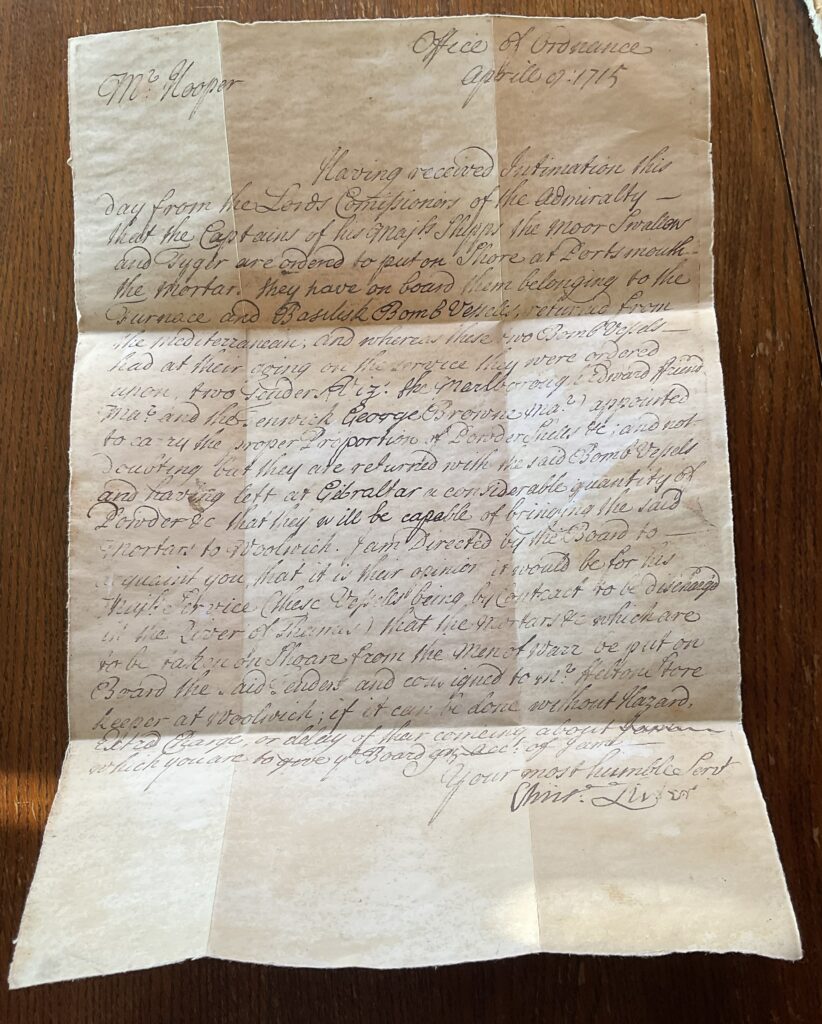
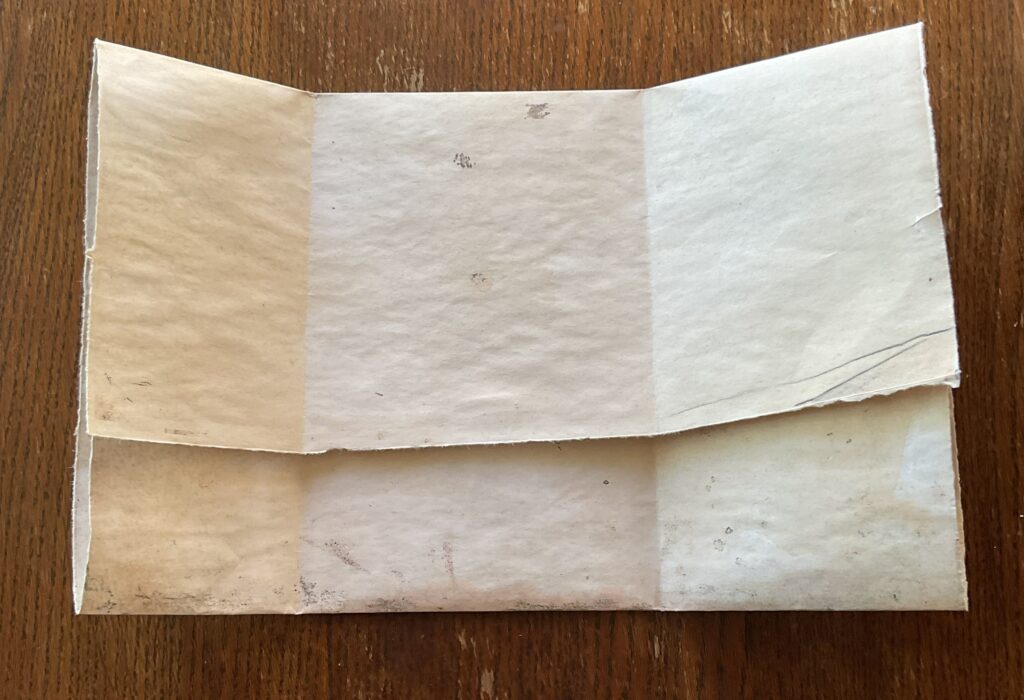
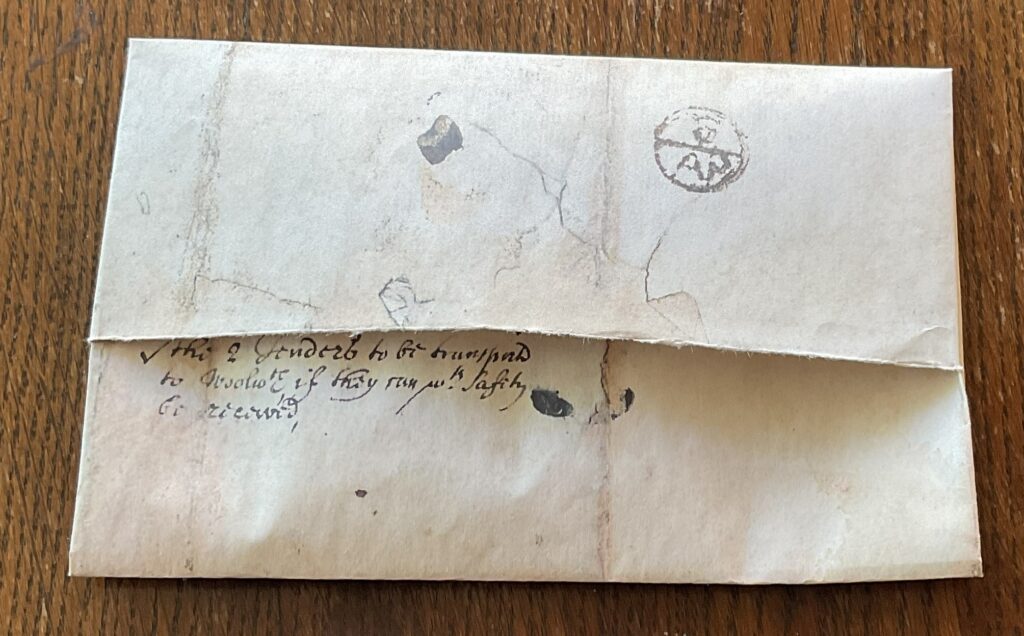
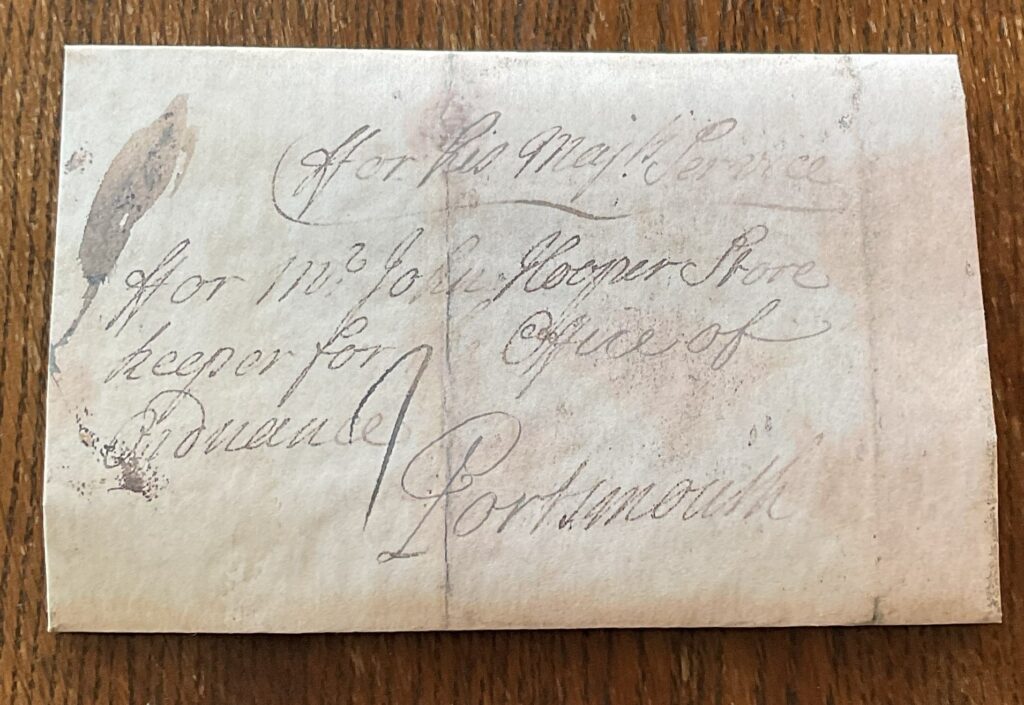
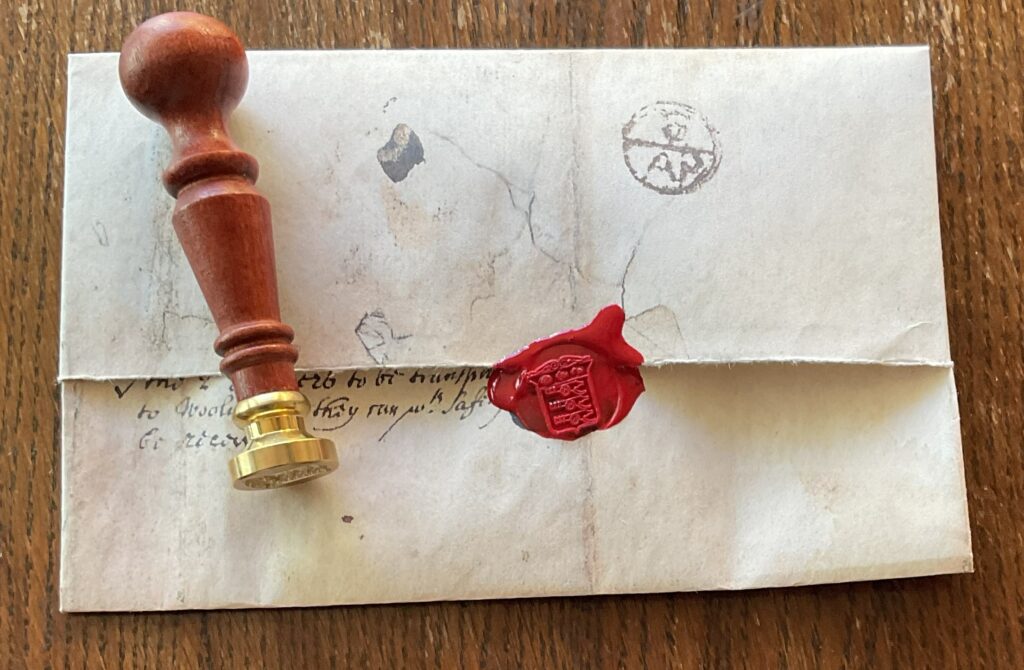
Examining the scans of the documents it is usually clear where the folds were made, and where the seal had been applied; grubby fingers and time have darkened the paper where the folds were made. Often a slight pink colour, and some tearing, shows us where the seal was. The actual wax seal would usually be removed and melted down for reuse.
In the above example you can make out the Bishop Mark (a little blurred, but it says 8/AP) which would have been stamped onto the letter to indicate the date of posting. You can also see some of the precis which would have been added after the original document had been opened by the clerks at The Dockyard.