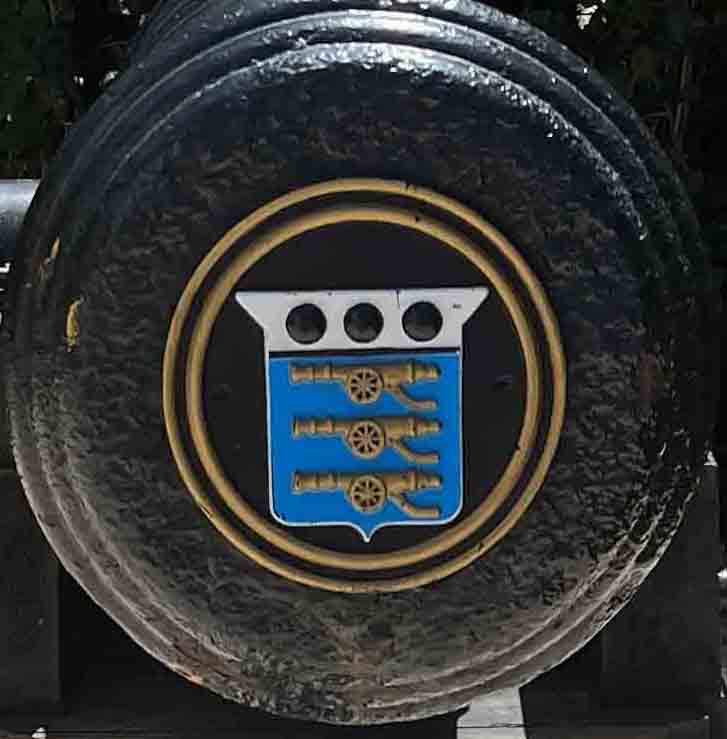
You will find download buttons for the scans and transcripts, or you can view them online by clicking the links where it says “View in new tab:”.
A letter from The Tower from W. Harrison, Junior is the beginning of an ongoing issue between him and the Portsmouth Office of the Ordnance. This letter of 15th January 1720 is insisting that receipts from all persons should be in duplicate with a copy being sent to The Tower. Is it a coincidence that this issue arises at the same time as Captain Baxter arrives on the scene? Could it be that he and W. Harrison Junior, also new on the scene, are already acquainted?
Until now all letters between The Tower and Mr. Hooper have been friendly and business like; something has changed.
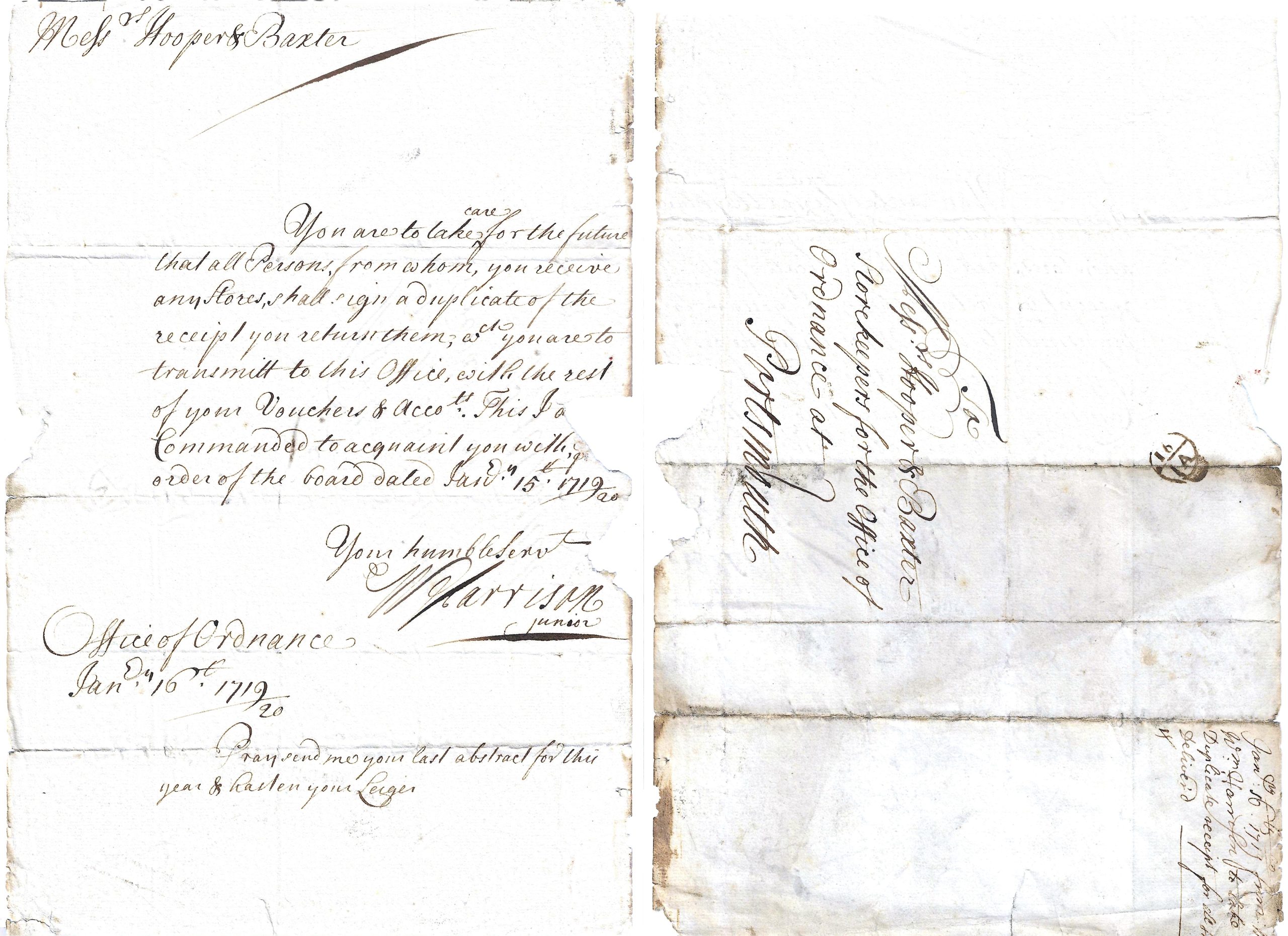
View in new tab:
A long letter on 2nd January 1720 dictates the method of dealing with old gun carriages to make best use of any useable parts. It appears designed to reduce wastage as the smiths avoid using second hand iron unless it suits their purpose.

View in new tab:
An indenture on 20th January 1720 hides an important clue to the symbol used to indicate a hundredweight. Faded, and just above the section titled ‘Tarred Rope’ we see ‘5 hundred weight’, so the circle with a cross through it must indicate ‘100’.
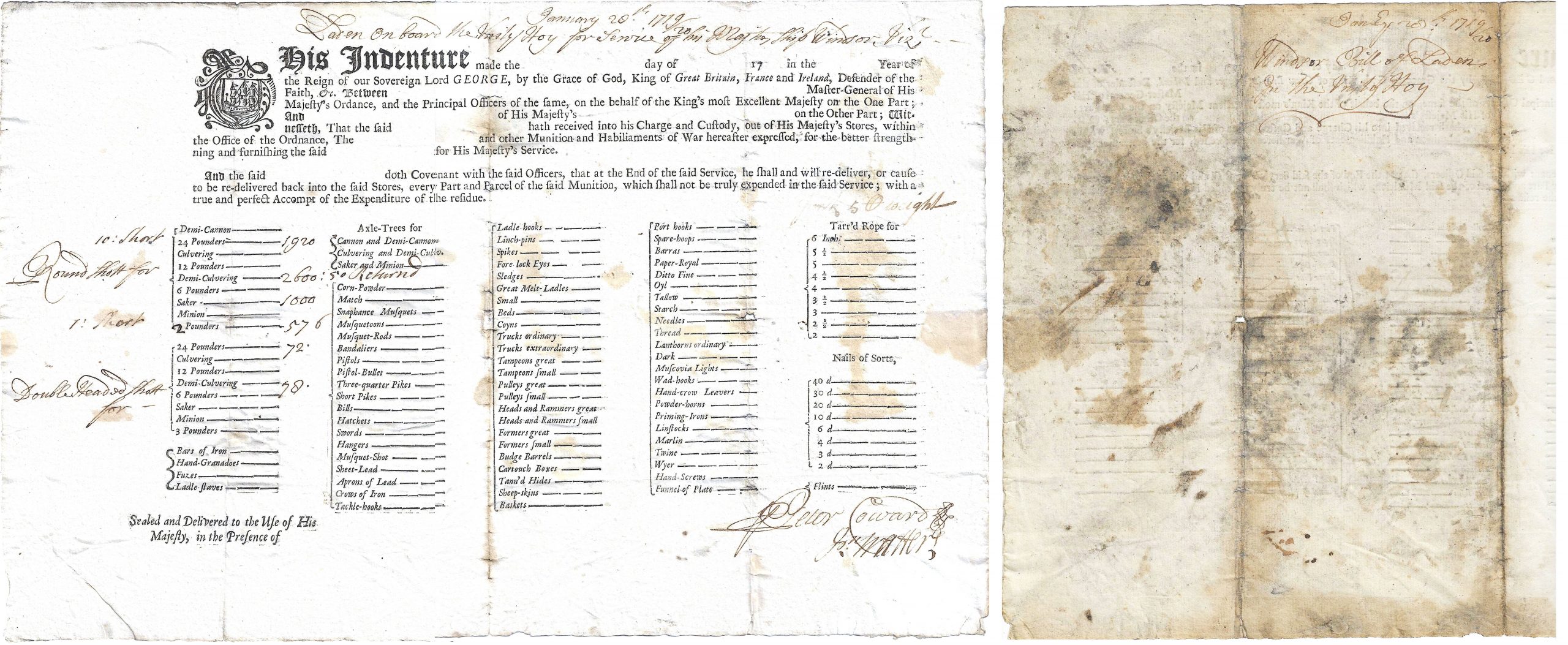
View in new tab:
23rd January 1720 a letter from The Board enquires whether a mortar and some powder taken as a prize by Admiral Byng are to be his own, or to be taken into His Majesty’s stores. They also ask Mr. Hooper to supply Capt. Pattison with coal for the use of the barracks.
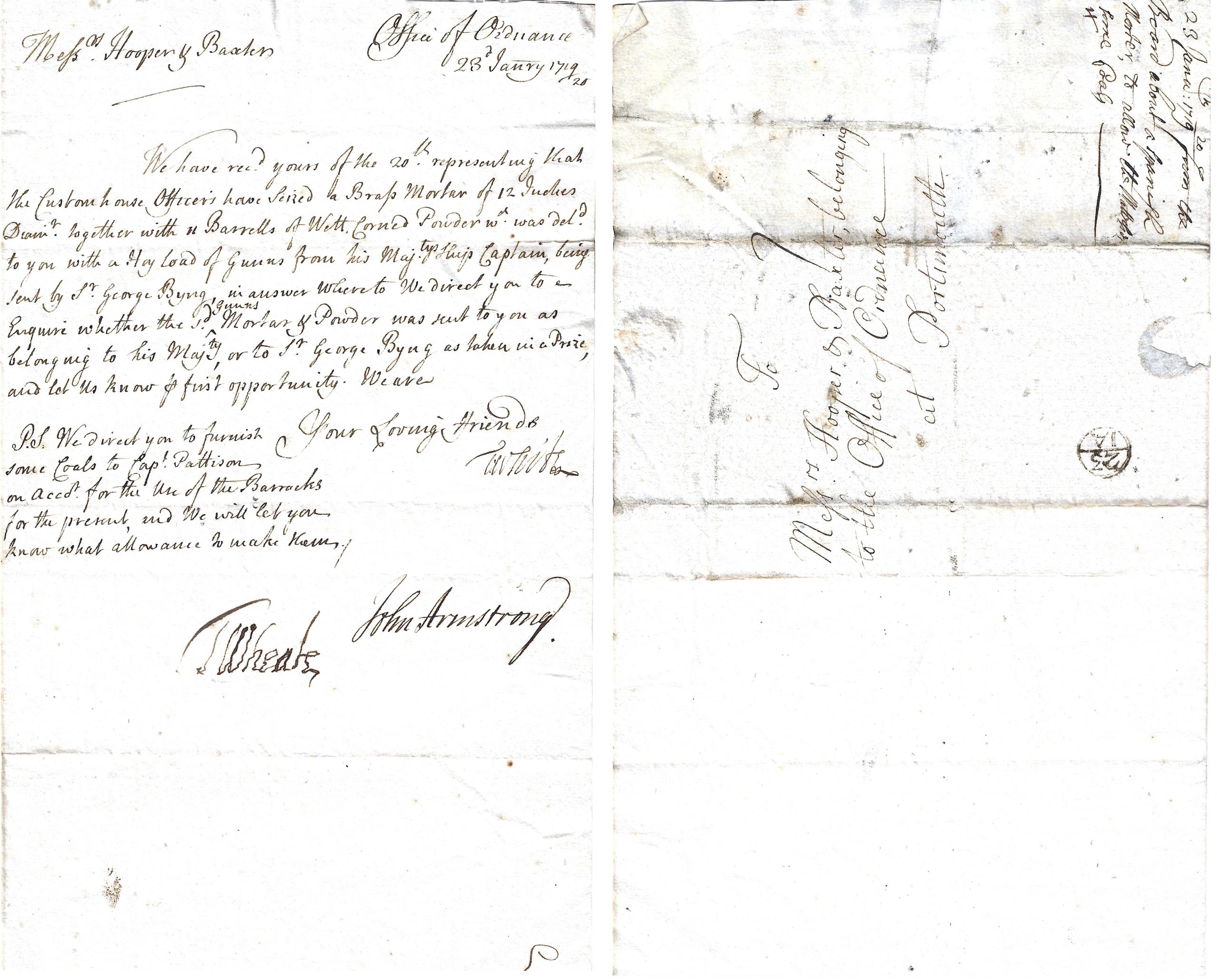
View in new tab:
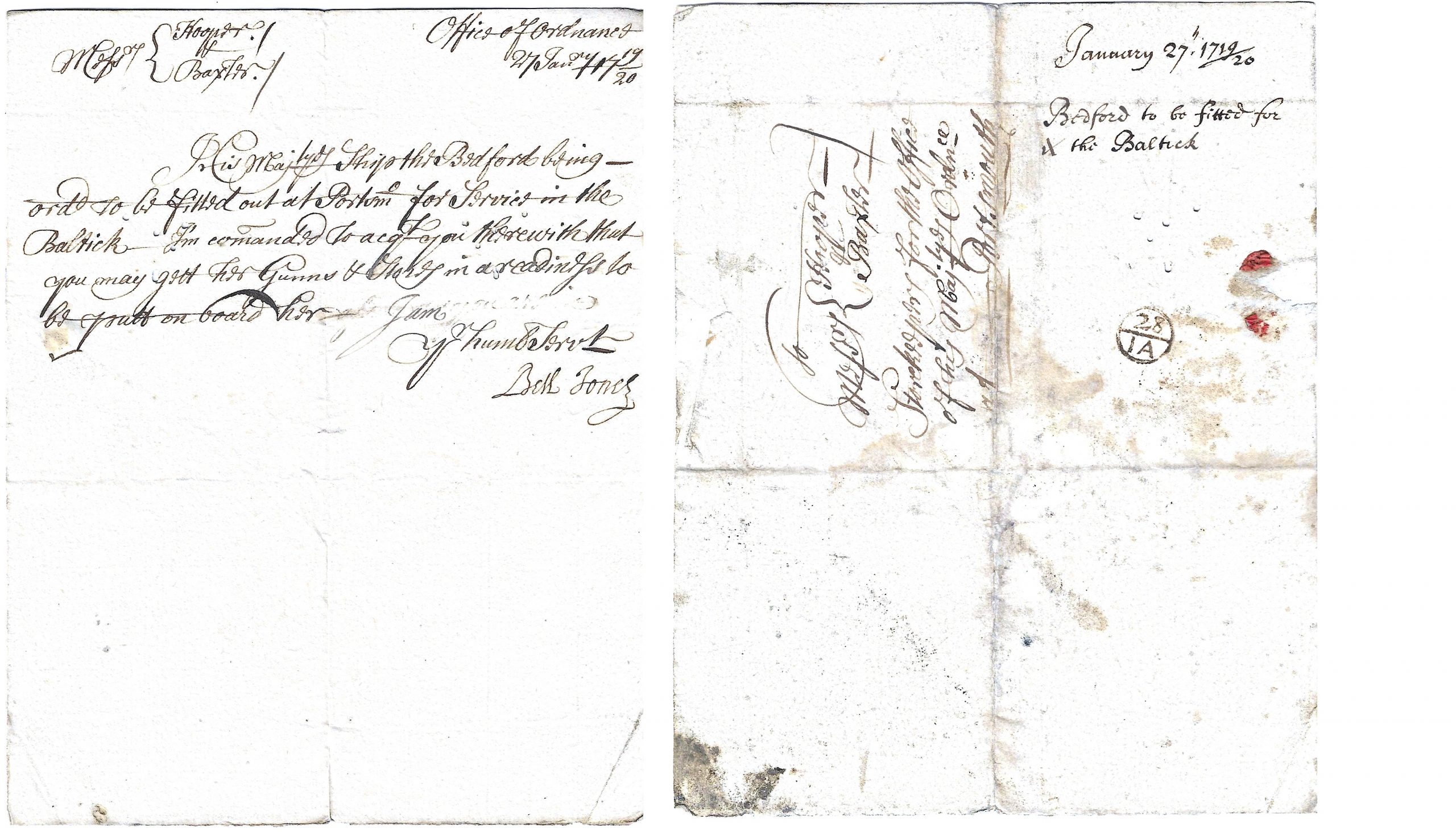
On 27th January 1720 a short note from Bell Jones advising that the dockyard should prepare the guns and gunners’ stores for HMS Bedford (1698) as she is on her way to the Baltic.
View in new tab:
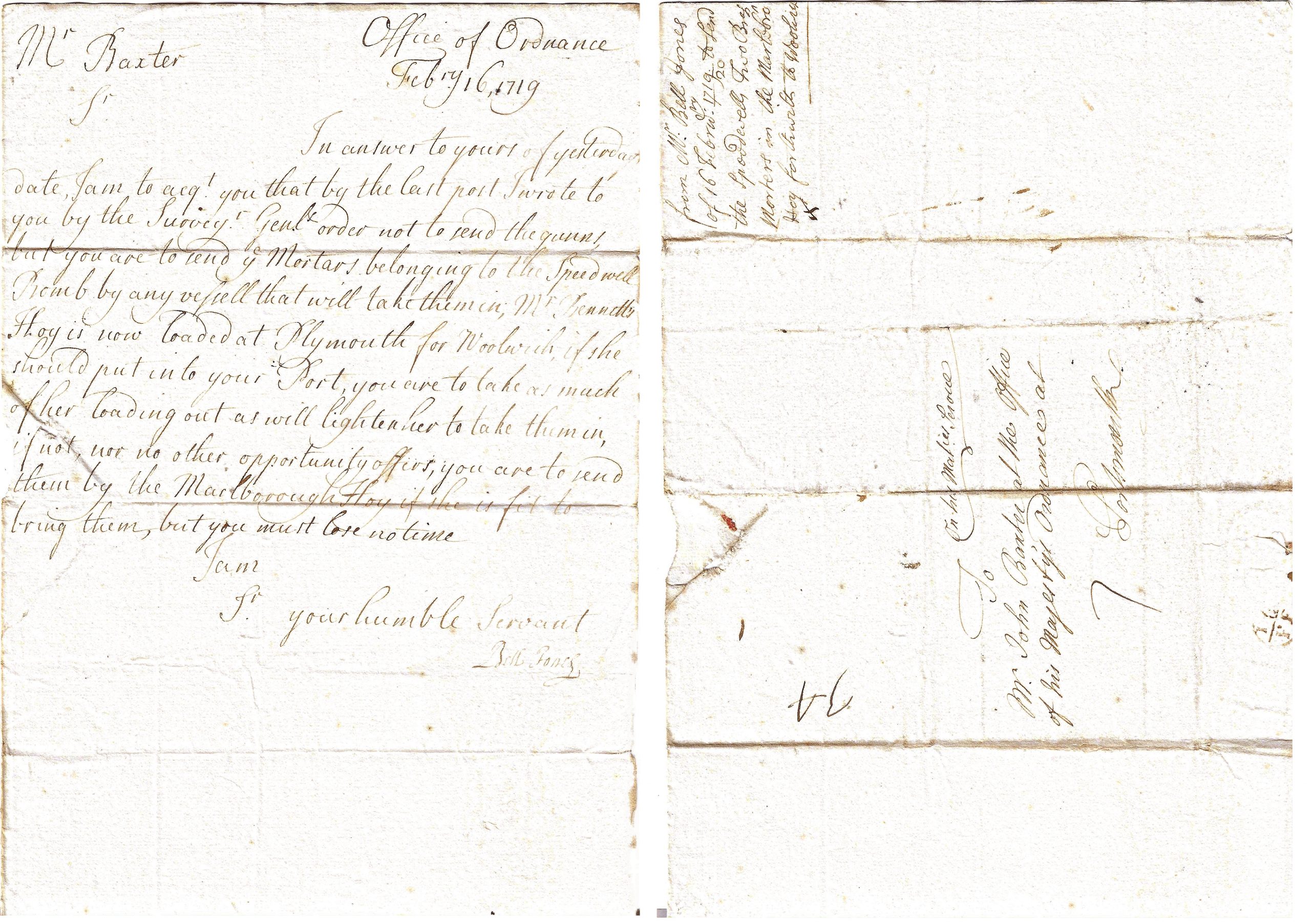
Bell Jones wrote to Captain Baxter on 16th February 1720 asking that he send two brass mortars belonging to HMS Speedwell (1690). It would seem that there was some hurry as he says “to lose no time”. Another letter on 7th March to Captain Baxter, refers to stores from HMS Speedwell (1690), this time from Commissary Joseph Burton who finishes with a personal note.
View in new tab:
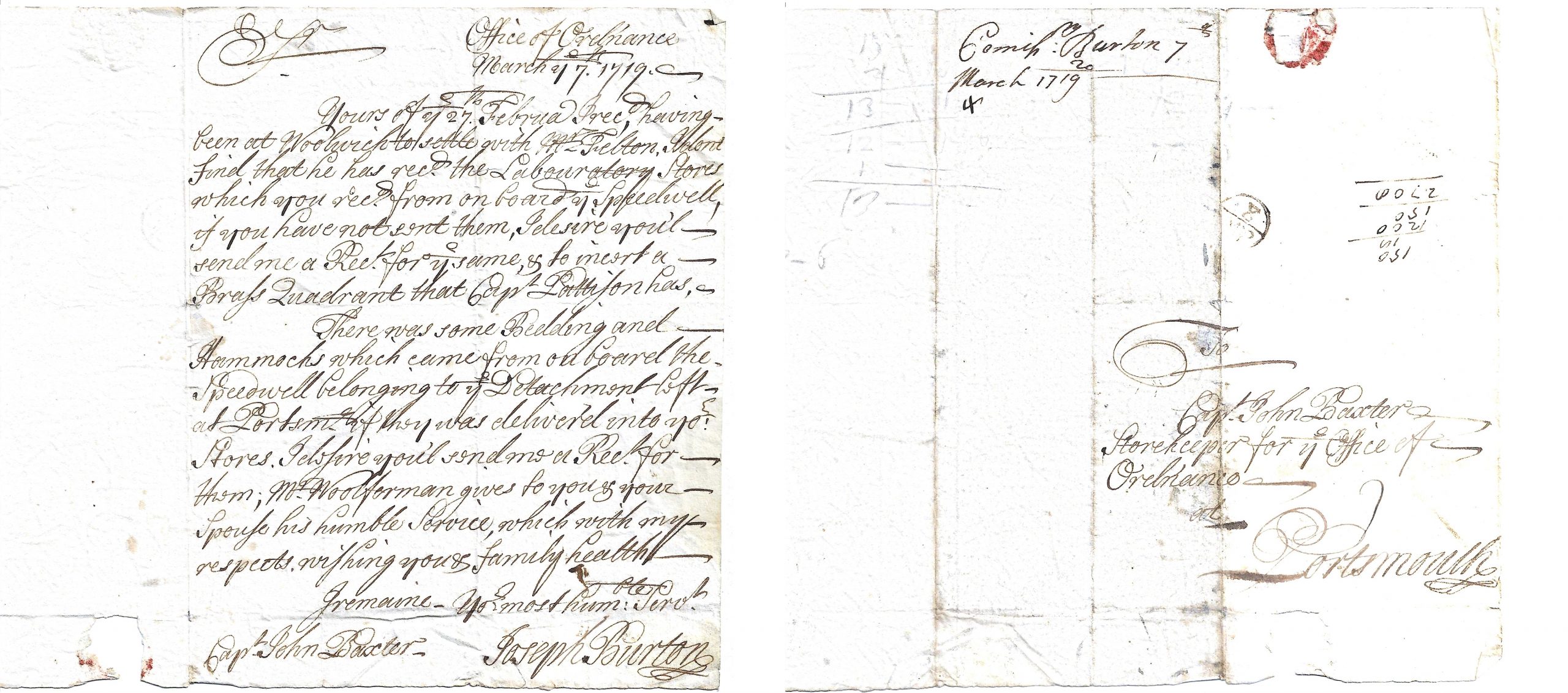
On 7th March 1720 Joseph Burton enquires about some laboratory stores which were delivered by the Speedwell hoy.
View in new tab:
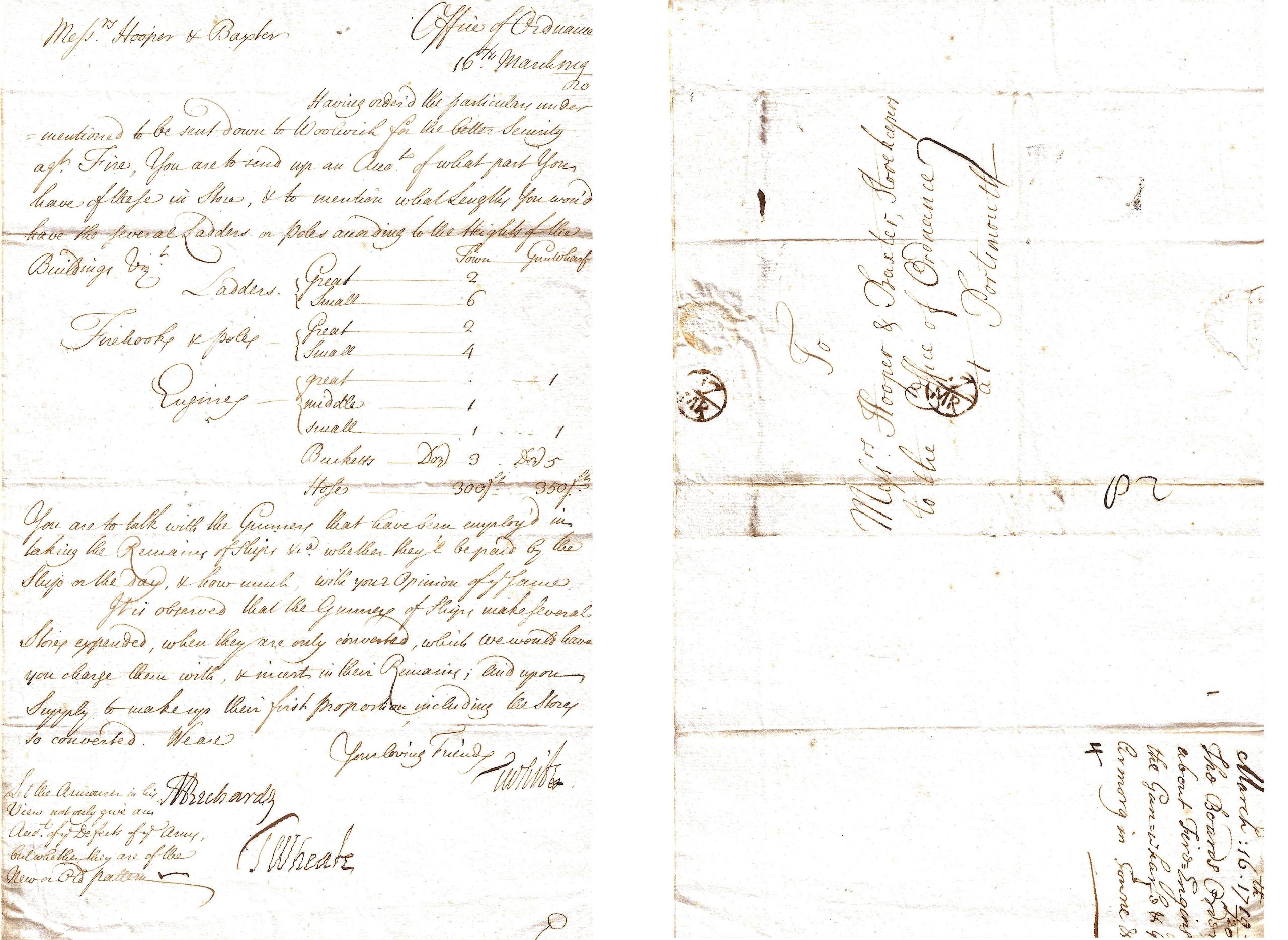
A letter of 16th March 1720 discusses firefighting equipment including fire engines, which were in their infancy at the time. The letter also goes on the discuss the tricks used by gunners when declaring their remaining stores.
View in new tab:
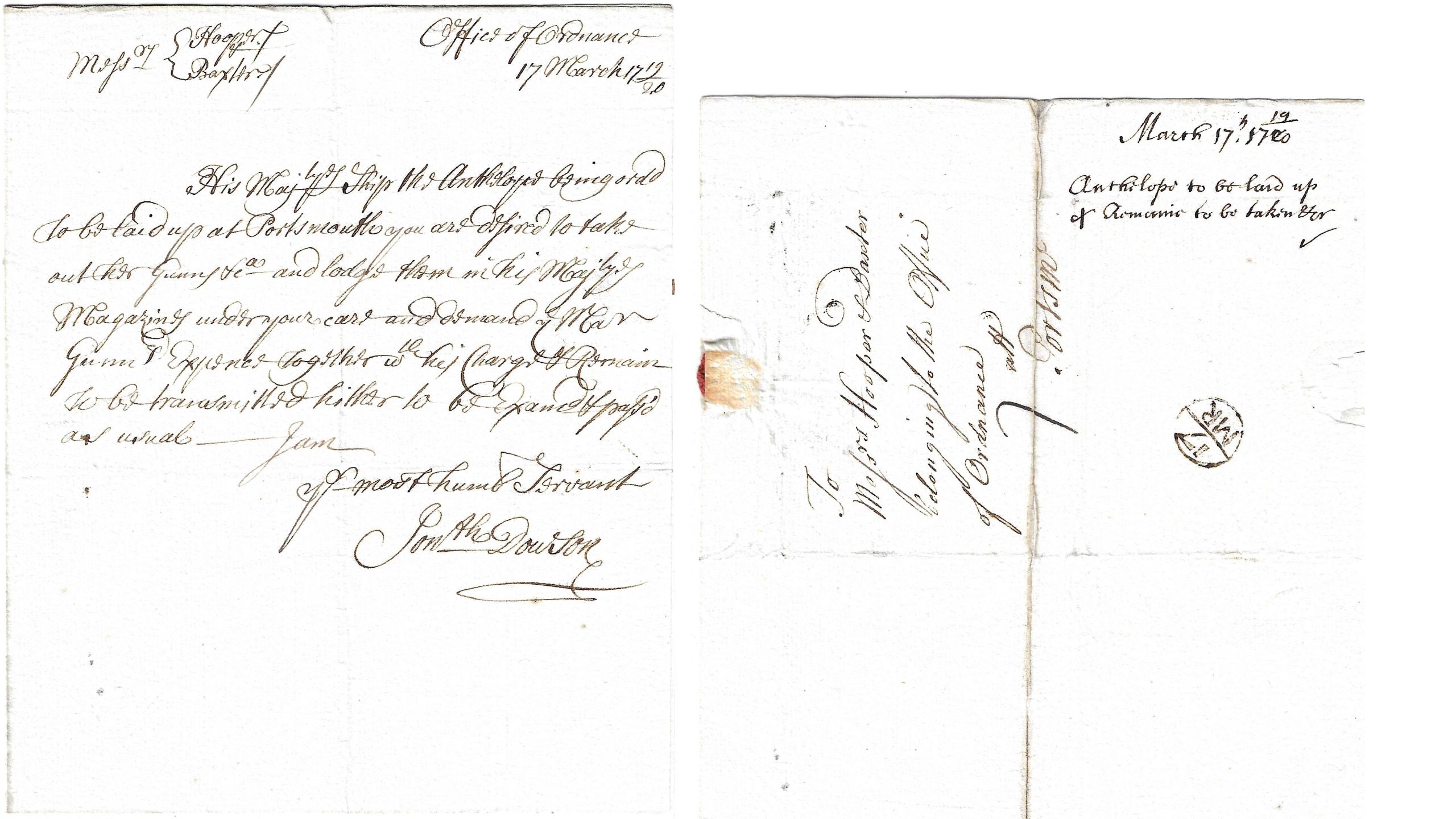
On 17th March 1720 HMS Antelope is to be laid up. This means that she will have all guns and gunner’s stores removed and taken in store. The ship will then be placed ‘in ordinary’: mothballed until required again for service.
View in new tab:
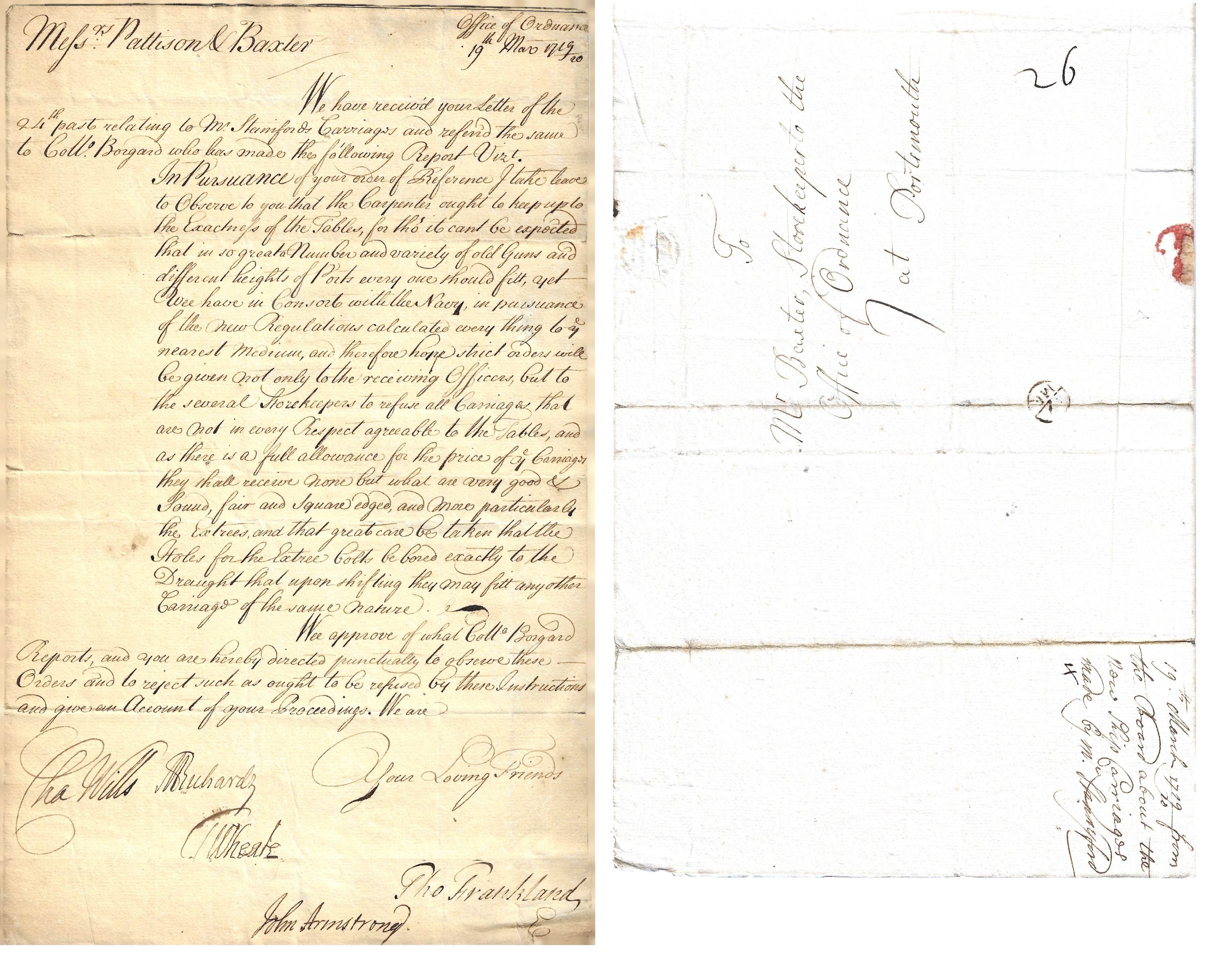
An interesting letter on 19th March 1720 discusses the standardisation of the build of gun carriages in order that parts may be interchangeable. A move toward mass production.
View in new tab:
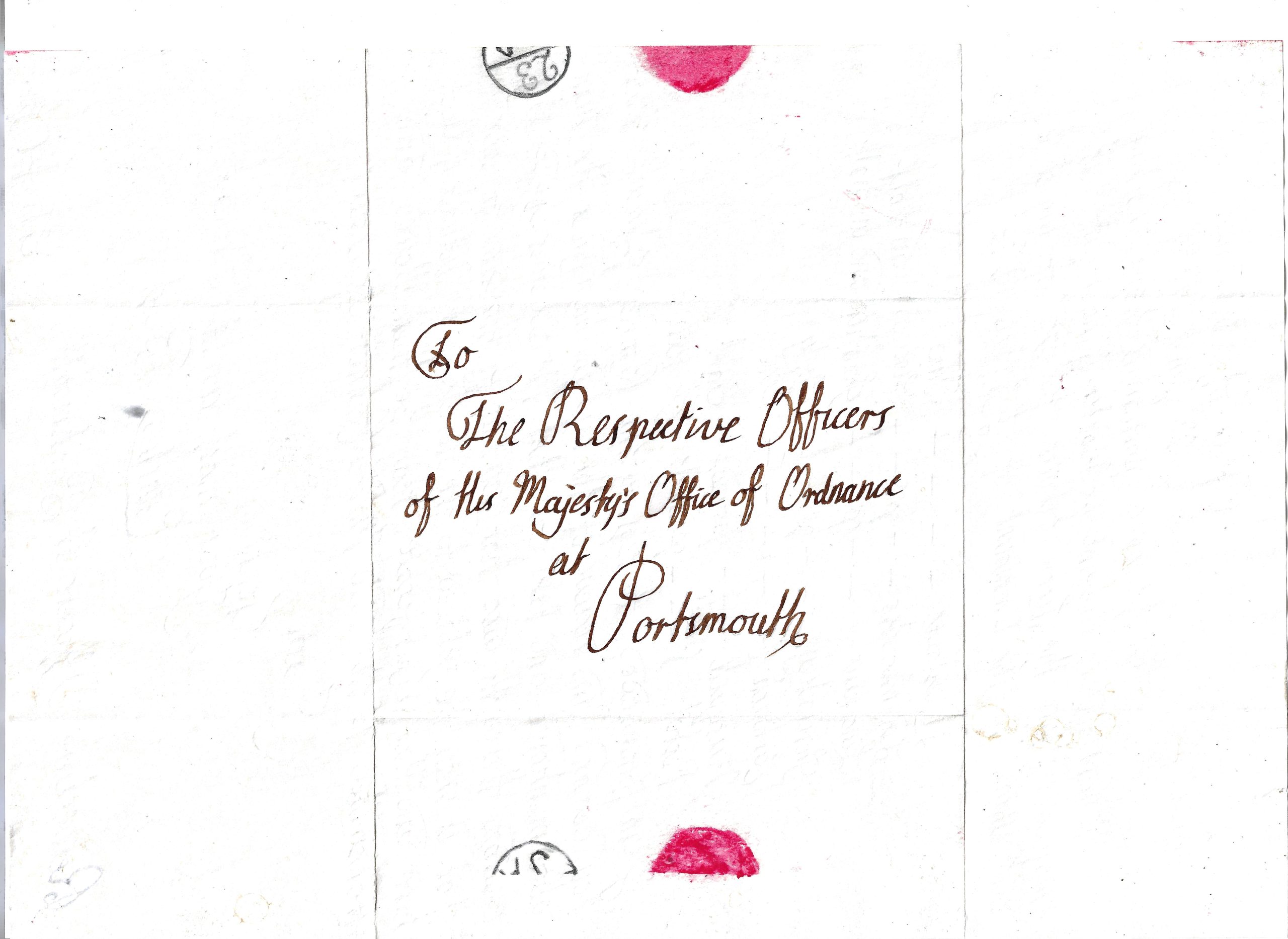
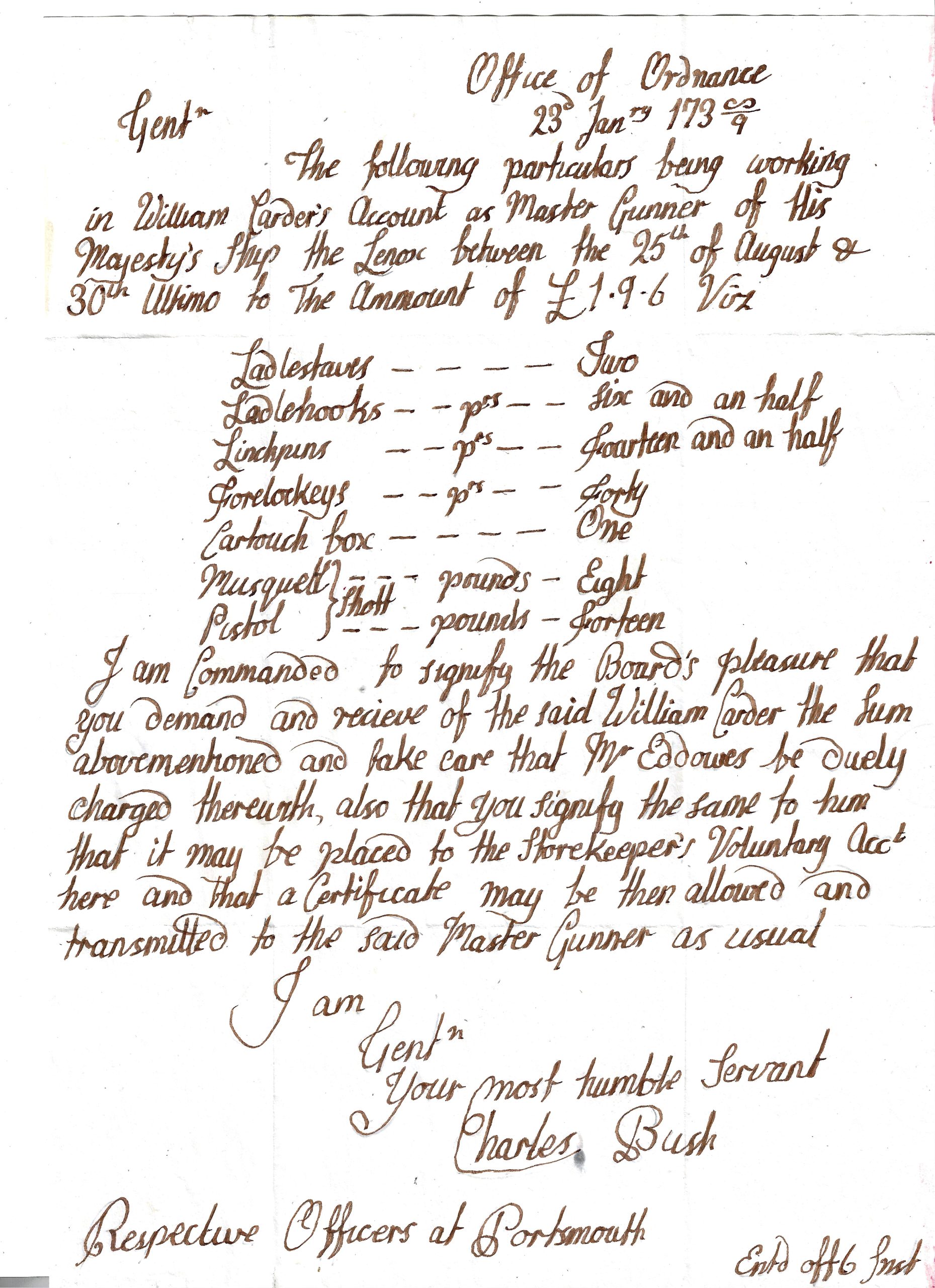
This document was found on Facebook, obviously one of the missing documents, it discusses gunners’ stores for the Master Gunner of HMS Lenox.
I cannot share a true scan of the document as I do not have it, but I can show you my reconstruction of it. Clearly I need some practice and to make myself some quill pens, but I think it conveys the spirit of the original. It was an interesting project as to do it as authentically as possible I also had to replicate the folding of the original, and in doing so was able to replicate the original Bishop Mark (date stamp) which was stamped across the edges of the fold after the seal had been applied, so therefore appears as in two parts, visible on the address side of the paper.
This document contains a word with which I was unfamiliar: ‘Ultimo’ meaning: previous month. The opposite would be ‘Proximo’: next month. Thanks to Philip Eley for enlightening me.
View in new tab:
This is another document that I have recreated from a photograph and so is just my ‘best effort’ at copying the handwriting of Charles Bush of The Tower. It would seem that there was a shortage of copper hoops and rivets, expensive items, at the Greenwich Magazine. Most barrels were made using steel hoops, but copper was used in favour of steel when making powder barrels as it will not create a spark when struck.

View in new tab:
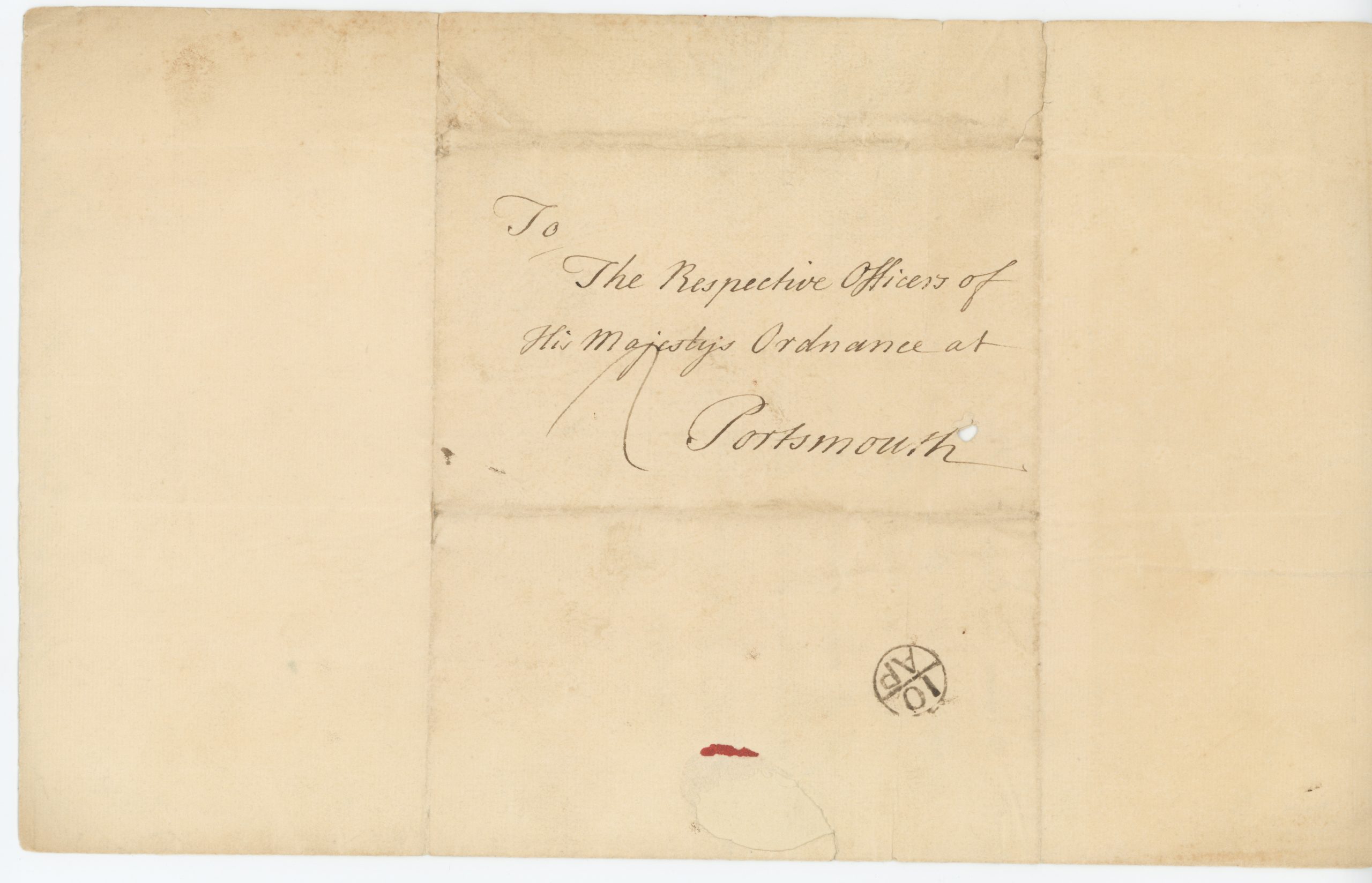
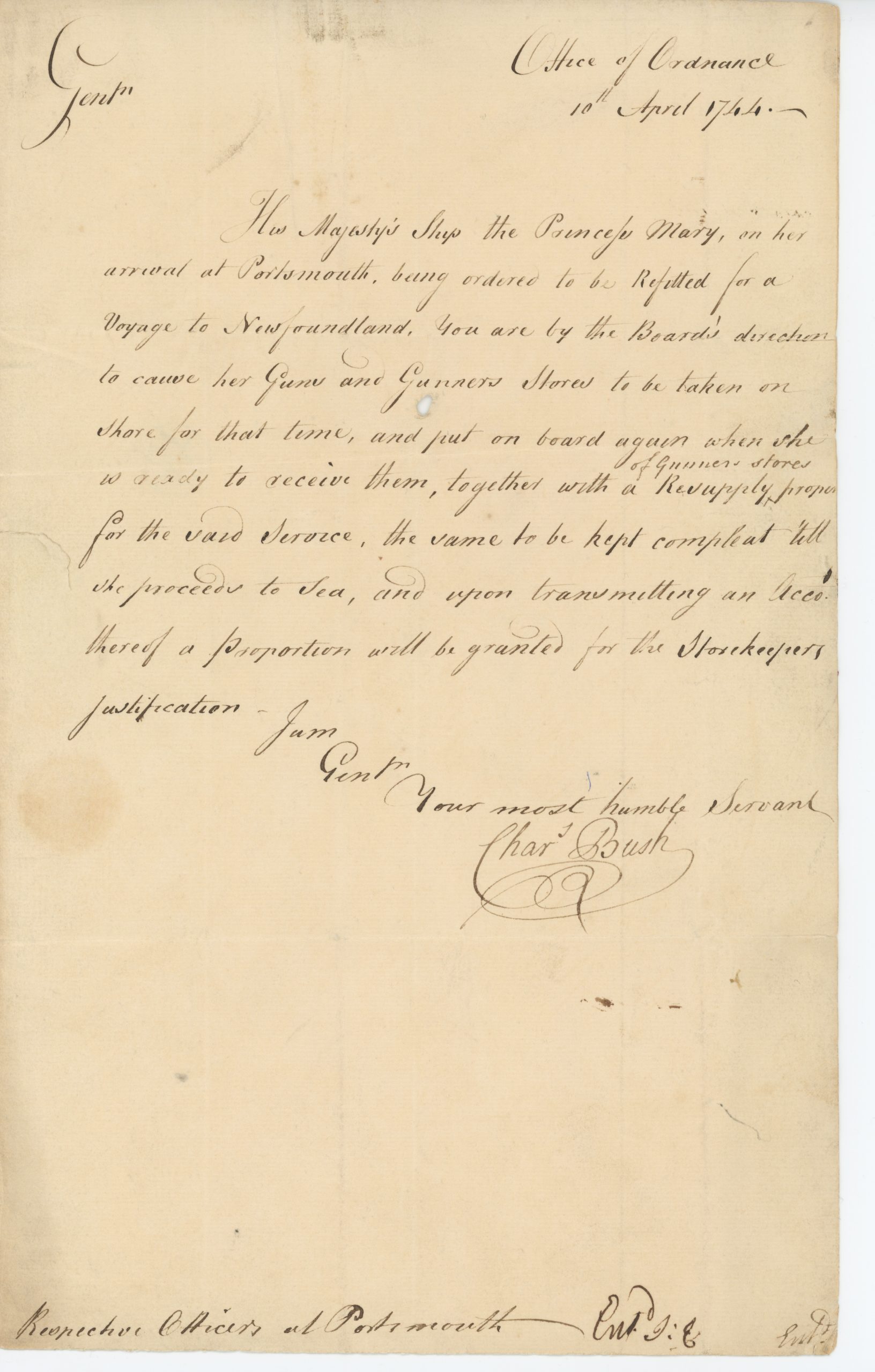
HMS Mary (1704) was renamed Princess Mary in 1742 after a rebuild at Portsmouth. Here we see her being refitted for a voyage to Newfoundland.
View in new tab:
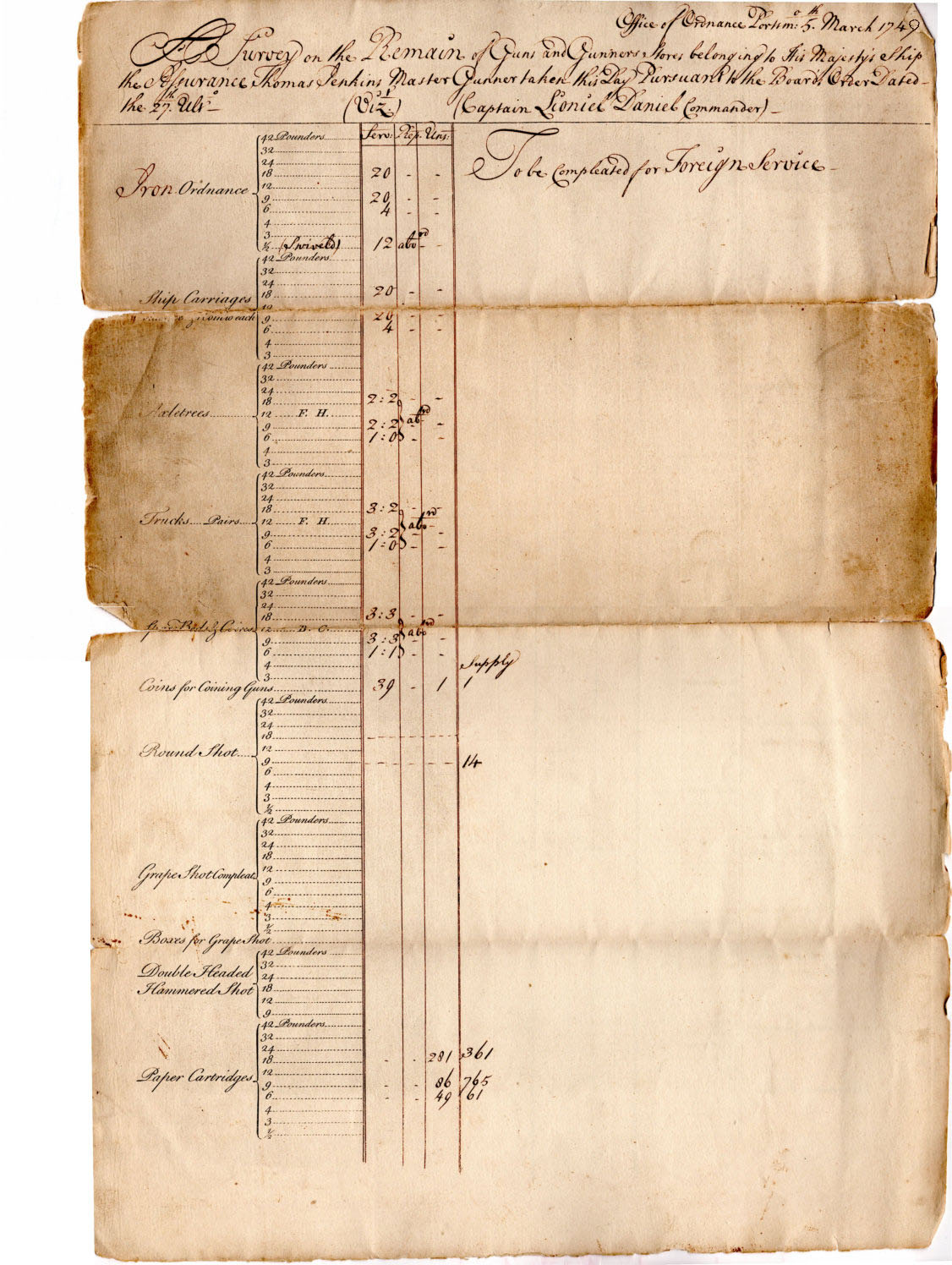
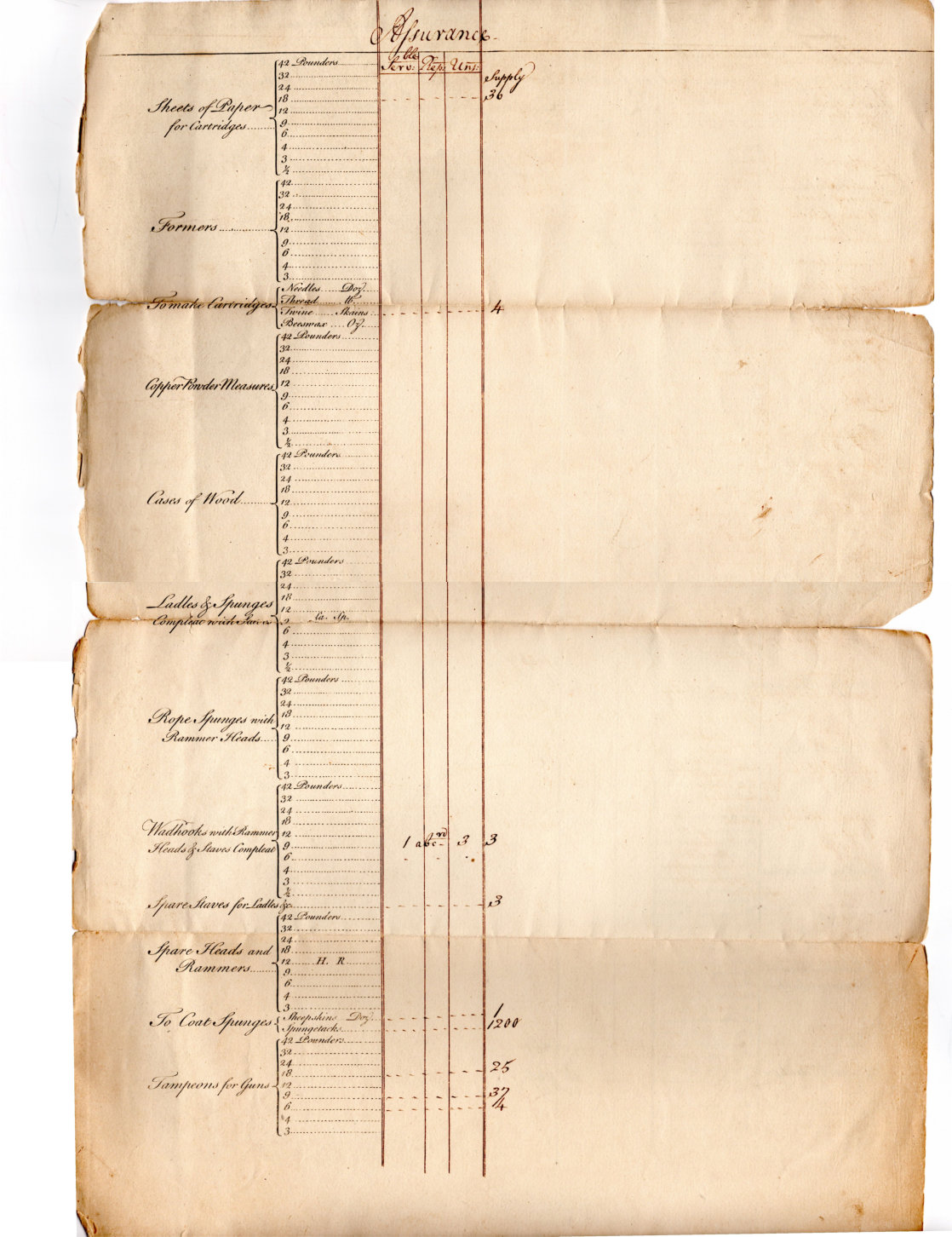
There would appear to be a large number of documents missing from the collection as, with the exception of the previous document, the next dates from 5th March 1749, almost 30 years later, and subsequent documents are no longer closely related. Mr. Hooper, Captain Baxter and the other characters we have become acquainted with appear no longer. Richard Veale and Robert Eddows are now the storekeepers. We start this new era with an indent from the gunner of HMS Assurance (1702) listing all the stores being returned to the Dockyard. Followed by similar for HMS Chesterfield (1745)and HMS Ludlow Castle (1744).
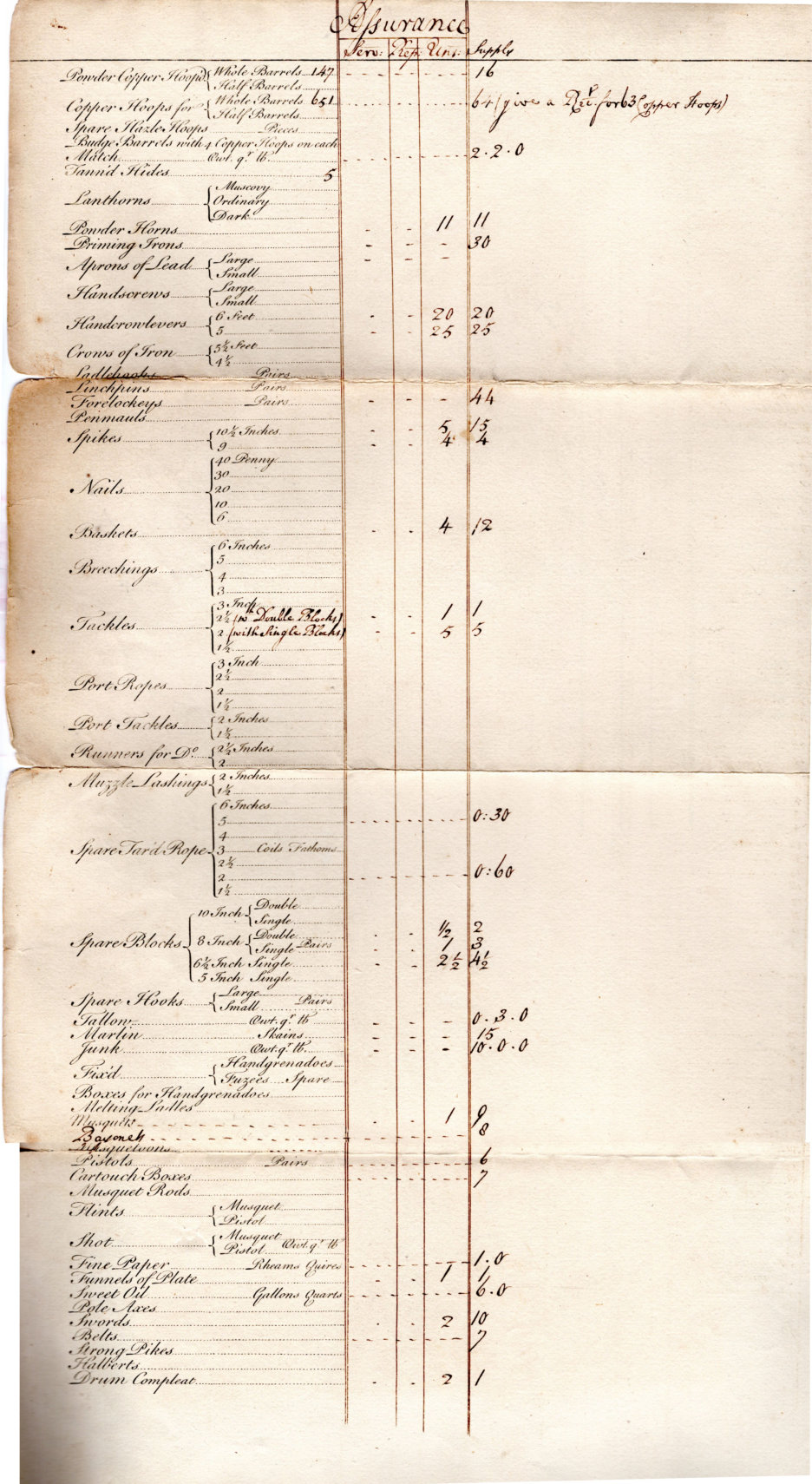
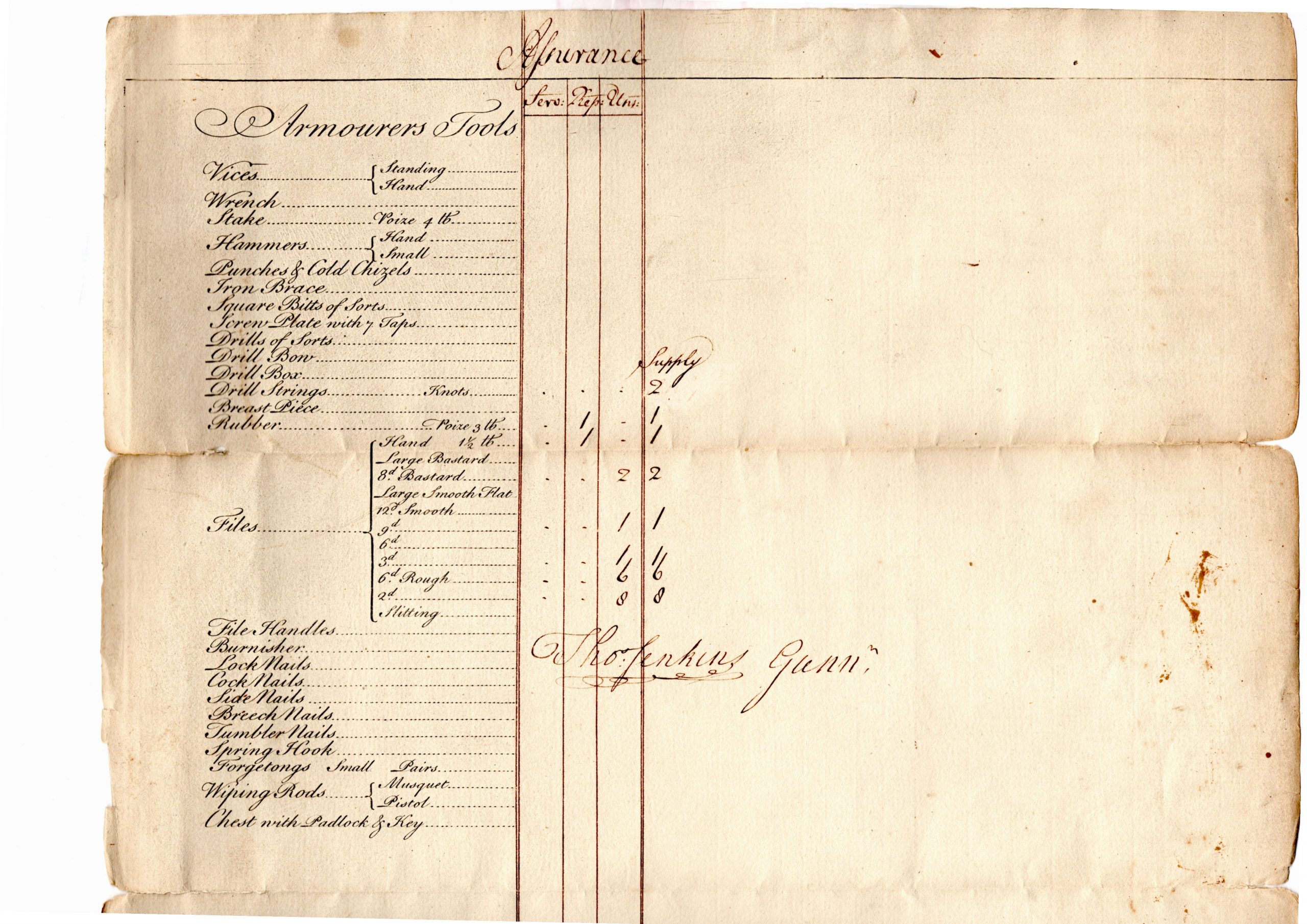
View in new tab: – Scan 1 Scan 2 Scan 3 Scan 4 / Transcript
In June of 1749 a list of ordnance being returned by Chesterfield & Ludlow Castle gives us a much more readable list of items than we are used to. It confirms the symbol used to denote a hundredweight, and that the abbreviation ‘lb’ is now in use.
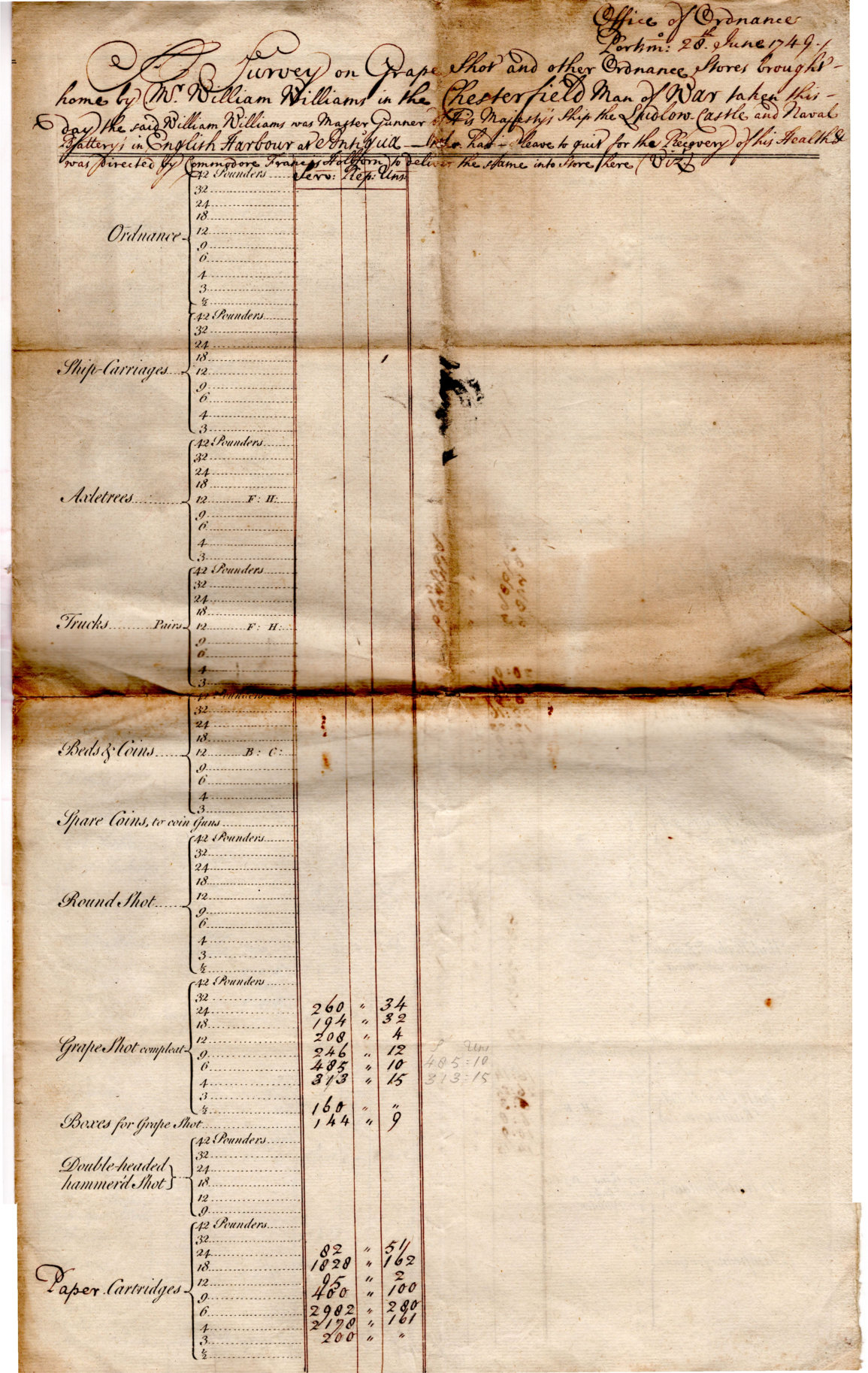
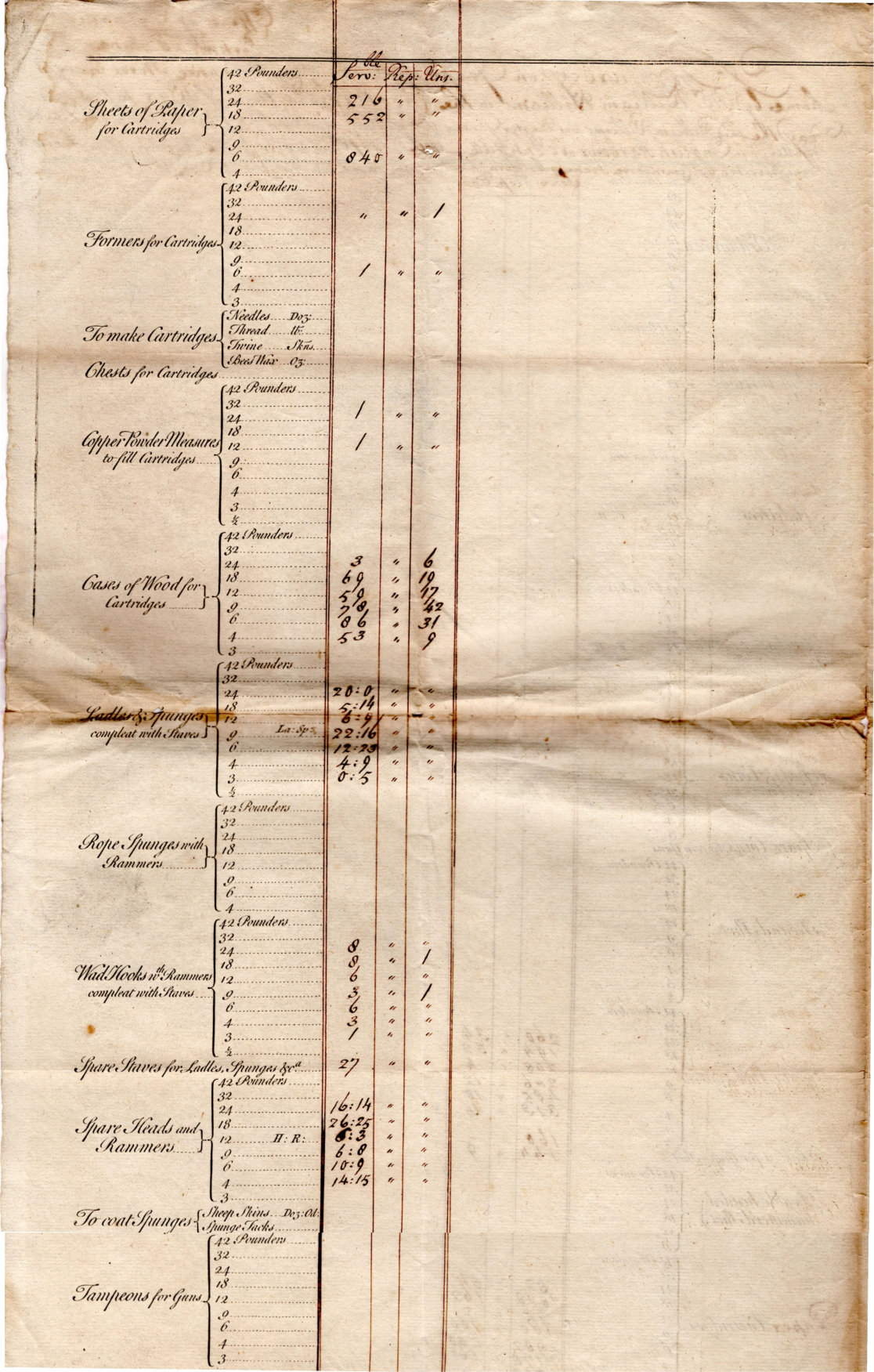
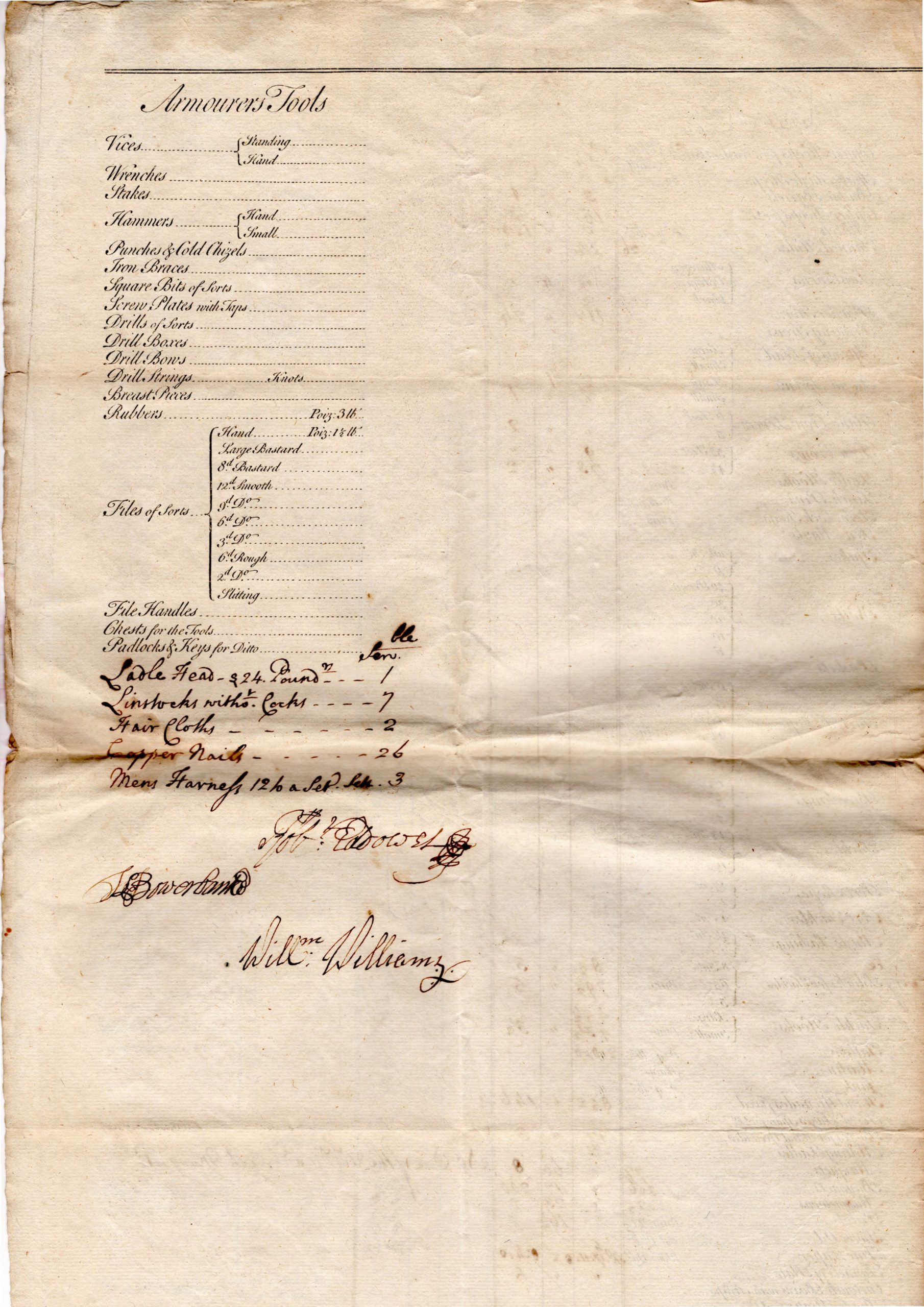
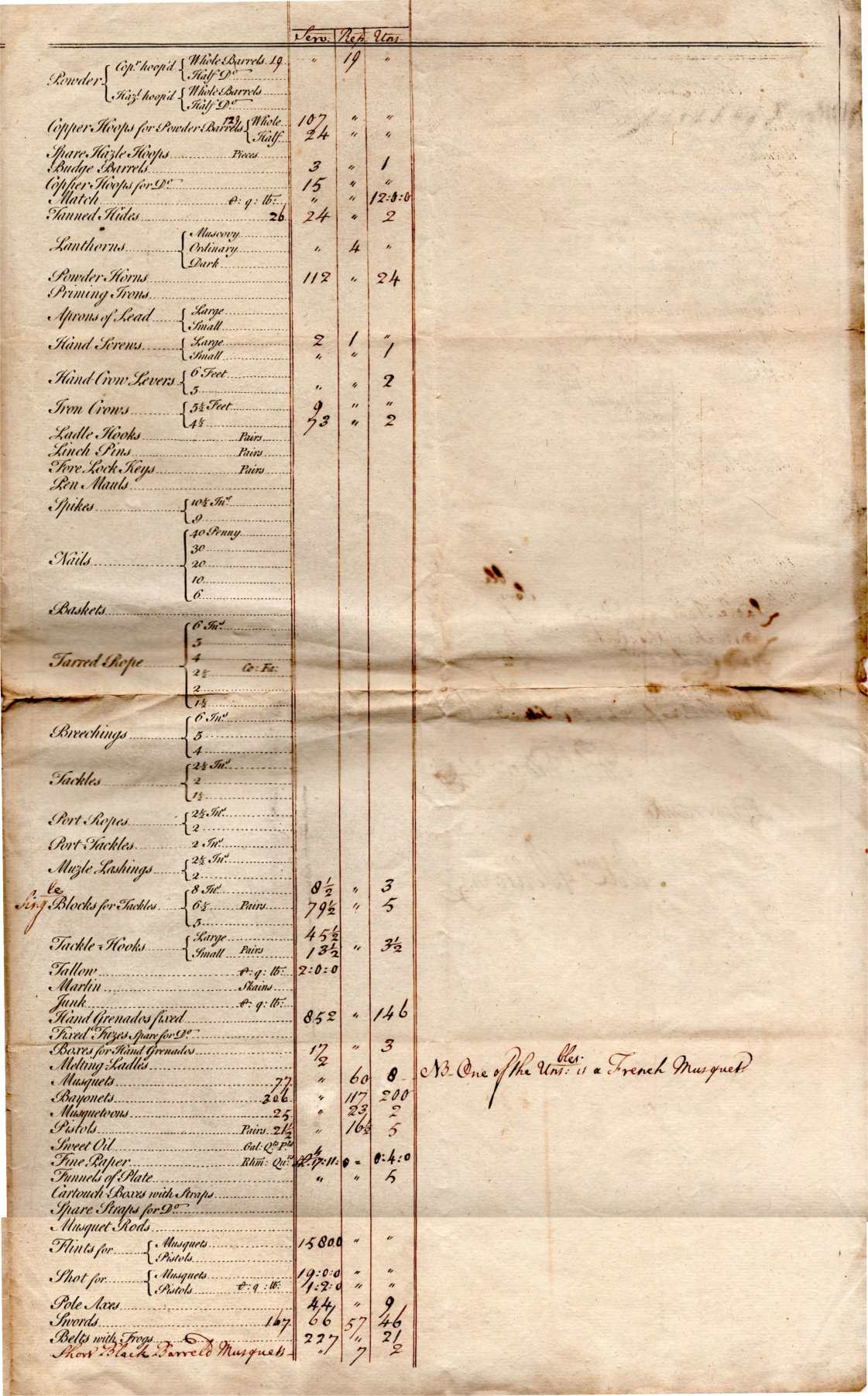
View in new tab:
This letter from Henry Osborn is unusual as Henry Osborn was, at the time, port Admiral at Portsmouth. As such, he should not have been issuing instructions to the Storekeeper of the Ordnance, instead he should have made his requests via the Ordnance Board at The Tower. However, I note that he ‘recommends’ and not ‘desires’, so maybe that was his get out.
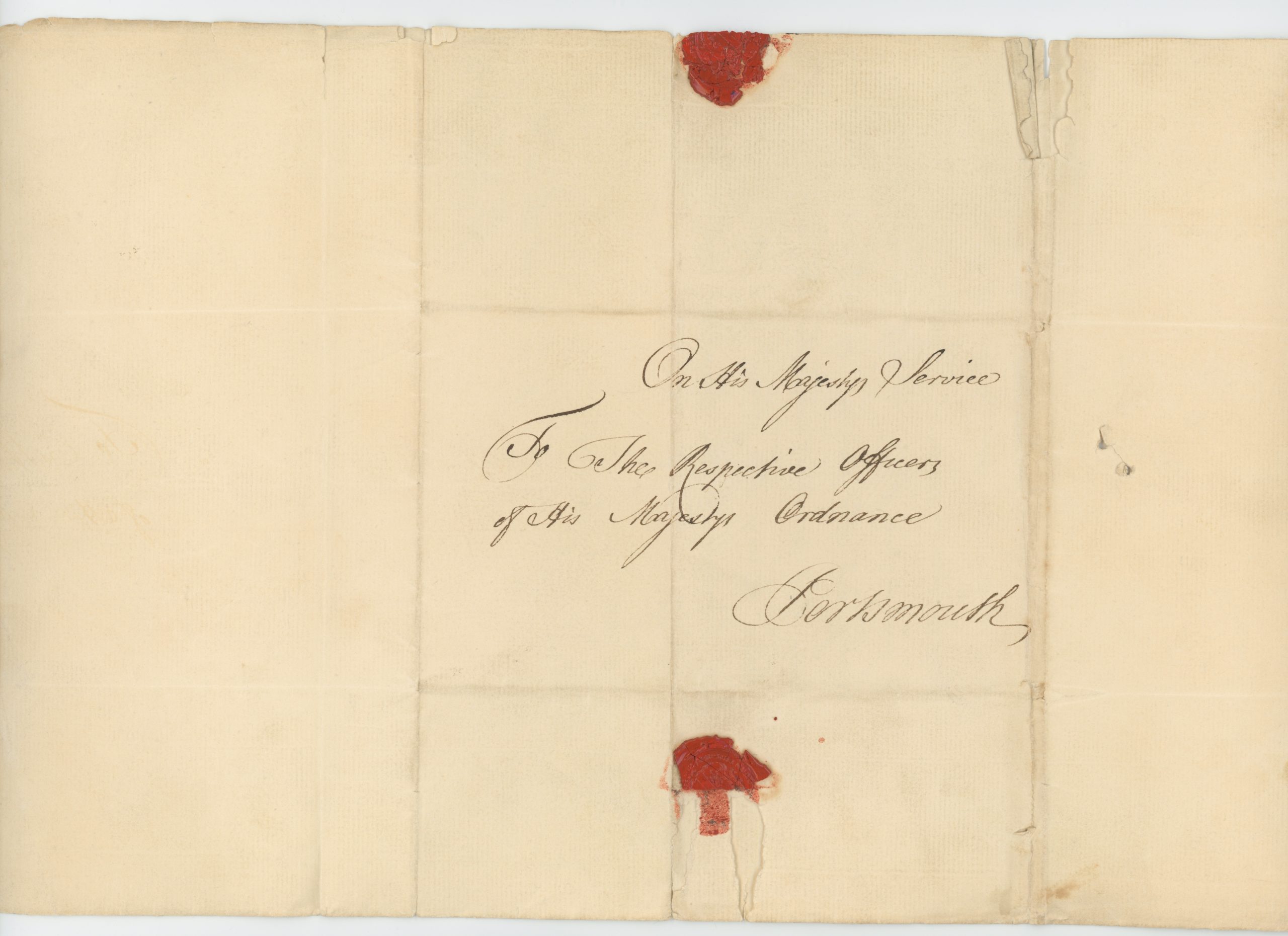
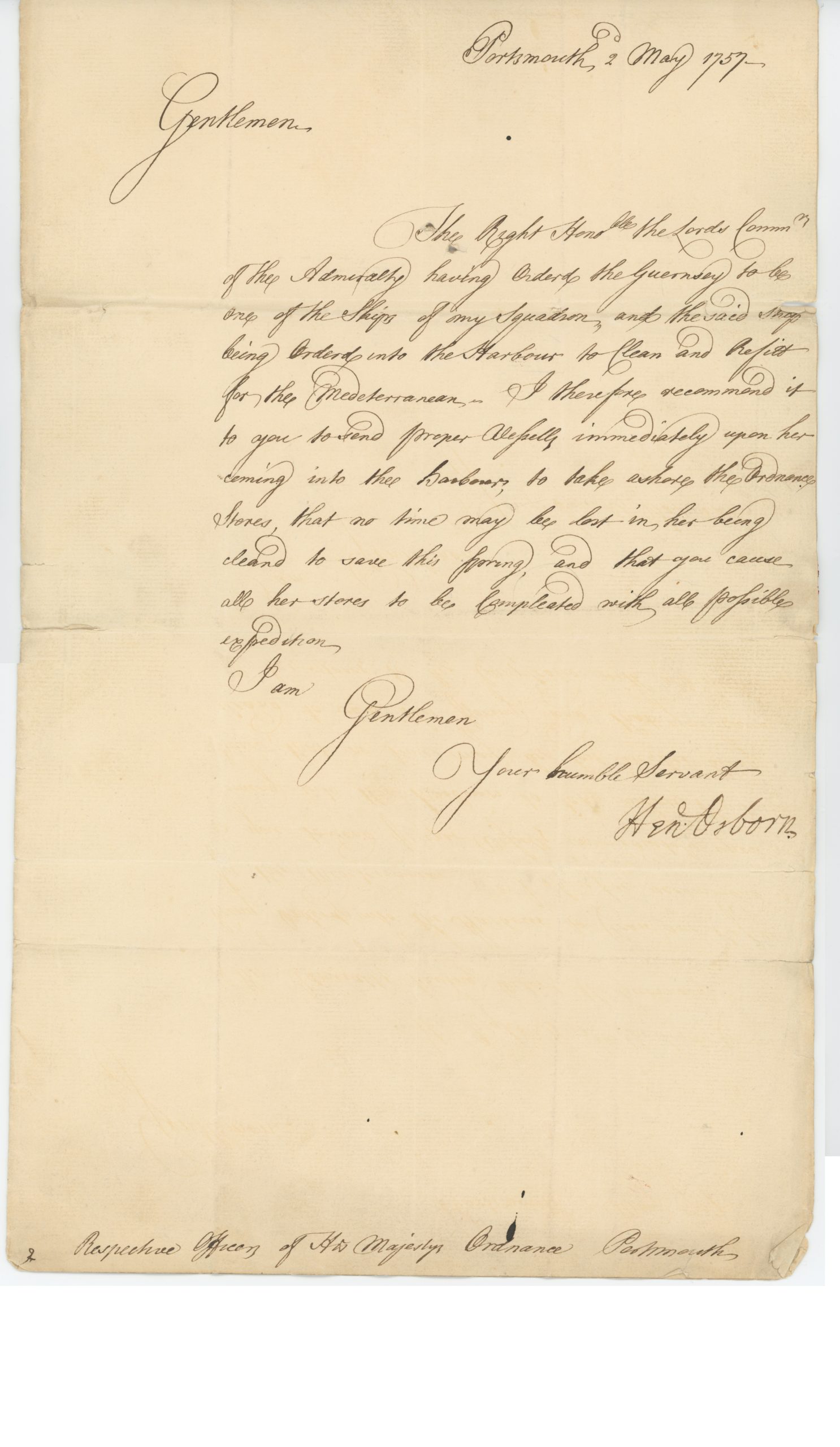
View in new tab:
On 24th August 1758 a list of stores to be transported by land carriage to Portsmouth intended for Fort Loius on the river Senegal in Africa.
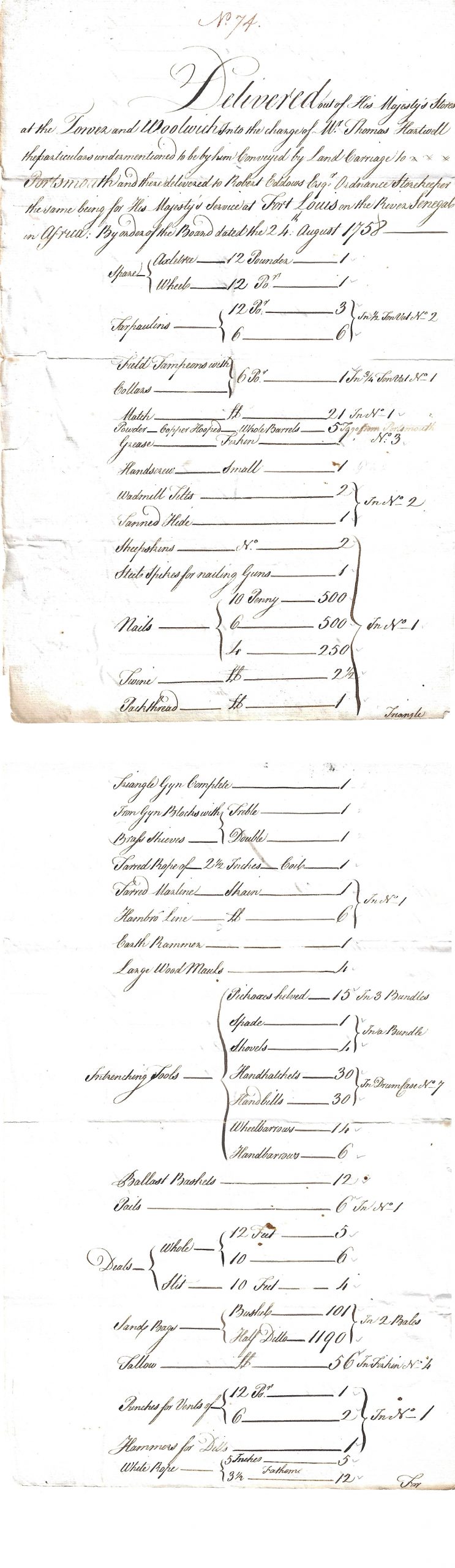
View in new tab:
7th February 1765 a letter enquires what ordnance stores were supplied to a hired tender, Eagle, between march 1759 and January 1762. One wonders if such a request could be answered today given that records are rarely kept today for more than 2 years.
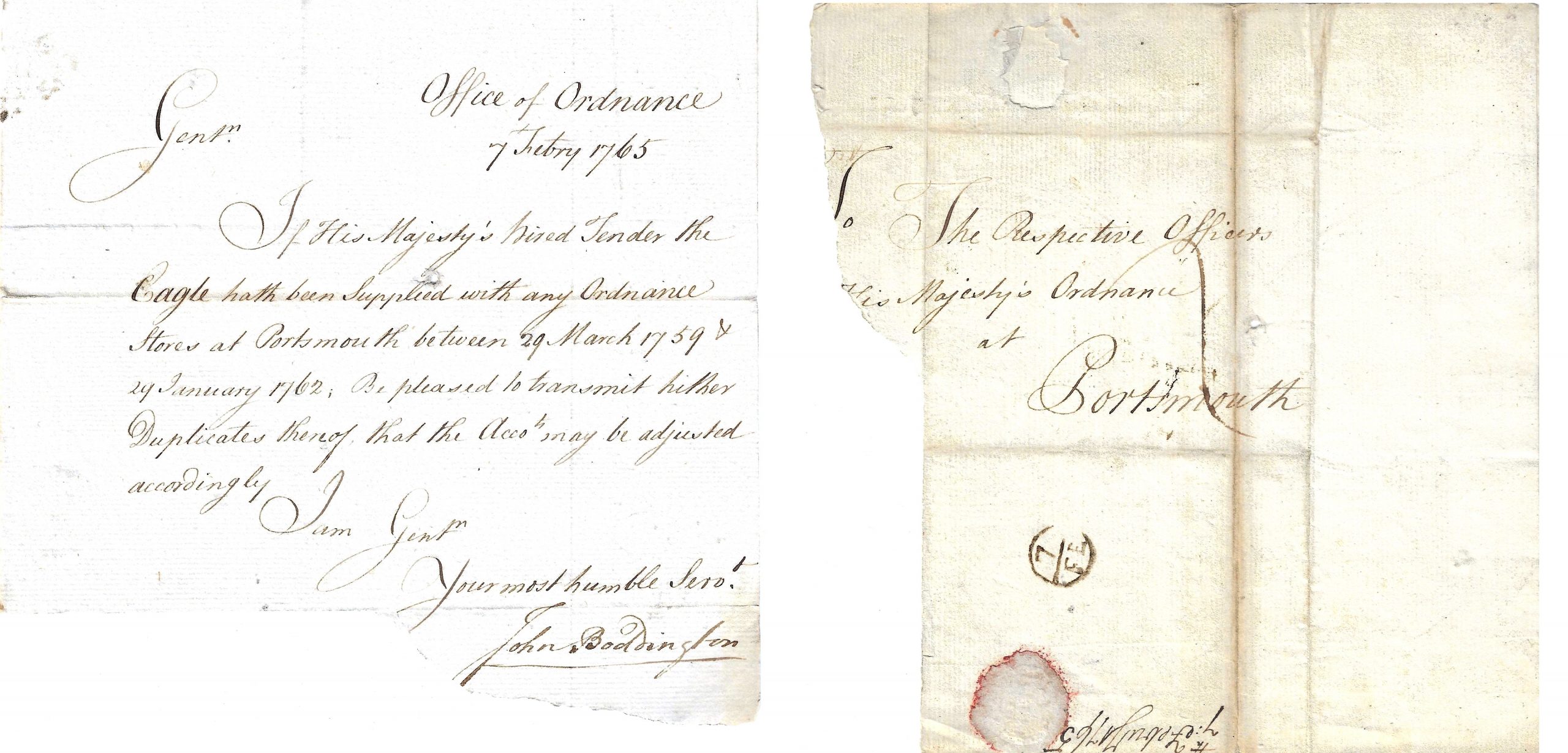
View in new tab:
On 22nd October 1766 John Boddington writes to Richard Veale regarding an imprest of £200 and advising that minor requests need not be passed by The Board. Temptingly ¼ of the original seal survives on this letter.
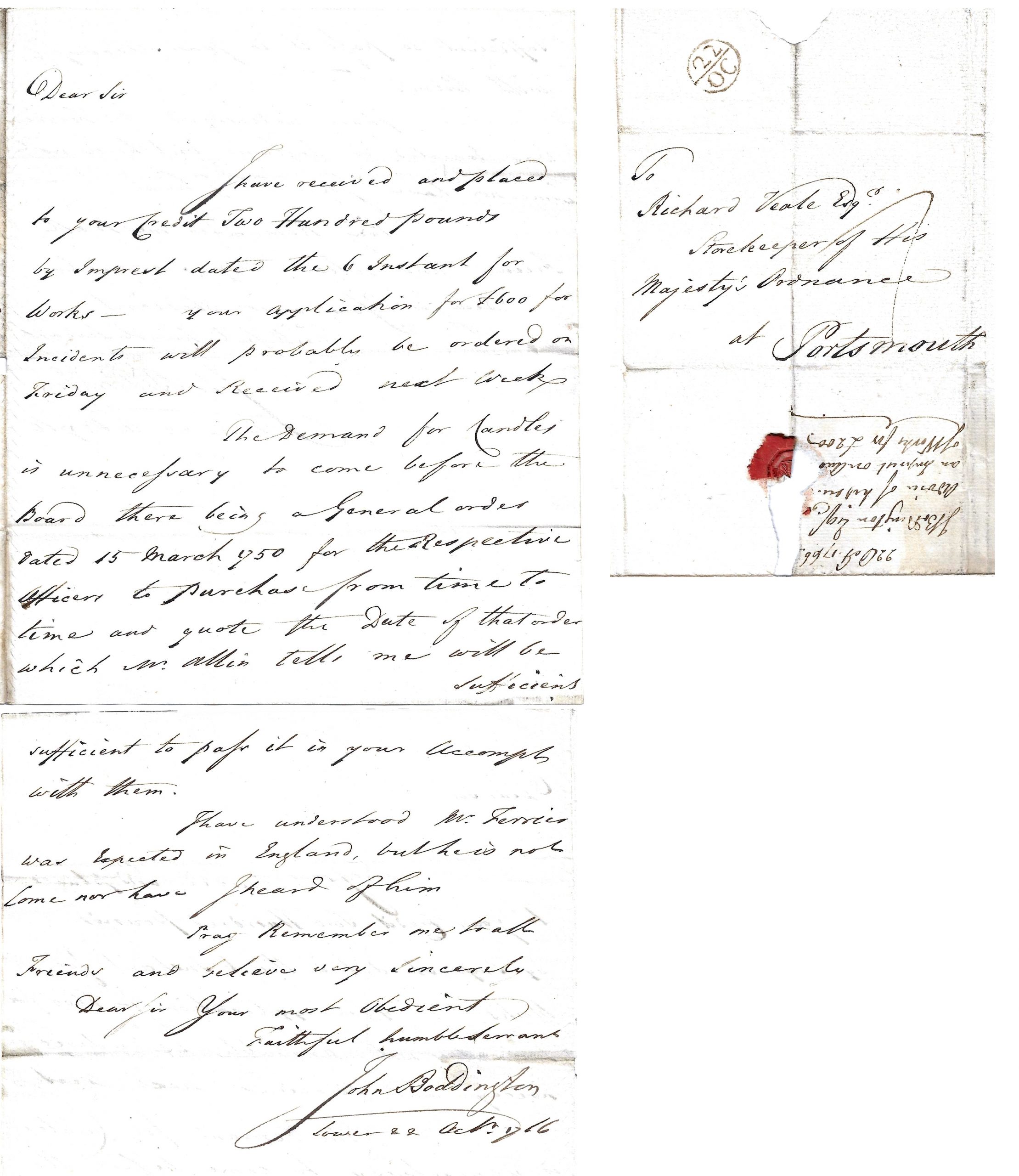
View in new tab:
12 years later in January of 1778 Thomas Butler writes on behalf of The Board to set out the method of manufacture and storing of gun carriage parts. The letter even goes into the detail of ensuring that the timber is well ventilated and carefully stored with regard for preventing decay. Again, parts of the original seal remain.

View in new tab:
In July of 1779 John Boddington writes, in a most beautiful hand, ordering 5 rounds of case shot to be issued to all ships of Sir Charles Hardy’s squadron immediately.
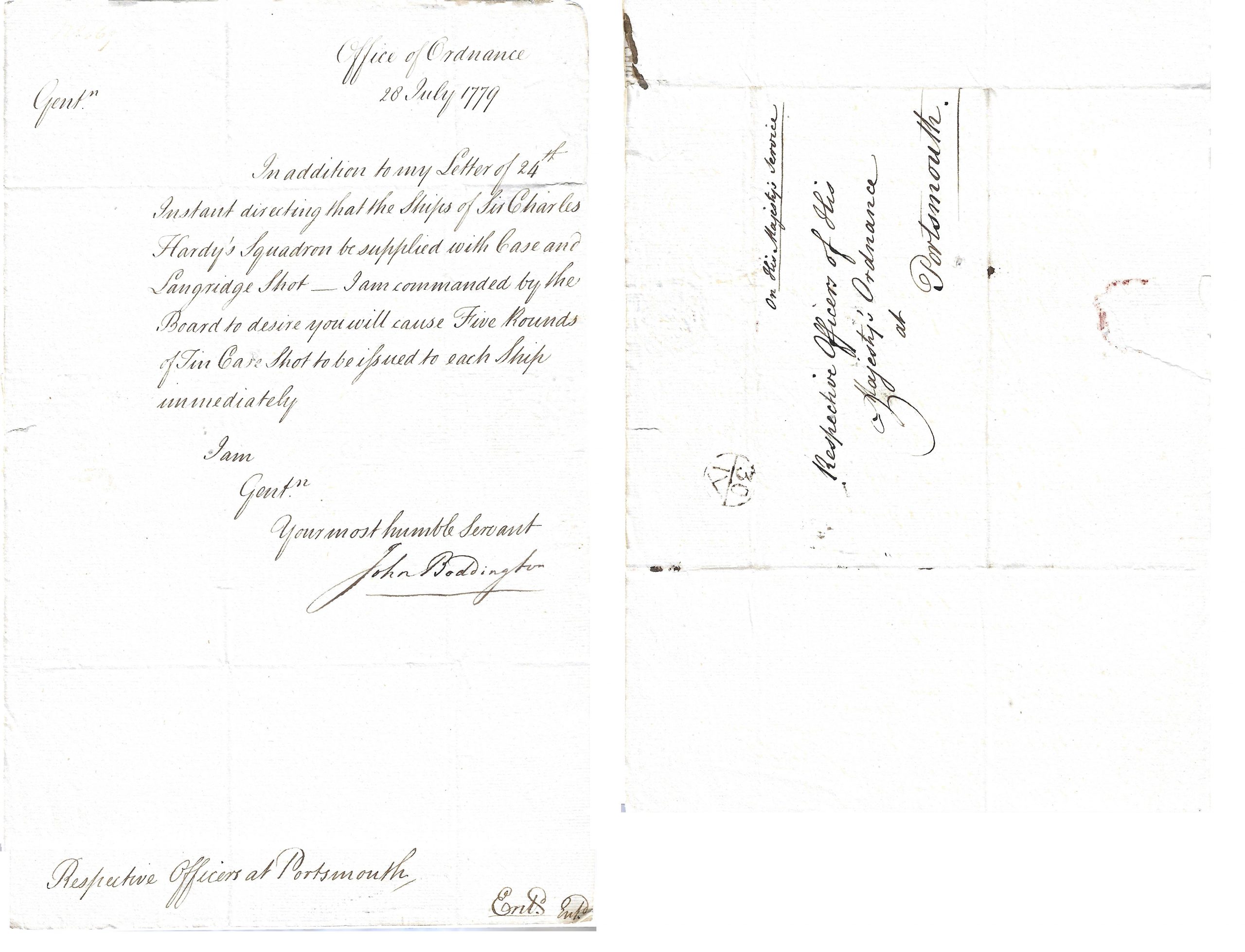
View in new tab:
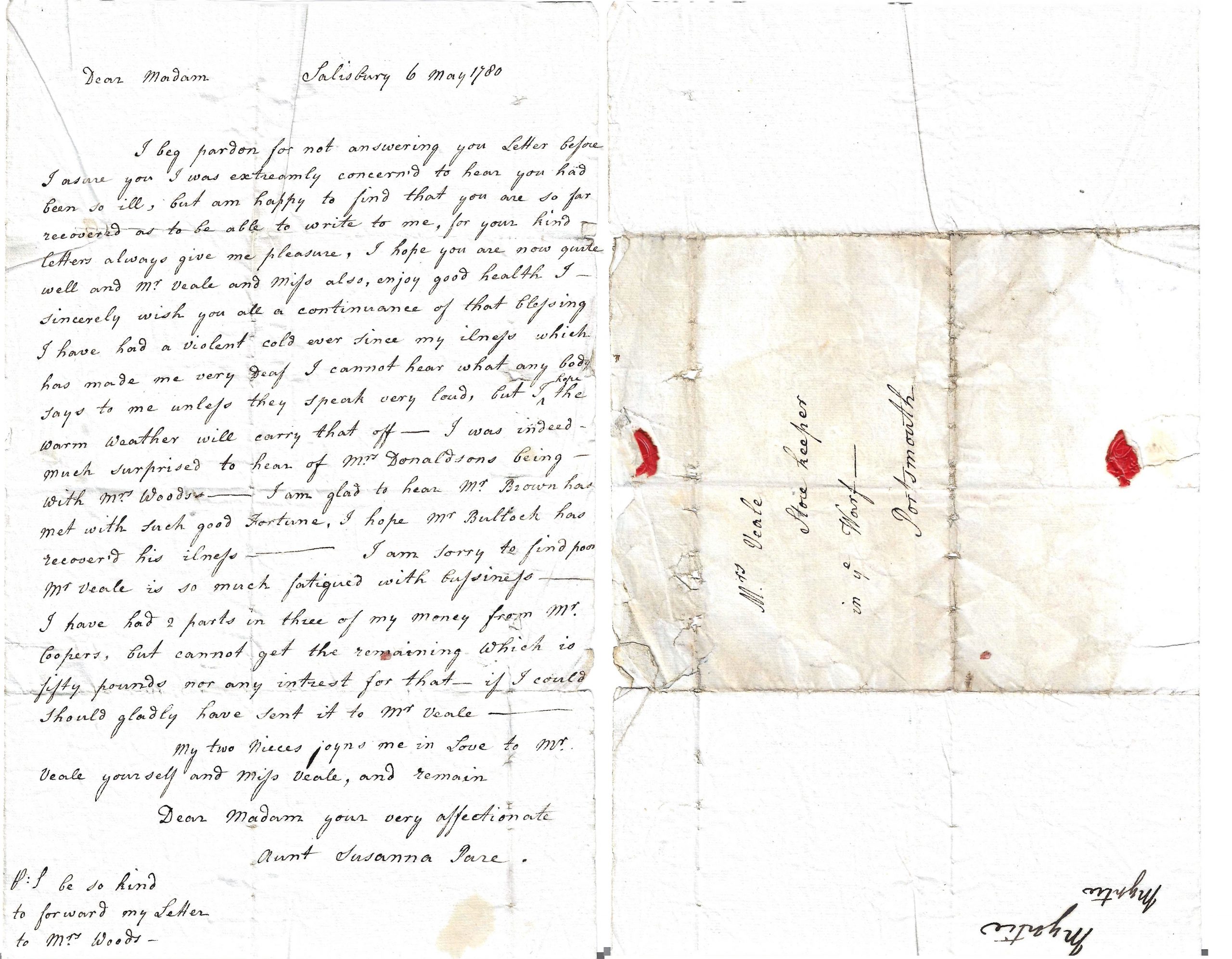
A private letter of May 1780 to Mrs. Veale (presumably the wife of Richard Veale, storekeeper) from her Aunt, Susan Price discussing the health of the family and financial matters.
View in new tab:
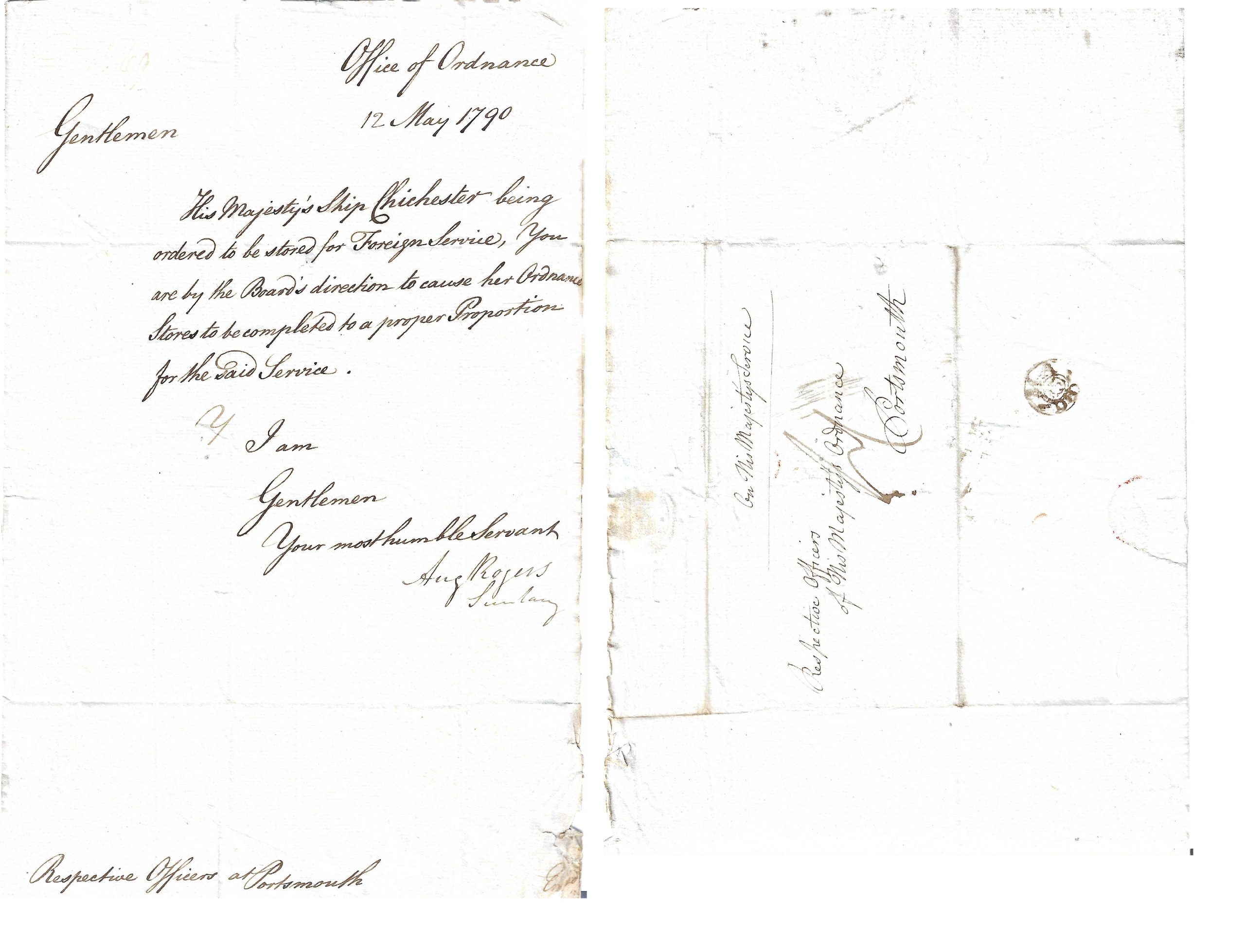
In May of 1790 HMS Chichester (1785) is stocked with ordnance in preparation for ‘foreign service’ this was probably to carry troops to Halifax.
View in new tab:
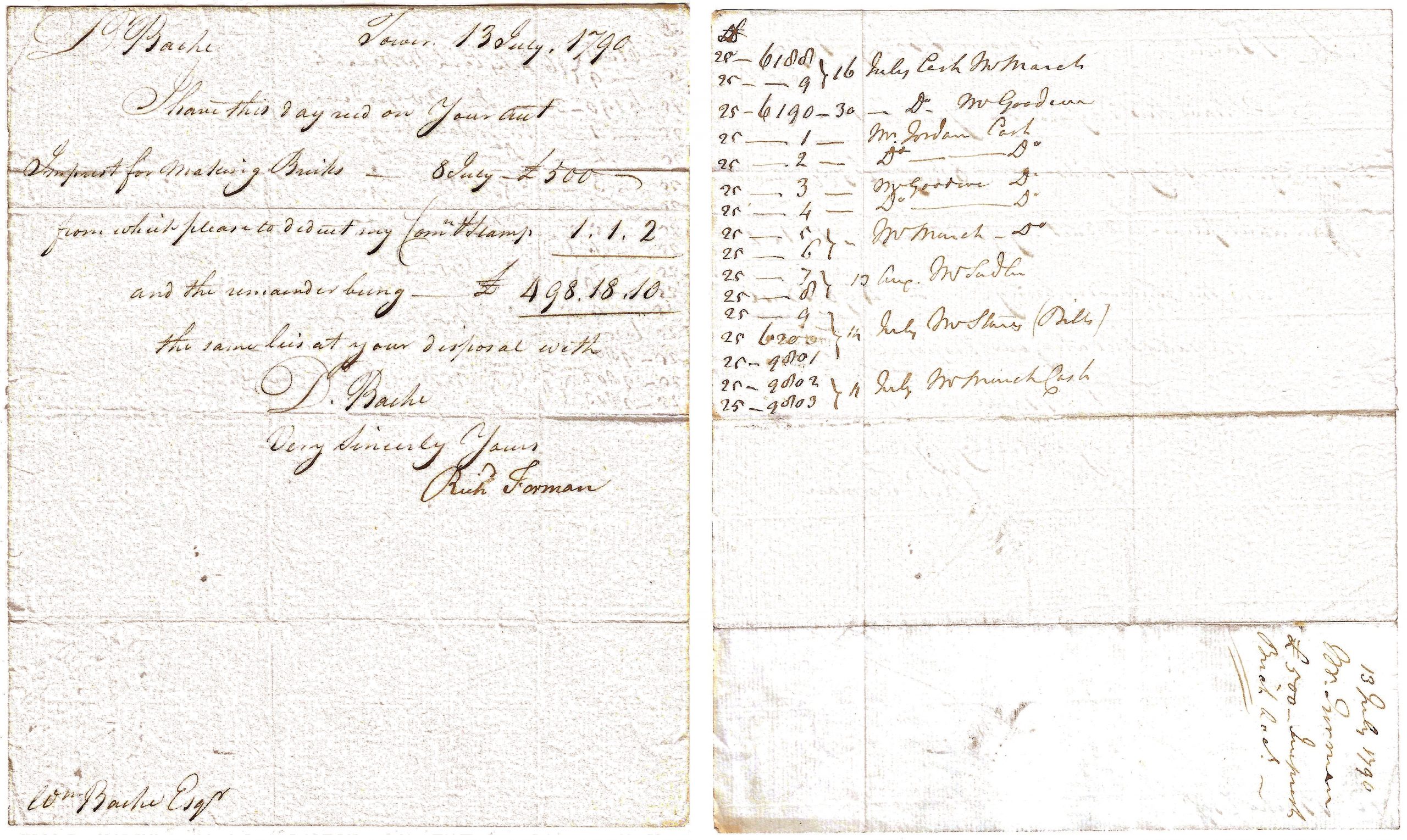
13th July 1790 a badly faded imprest for £500 between Messrs Rich Foreman and William Bache for bricks. William Bache was the first storekeeper at the new ammunition store at Priddys Hard in Gosport. The calculation on the second page is rather confusing.
View in new tab:
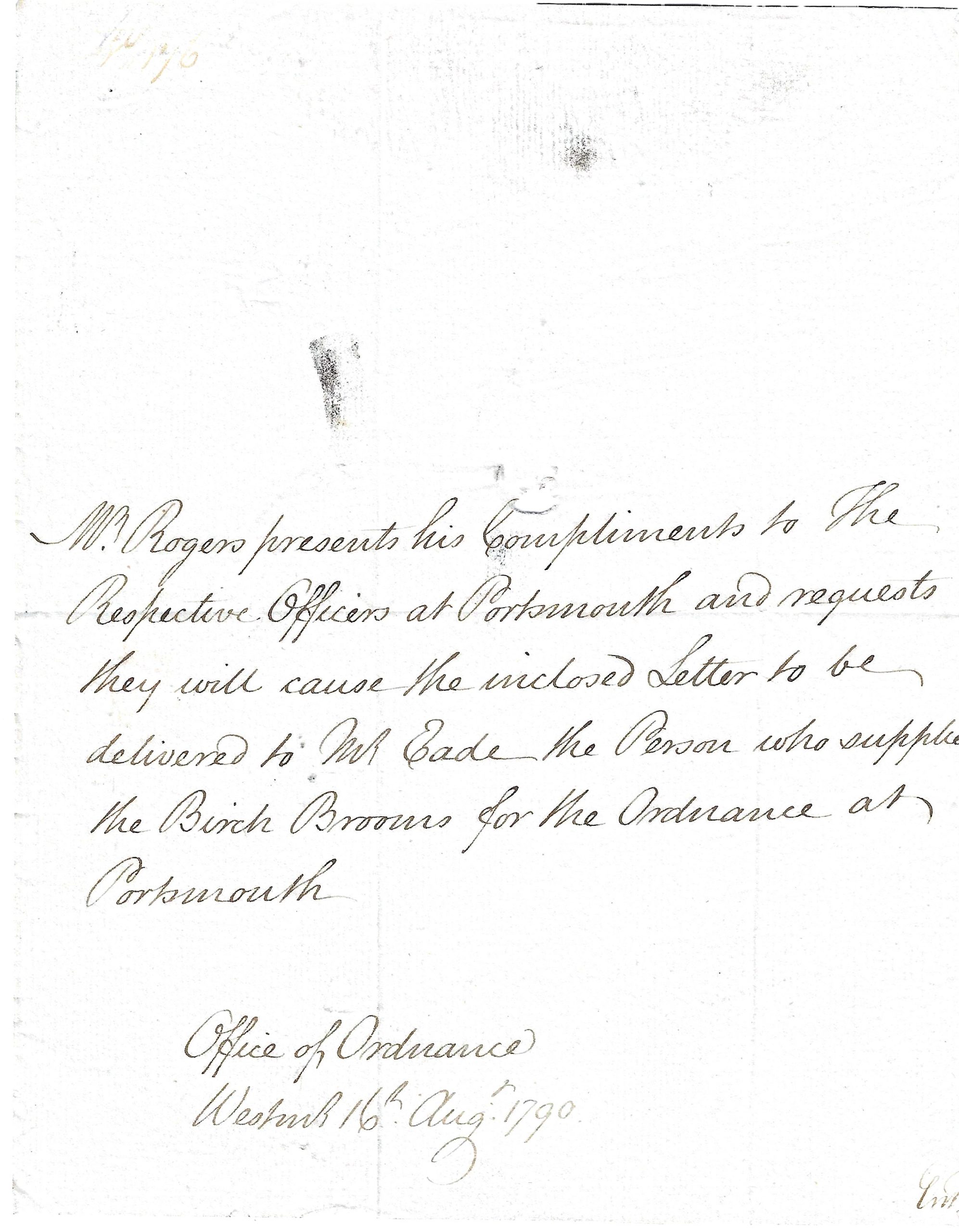
A note on 16th August 1790, asks for an accompanying letter to be passed to Mr. Eade who supplied birch brooms. It is marked as coming from the Office of Ordnance ‘Westmr’. There was no office recorded at Westminster, so one wonders the reason for this.
View in new tab:
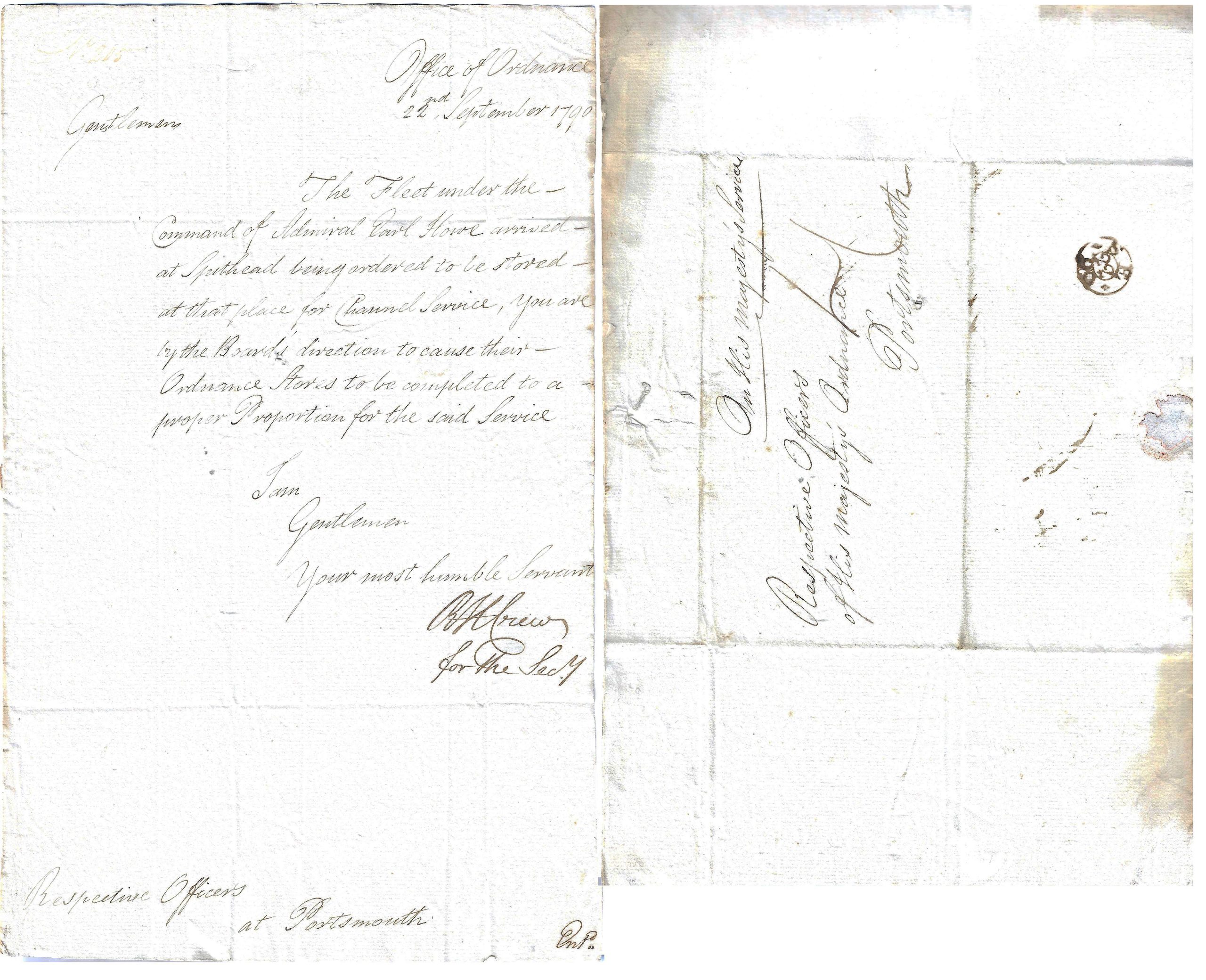
On 22nd September of 1790 Admiral Howe’s fleet arrived at Spithead, the Dockyard being ordered to supply them with gunners’ stores. The letters by now are rarely addressed to individual officers, but to ‘Respective Officers’.
View in new tab:
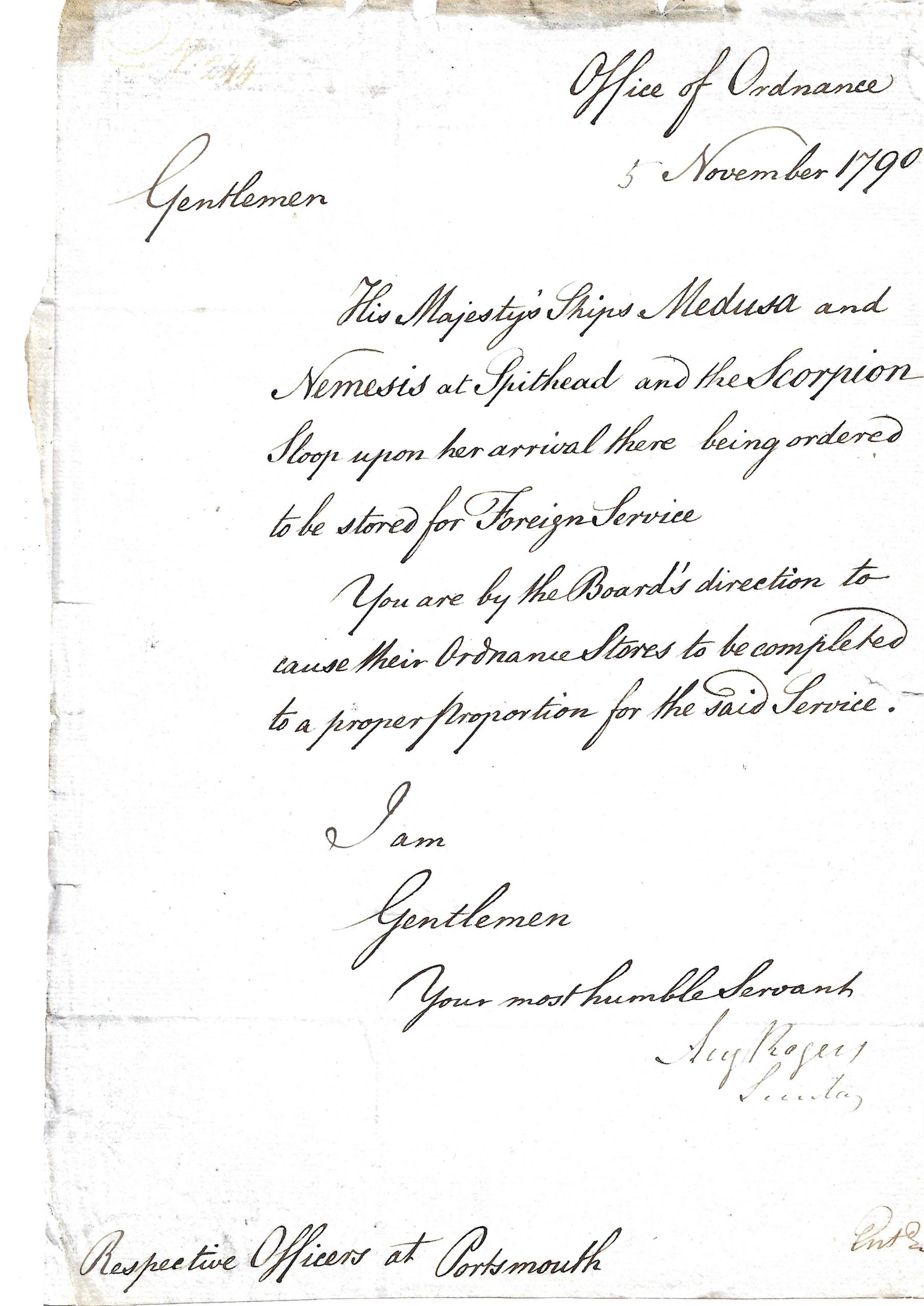
In November 1790 HMS Medusa (1785), Nemesis (1780), commanded by Captain Alexander Ball, his first command, and the sloop Scorpion (1785) arrived at Spithead to be supplied for foreign service. Nemesis had a chequered life being captured by the French in December of 1795 only to surrender again in March of the following year.
View in new tab:
On 21st February 1791 a letter from Rich Foreman talks about an imprest for £200. The letter is addressed to Richard Veale, yet at the bottom he is referred to as Dr Veale. Does this mean that our storekeeper was a doctor?

View in new tab:
Another very faded letter to Mr Veal on 5th September 1793 tantalizingly talks of an enclosure from Mr. Courtney, asking if it is satisfactory, however, the enclosure is missing.
This is the last letter addressed to an individual storekeeper; subsequently all letters are addressed to ‘Gentlemen’. Incidentally: we note that Richard Veale is here referred to as ‘Esquire’, a title applied to those above gentleman, yet below knight.

View in new tab:
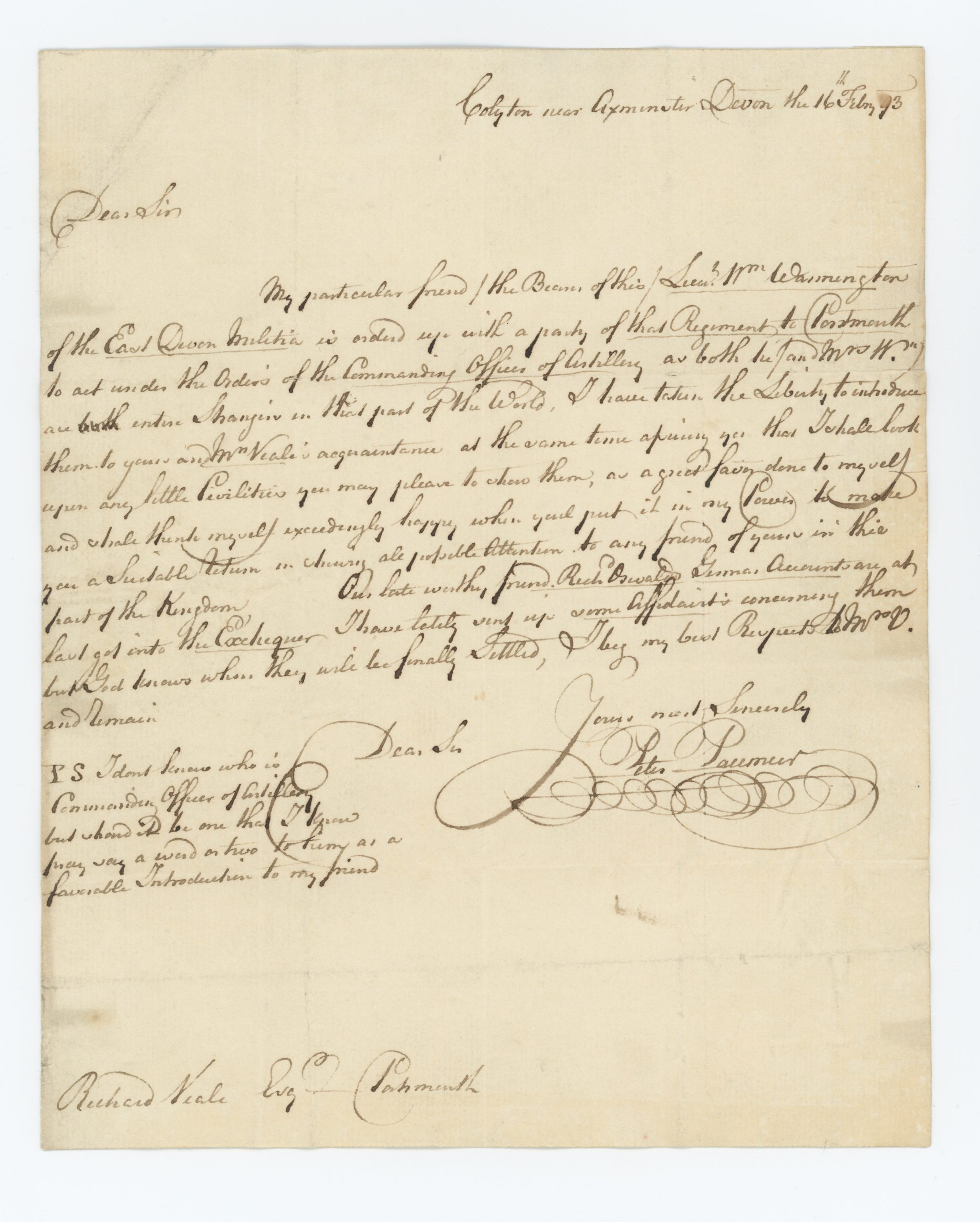
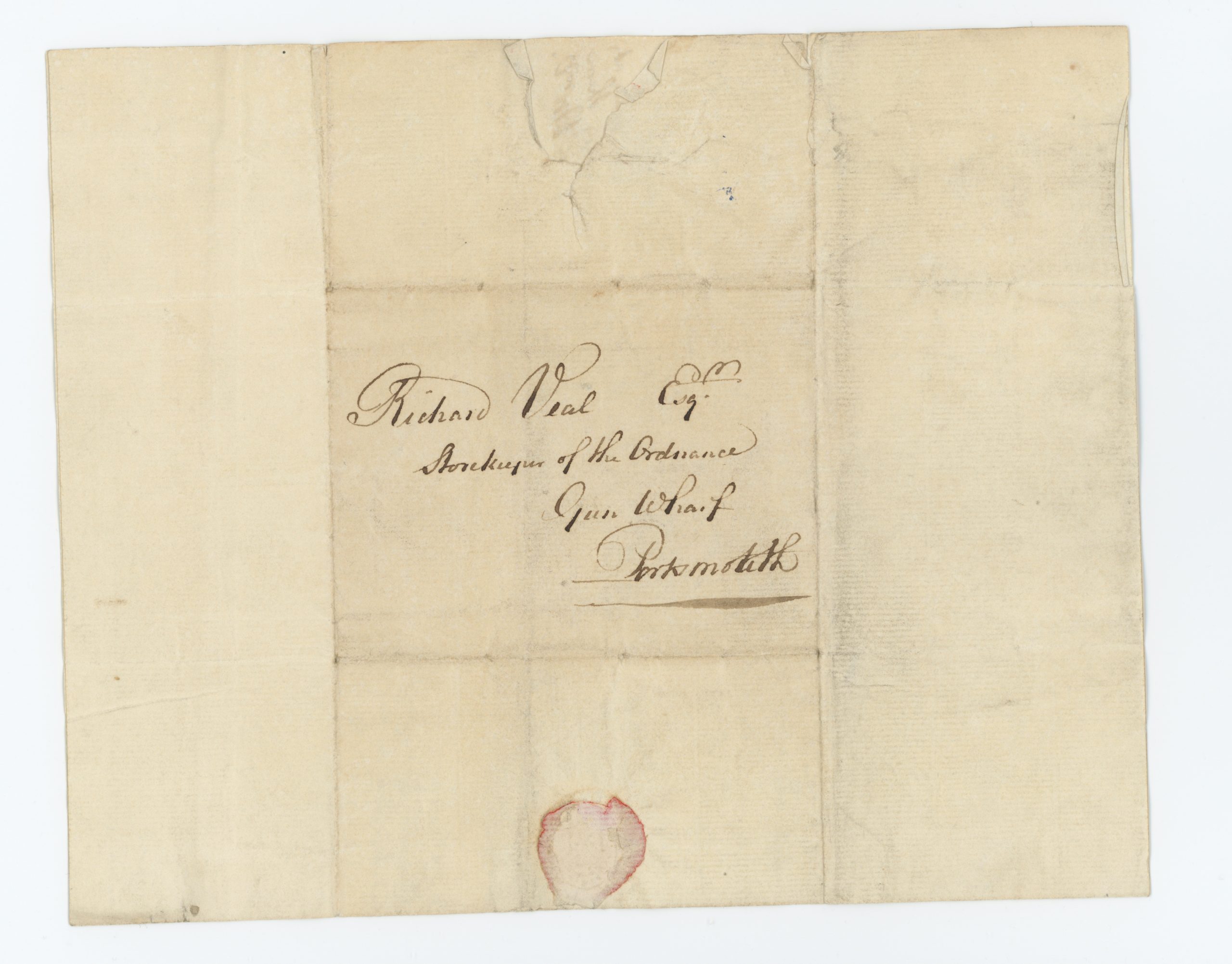
Richard Veal, the storekeeper at Portsmouth at this time, was in the habit of including his private correspondence among the Ordnance documentation. These were not written by clerks or scriveners, and so are sometimes difficult to read. For instance: in this example we see:
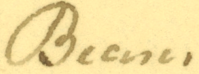
The ‘B’ is clear, but none of the other letters are easily identified. The entire letter is like this, so I may have misinterpreted some words. If you can decipher them please feel free to enlighten me; leave a comment on the ‘Discussion’ page.
Interestingly the letter, although mostly mundane, mentions Richard Oswald’s ‘German’ accounts. There was a Richard Oswald who was a merchant and slave trader. He died 9 years before this letter, but it is quite conceivable that his estate took some years to execute as is intimated in this letter.
View in new tab:
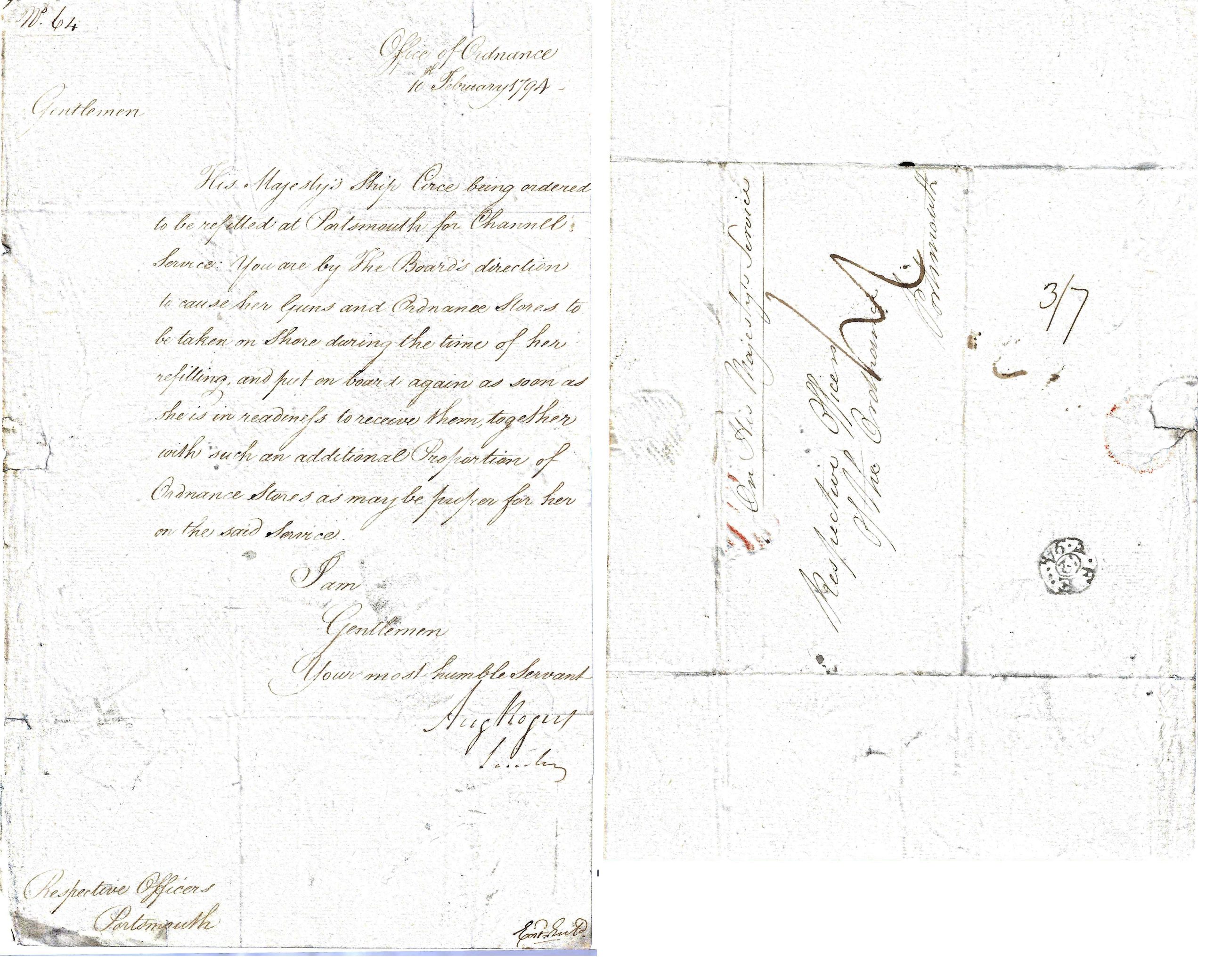
HMS Circe (1785) arrived on 10th February 1794 to be refitted for Channel service. Already in receipt of prize money for her part in the capture of Reunion, the brig Venus, and the sloop Ant, just three months later, on 24th May she captured the brig Perseverance.
View in new tab:
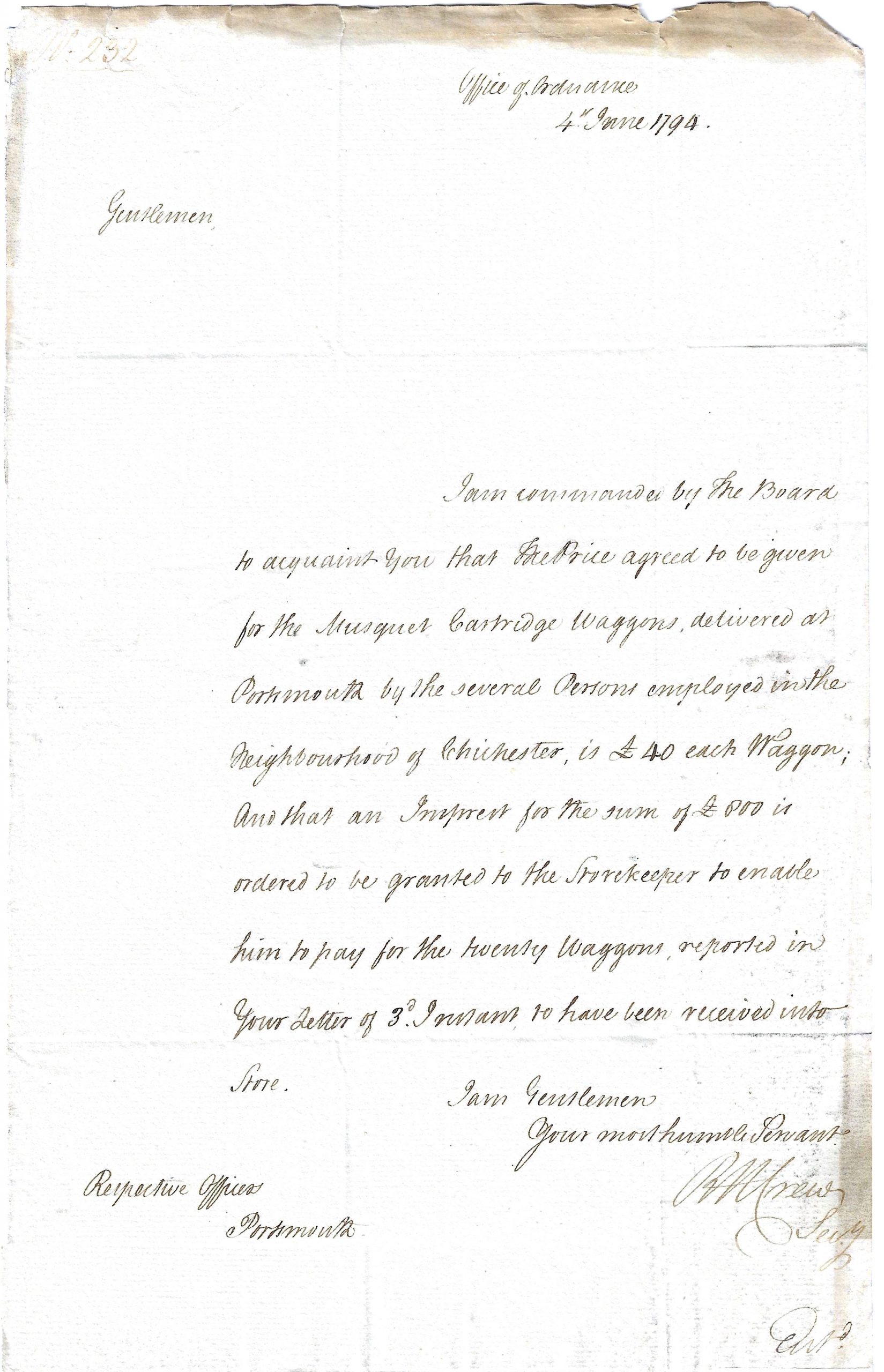
On 4th June 1794 twenty wagons of ‘musket cartridge weapons’ are delivered to Portsmouth by ‘several persons employed in the neighbourhood of Chichester’ at a cost of £800.
View in new tab:
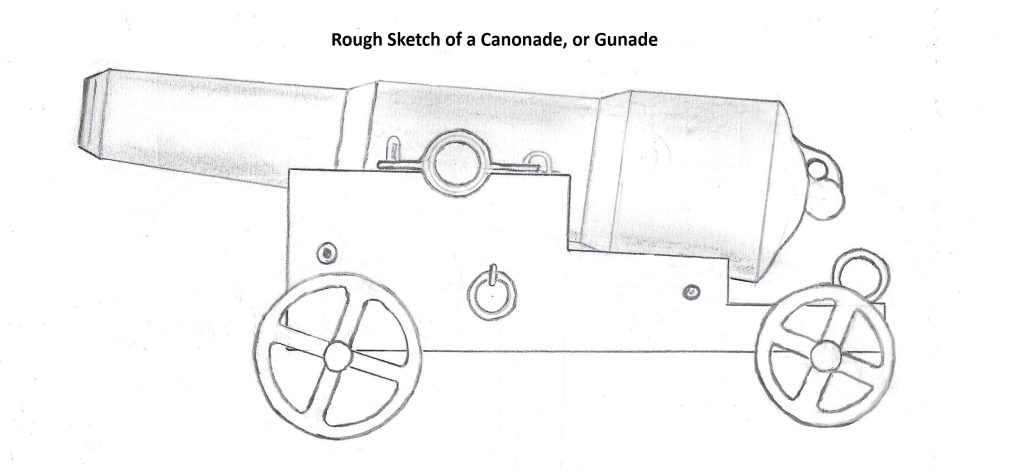
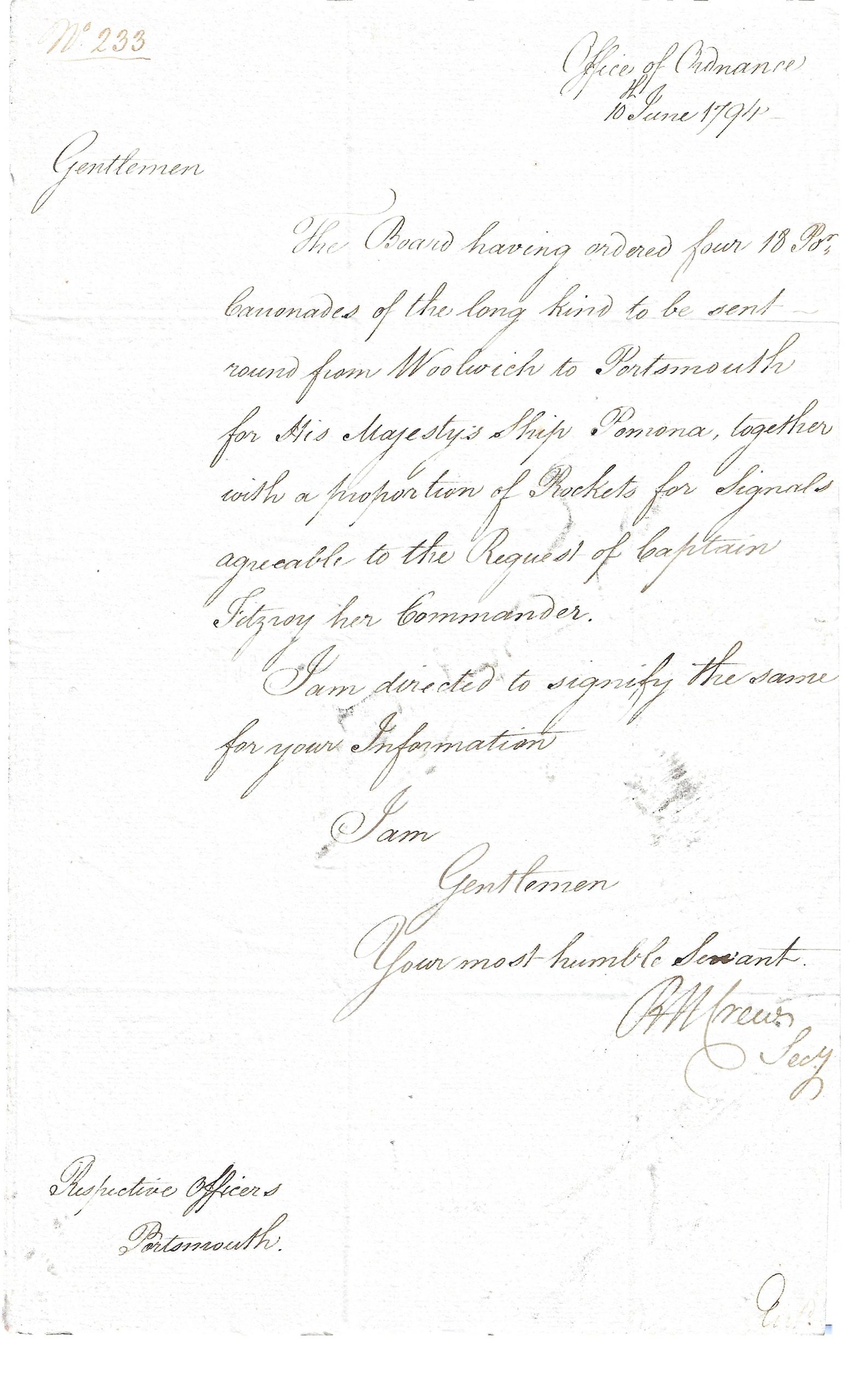
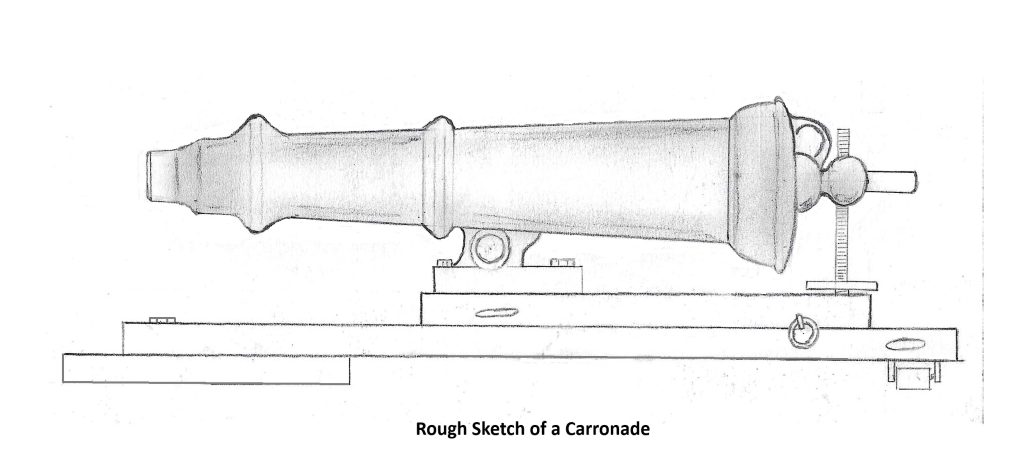
On the 10th June 1794 a letter advises that 4 x 18 pounder ‘cannonades’ have been sent from Woolwich for HMS Pomona (1778). Pomona (1778), an Enterprise class sixth rate, carried six 18 pounder carronades, two on the forecastle and four on the quarter deck. A cannonade (also known as a gunnade) could be considered a hybrid of a carronade and a long gun giving slightly greater range than a carronade yet still firing an oversized shot fired from a short barrel. Cannonades were a popular choice for arming merchant ships as they required fewer crew to fire them. Presumably, some of Pomona’s carronades were to be replaced with cannonades.
In the Patrick O’Brien novel, ‘HMS Surprise’, Jack Aubrey describes cannonades thus: “What a lynx you are, upon my honour: nothing escapes you. And clearly you know a canon, a great gun? Well now, conceive of an unlucky bastard cross between the two, something that weighs a mere twenty-eight hundredweight and jumps in the air and breaks it’s breeching every time you offer to fire it, and that will not strike true at five hundred yards, no not at fifty, and there you have your cannonade.”
View in new tab:
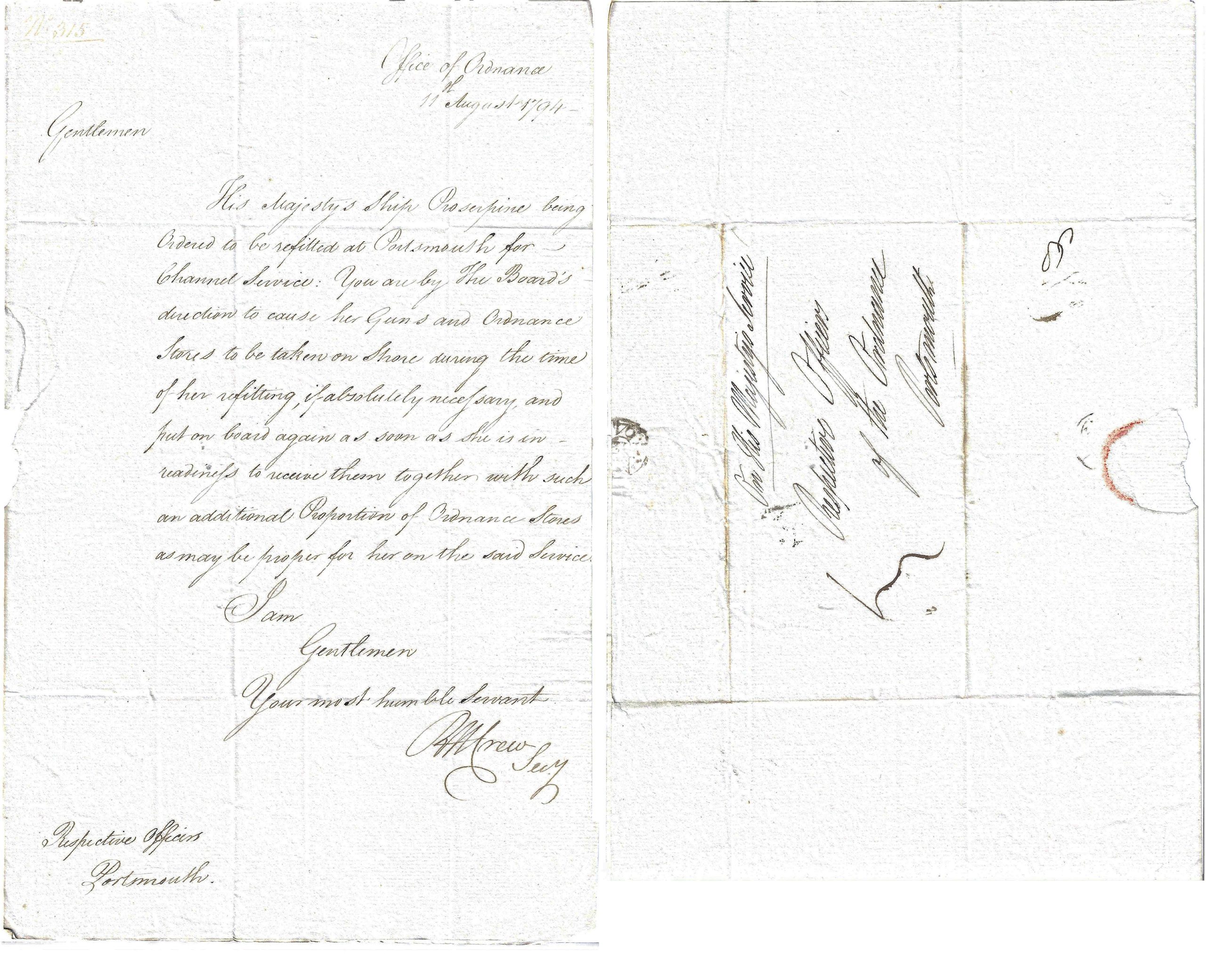
HMS Proserpine is to be refitted for Channel Service on 11th August 1794.
View in new tab:
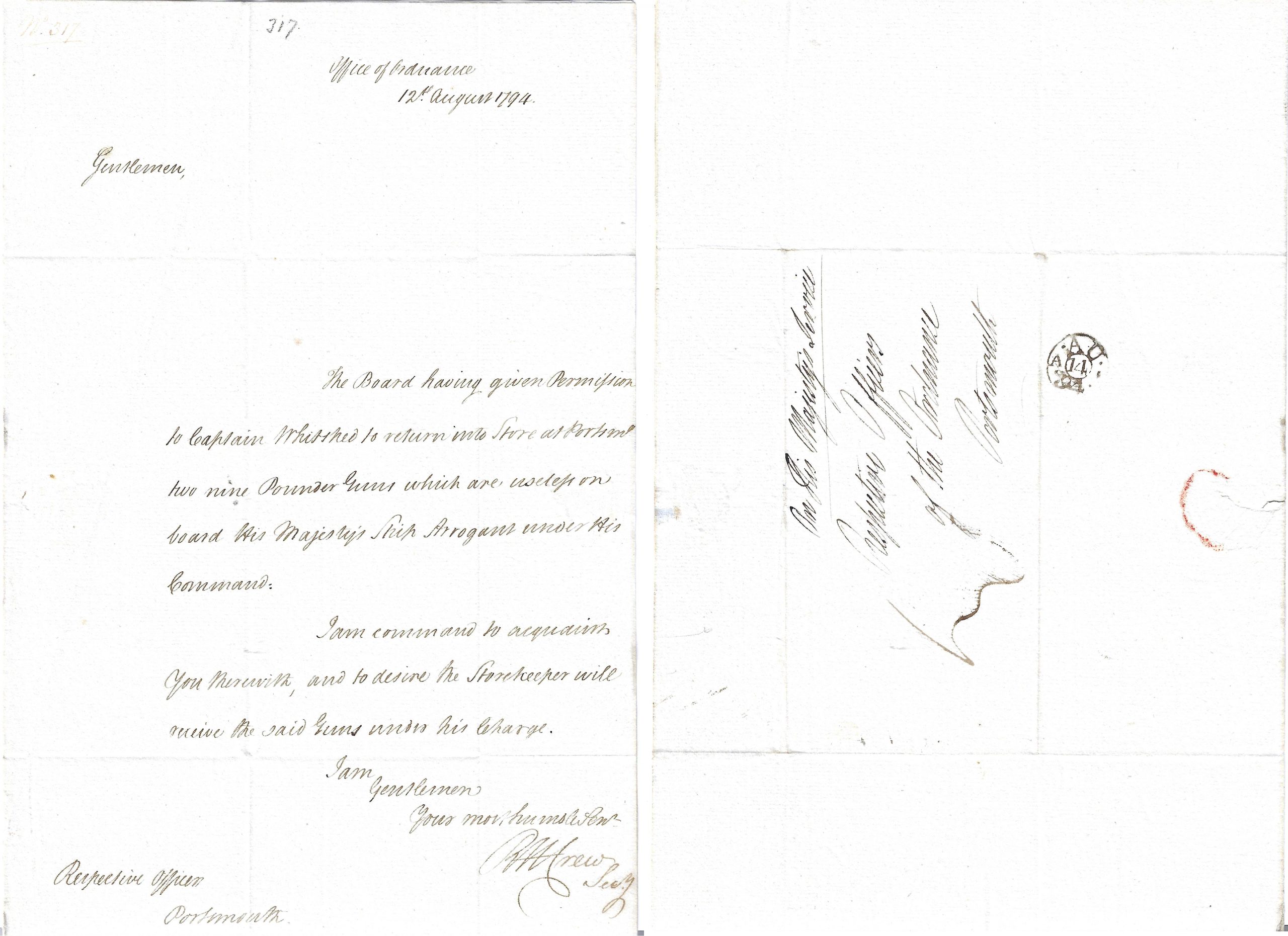
An unusual communication on 12th August 1794 advises that Captain Whitehead, is authorised to return two long nines into store as ‘they are useless on-board HMS Arrogant 1761), a 74 gun ship.
View in new tab:
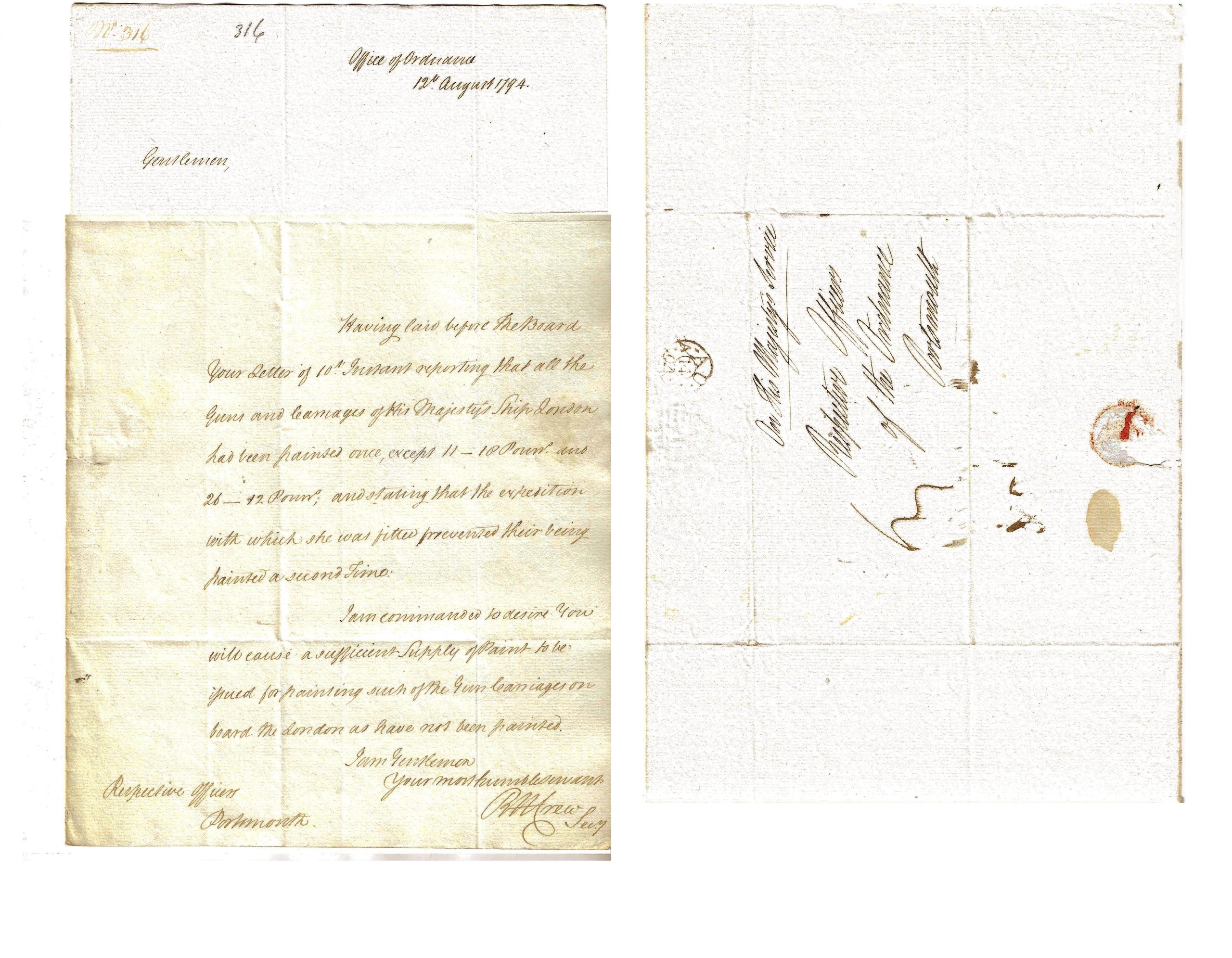
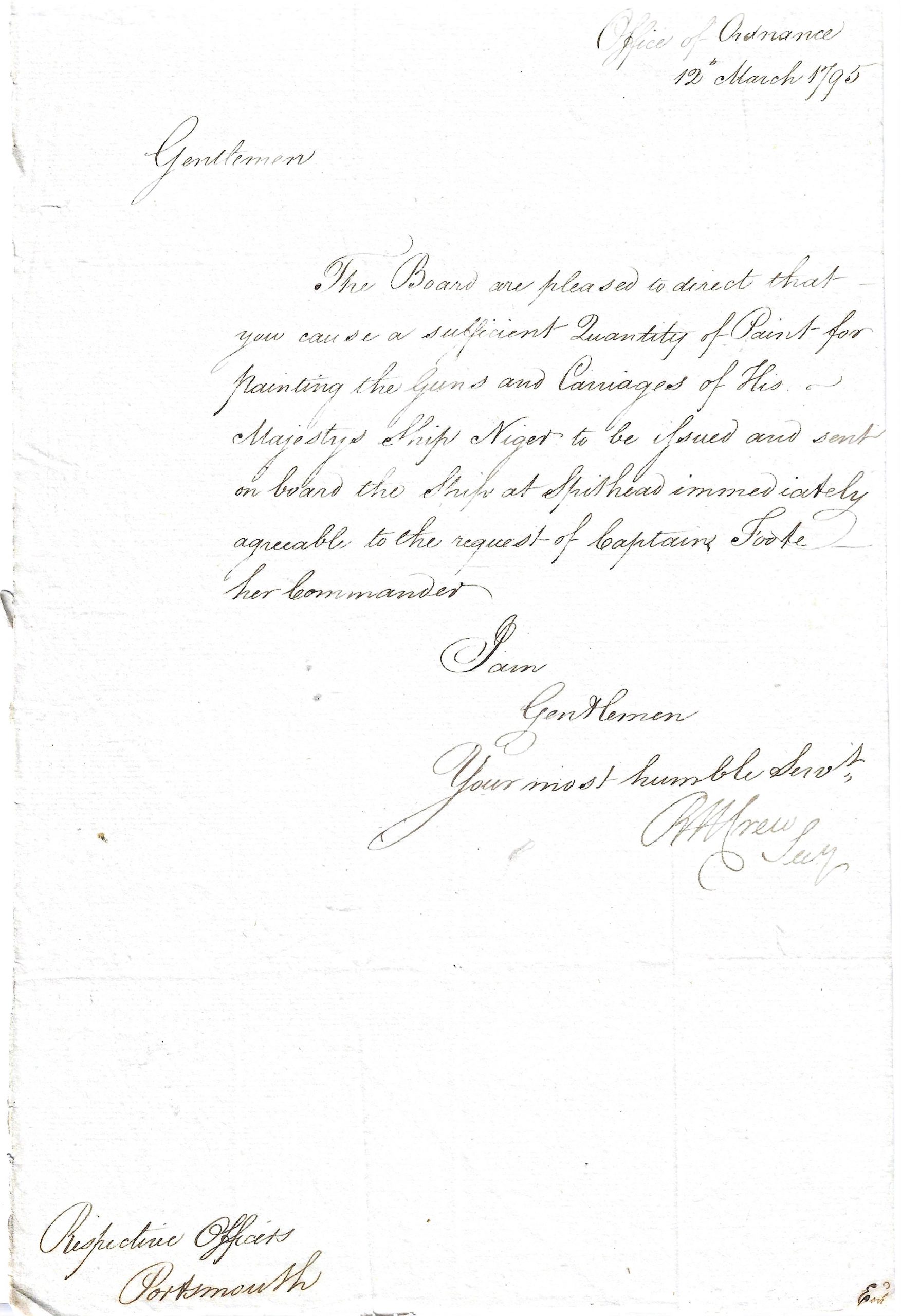
This is followed on the same day by a letter regarding the painting of guns aboard HMS London (1766).
View in new tab:
On 27th November 1794 a very faded letter from The Board is the first to mention carronades, a short, fat gun designed to clear the enemy’s quarterdeck. They were close range weapons that fired a large weight of ammunition, be that roundshot, bar, grape or canister. It would appear that the captain of HMS Pallas (1793) prefers the old-style guns over the newer ones that have been fitted. One might assume some resistance to change, however, the weight of guns would have an effect upon the centre of gravity of a vessel, and therefore here seaworthiness.

View in new tab:
View in new tab:
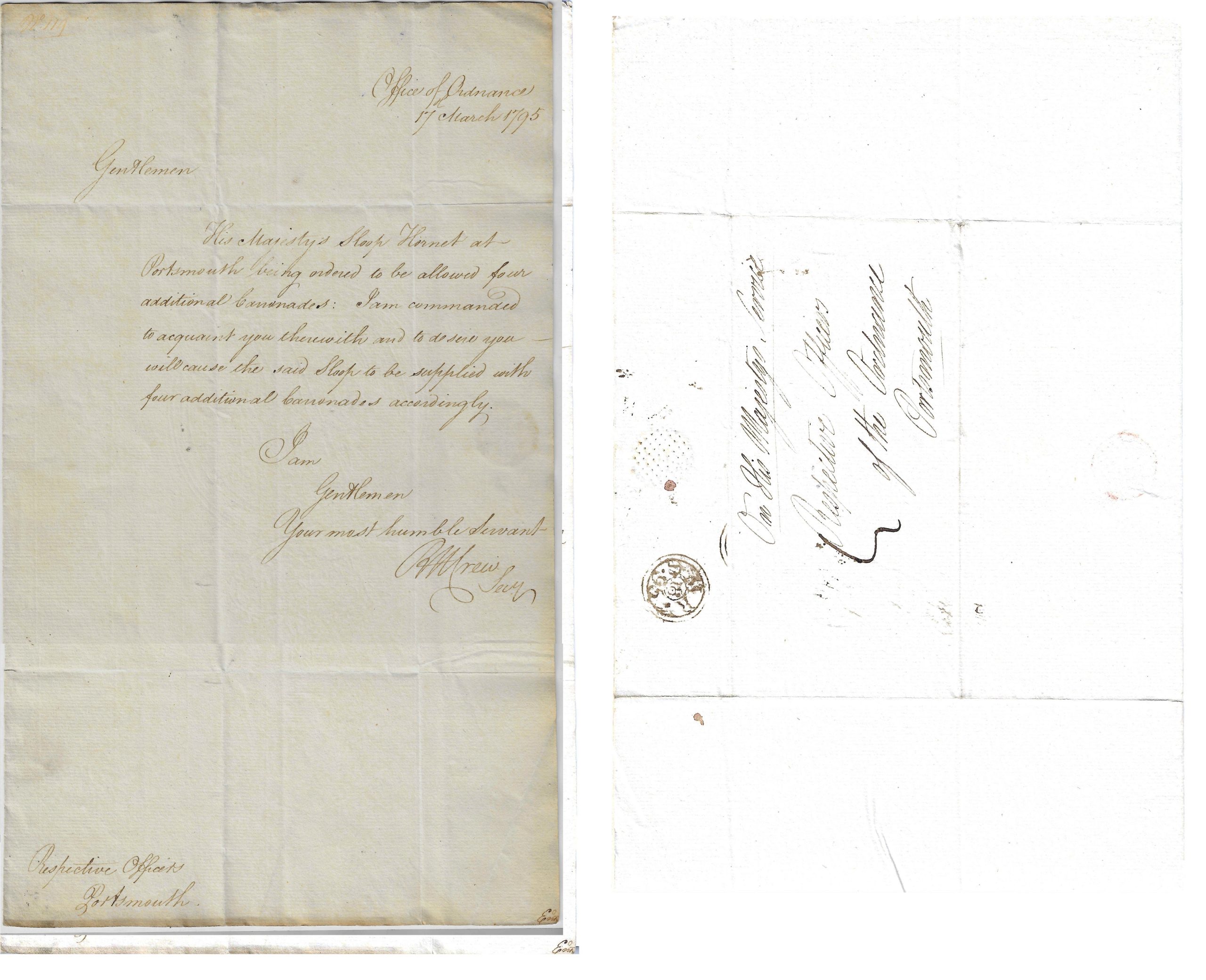
In March 1795 HMS Hornet (1763), a 4 gun sloop, is to be allowed 4 ‘additional’ carronades. One wonders where they will put them. It is also interesting to note that the ship was paid off the following month.
View in new tab:
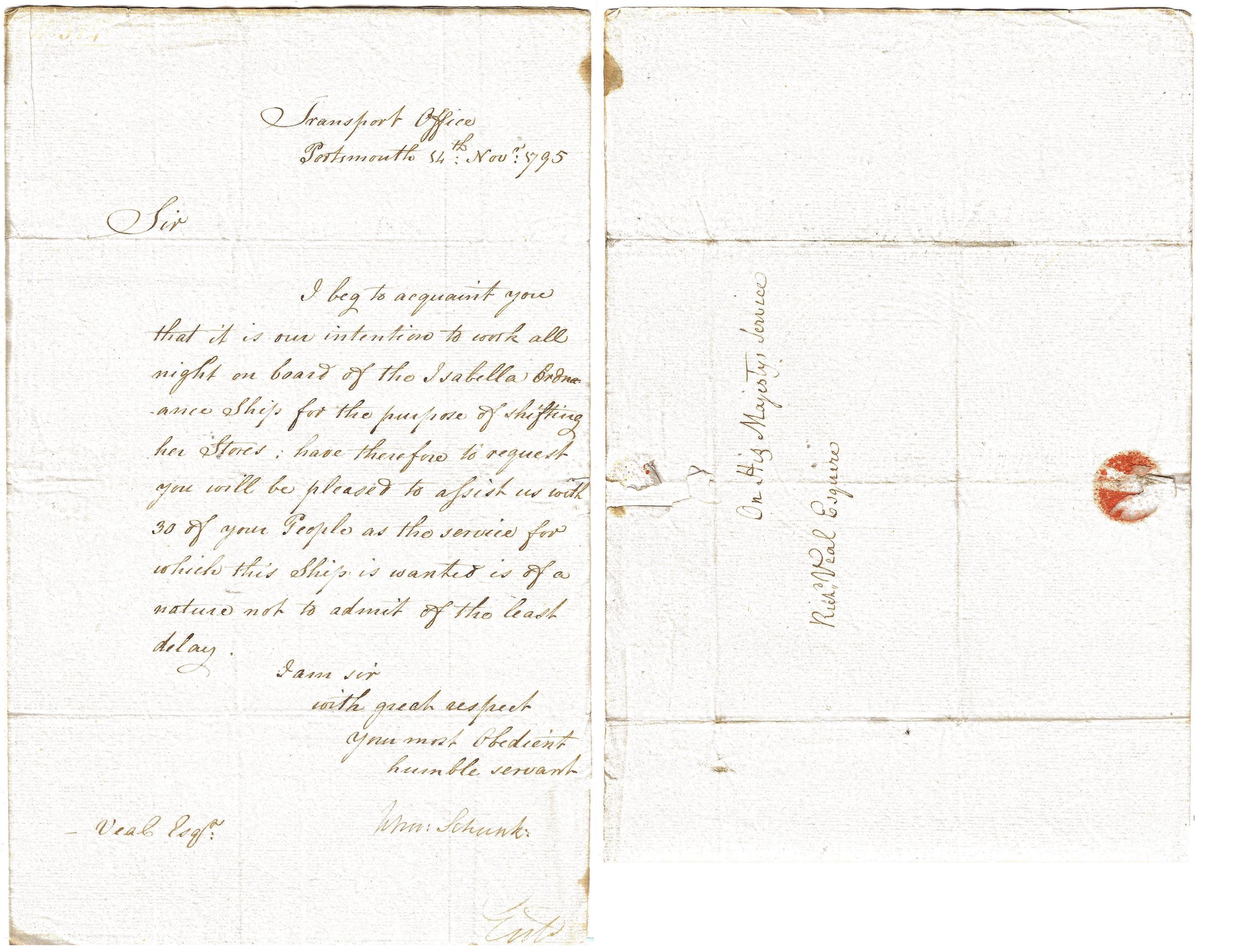
November 1795 a letter to Mr. Veale asks for 30 of his people to work overnight aboard the Ordnance Ship Isabella to shift her stores as the ship is wanted for service without delay.
View in new tab:
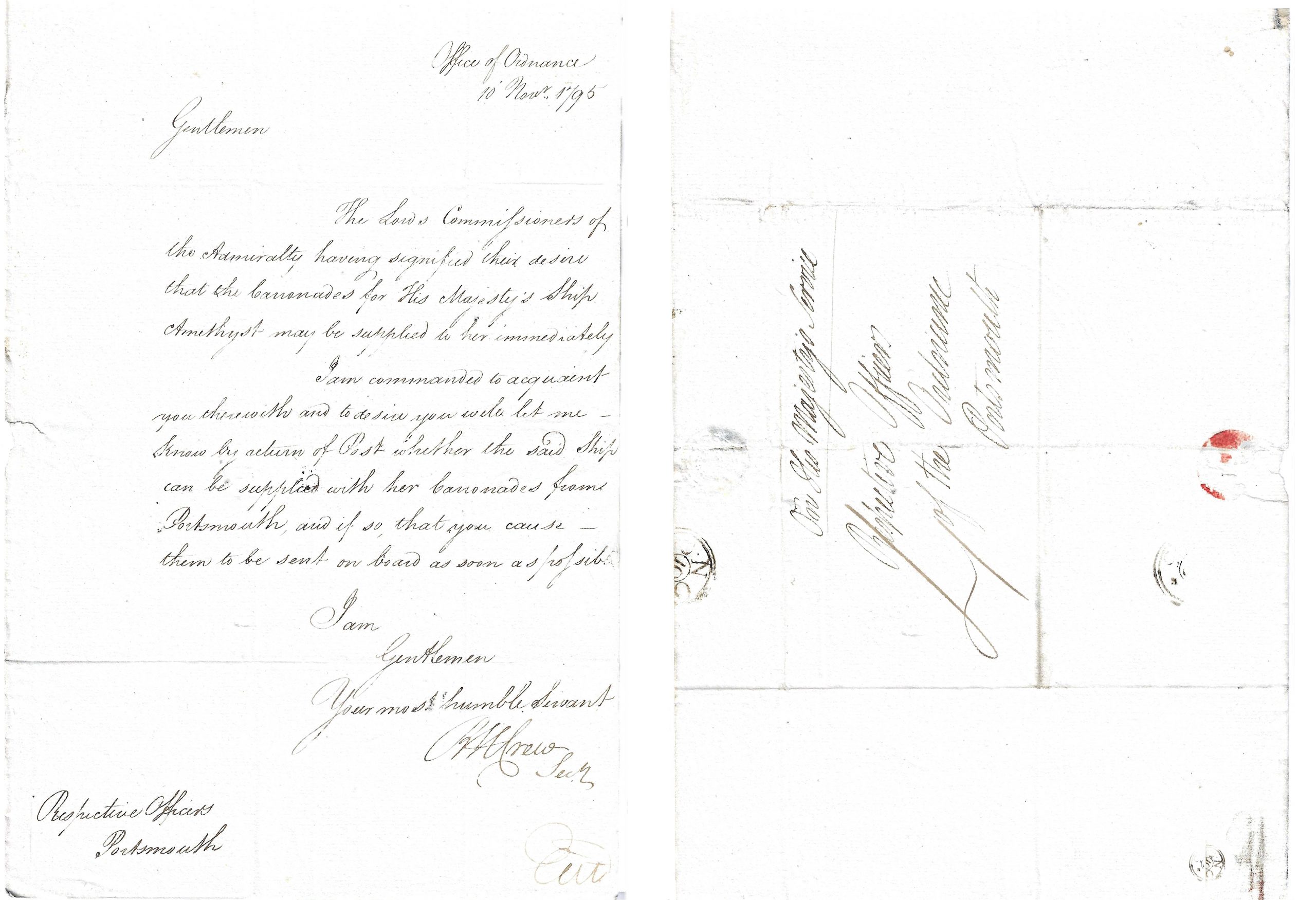
A letter on 10th November 1795 asking if the stores have enough stock to supply ‘Canonades’ to HMS Amethyst. At first sight one could be forgiven for thinking that the request was for Carronades. A Carronade had no trunnions, whereas a Canonade was fitted with trunnions allowing it to be fitted into a standard sea carriage. One could regard a Canonade as a hybrid between a Carronade and a long gun. They were more popular on merchantmen as they required fewer crew to man them.
View in new tab:
Another letter on 10th November discusses HMS L’Clair’s guns. The commander, Captain Douglas, is asking that one of his guns be fitted on a sea service carriage allowing it to fired abeam, on the quarter or astern.

View in new tab:
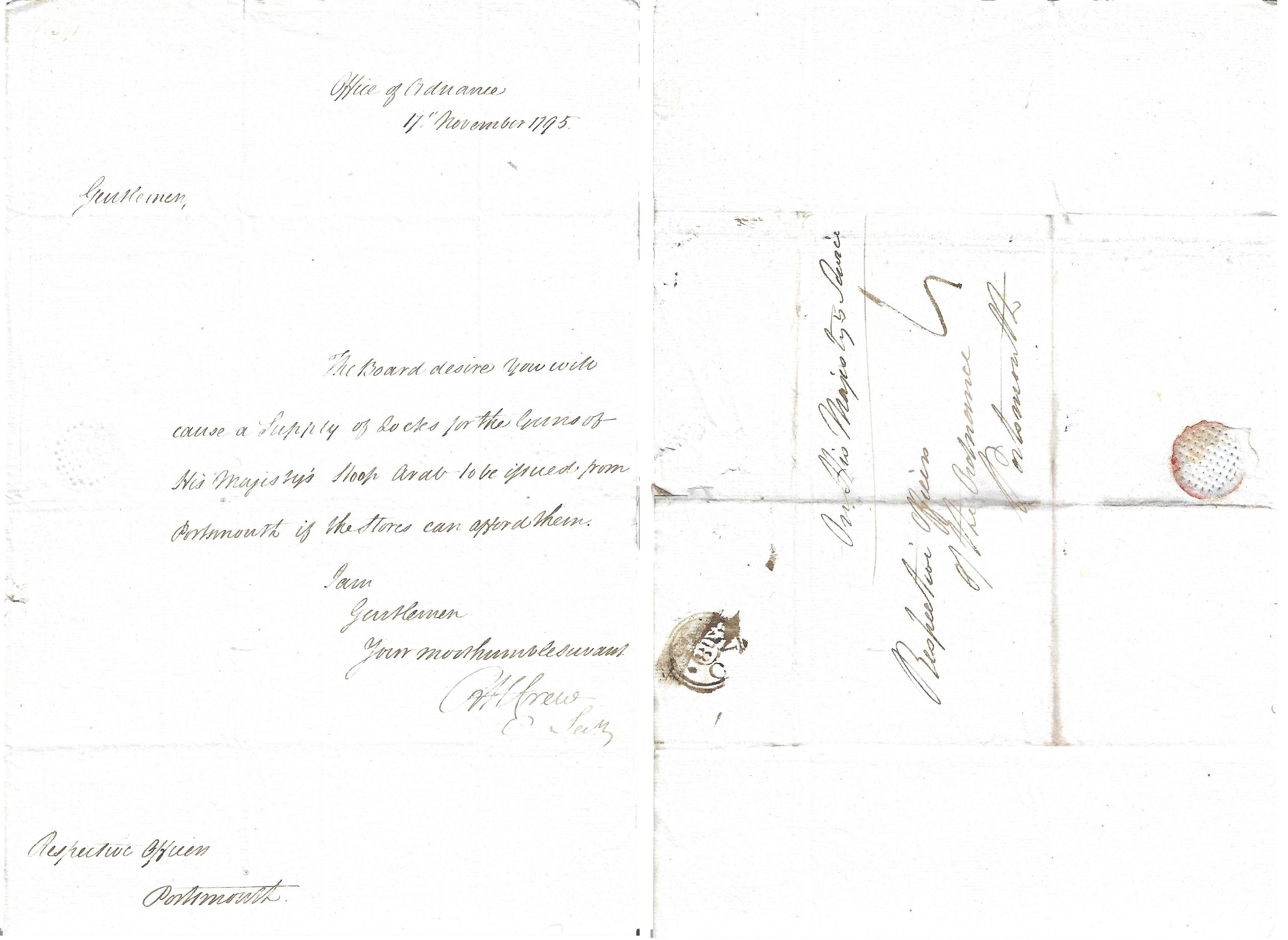
November 11th 1795 a short letter regarding HMS Arab tells us that locks are now being supplied rather than relying on linstocks to fire the guns. Arab was wrecked in June the following year.
View in new tab:
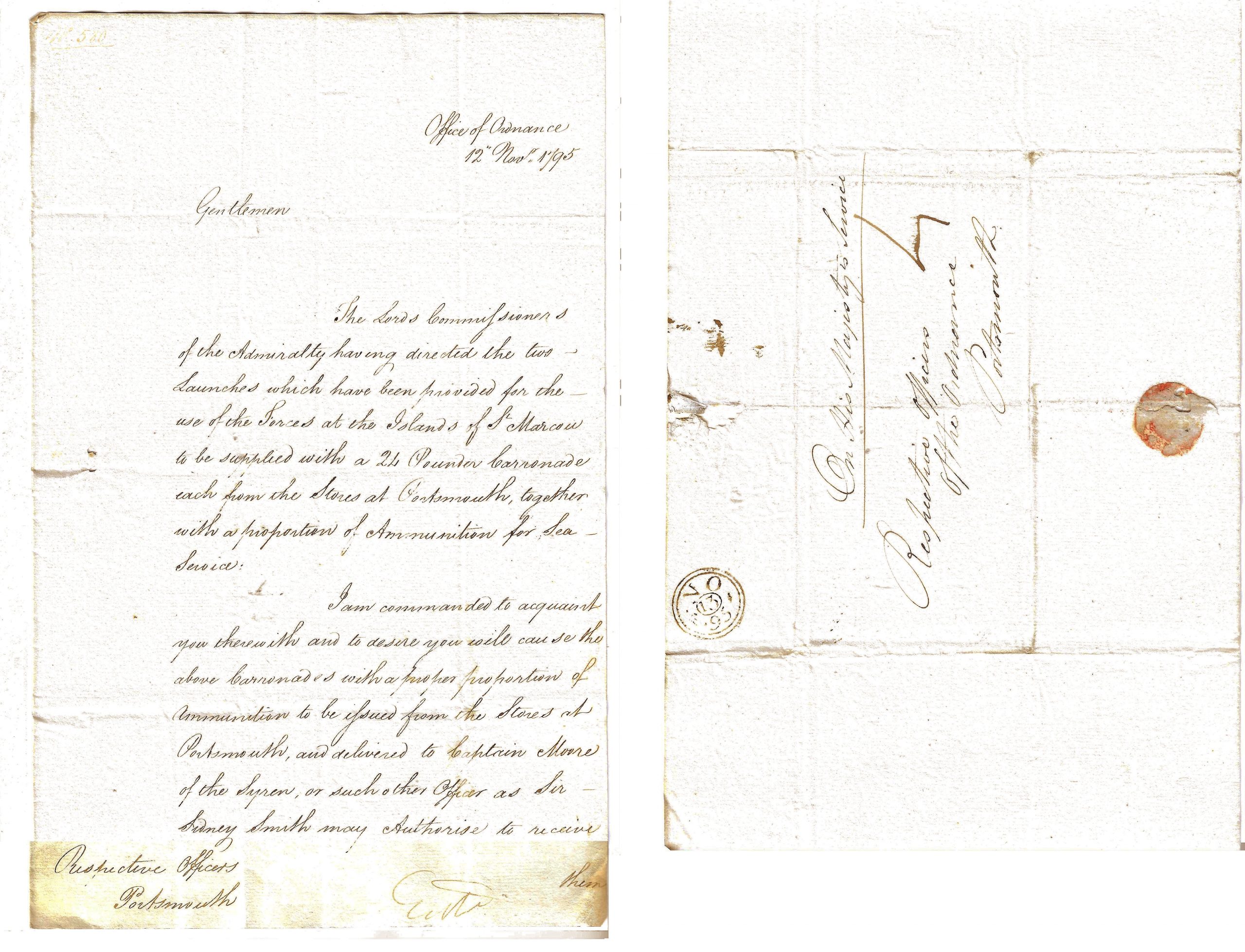
The 12th of November 1795 was a busy day:
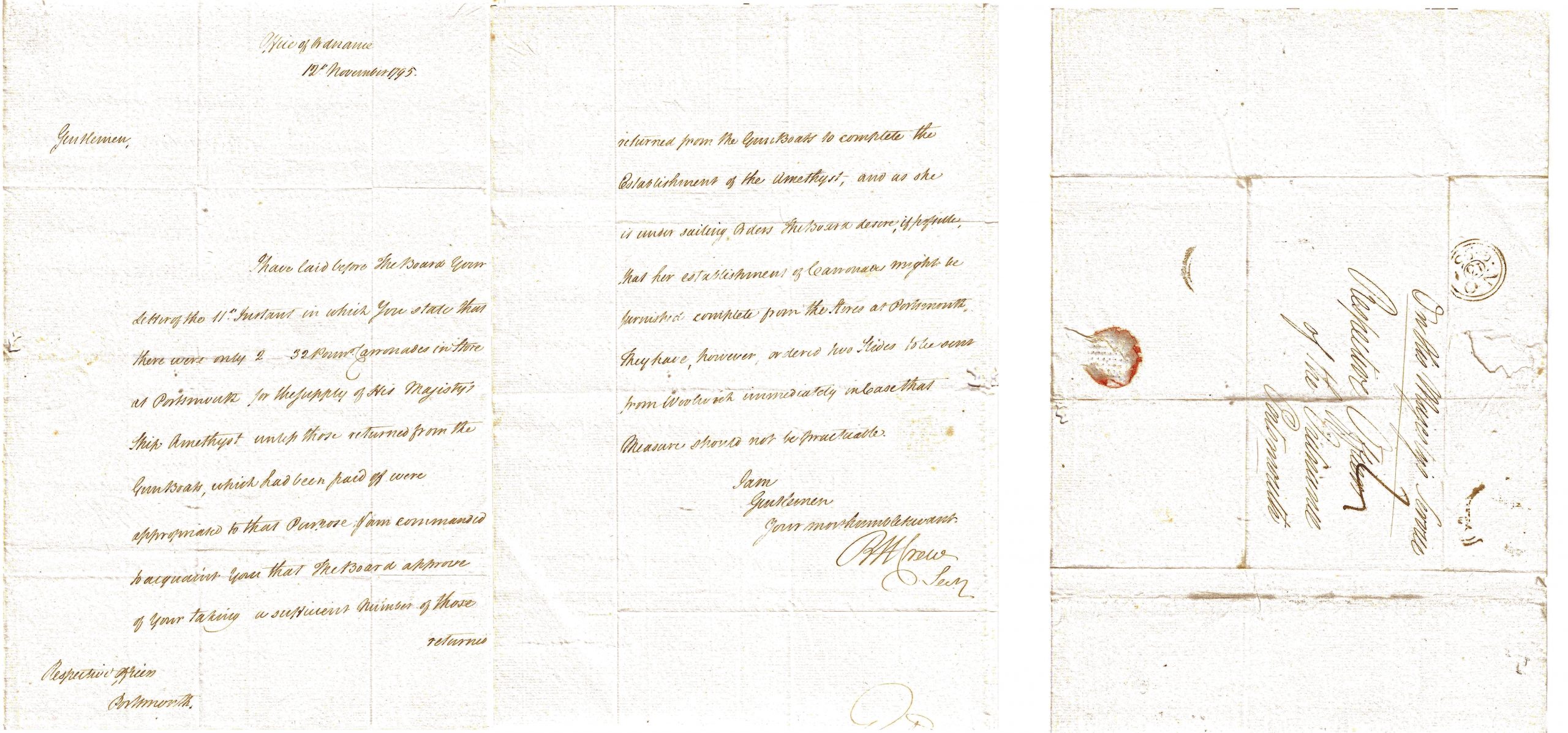
A letter from The Board requests that two launches, provided for the defence of the Islands of St Marcow, off the coast of Normandy, be supplied with carronades and ammunition to be carried by HMS Syren (1794). These were for vessels of under the command of Sir Sidney Smith whose squadron was defending the islands. The two vessels probably comprising of either Badger, Hawke, Shark, (former Dutch hoys), or Sandfly, a vessel built for the defence of the islands. In December of 1795 the crew of Shark mutinied because of the harsh conditions.
View in new tab:
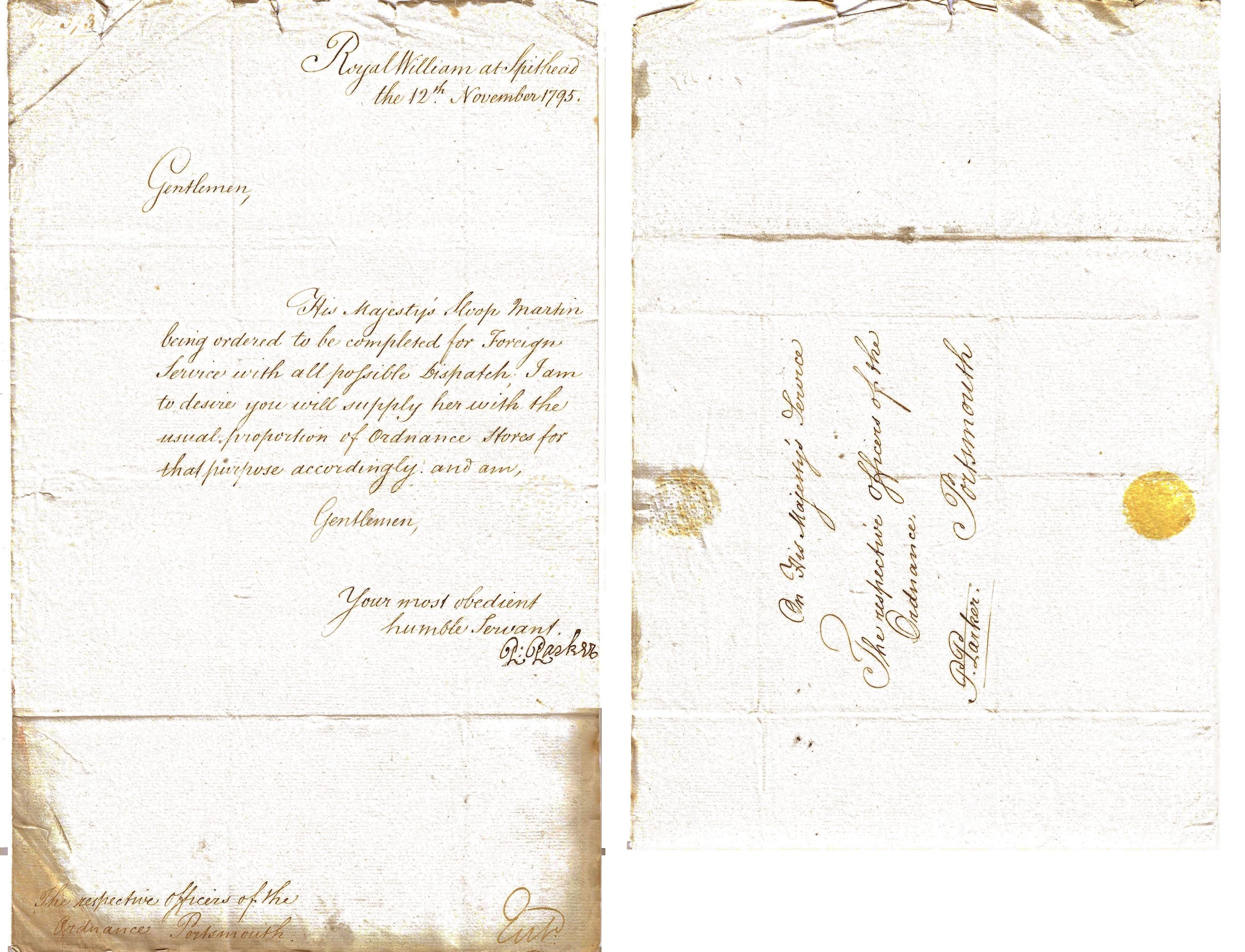
Also that day, HM Sloop Martin (1790), having been serving as a yacht for Caroline of Brunswick, under the command of William Lobb, was ordered to be equipped for foreign service. She departed for the west coast of Africa in December commanded by Samuel Sutton.
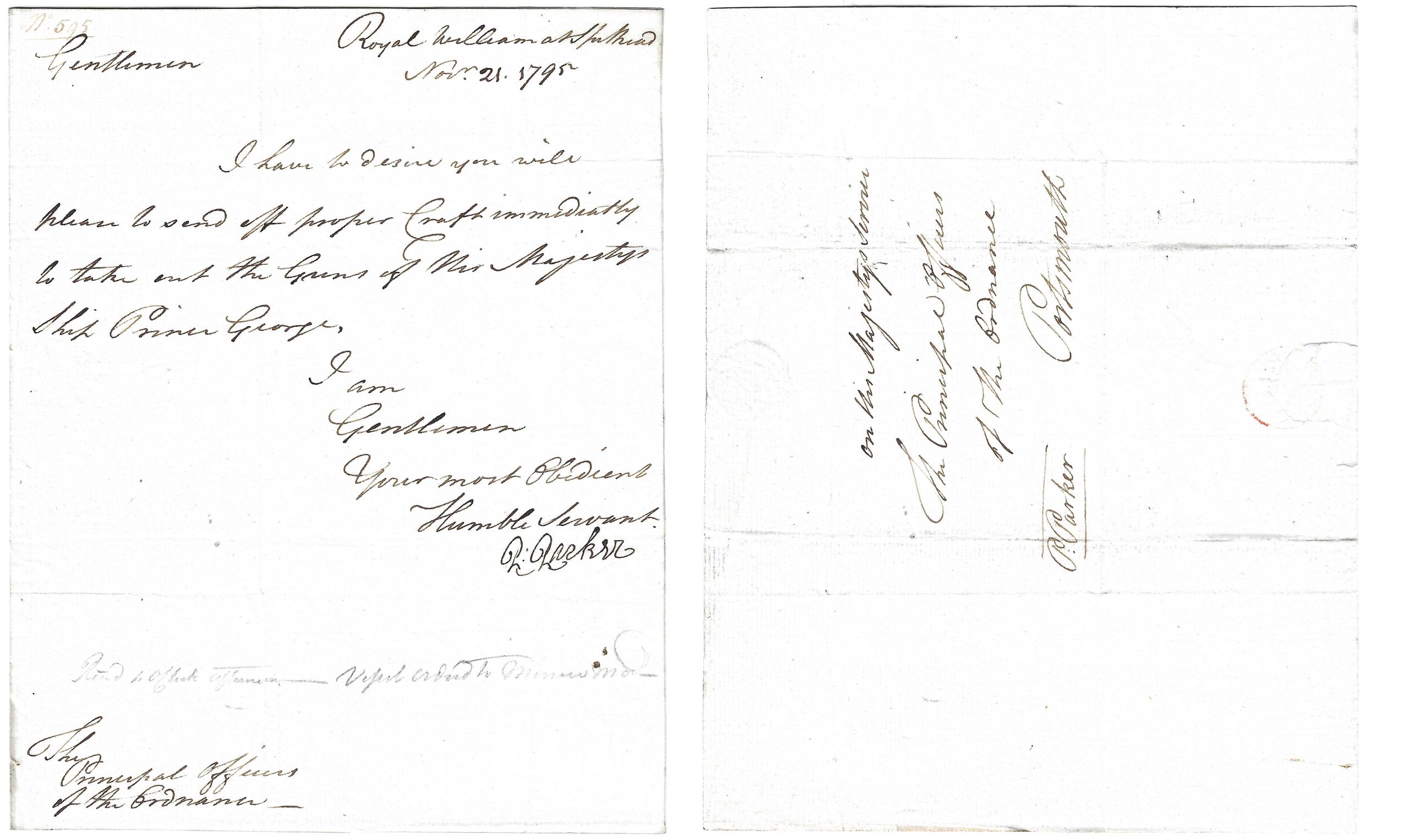
This message, sent from the Royal William, at Spithead, is signed by P. Parker, likely to be Sir Peter Parker who was, at the time, Commander in Chief, Portsmouth.
View in new tab:
The storekeepers, having replied to the letter of the 10th regarding carronades for Amethyst, saying that they were more than the stores had in stock, but suggesting to The Board that they reassign returned guns in lieu. They are given the go ahead.
View in new tab:
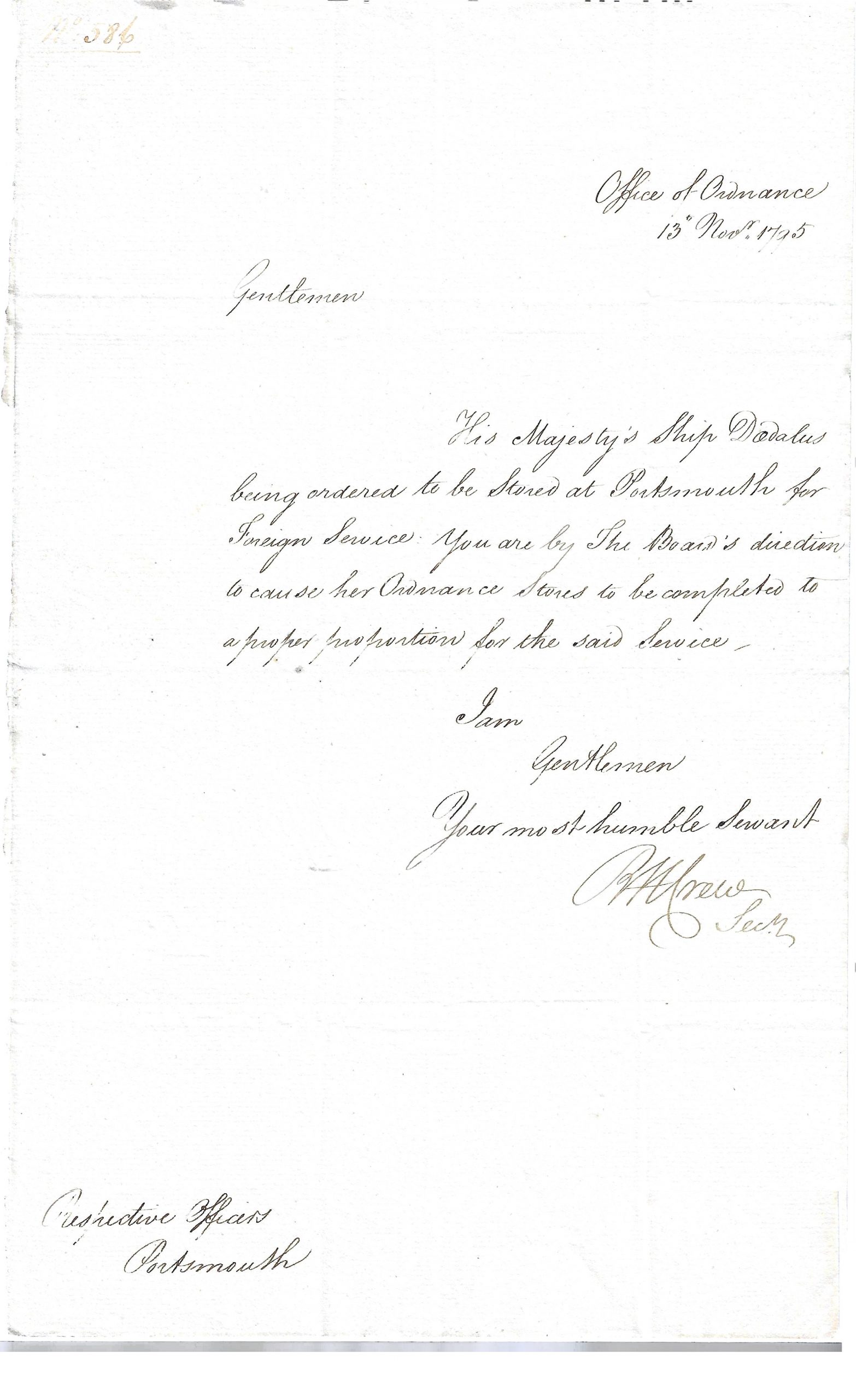
On 13th November 1795 HMS Daedalus, under command of was ordered to be prepared for foreign service. She then sailed for the west coast of Africa under the command of George Countess who later took her to Jamaica.
View in new tab:
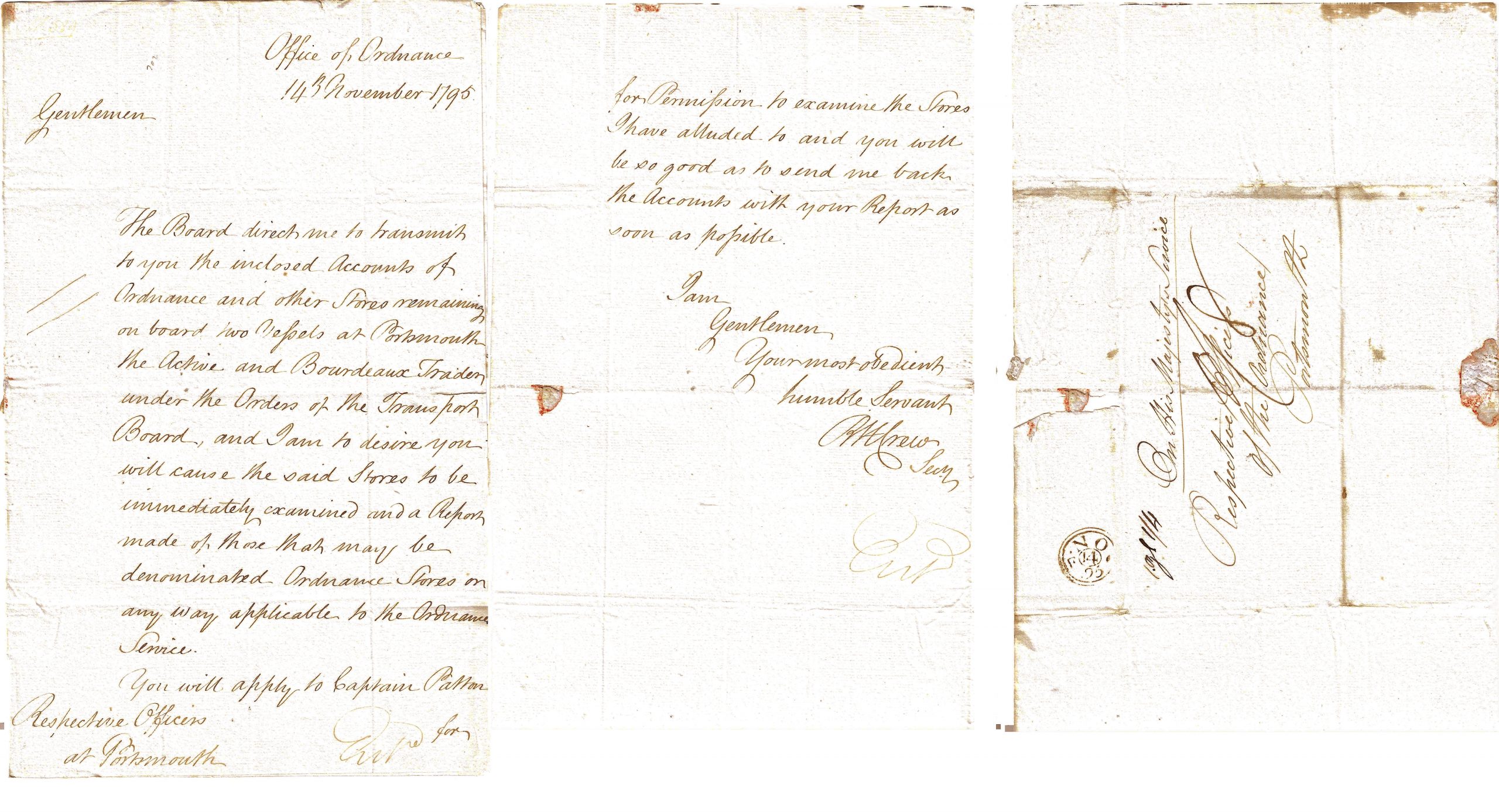
On 14th November 1795 a letter from The Board directs the storekeepers to inspect the ordnance and other stores delivered by two vessels: Active and Bourdeaux Trader. It is difficult to find information on either vessel as Active, a Liverpool privateer, launched in 1789, was reported as having foundered in 1794. However, the vessel is listed as both a brig of 100 tons and a sloop of 165 tons. A brig would have been a post captain’s command, whereas a sloop would have been commanded by a lieutenant, known as ‘master and commander’. Perhaps these were two separate vessels? Bourdeaux trader was reported wrecked in 1787, and re-floated.
View in new tab:
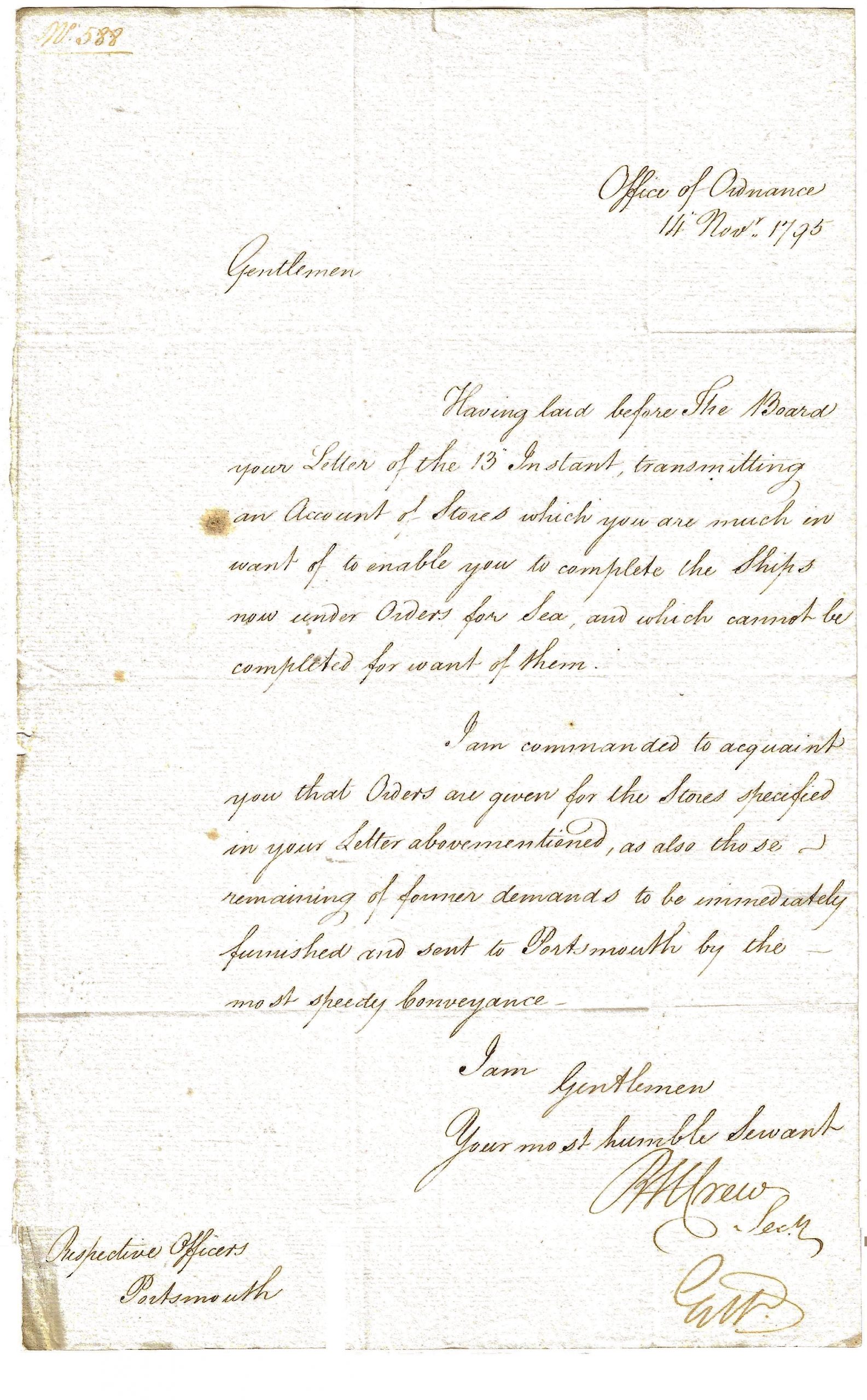
Again, on the 14th November 1795 The Board wrote to advise that the stores required to supply ships for duty will be sent ‘by the most speedy conveyance’.
View in new tab:
On 17th November 1795 a letter from The Board advises that Russian ships, forming part of Admiral Duncan’s squadron, should be supplied by the dockyard, but that demands for stores should be countersigned by Admiral Duncan. The Royal Navy worked with the Russian navy in partnership for about five years in response to the French revolutionary forces. Admiral Duncan’s ships were supported by Russian ships in blockading the Dutch invasion ports.
Admiral Duncan went on to defeat the Dutch fleet off Camperdown on 11 October 1797.

View in new tab:
Two more letters that day instruct the stores to resupply vessels for Channel Service. The first is for HMS Romney.
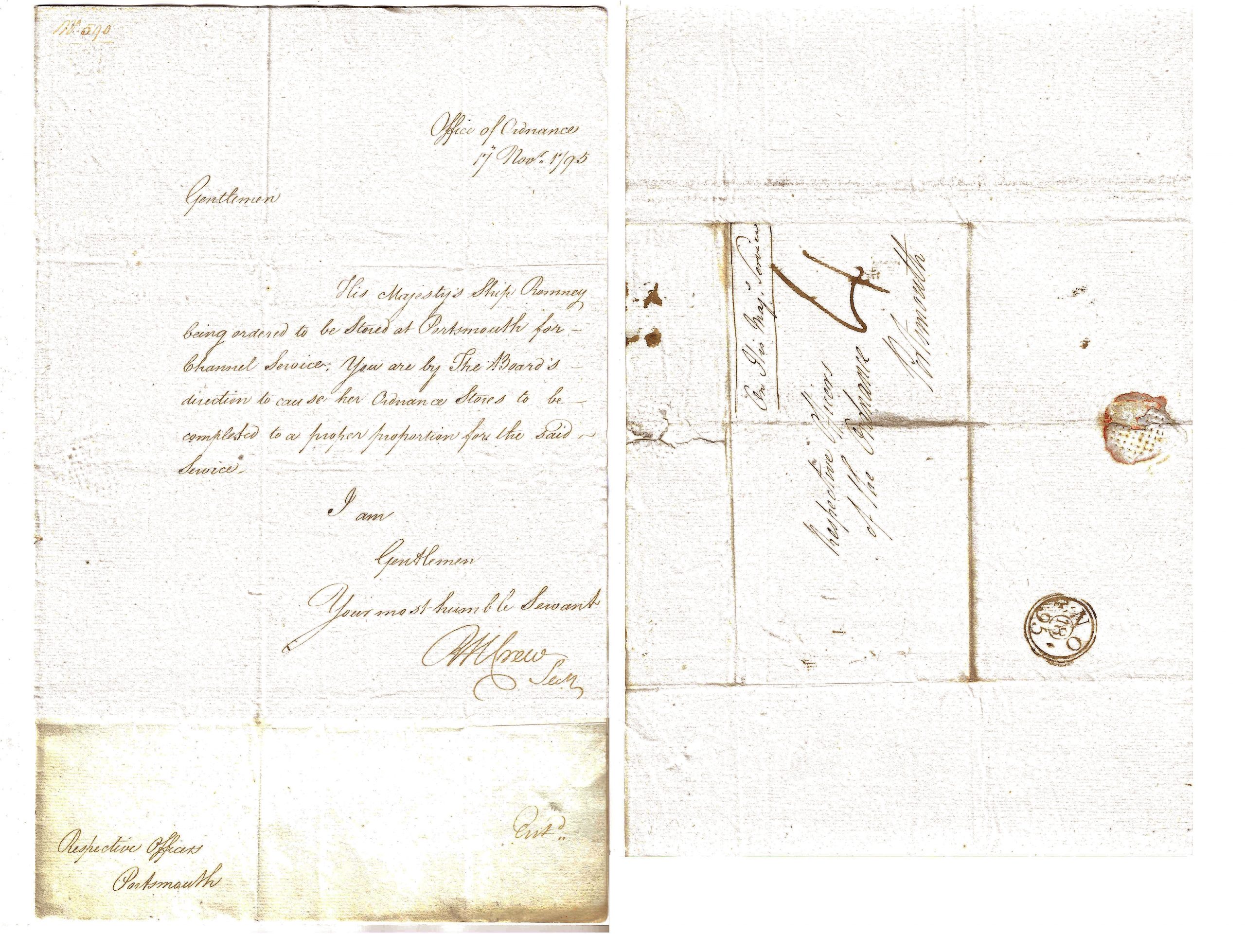
View in new tab:
The next is for HMS Stag and HMS Ramillies. again, refitting for Channel Service.
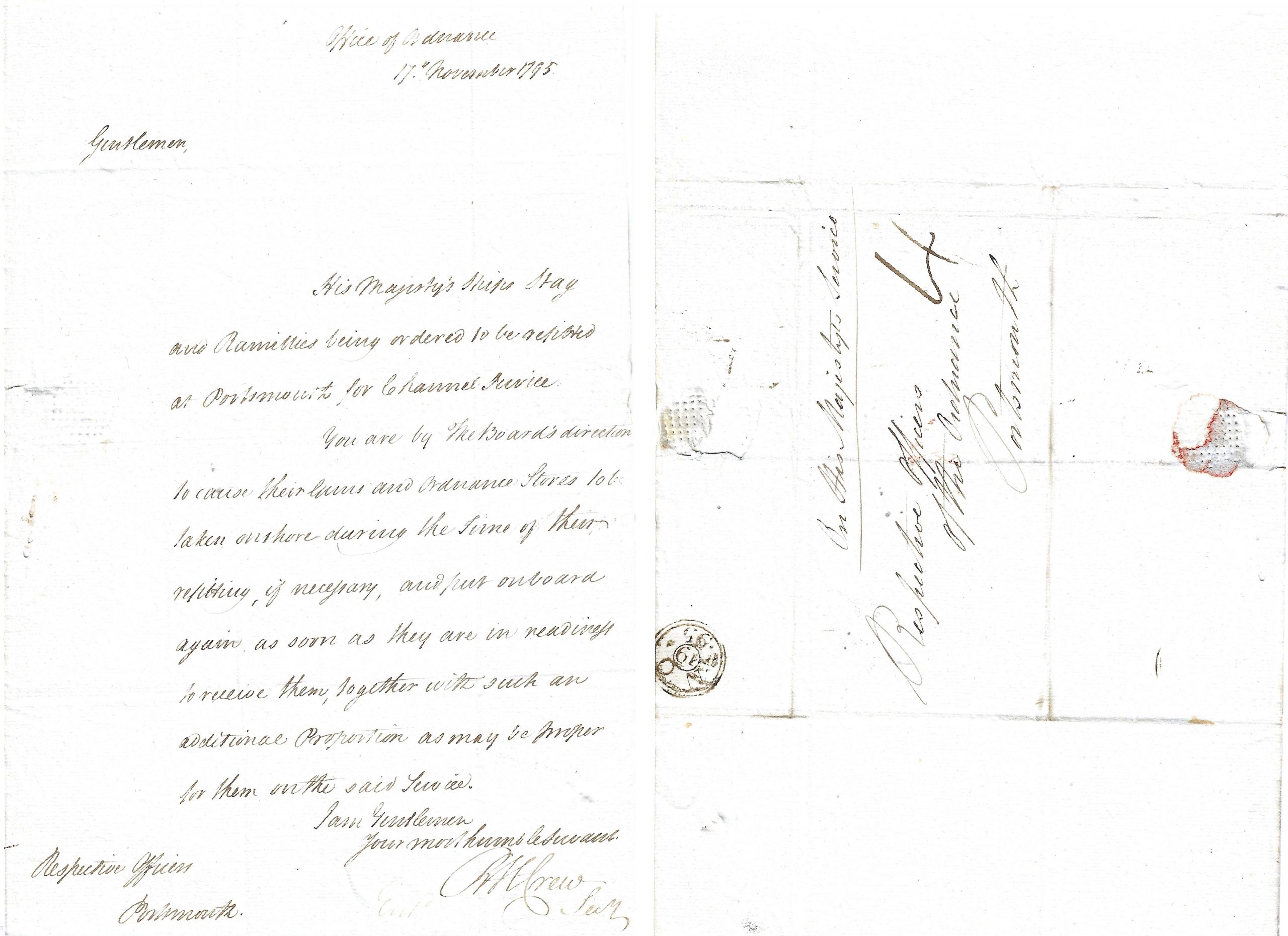
View in new tab:
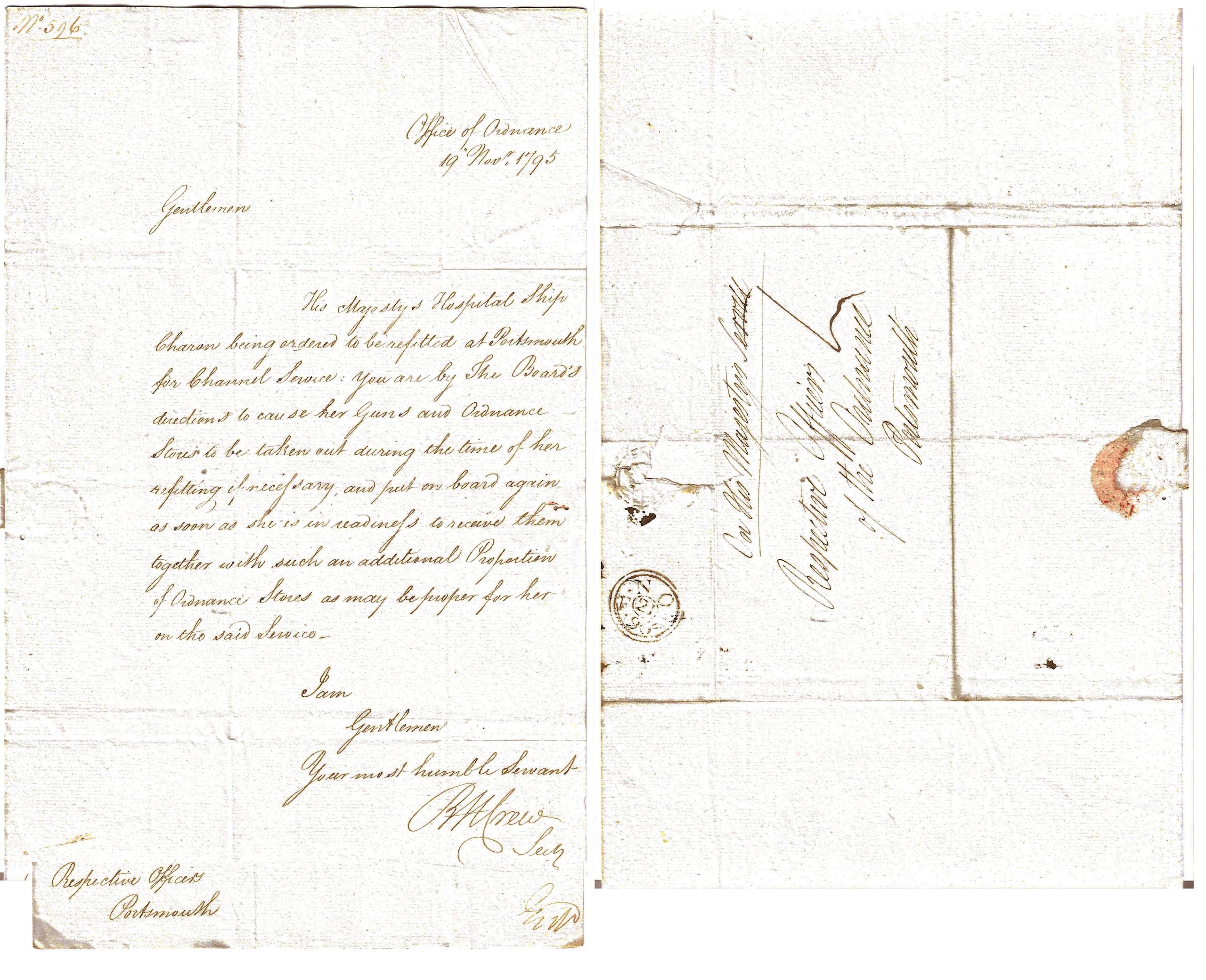
View in new tab:
A letter of 21st November 1795 stating that the storeship Expedition is returning to The River from Portsmouth commanded by Lt. Rop. The storekeeper is ordered to fill her with unserviceable stores to be used as ballast.
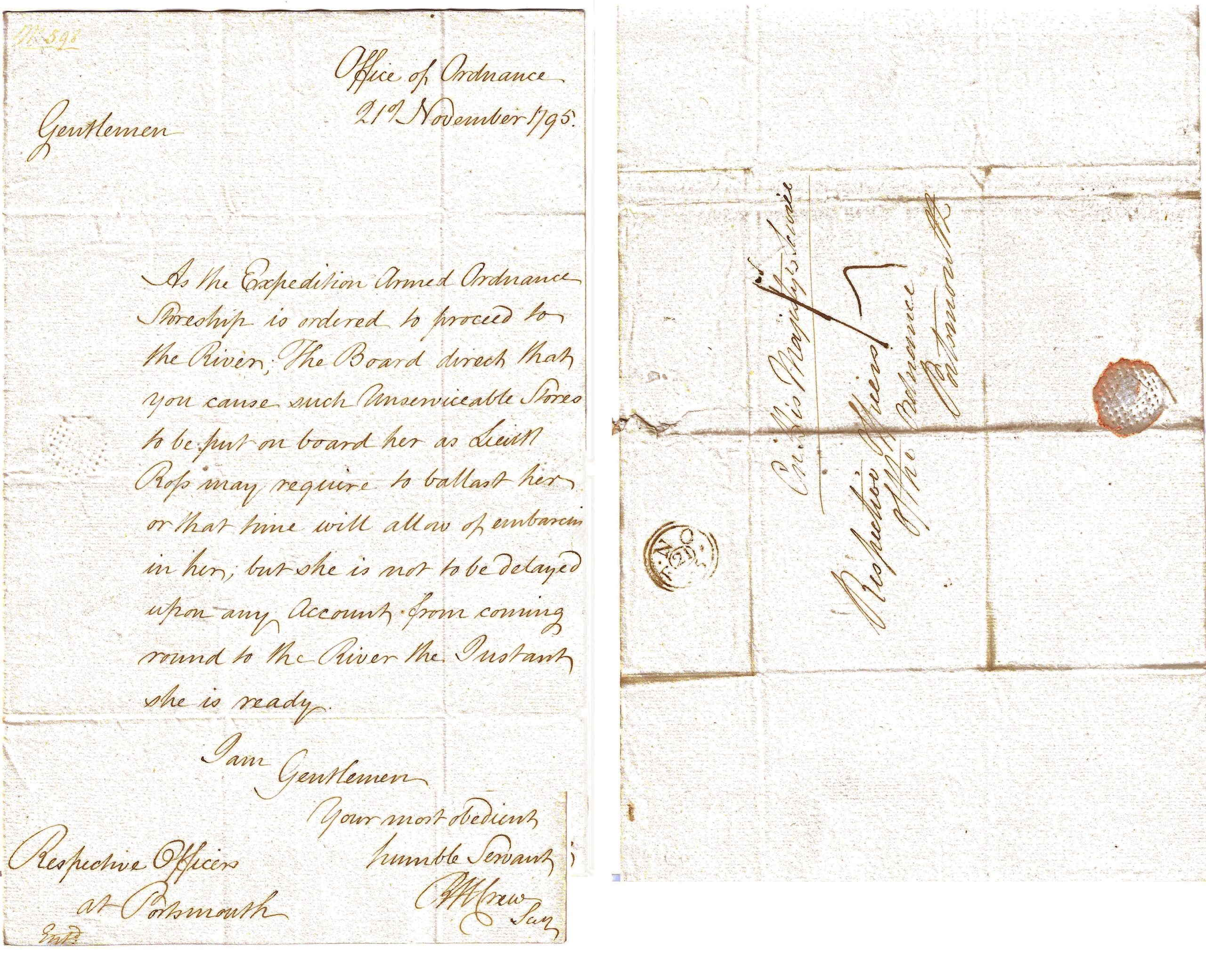
View in new tab:
Also on the 21st November another note from P. Parker on the Royal William at Spithead, ordering the Dockyard to remove the guns of HMS Prince George (1772).
View in new tab:
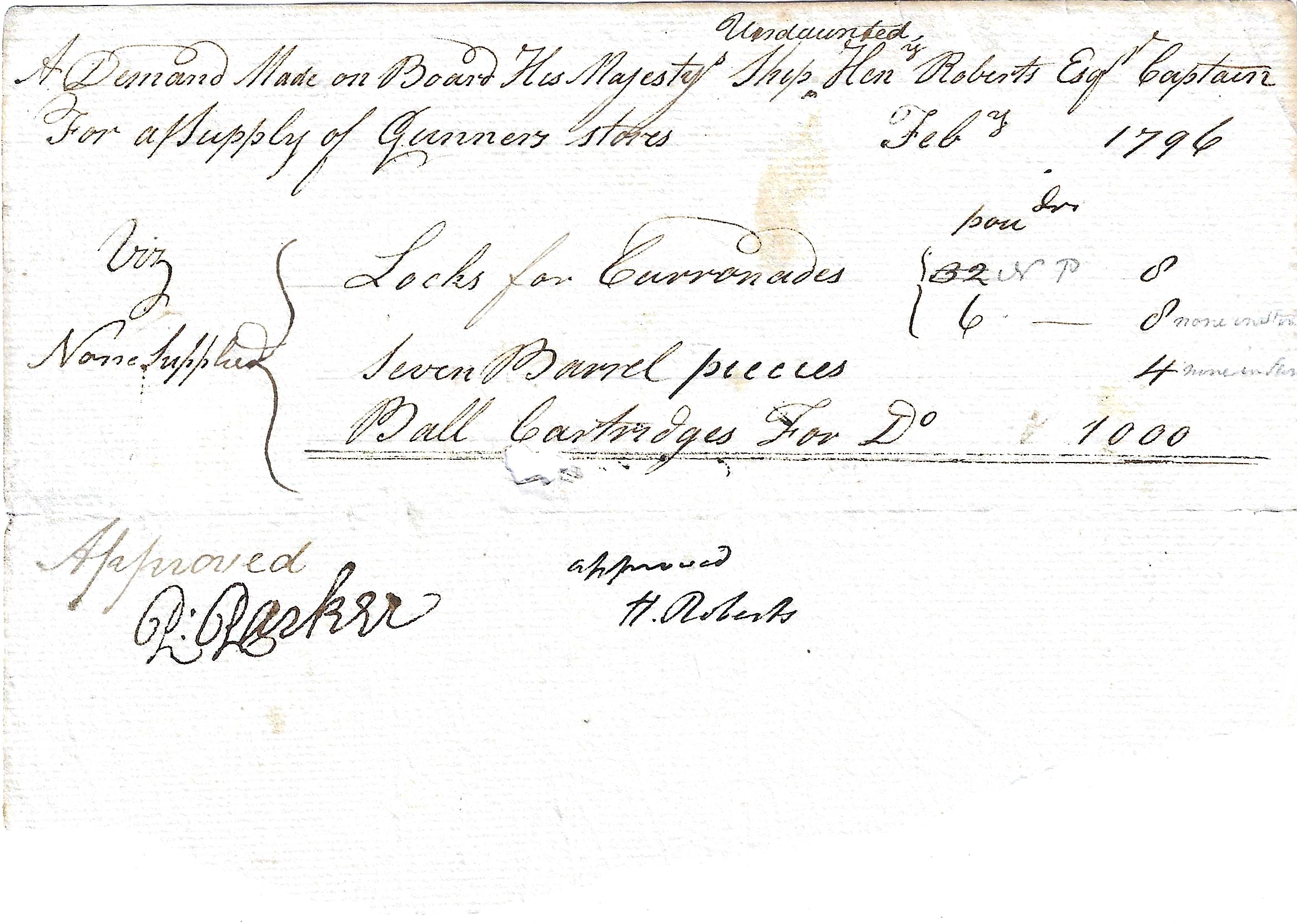
The Royal Navy commissioned Mr. Nock, gunsmith of London, to supply volley guns intended to be used from the fighting top of a ship to pick off the officers on an enemy’s quarterdeck. These guns had seven barrels which fired .45 pistol shot, all barrels fired at the same time, so the recoil was considerable, which was their downfall as it required sizable men to fire them. These guns were made famous in the television series ‘Sharpe’.
This small note from Captain Henry Roberts, commander of HMS Undaunted (formerly Arethusa), In February 1796, requests four of these volley guns together with 1000 ball cartridges. He also asks for locks for carronades, a clear sign of the times as the early documents talked of linstocks and snaphance muskets, but we are now using locks, carronades and volley guns. Unfortunately Captain Roberts, whose signature appears on the note, died of yellow fever on 25th August 1796. HMS Undaunted was wrecked later that month.
View in new tab:
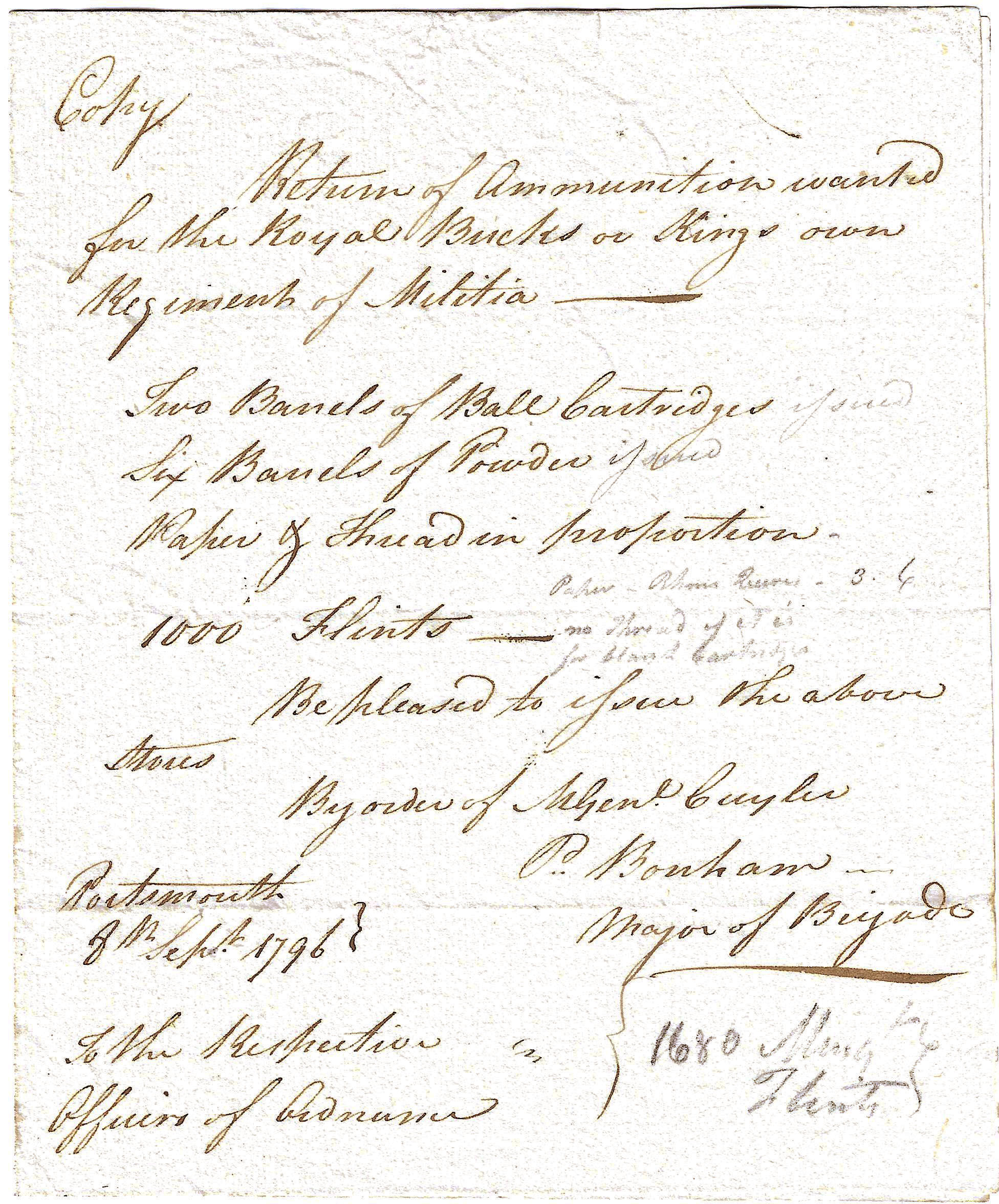
In September 1796 we see a note from the militia demanding powder, flints, paper and thread. There is no endorsement, but pencilled annotations infer that the stores were, in part, supplied.
View in new tab:
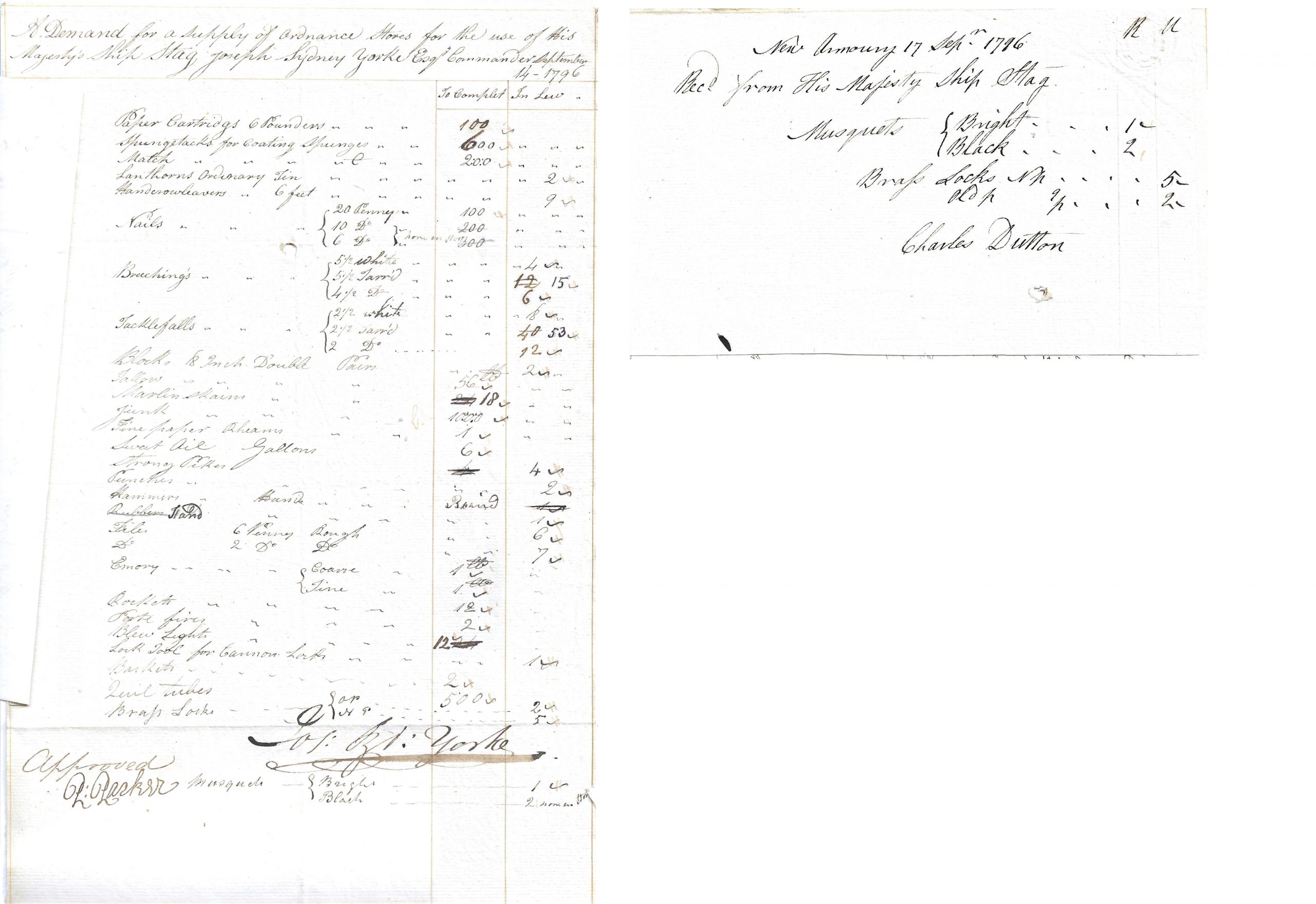
The commander of HMS Stag, Joseph Sydney Yorke, also writes sending a well-presented and very concise demand for stores which was approved by P. Parker.
View in new tab:
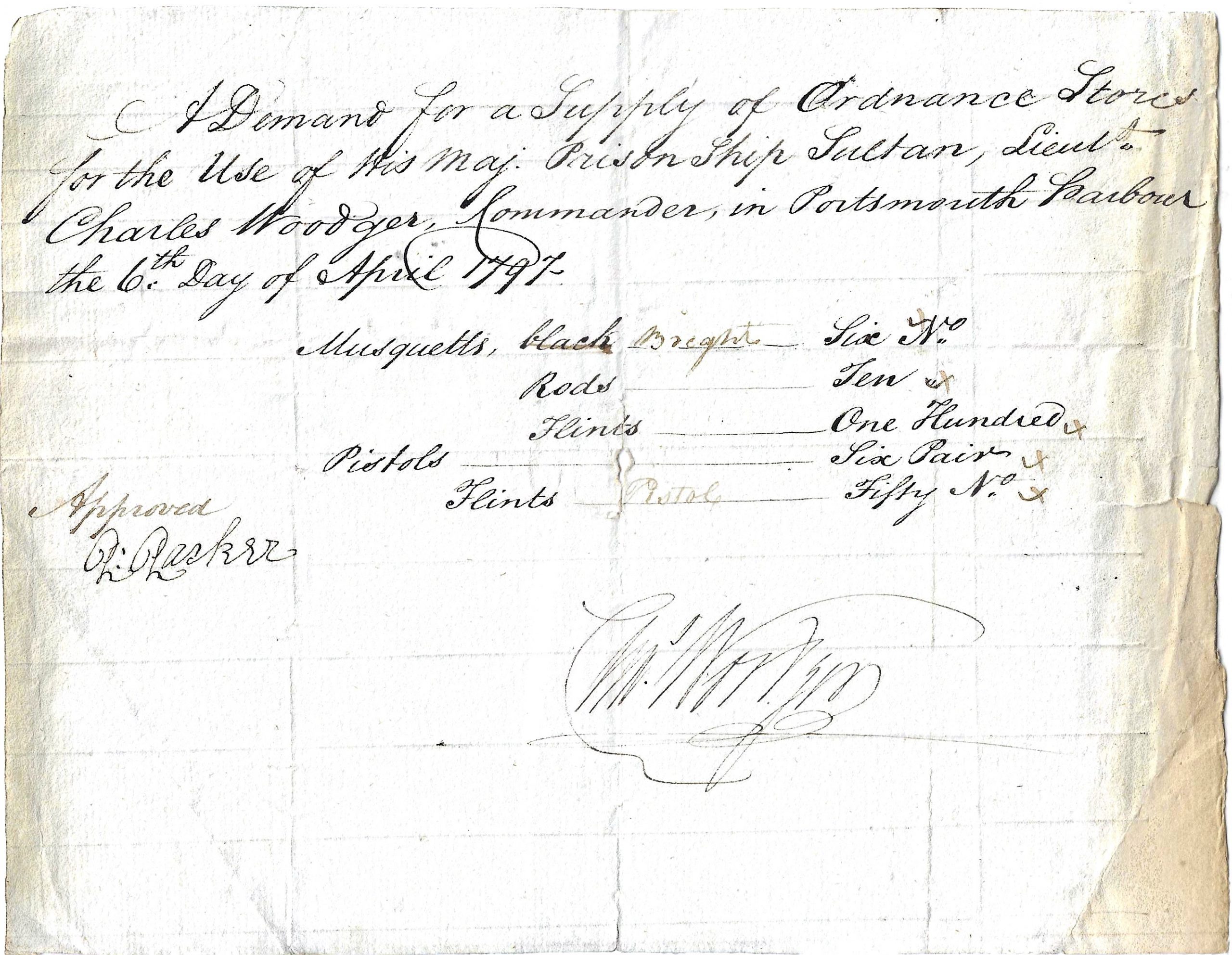
Finally, on the 6th April 1797, Lieutenant Charles Woodger commanding the prison ship HMS Sultan (1775), a vessel that had considerable battle honours, requests muskets, pistols flints and rods. What a miserable job the poor man must have had. We can see that the storekeepers have substituted bright muskets for black and annotated the flits as ‘pistol’.
Interestingly, on the 16th April 1797, the fleet at Spithead mutinied, perhaps Lt. Woodger had prior knowledge and so ordered additional arms in preparation.
View in new tab:
That’s all folks!