You will find download buttons for the scans and transcripts, or you can view them online by clicking the links where it says “View in new tab:”.
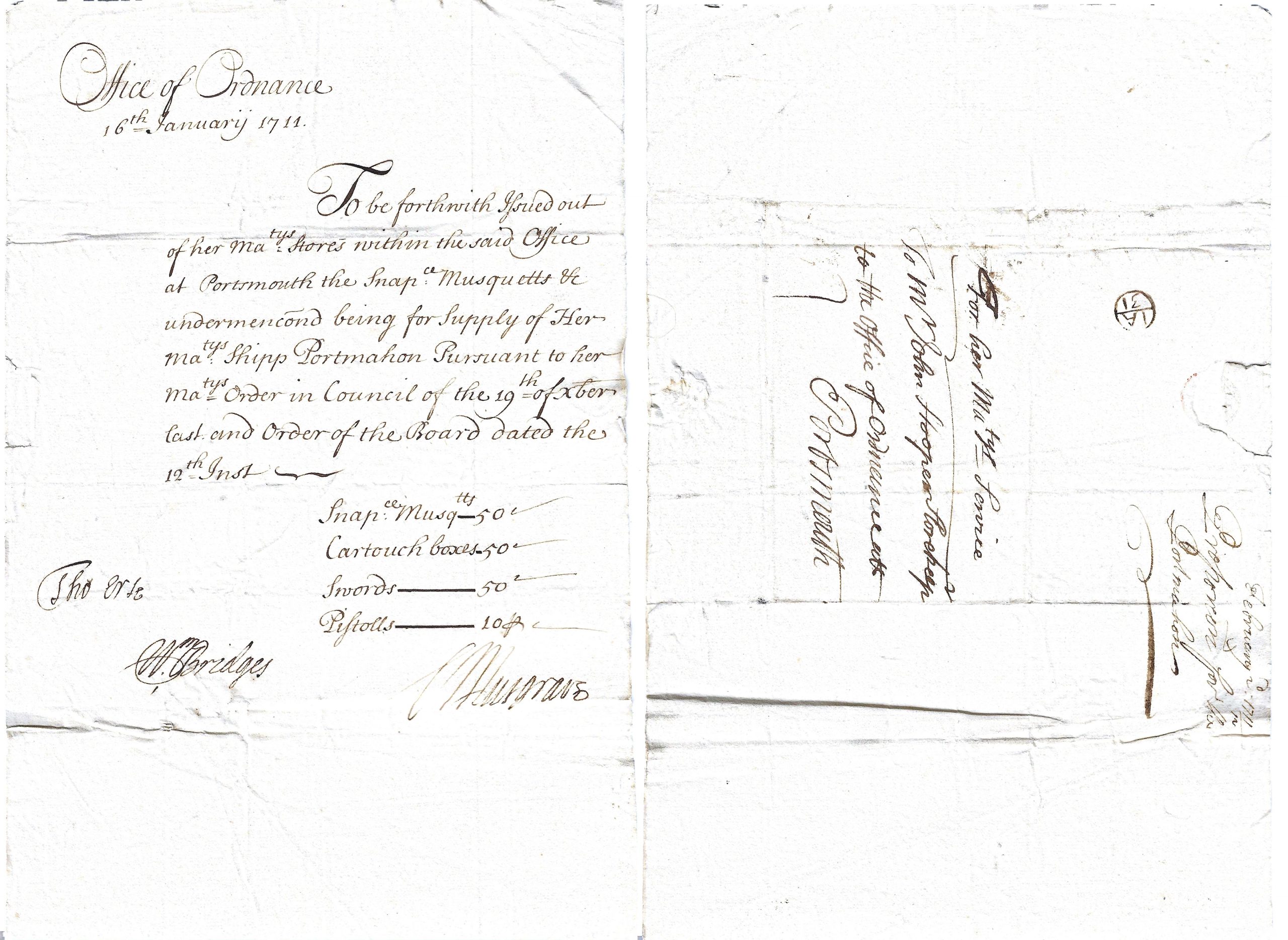
1711 starts with an instruction to supply small arms to HMS Portmohon (1711).
View in new tab:
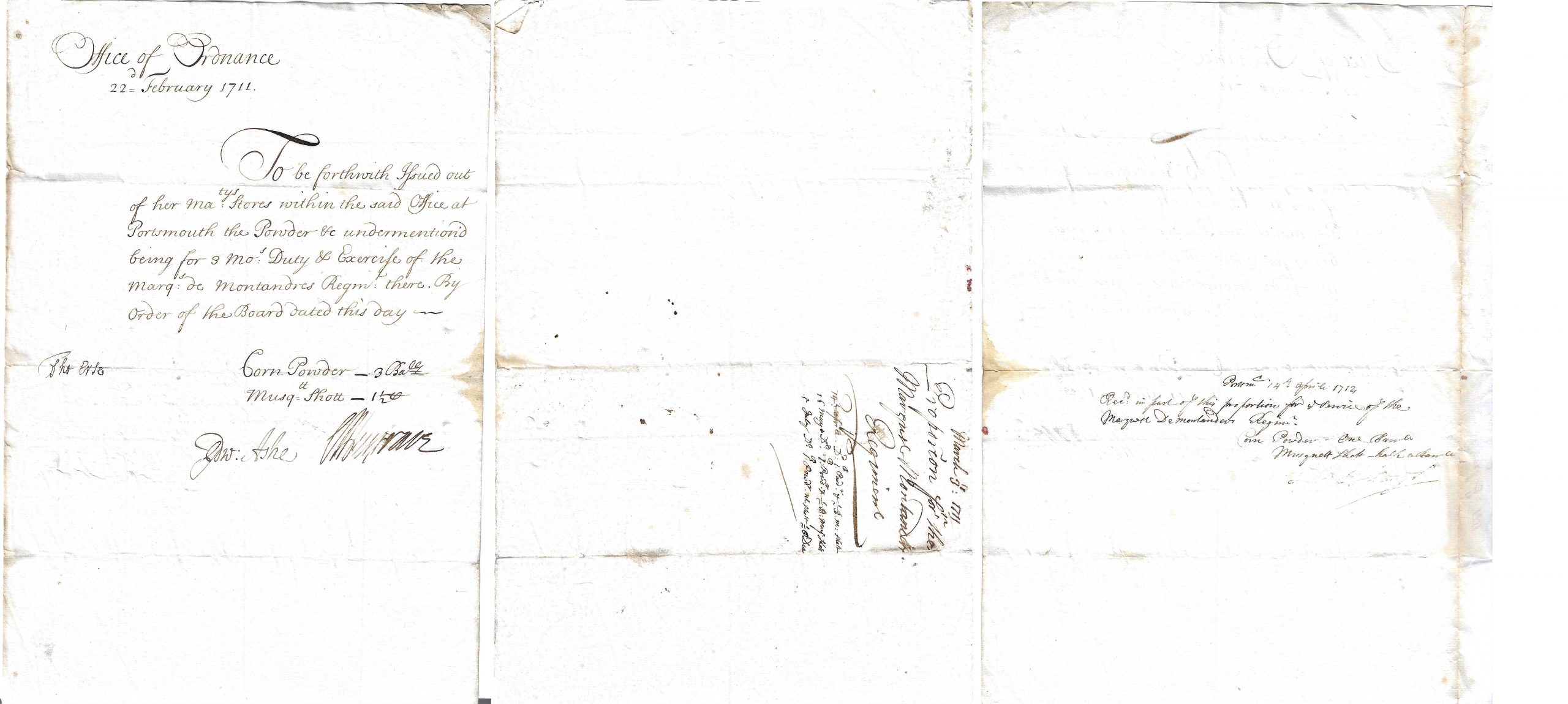
On 22nd February 1711 The Board ask Mr. Hooper to supply corn powder and musket shot for the Marquis de Montandre, also known as Francis de La Rochefoucauld. It is beautifully written and demonstrates that a double ‘s’ was written ‘Ss’, we see this in the first sentence: “To be forthwith ISsued…”. Something that often catches people out when trying to transcribe documents from this period.
View in new tab:
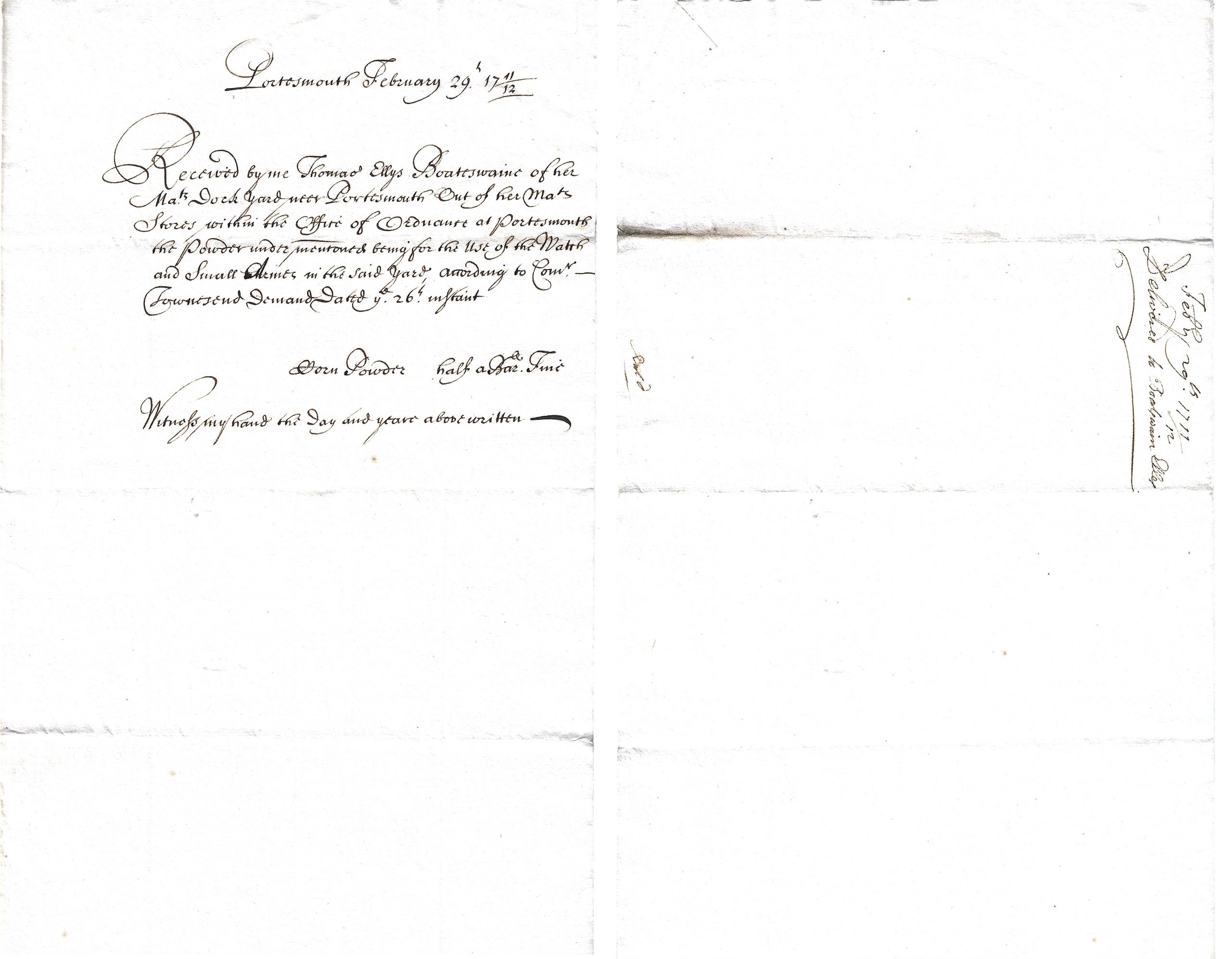
One would assume that Thomas Ellys, boatswain to Portsmouth Dockyard would, as his primary duty, be responsible for rope and rigging for the visiting vessels, but it would appear that he also had a hand in the protection of the yard as on February 29th, 1711, he was in receipt of powder for “Use of the watch and small armes.” Under order of commissioner Isaac Townsend who had a long and notable career in the navy. He is buried in Winchester Cathedral where there is an elaborate memorial to him.
View in new tab:
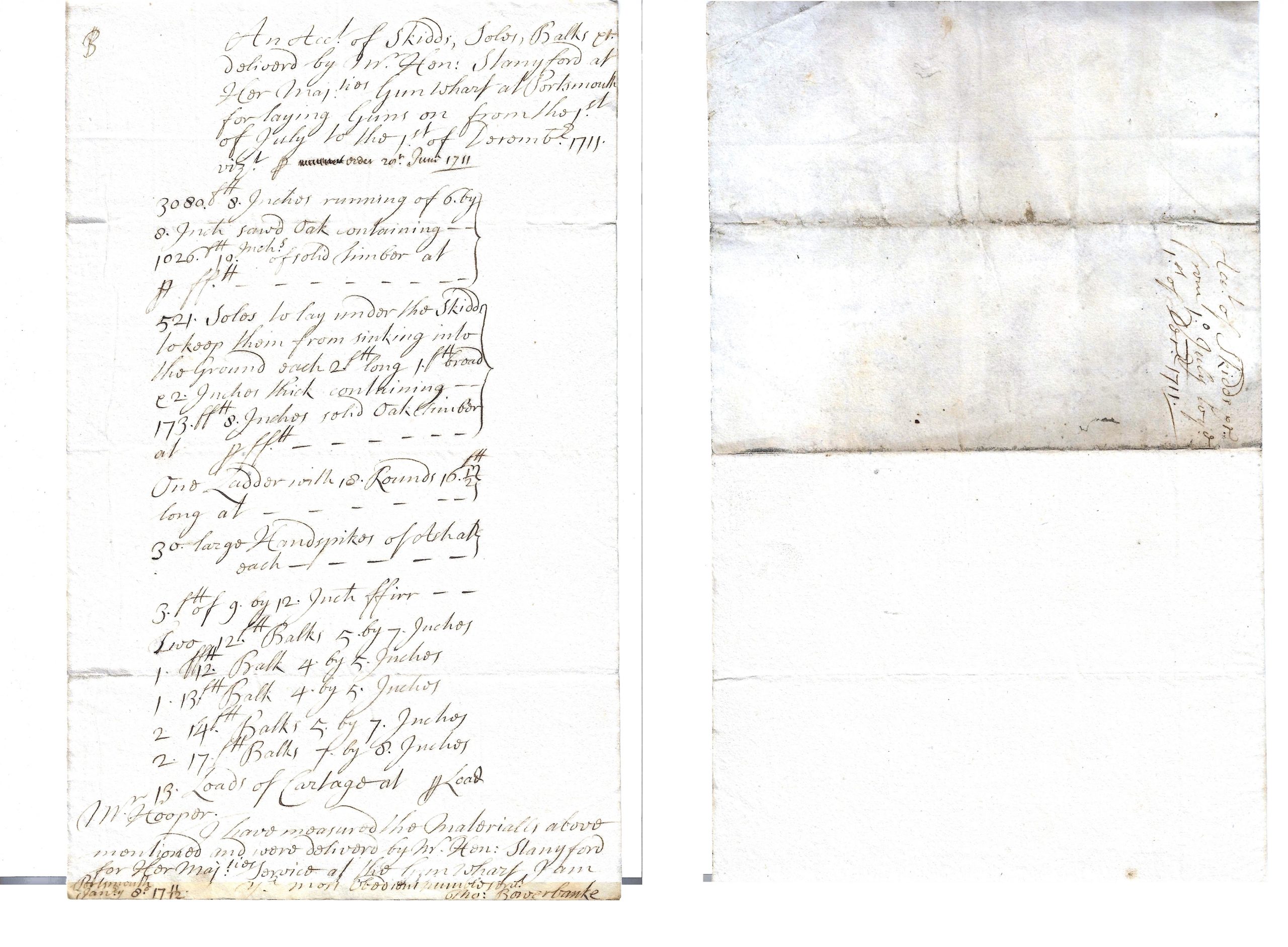
We can imagine a scene of the gun wharf where the guns would be laid out in neat rows on baulks of timber while the ships to which they belonged were undergoing refit. The order of 28th June 1711 lists the new timbers, supplied by Henry Stanyford, ‘for laying the guns on.’ The list is endorsed by Thomas Bowerbank.
View in new tab:
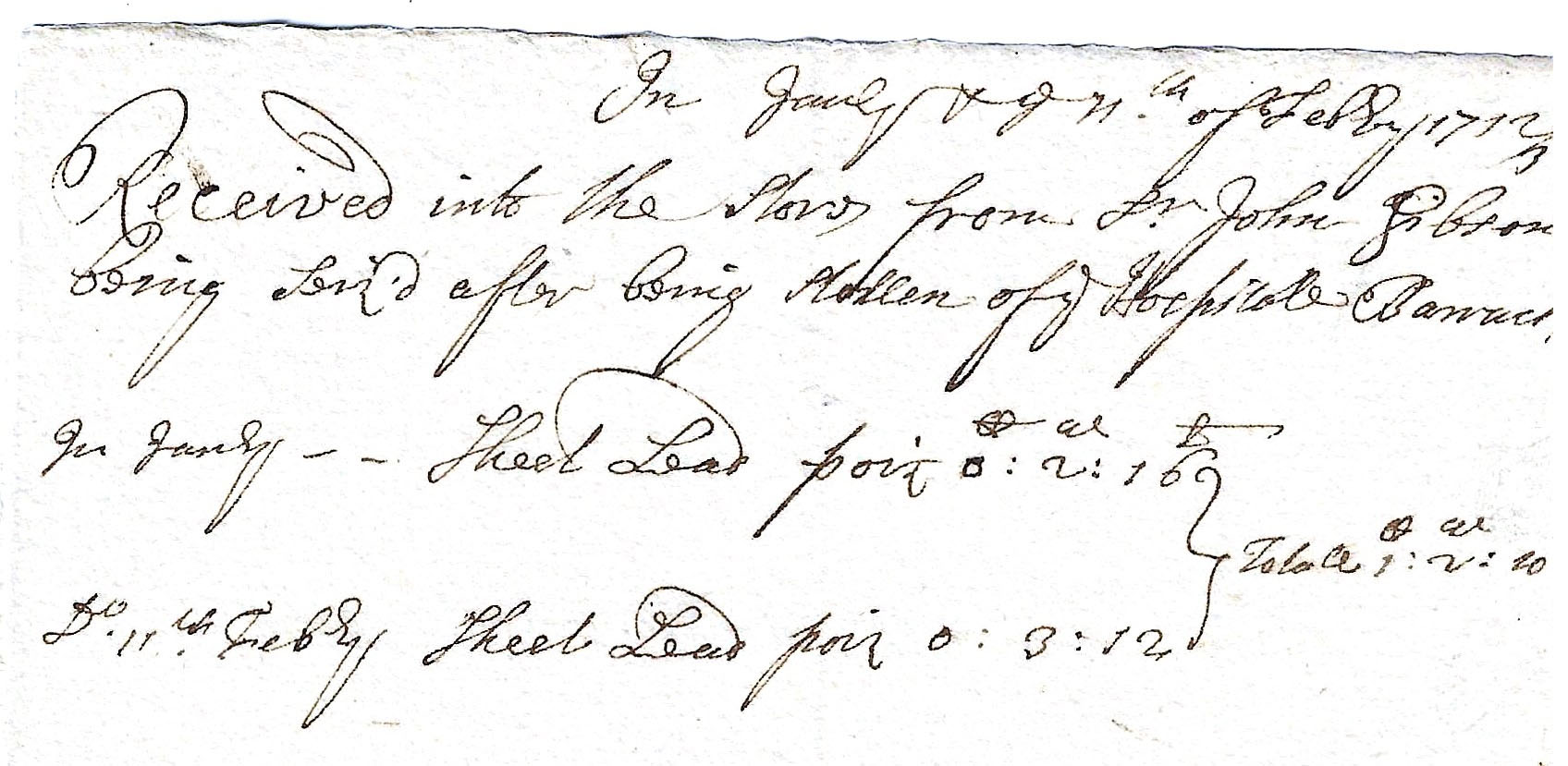
A receipt for sheet lead on 11th February 1712 says that the lead had been stolen from the Hospital Barracks. On a map dating 1850, there are two barracks shown: Colewort barracks was where Armoury Lane is now (on the site of the old Portsmouth power station), and Cambridge Barracks was where the Portsmouth Grammar School now stands.
View in new tab:
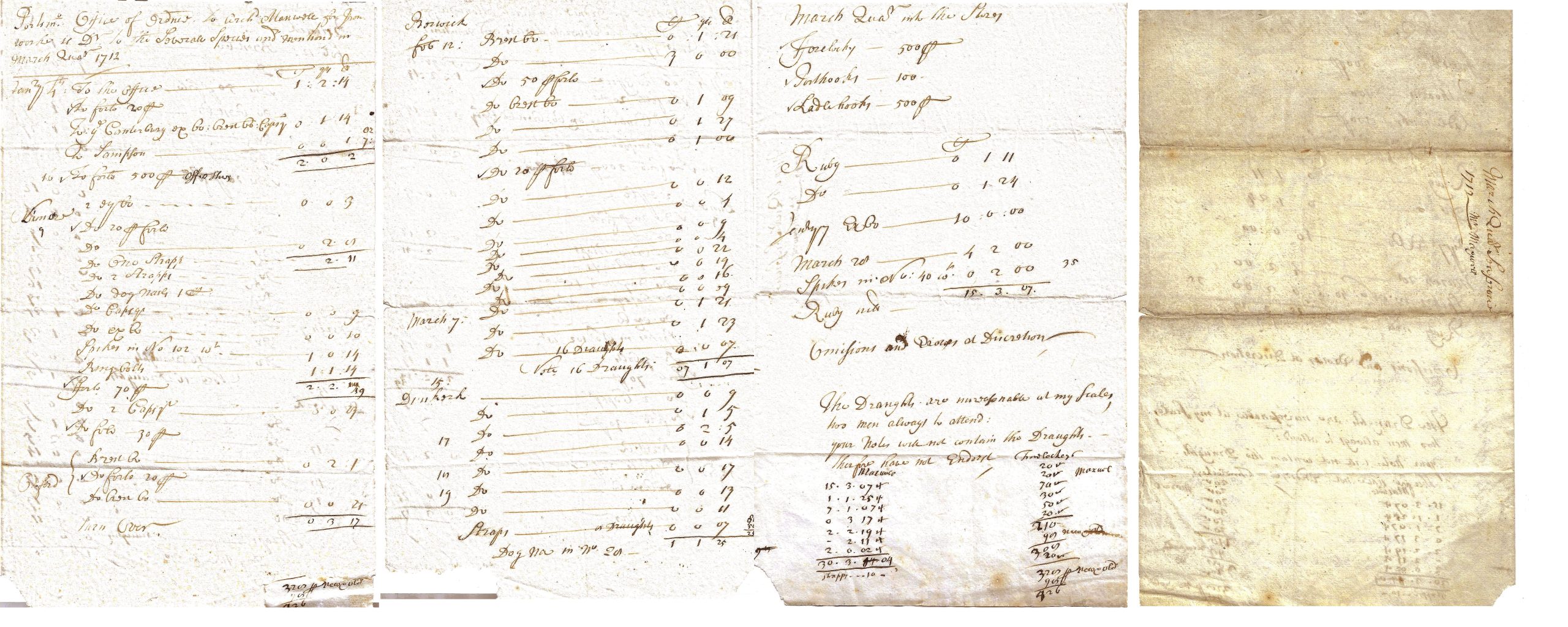
Unfortunately, Mr. Maxwell’s bill for March quarter 1712 iron works is so faded as to make it almost unintelligible.
View in new tab:
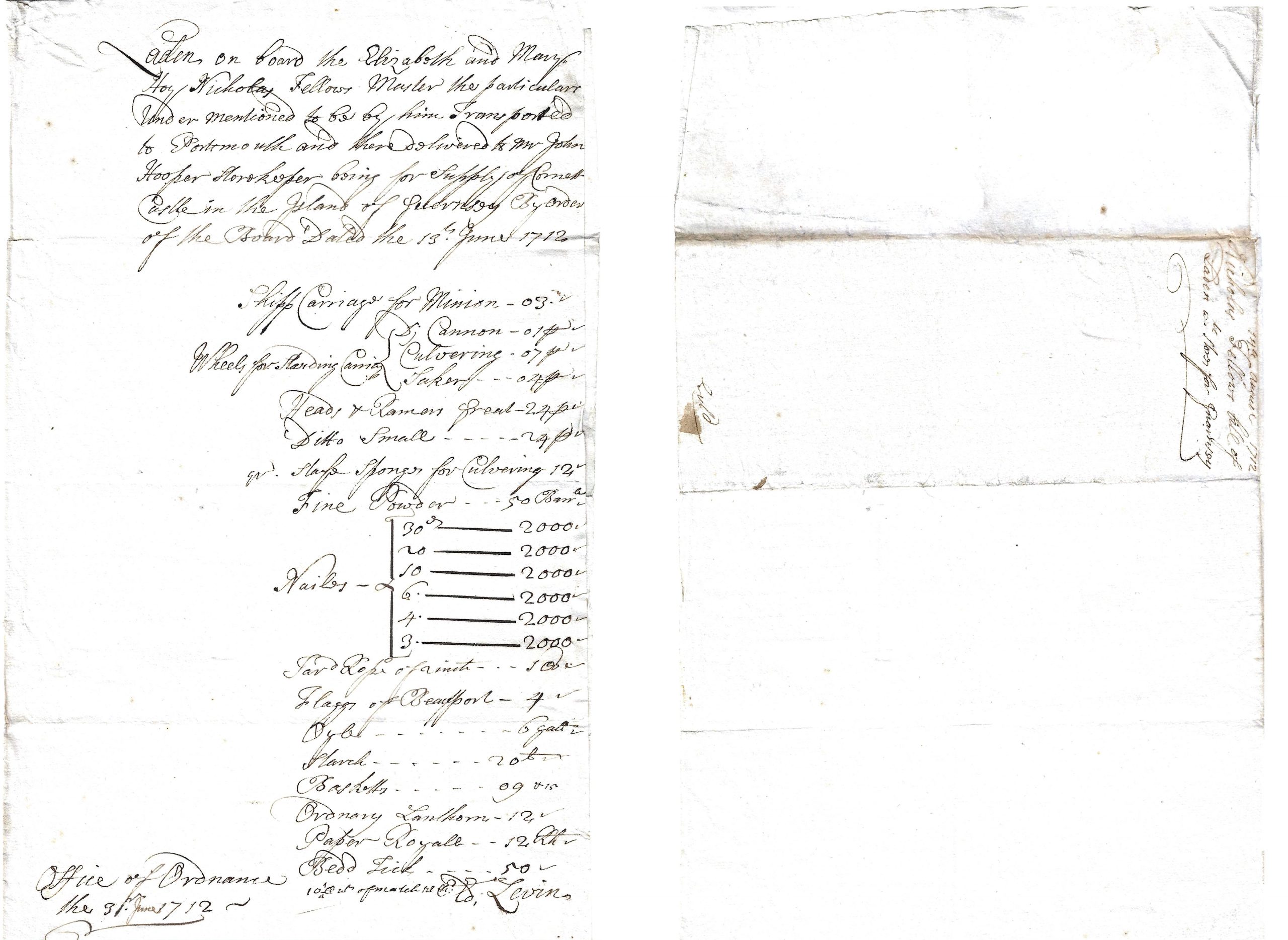
A bill of laden from Nicholas Fellows, master of the Elizabeth and Mary hoy in August 1712 lists among the stores a Flag of Beauport for Cornett Castle in Guernsey.
View in new tab:
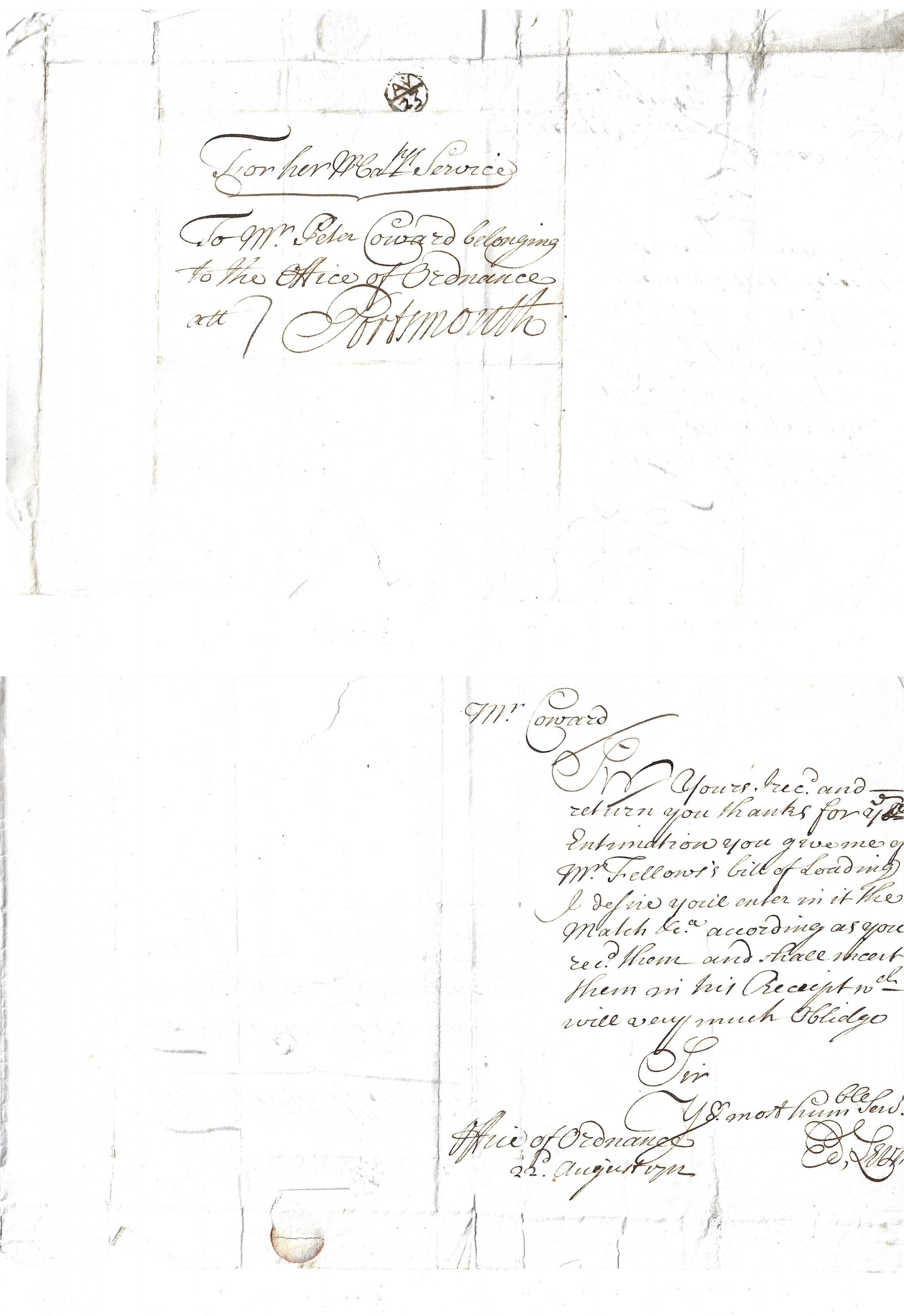
Next: letter from The Tower to Peter Coward regarding the load mentioned in Mr. Fellows’ bill of laden.
View in new tab:
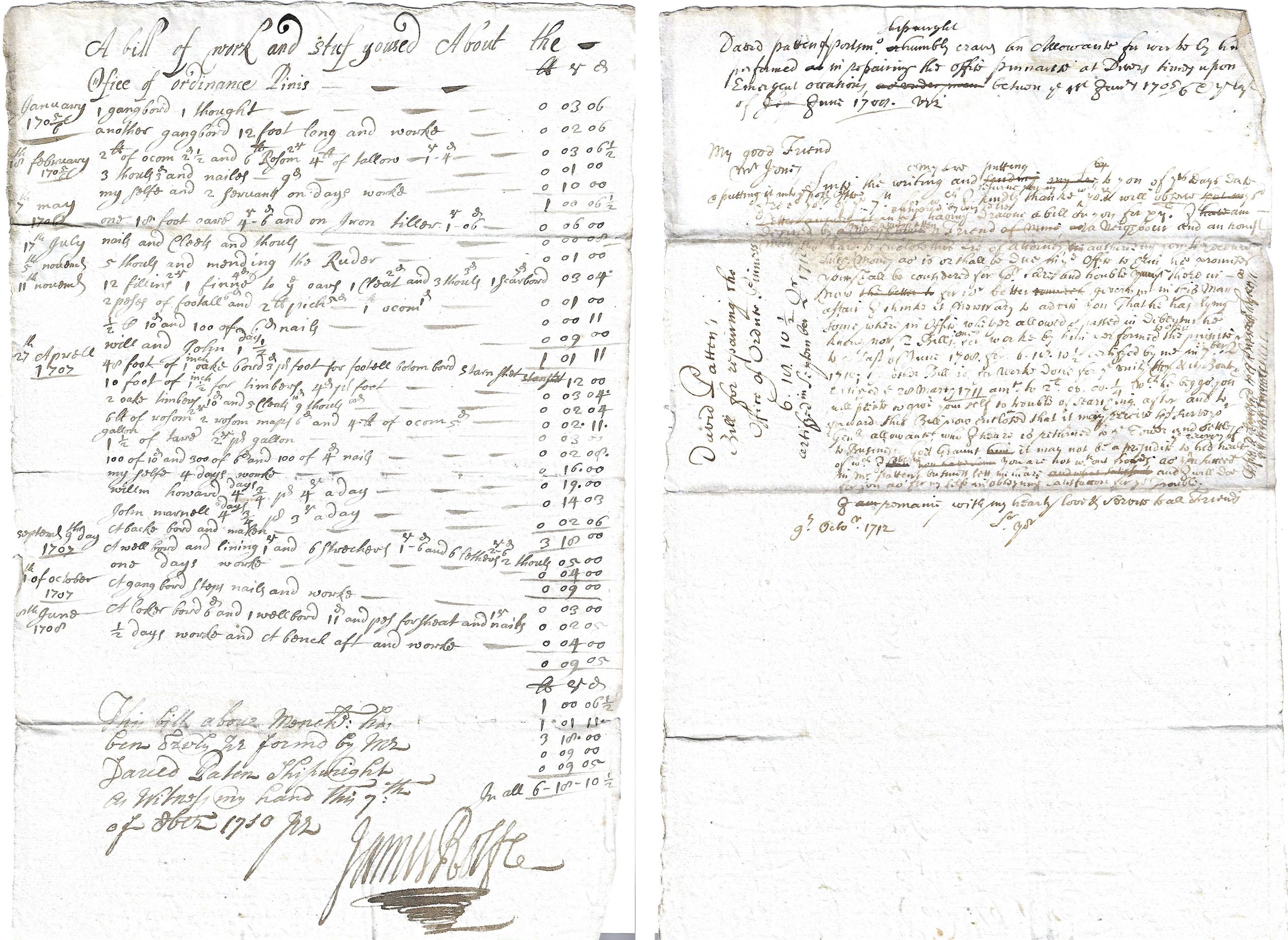
David Patten’s bill for repairing the pinnace was certified in September 1710, yet covers work done for a period beginning in 1705. To confuse matters further, there is a postscript, mostly unreadable, dated 9th October 1712. He may well have been a good carpenter, but his writing is most difficult to read. Another example of phonetic spelling; its about the sound of the words, not the spelling.
The last section of this I found impossible to transcribe, yet Philip Eley rose to the challenge and made a really good job of it.
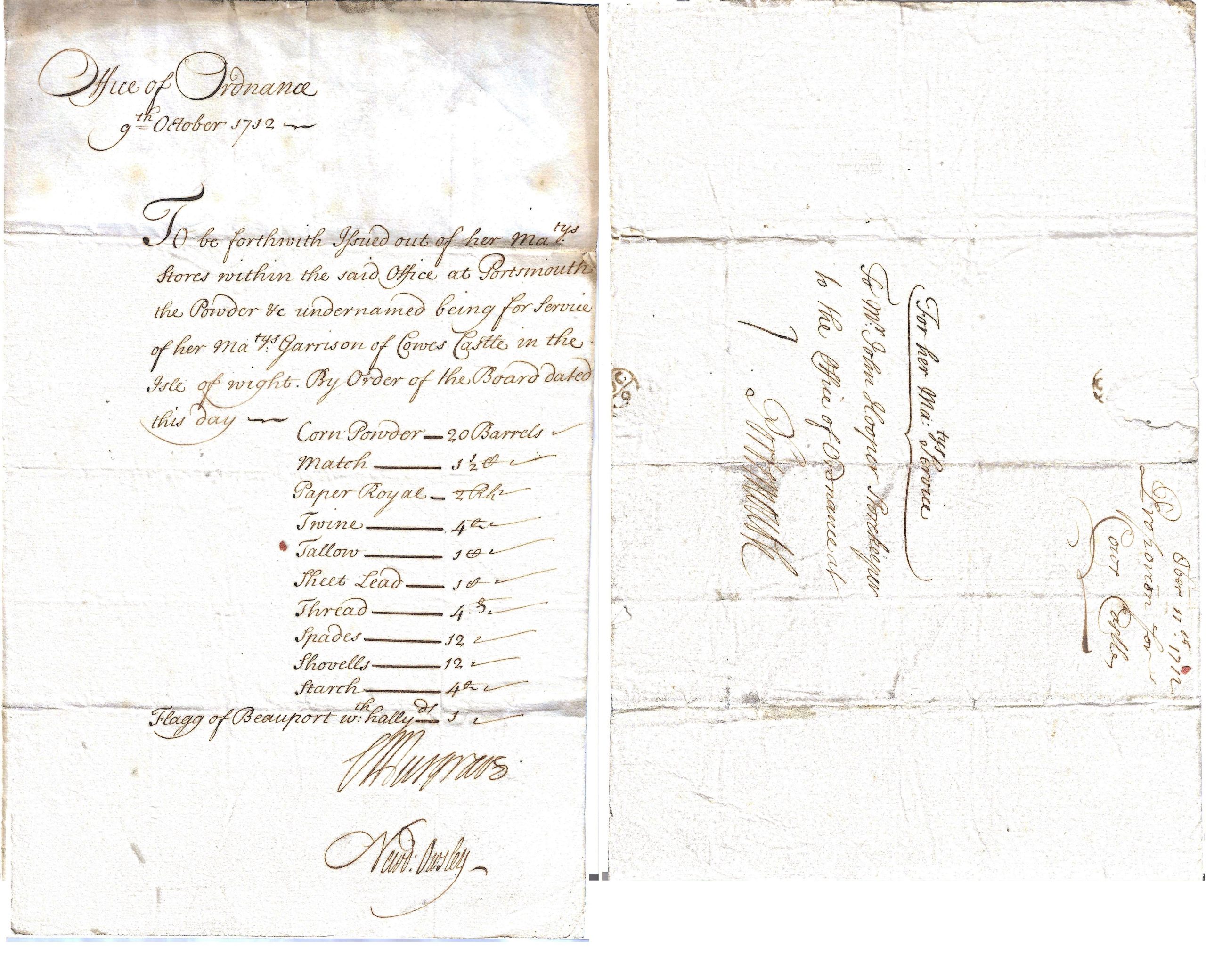
Also, on the 9th of October 1712 an order to supply Cowes Castle.
View in new tab:
A beautifully scripted list of gunner’s stores and a flag of Beauport to be issued to Cowes Castle.
View in new tab:
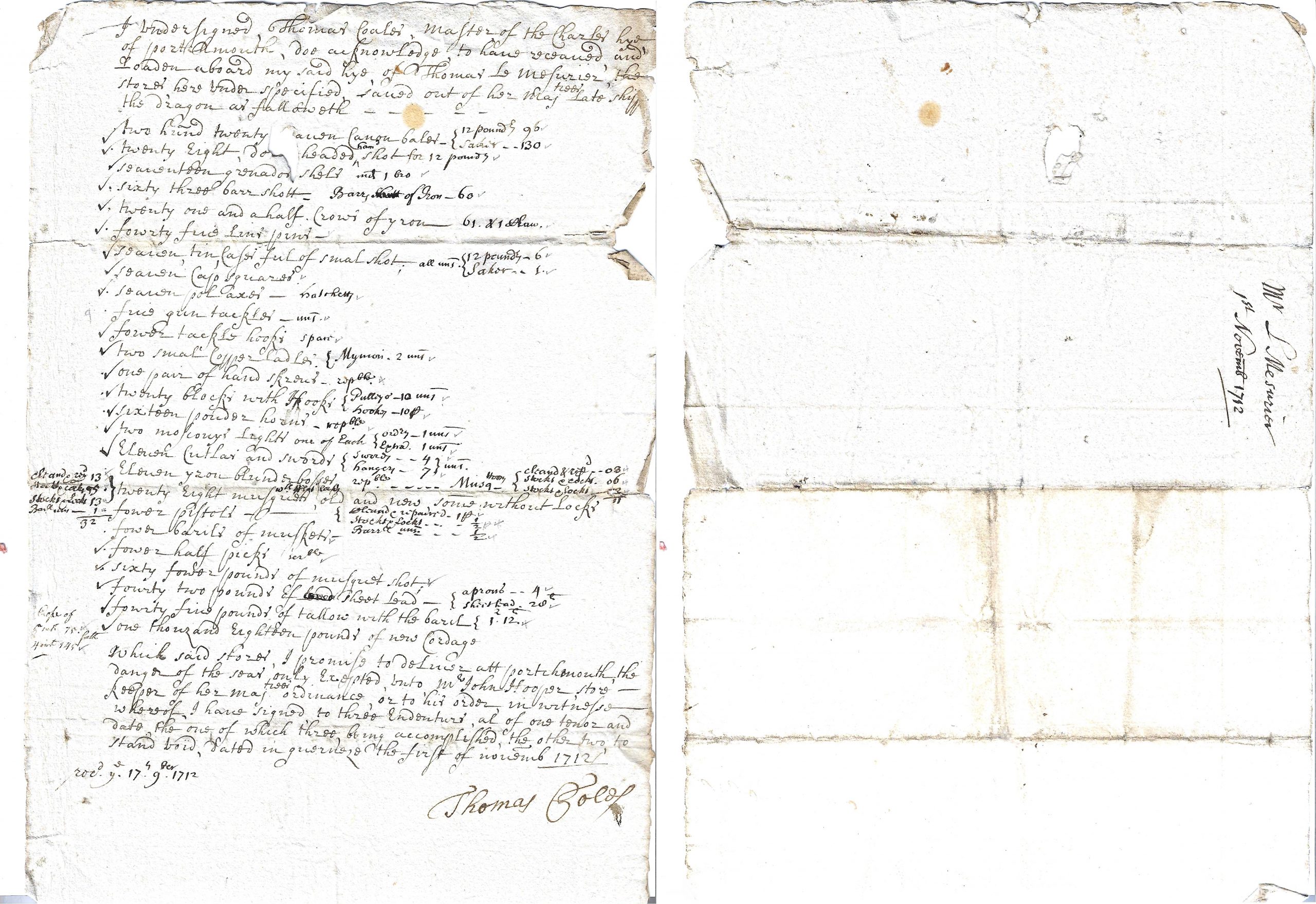
1st November 1712 Thomas Coles, master of the Charles hoy, lists the salvage from the wreck of HMS Dragon (1647) that was wrecked, with no loss of life recorded, on the Casquets, a group of rocks to the northeast of Guernsey in the Channel Islands. The note is somewhat damaged, and very difficult to read, but still gives us a good insight into just how much was salvaged from the wreck. Although daunting at first sight, the whole letter is a joy to read.
Some of the abbreviations and contractions are challenging, for example: ‘uns’ for unusable, ‘rePble’ for repairable, ‘serble’ for serviceable.
View in new tab:
A seemingly incomplete yet highly detailed cooperage bill follows. We have no date other than 1713.
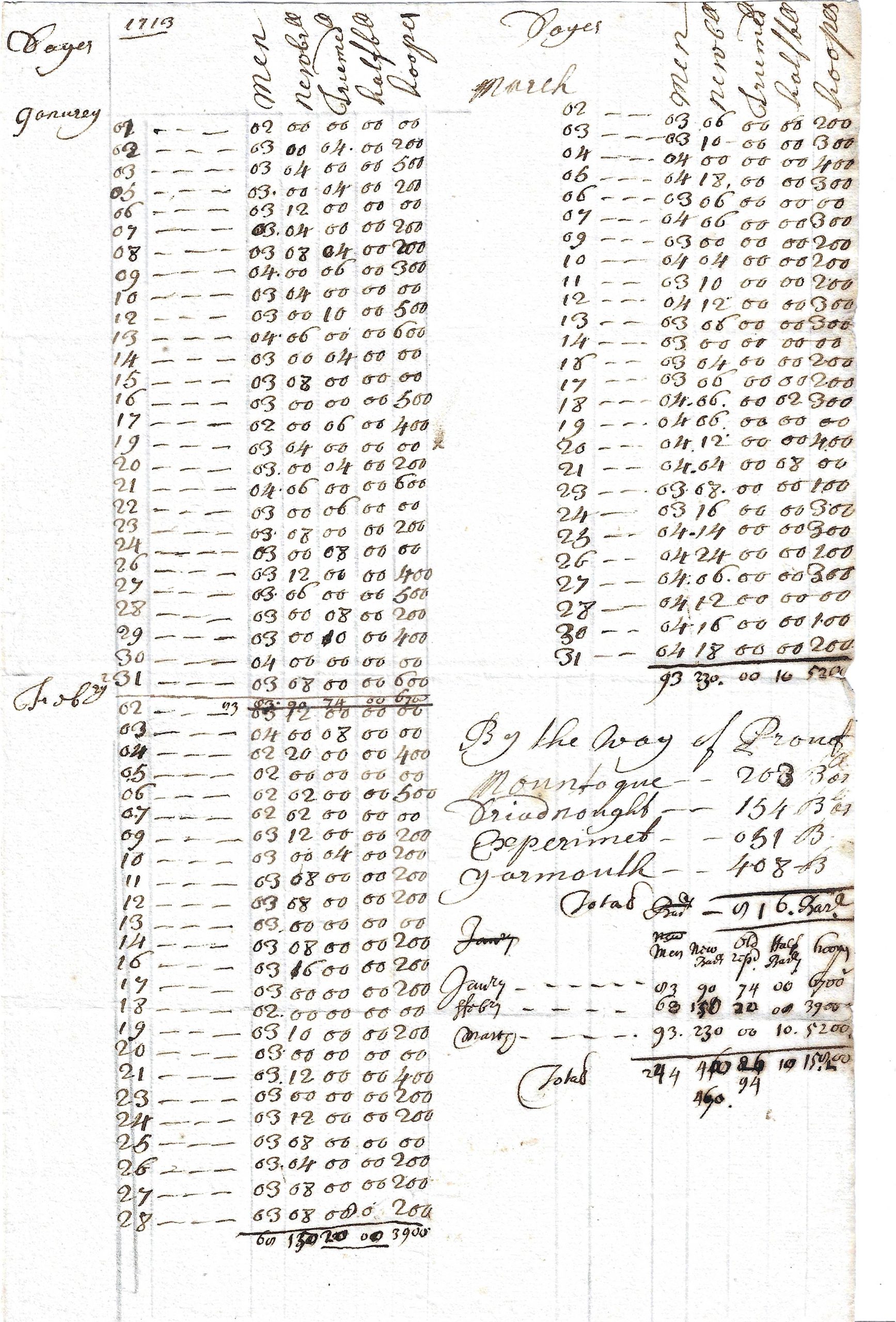
View in new tab:
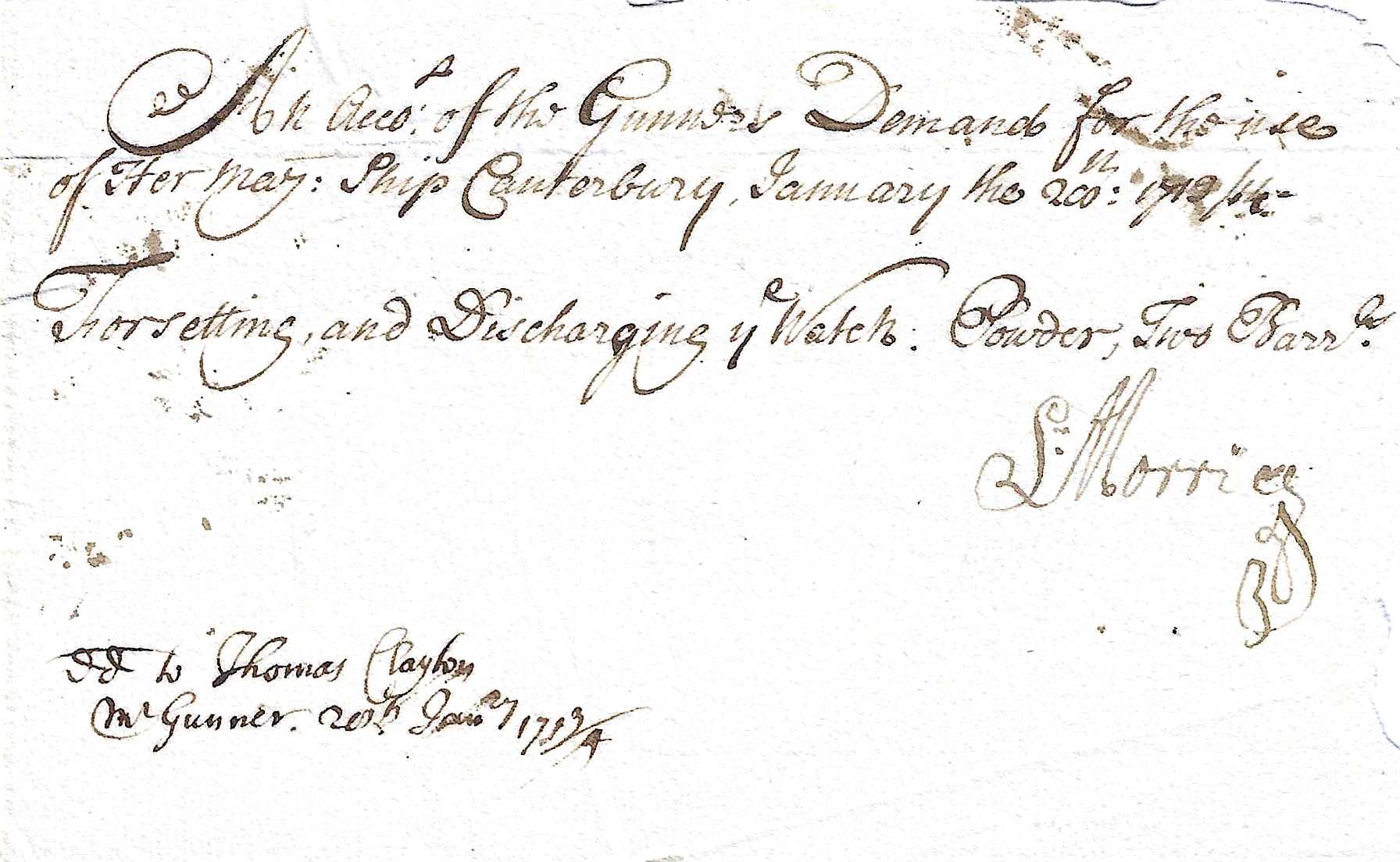
A note from the master gunner of HMS Canterbury dated 20th January 1713 asking for two barrels of powder contains an unusual contraction for ‘PP’ (per procurationem – Latin for per proxy) to indicate that it has been signed by someone on his behalf. It looks like two ‘L’s with a bar above them.

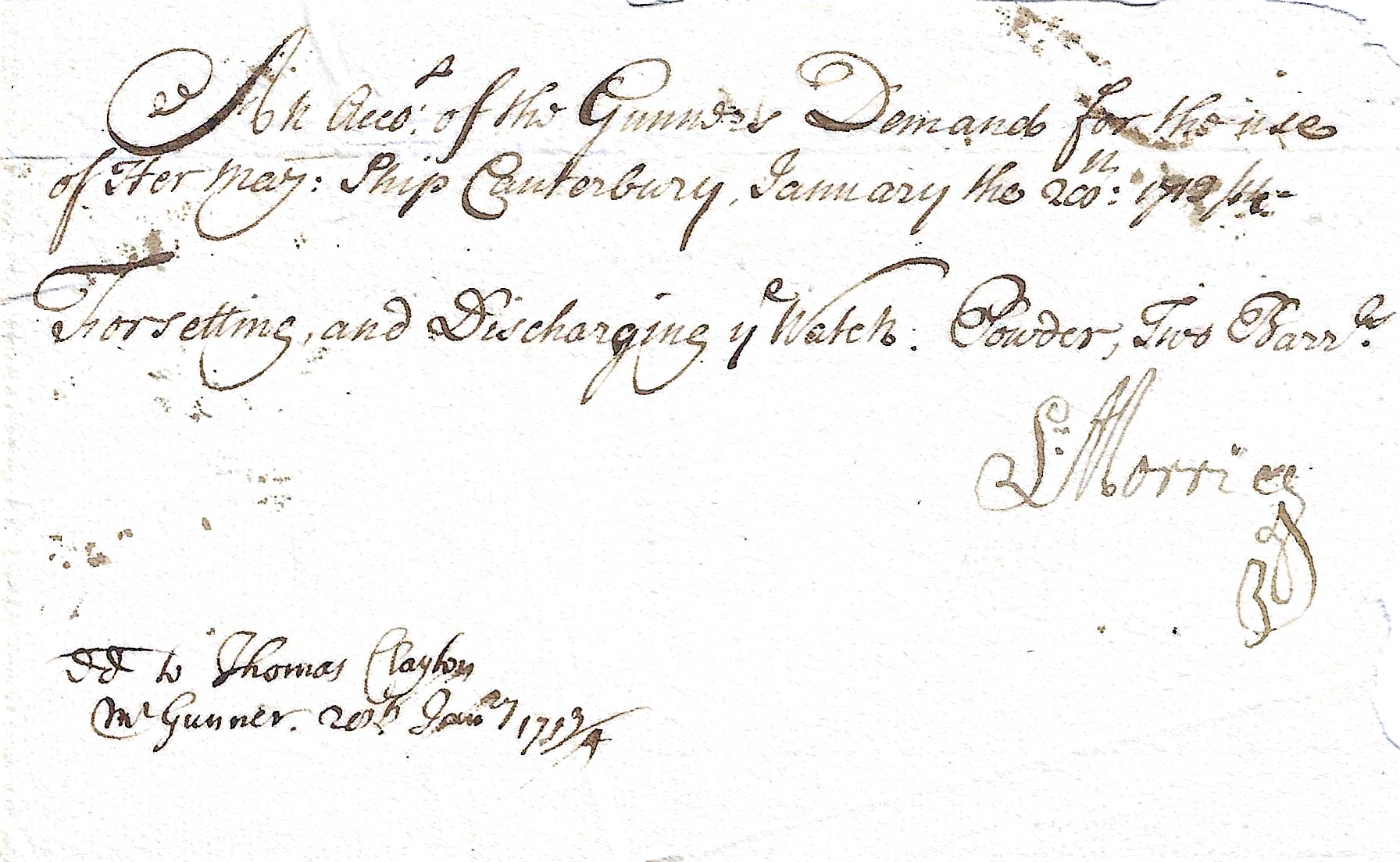
View in new tab:
On 9th February 1713 there was a demand for paper, powder and junk for HMY Soesdyke (1702), endorsed by Sir Isaac Townsend. However, a record of Soesdyke states that she was paid off in 1708. We can only assume that she was returned to service, or replaced by another vessel of the same name that is not recorded.
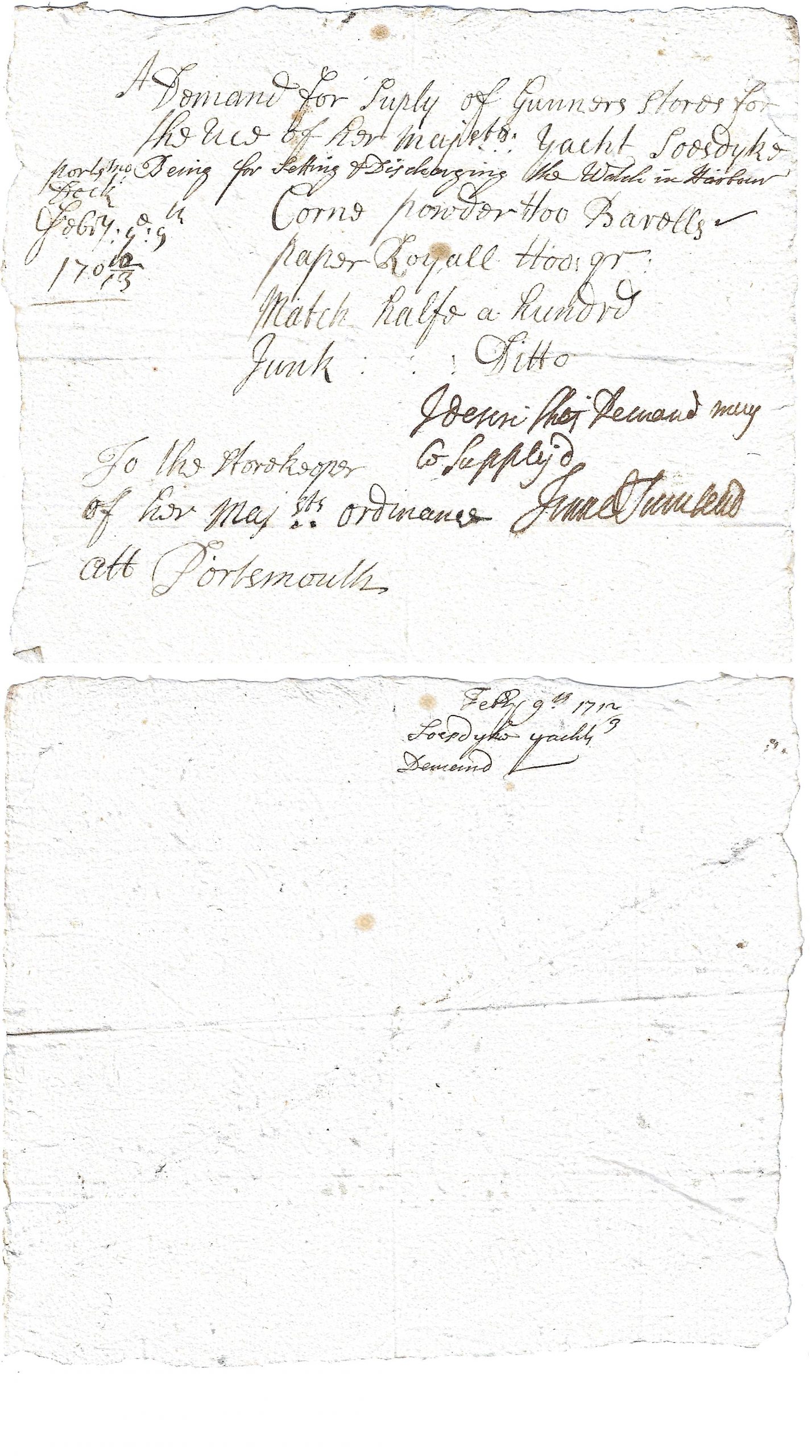
View in new tab:
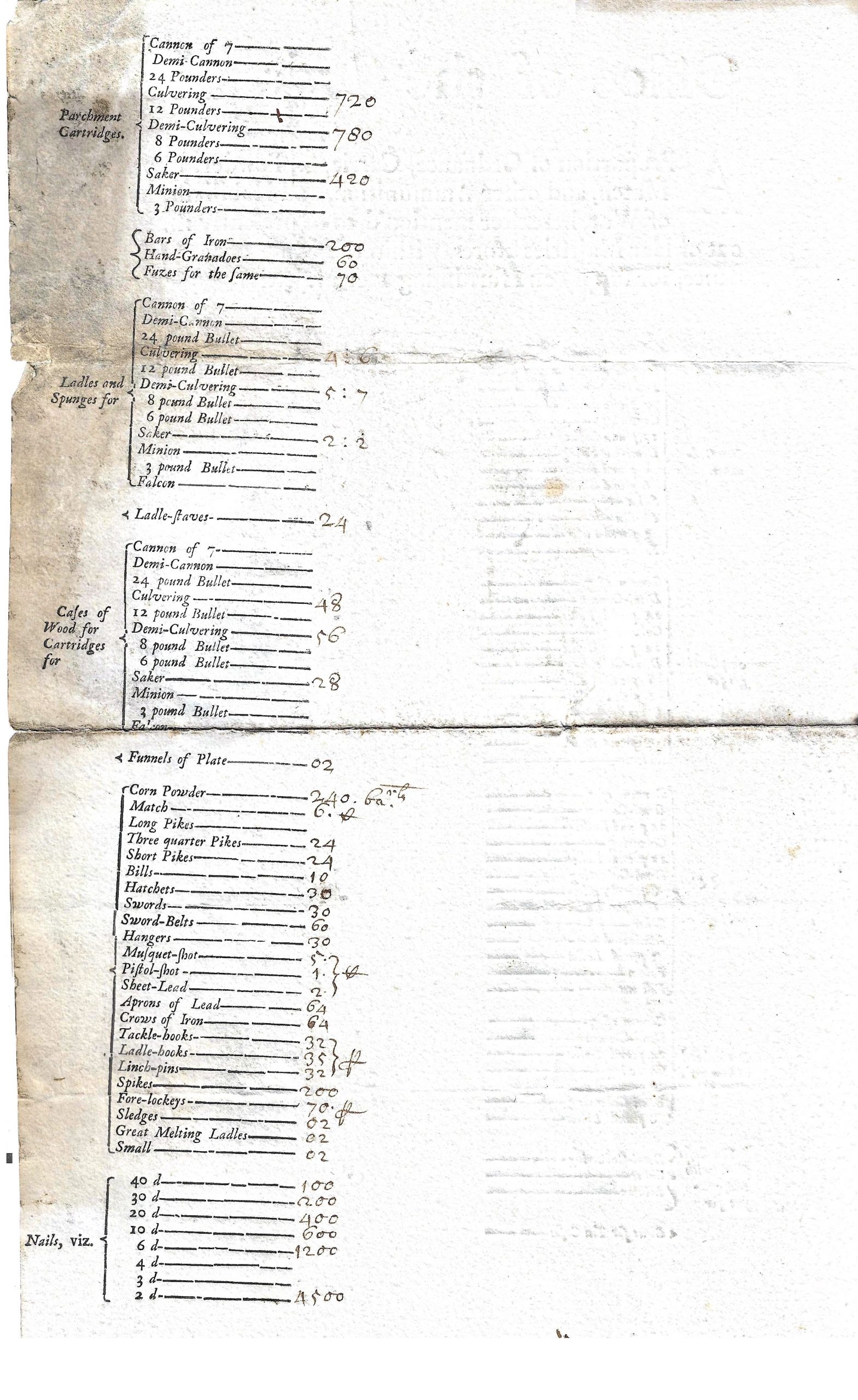
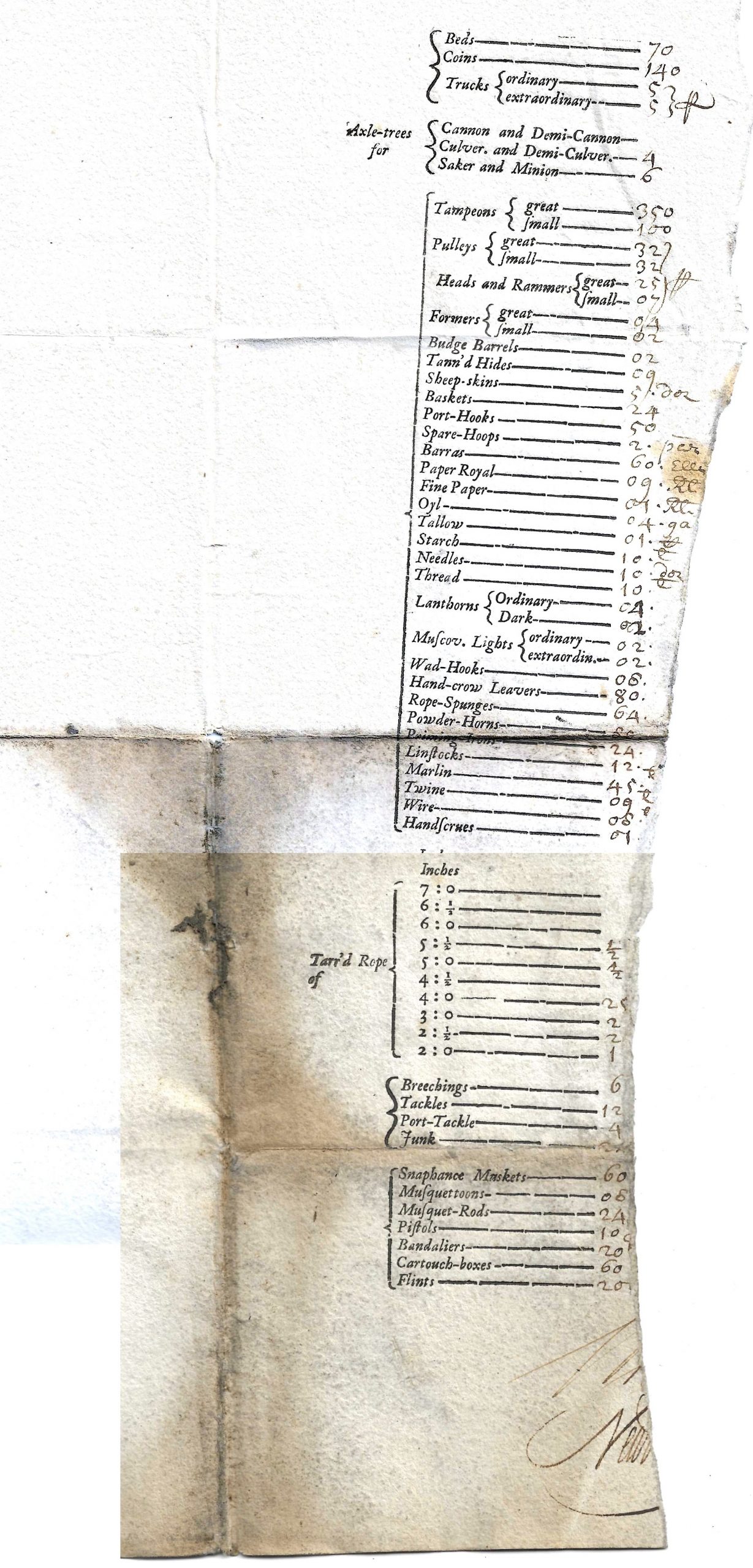
Always fascinating, a proportion of Ordnance for HMS Dreadnaught (1691) lists 44 guns being supplied: Culverings, Demi-Culverings and Sakers, yet at the time she was a 60-gun 4th rate ship. She is also issued 2000 round shot for Falconets (2” shot, 3’9” long), and with 60 Ells of Barras (a coarse linen fabric, used as wadding or for caulking.), and 9 reams of Paper Royal which they would have mostly used for making cartridges for the guns. Unfortunately, one page has been badly torn. There is no address, but the precis is in a particularly pretty hand.

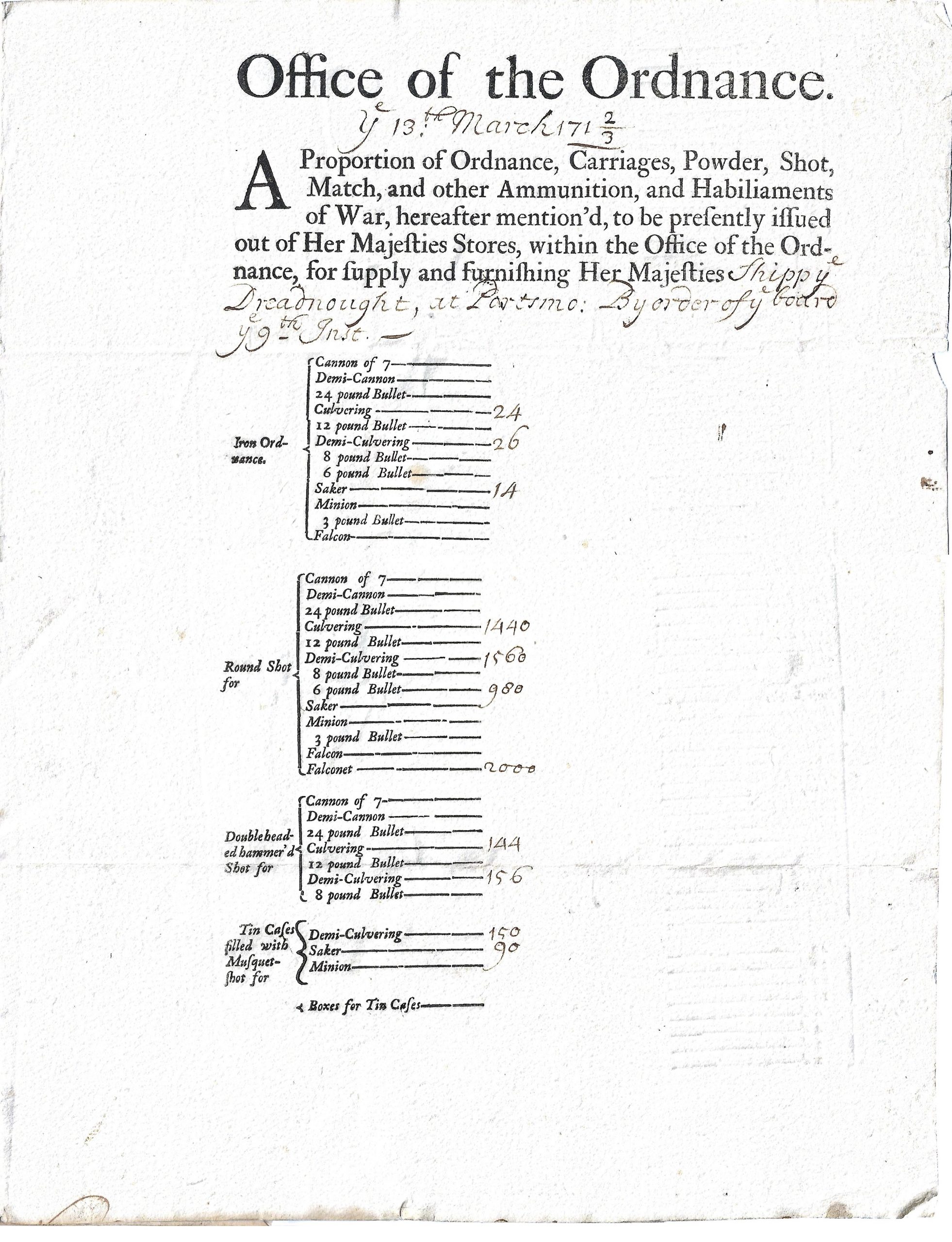
View in new tab:
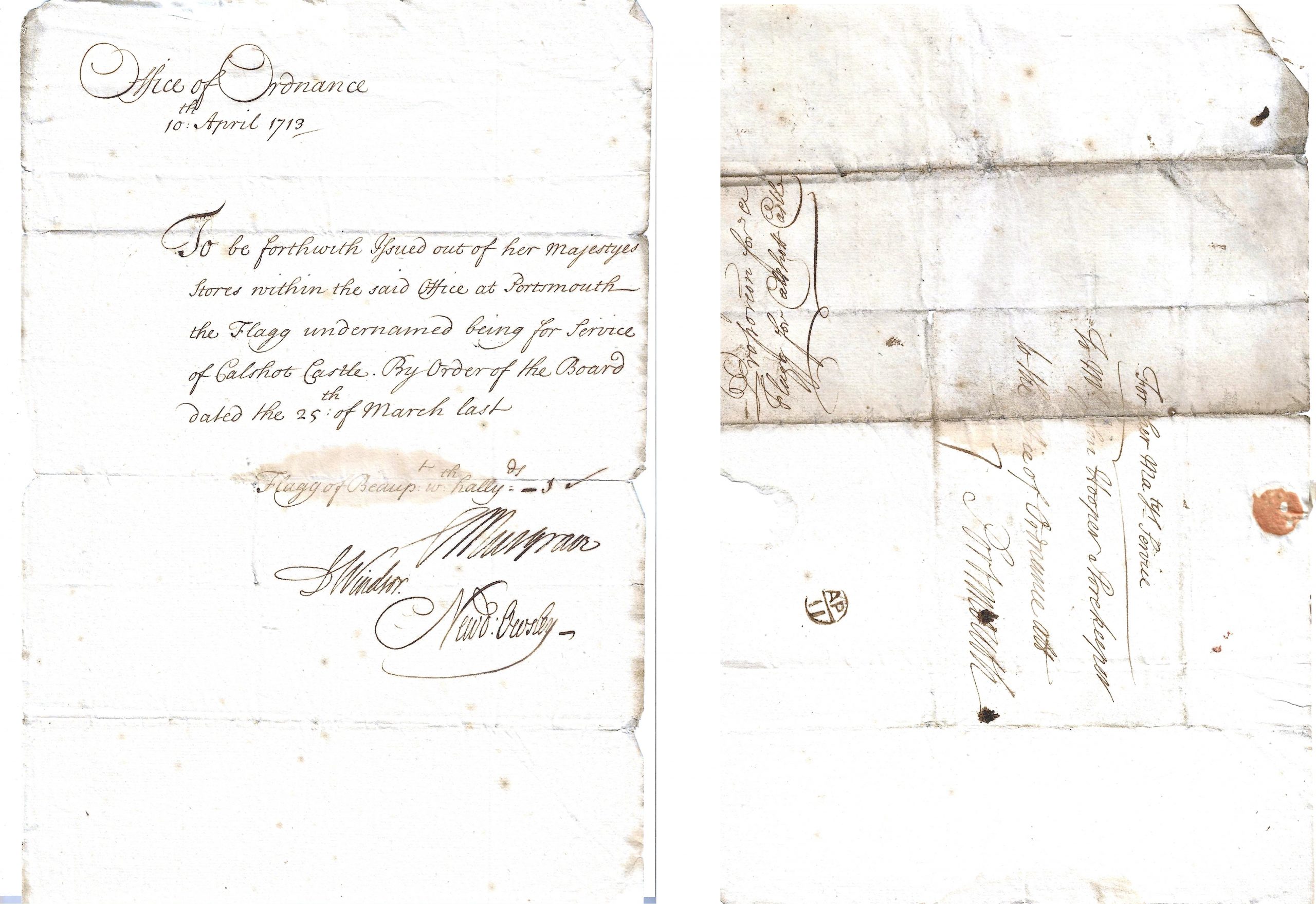
10th April 1713 a new flag of Beauport, with halliards, for Calshot Castle.
View in new tab:
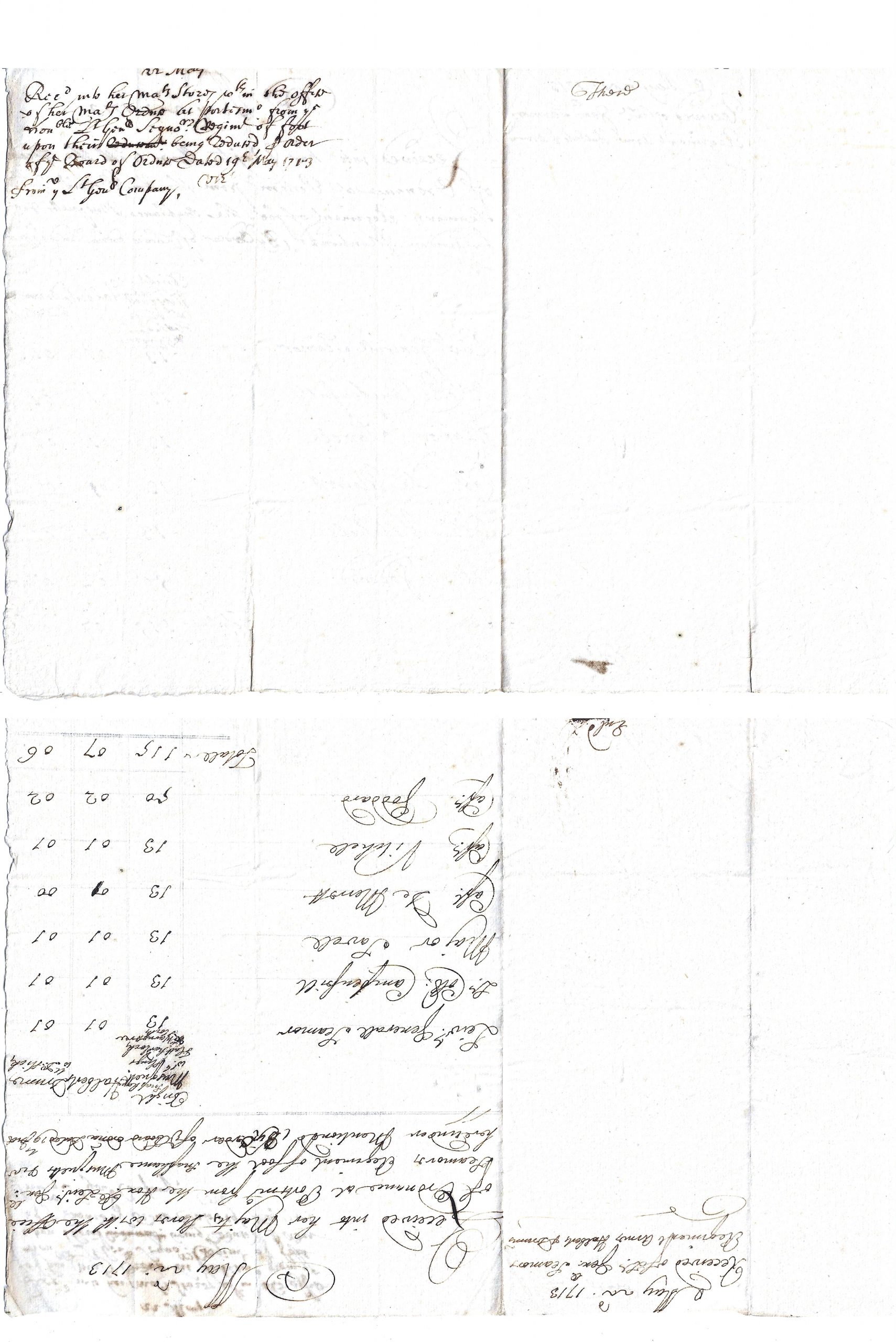
22nd May 1713 a receipt for small arms received from the Honourable Lieutenant General Seymour’s Regiment of foot.
View in new tab:
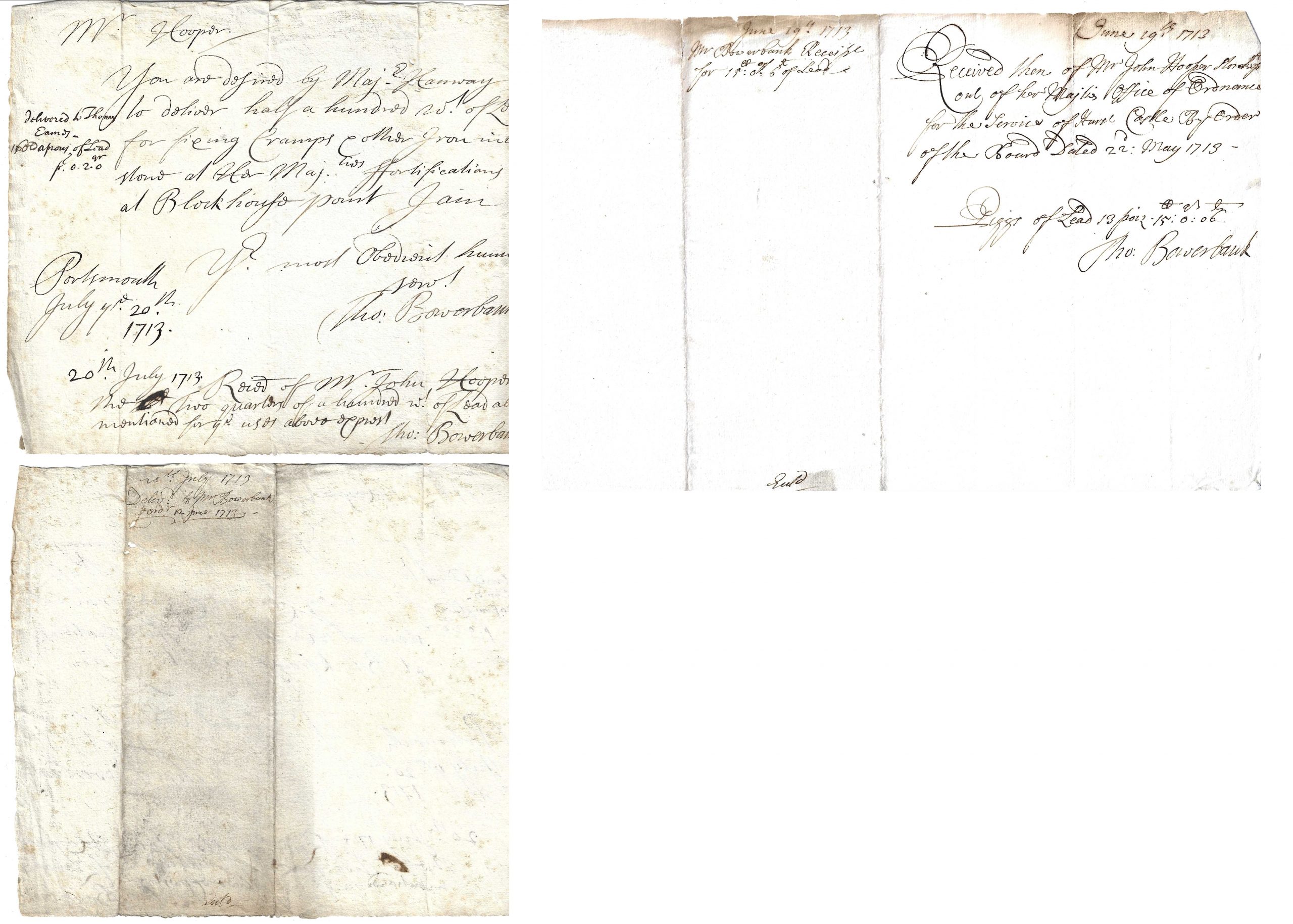
In June and July of 1713, we see that work is in progress at Fort Blockhouse, Thomas Bowerbank, under instruction from Major Hanway, probably of the Royal Engineers, requests lead, tallow and rosin. The lead he receives is in pigs and old aprons. Aprons of lead were used on the great guns to cover the touch hole area when not in use. Being soft, they could be wrapped around the gun to give a seal. Pigs of lead were so named as they were cast directly into sand. A central trough would be formed in the sand with feeders running from it to the impressions for the ingots. Molten lead was poured into the central trough and would run down the feeders to fill the ingot moulds. Once full it would look a little like piglets suckling the mother. The resulting ingots could be broken off and were known as pigs.
View in new tab:
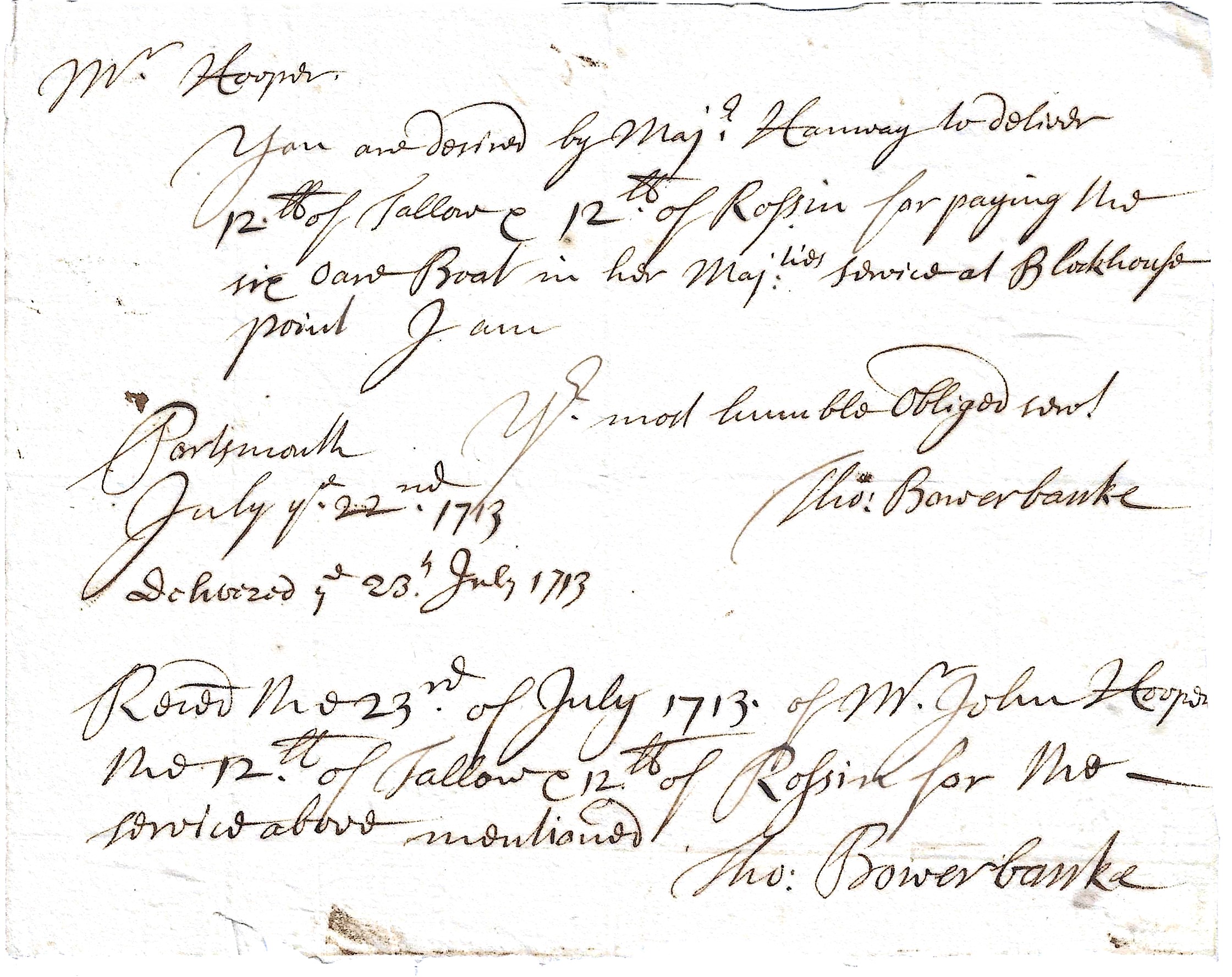
A note from Thomas Bowerbank who worked with Talbot Edwards, engineer, and Major Hanway on the fortifications of Gosport and Portsmouth.
View in new tab:
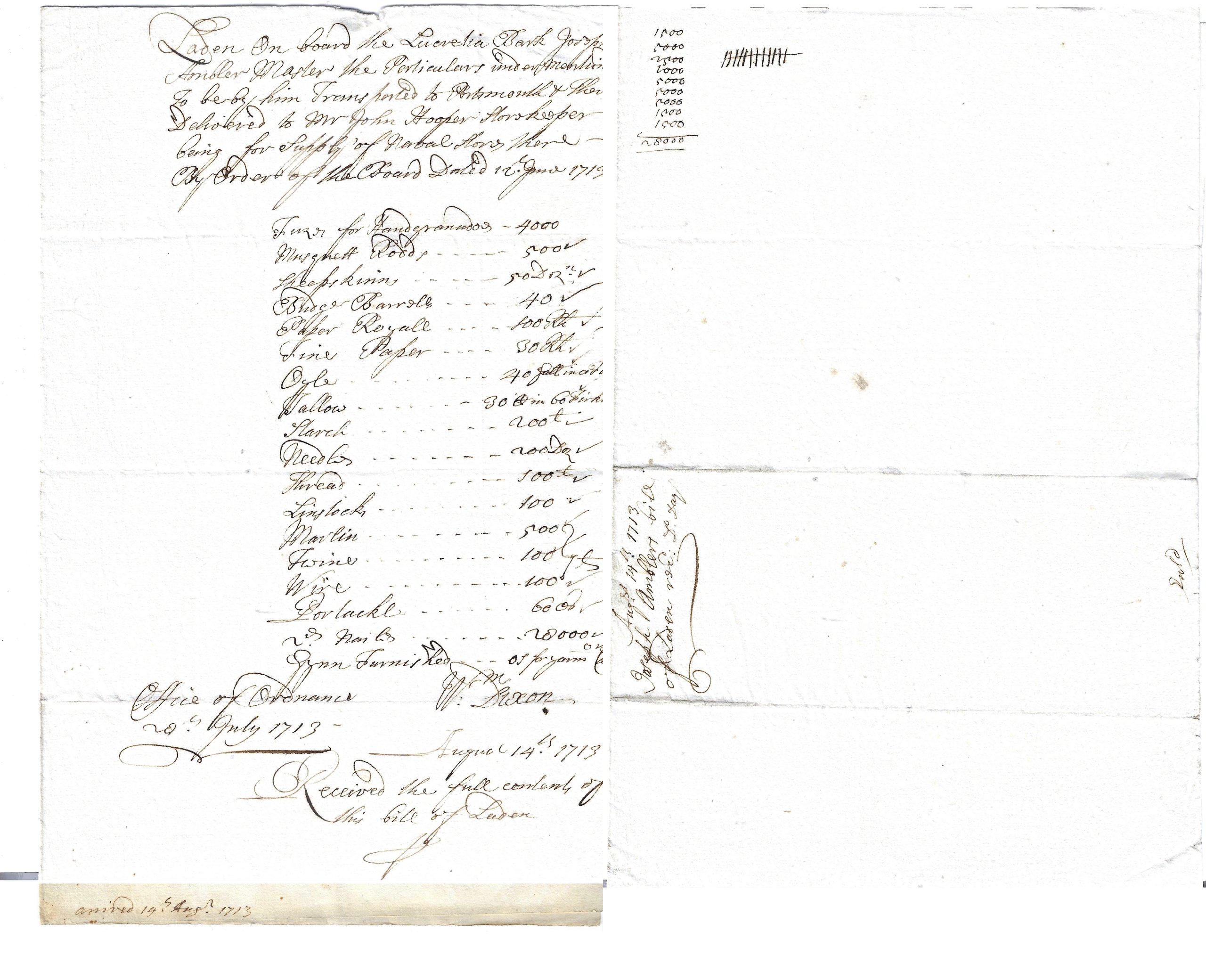
Joseph Ambler’s bill of laden of 14th August 1713 contains an eclectic list of stores to be transported including ‘Budge Barrels’. These were used by the powder monkeys to deliver fine powder to the guns from the magazine. They were small barrels with no top, instead they had a rope handle and a canvas or leather cover, drawn together with strings as with a purse, to prevent sparks entering.
View in new tab:
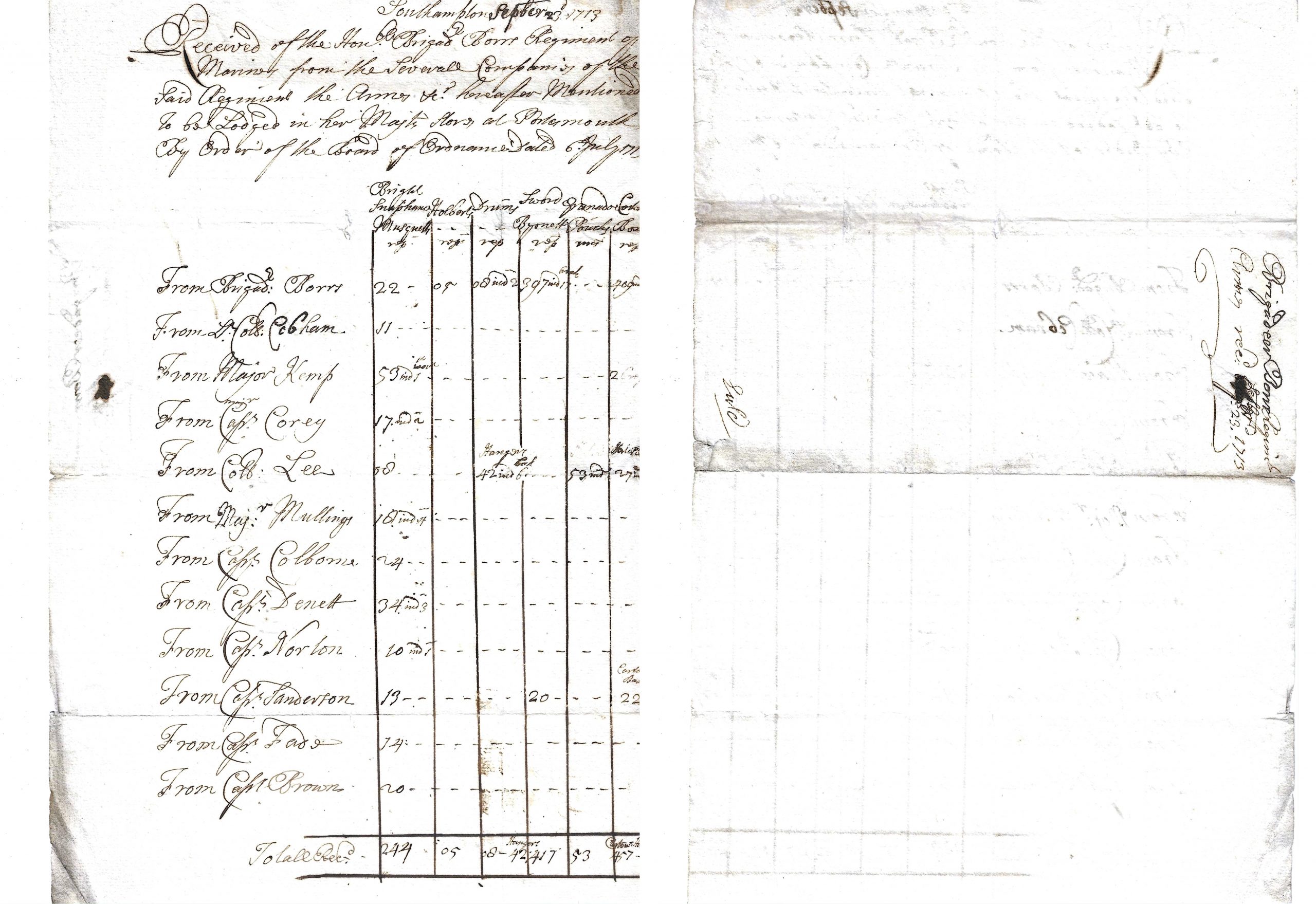
Brigadeer Borr’s regiment returned small arms to the stores on 23rd September 1713.
View in new tab:
Although a hoy was a single masted vessel, the account of Sir John Miller’s hoys for October to December 1713 shows us that there were differing types of hoy employed two and four oared open boats, open and closed sailing vessels. We even get to see the days of demorage (delay incurred while being loaded).
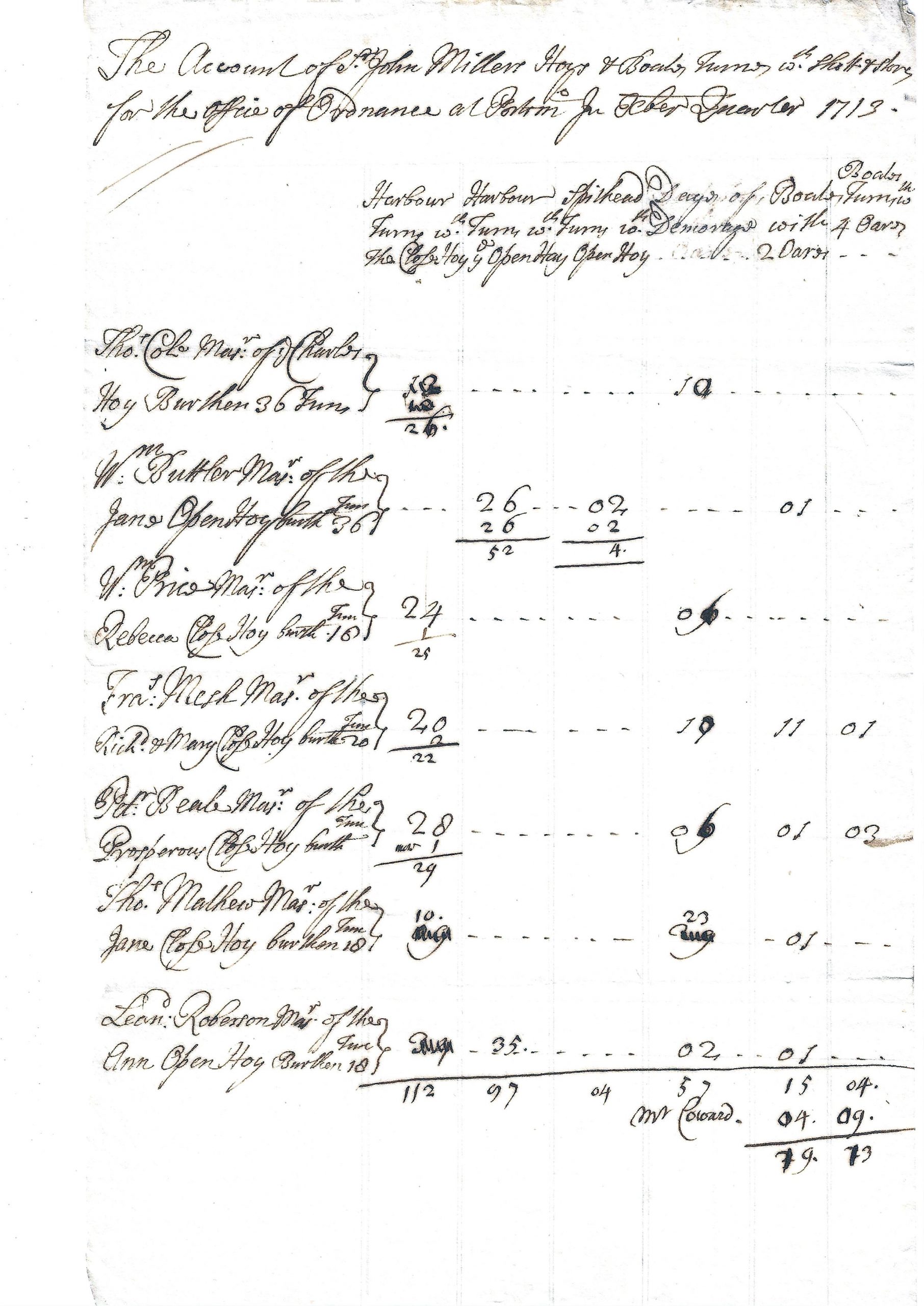
View in new tab:
A demand for gunners stores to discharge the watch in Portsmouth Harbour, perhaps this is why only stores for 6 pounders (sakers) are requested even though HMS Yarmouth 1695 also had 12 and 24 pounders.

View in new tab:
Another neatly written list of stores for one of the forts, in this case Hurst Castle. This includes ‘melting ladles’ which would have been for melting metal as opposed to ladles for guns, the latter being used to remove powder and shot from loaded guns.
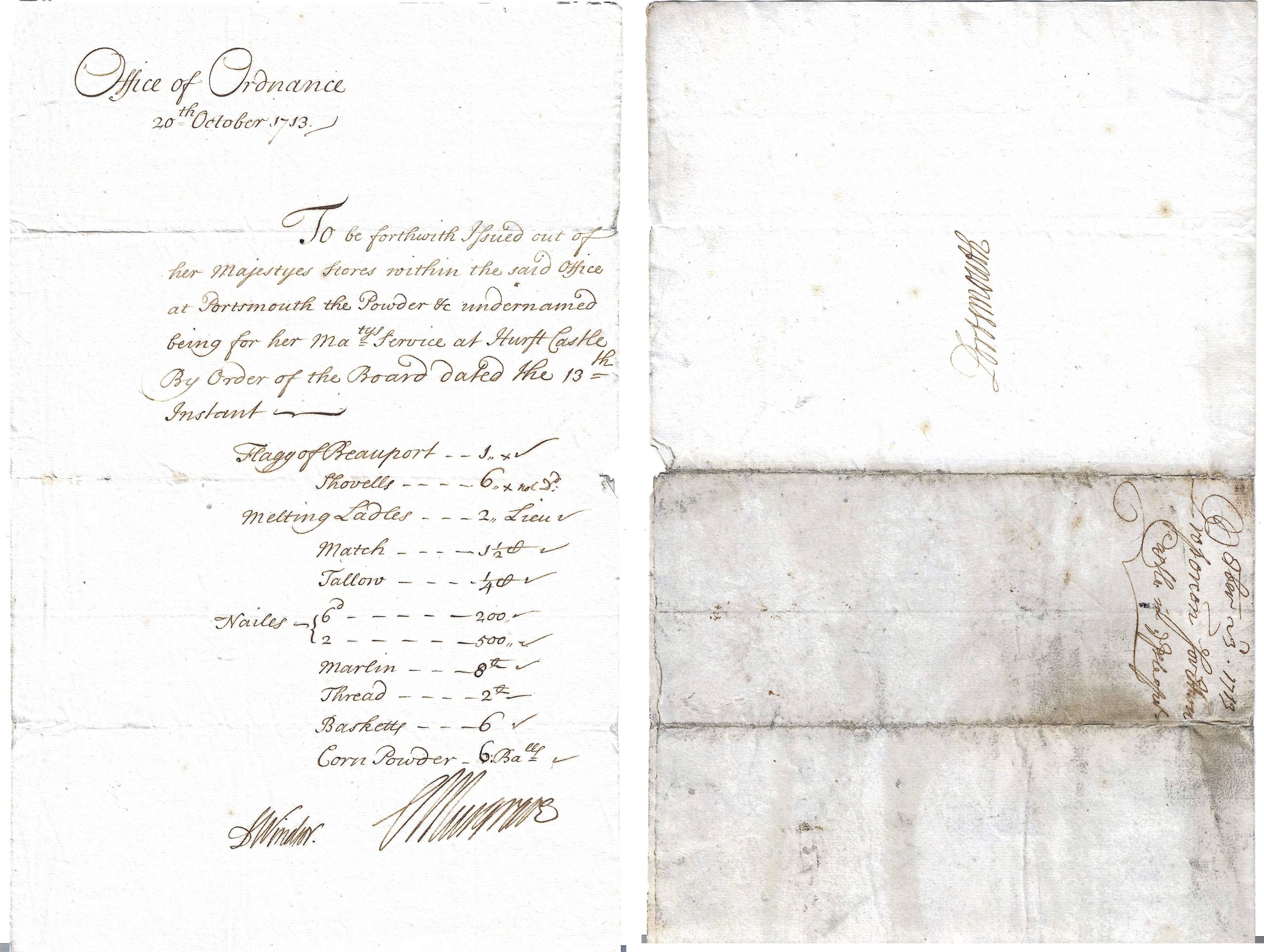
View in new tab:
Some pilfering was underway in November 1713 when James Rolfe and Samuel Palmer were caught stealing and selling the ‘decayed stores’. This was a lucrative business for dockyard employees for many years. It was easy for a small boat to tow baulks of timber across the harbour to Gosport where it could be disposed of. Some of this trade was perfectly legal, traders had a contract with the Dockyard to collect and sell second hand timber. Ring bolts can still be found on the foreshore at Hardway in Gosport where hulks could be winched up onto the beach to be dismantled, the timber being recycled for building work. The foreshore is still littered with ancient nails and other discarded fittings. Until the late 1970s there was a timber yard, adjacent to the slipway, selling offcuts and recovered timber.
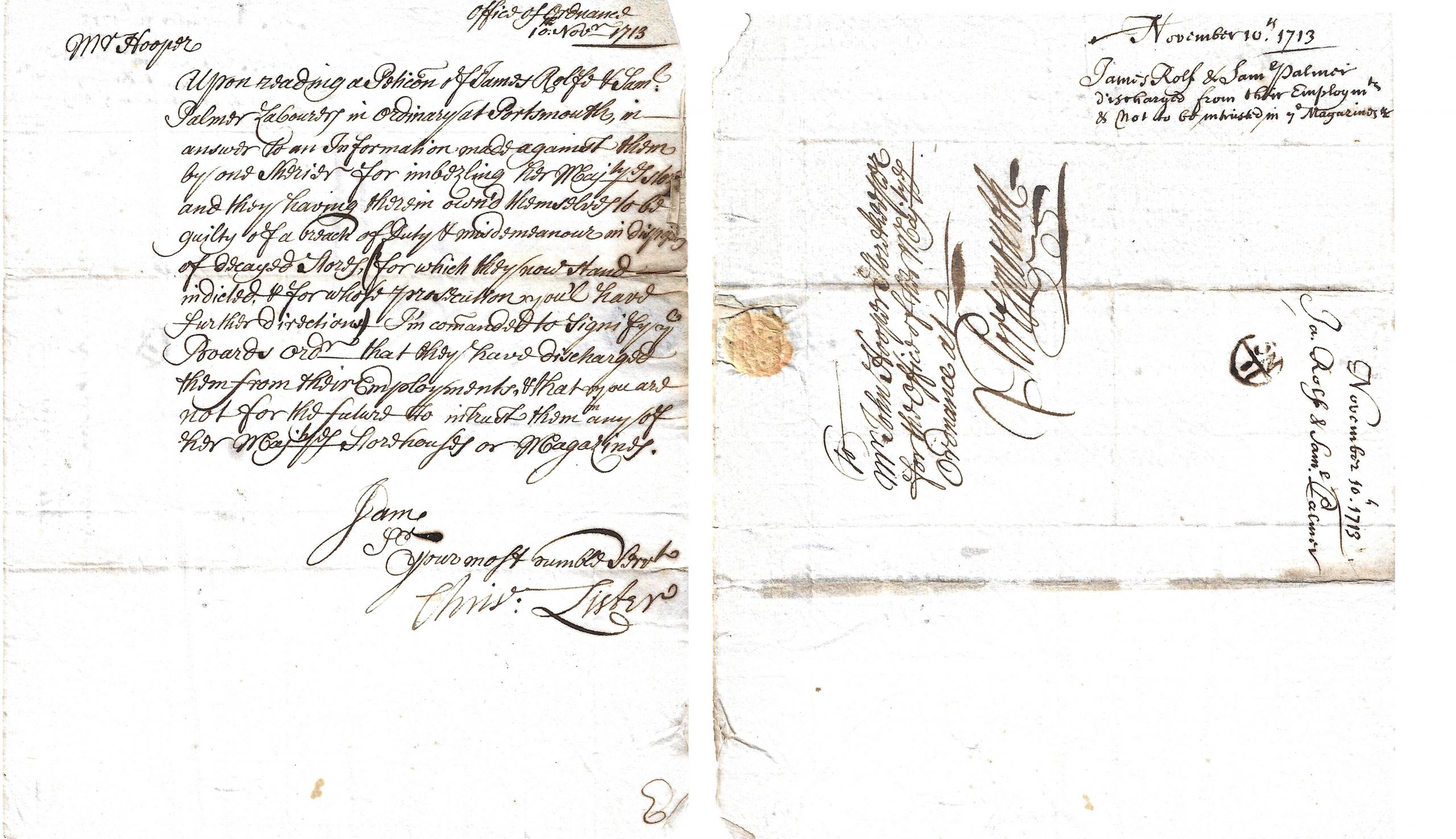
View in new tab:
A bill of laden listing stores transported by Henry Brown, wagoner. Presumably this was from The Tower to Portsmouth and included flags of Beauport.
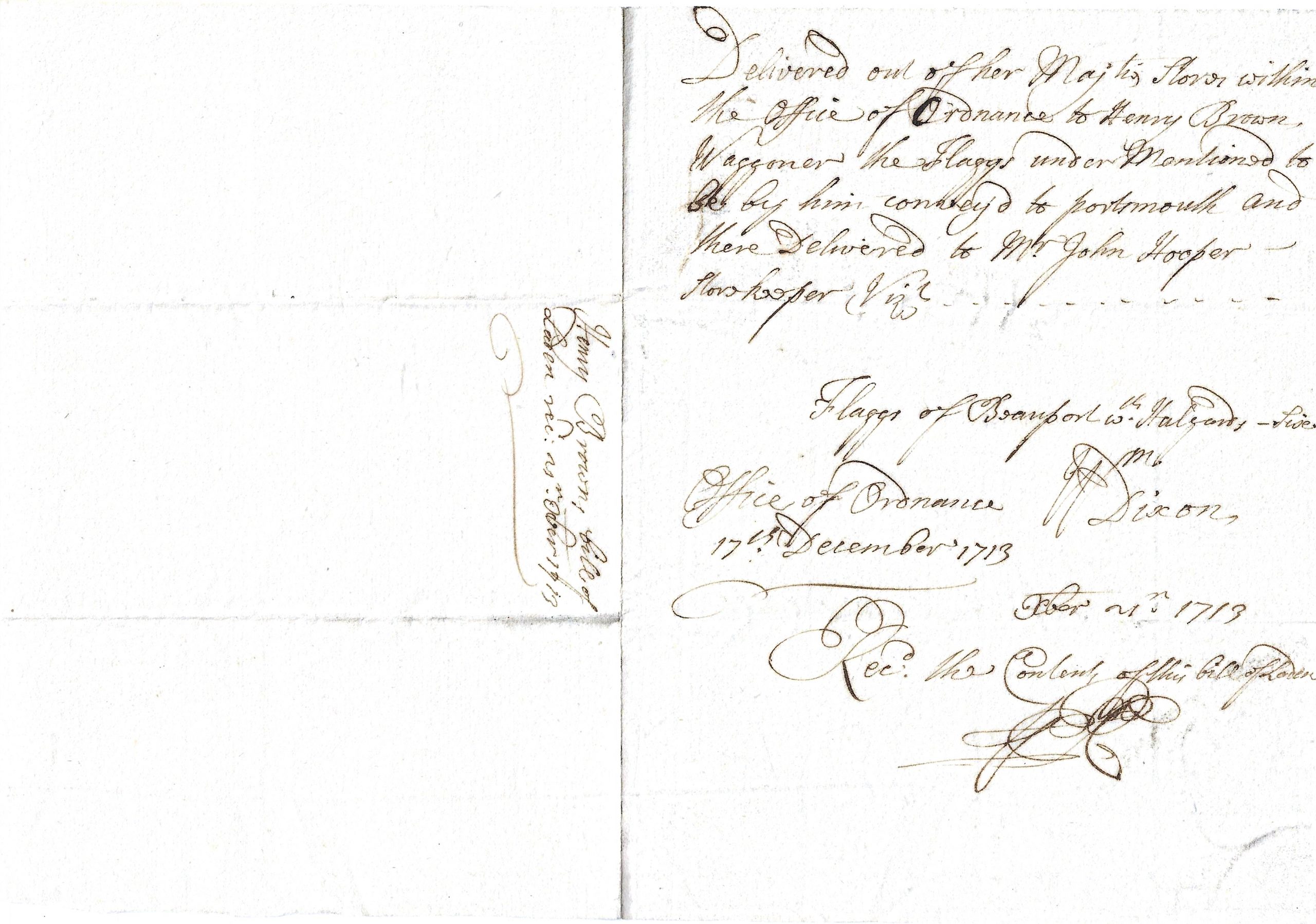
View in new tab:
A very brief demand for powder from the master gunner of HMS Canterbury.
View in new tab:
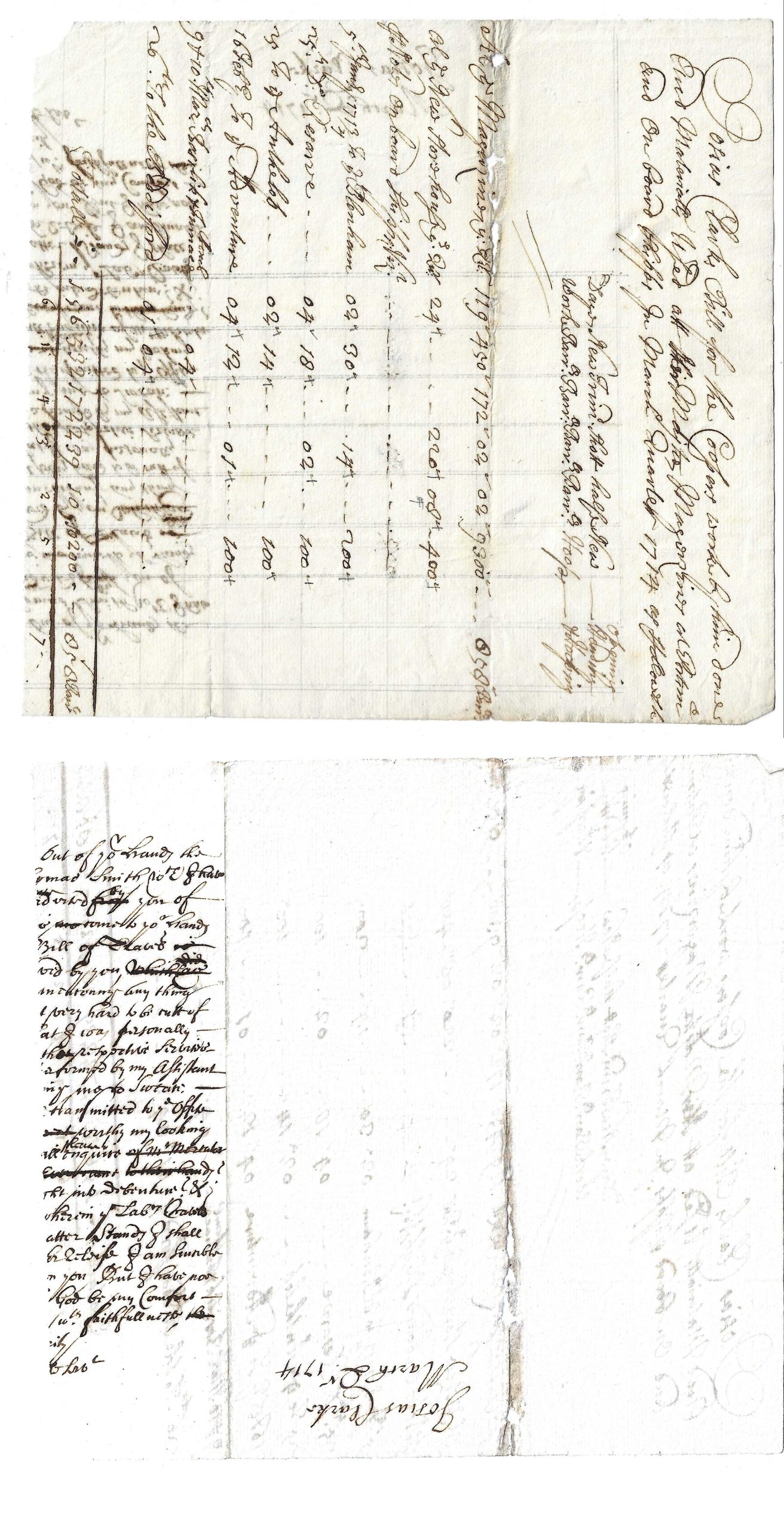
A challenging cooperage bill, badly faded.
View in new tab:
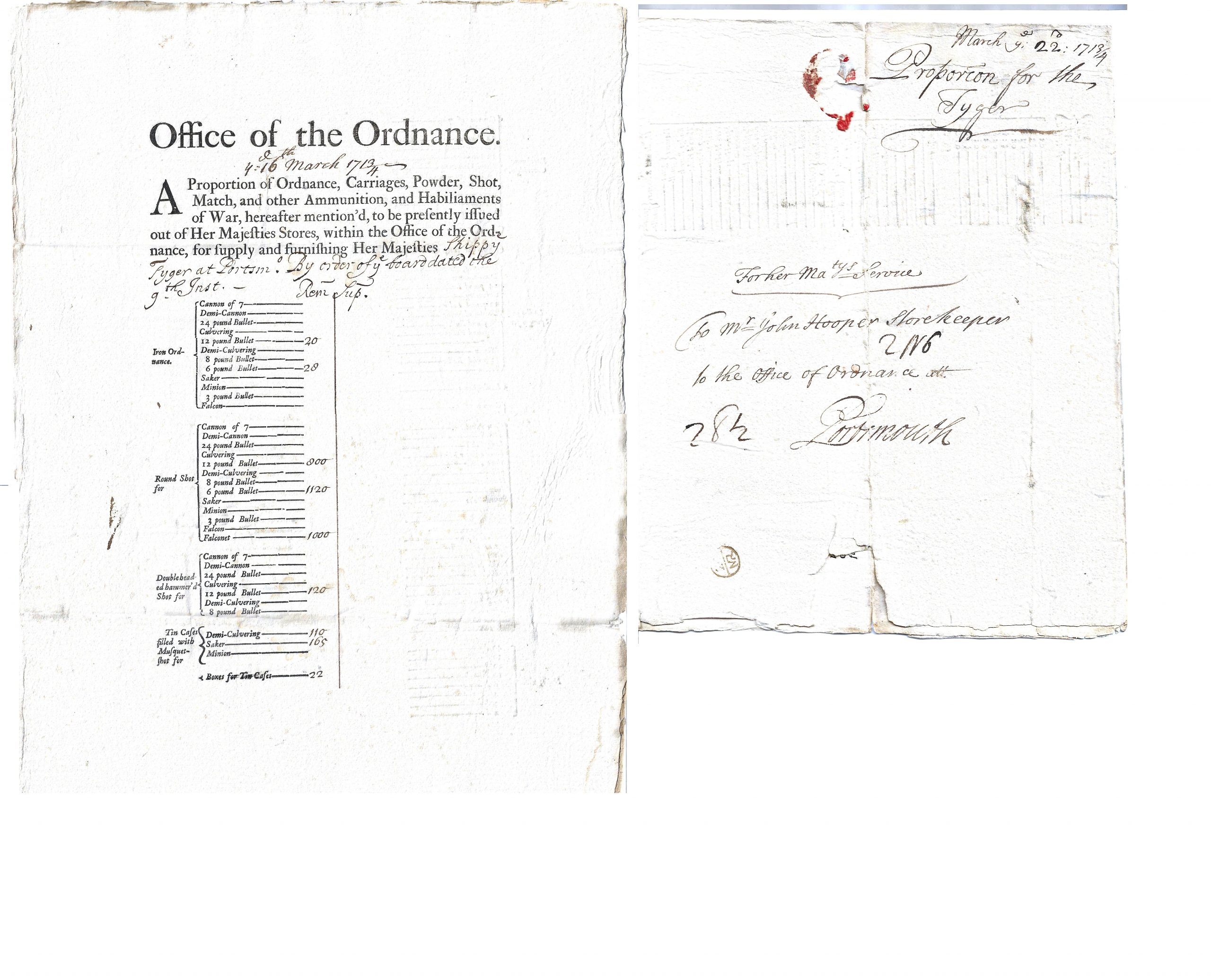
16th March 1714 a proportion of ordnance for HMS Tyger (1647), a 38-gun frigate with an interesting history. She was in service for almost 100 years, wrecked in 1742, her crew were stranded in the Florida Keys and eventually escaped in small boats to Jamaica losing only 5 crewmembers.
View in new tab:
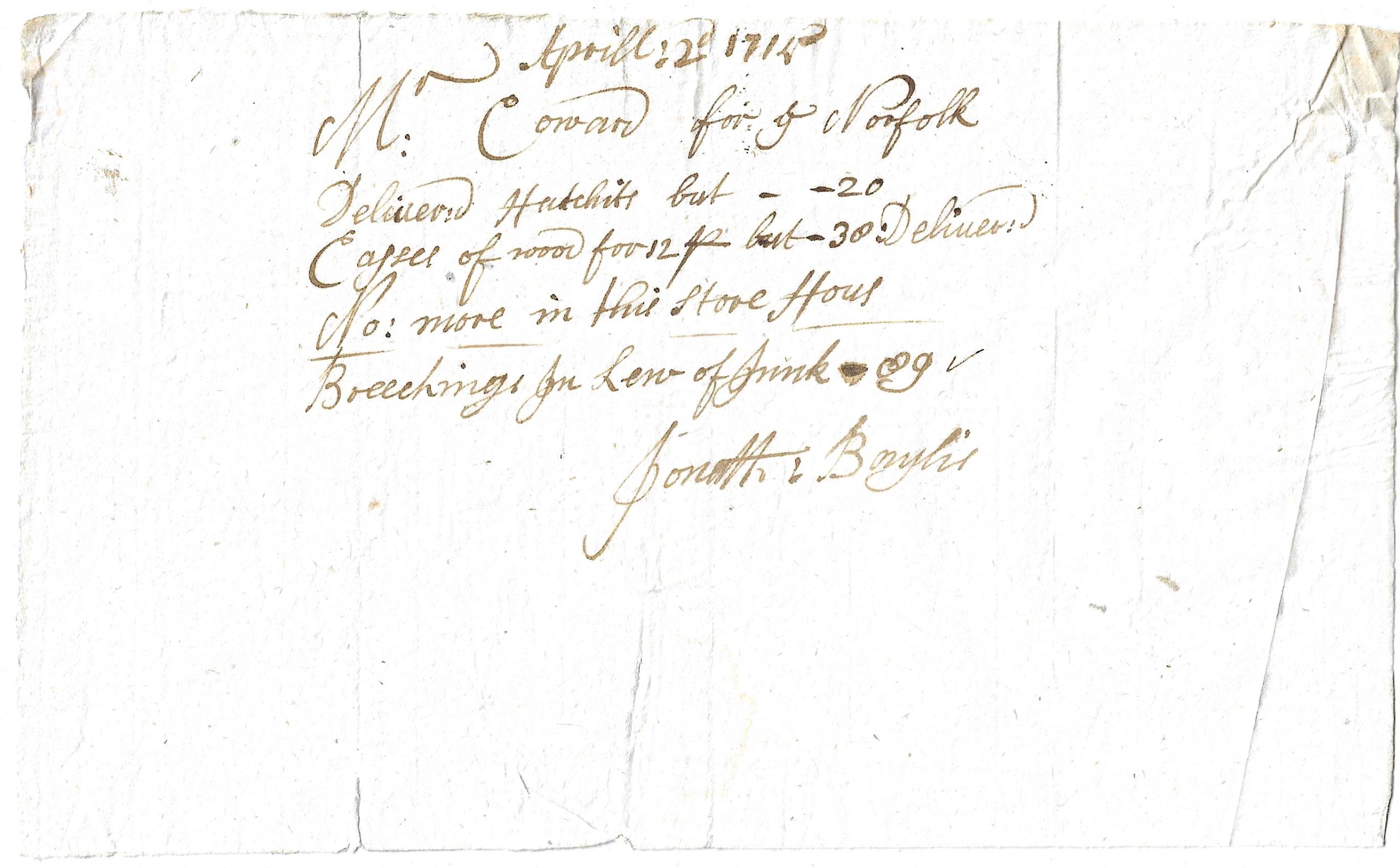
12th April 1714 a note on fine paper from Jonathan Baylis, possibly master gunner of HMS Norfolk (1693), lists stores received, but gives us a clue that stores were short. He says that ‘but 30’ cases of wood were delivered adding that ‘no more in the store house’. It also says that 9 cwt of breechings were supplied in lieu of junk. Breechings were the large ropes used to haul a gun to the gun port, these could be unlaid to make wadding for loading the guns.
View in new tab:
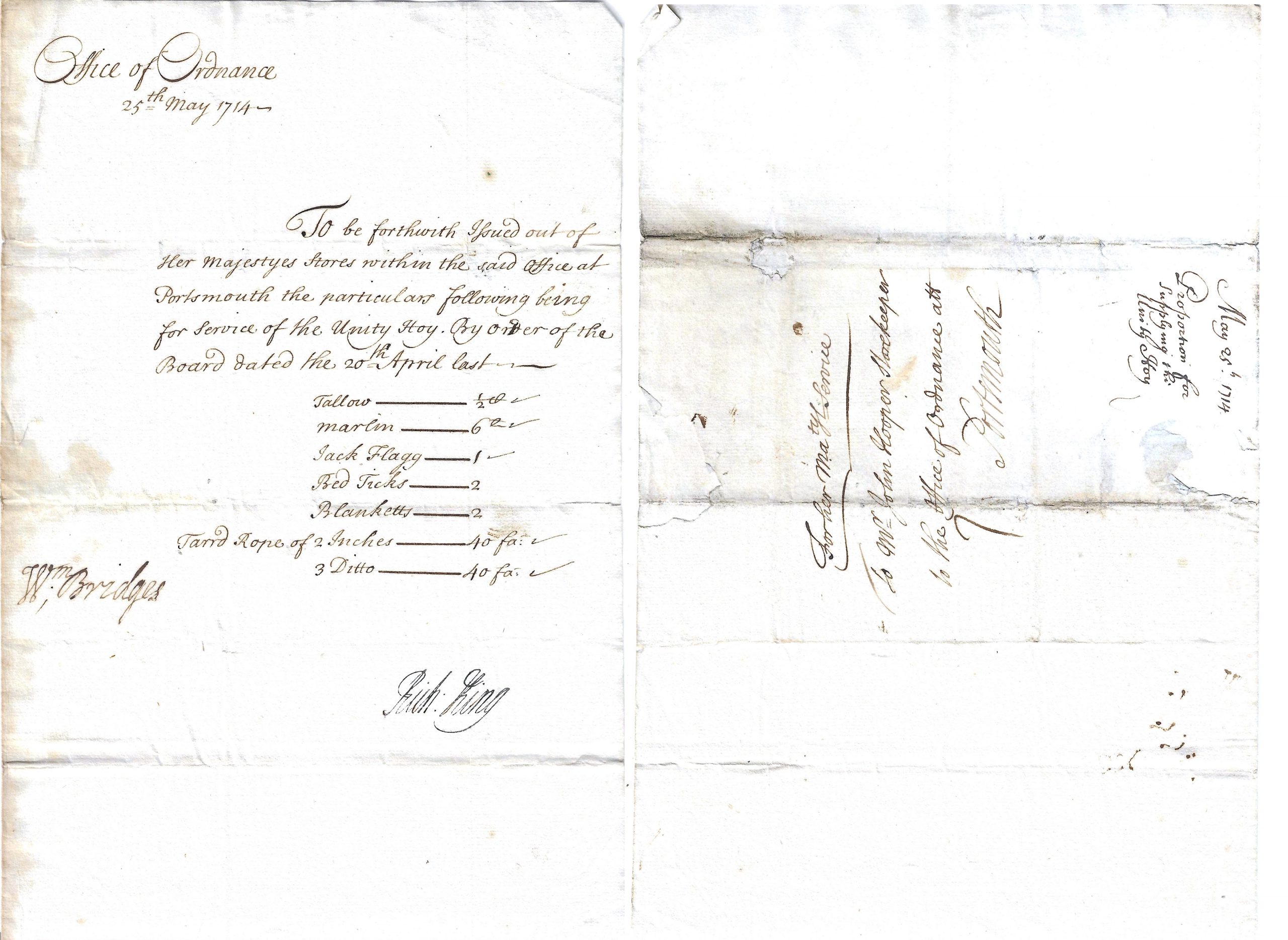
25th May and again on the 20th of June 1714, two related documents regarding the hoy Unity, Anthony Swift, master. They list stores for use aboard the vessel.
View in new tab:
A cooperage bill from Mr Josias Clarke.
View in new tab:
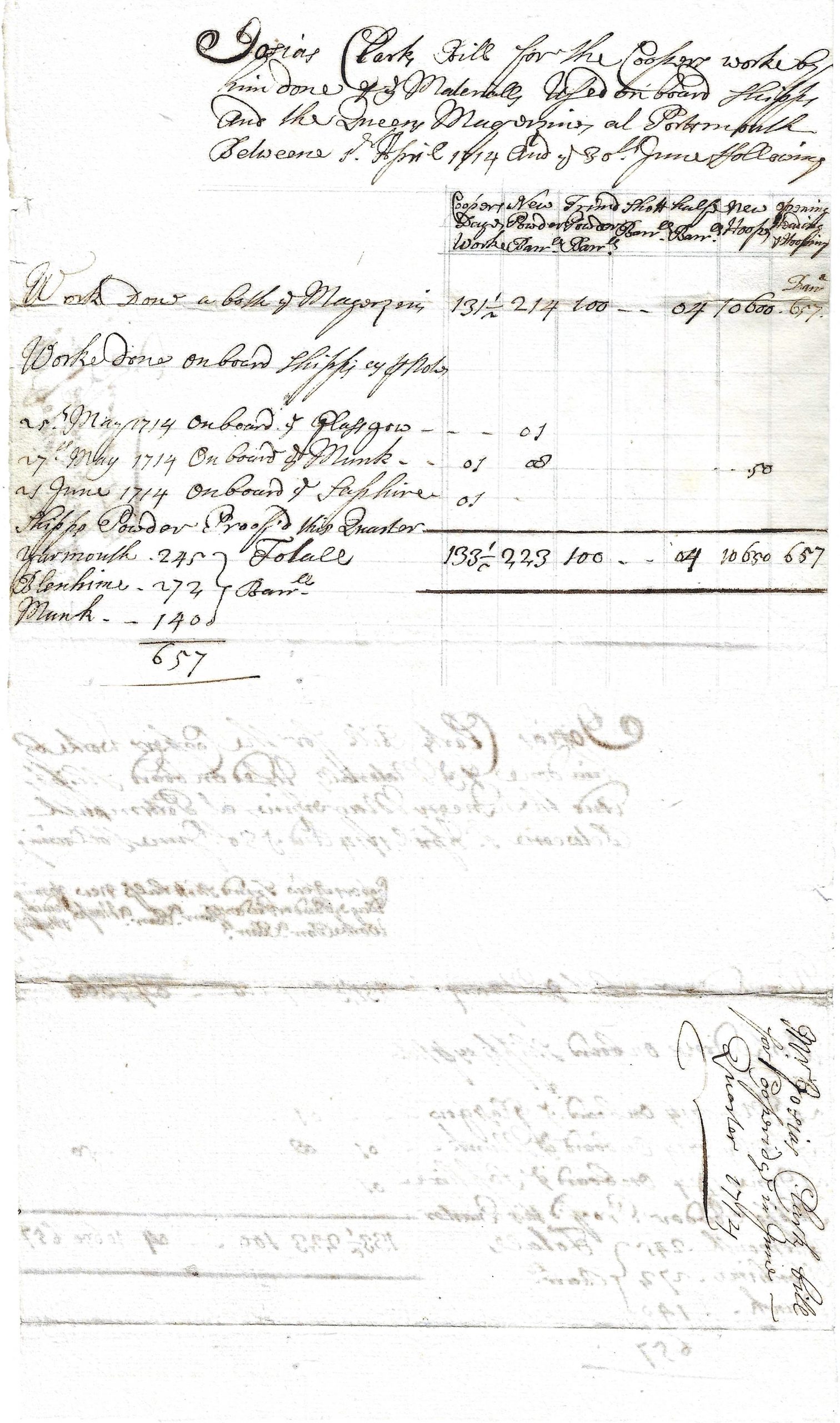
On 12th June an unsigned receipt from Sir Charles Milne Rees, for 3 months’ supply of powder and shott for the guards stationed at Portsmouth,
View in new tab:
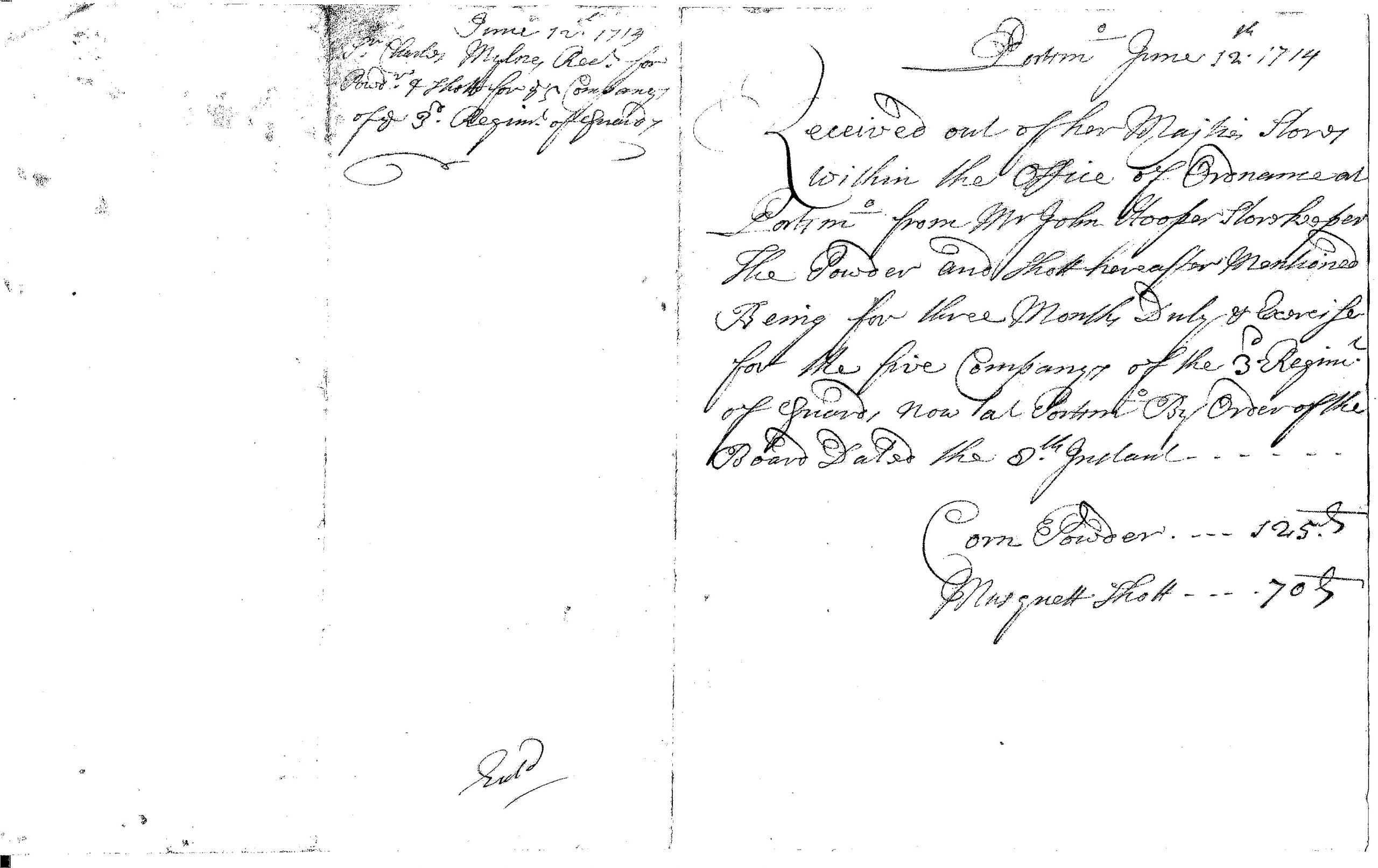
On June 16th, 1714, a note from Thomas Bowerbank, who was based at Fort Blockhouse, asks for tallow, presumably to re-caulk their six oar boat.
View in new tab:
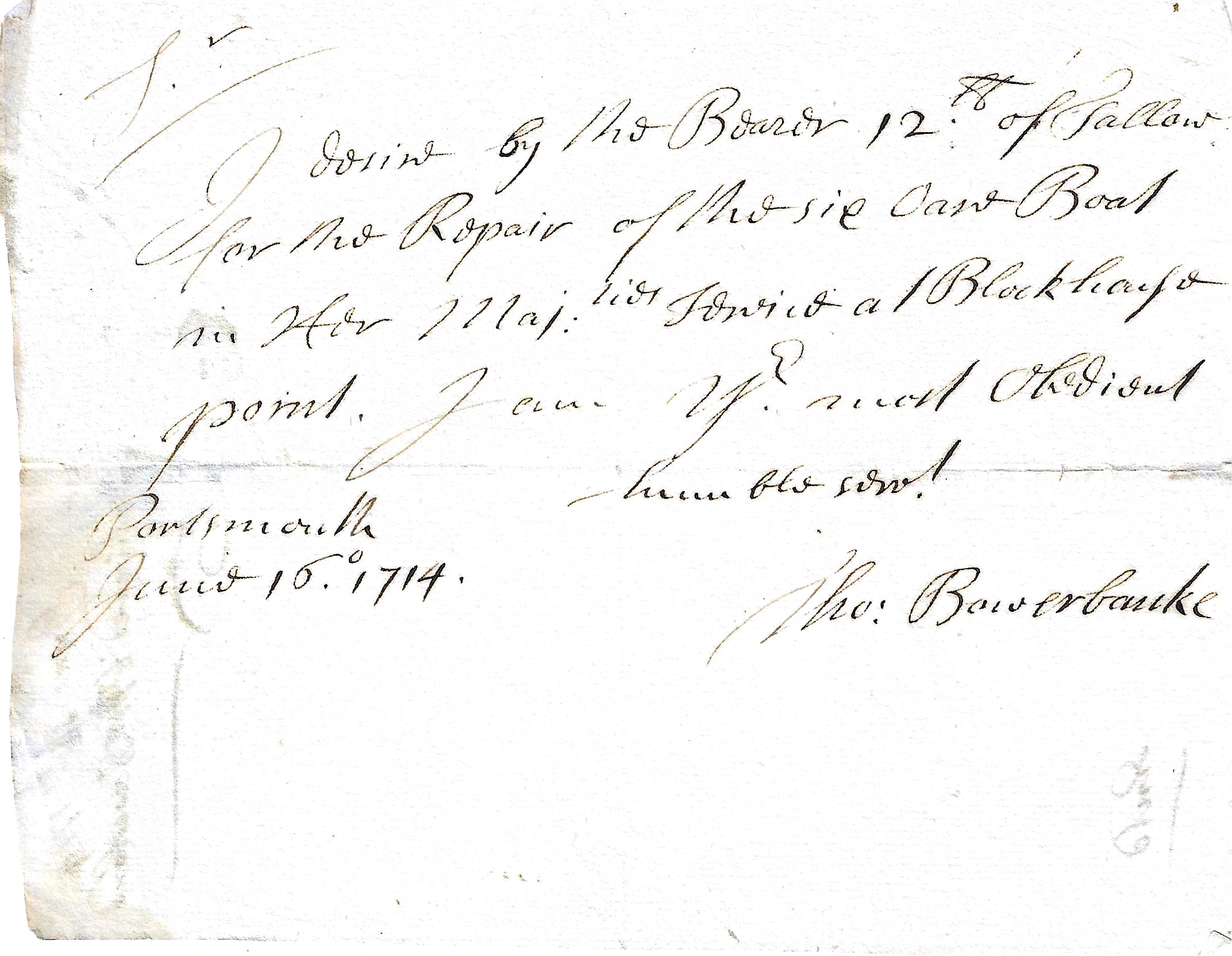
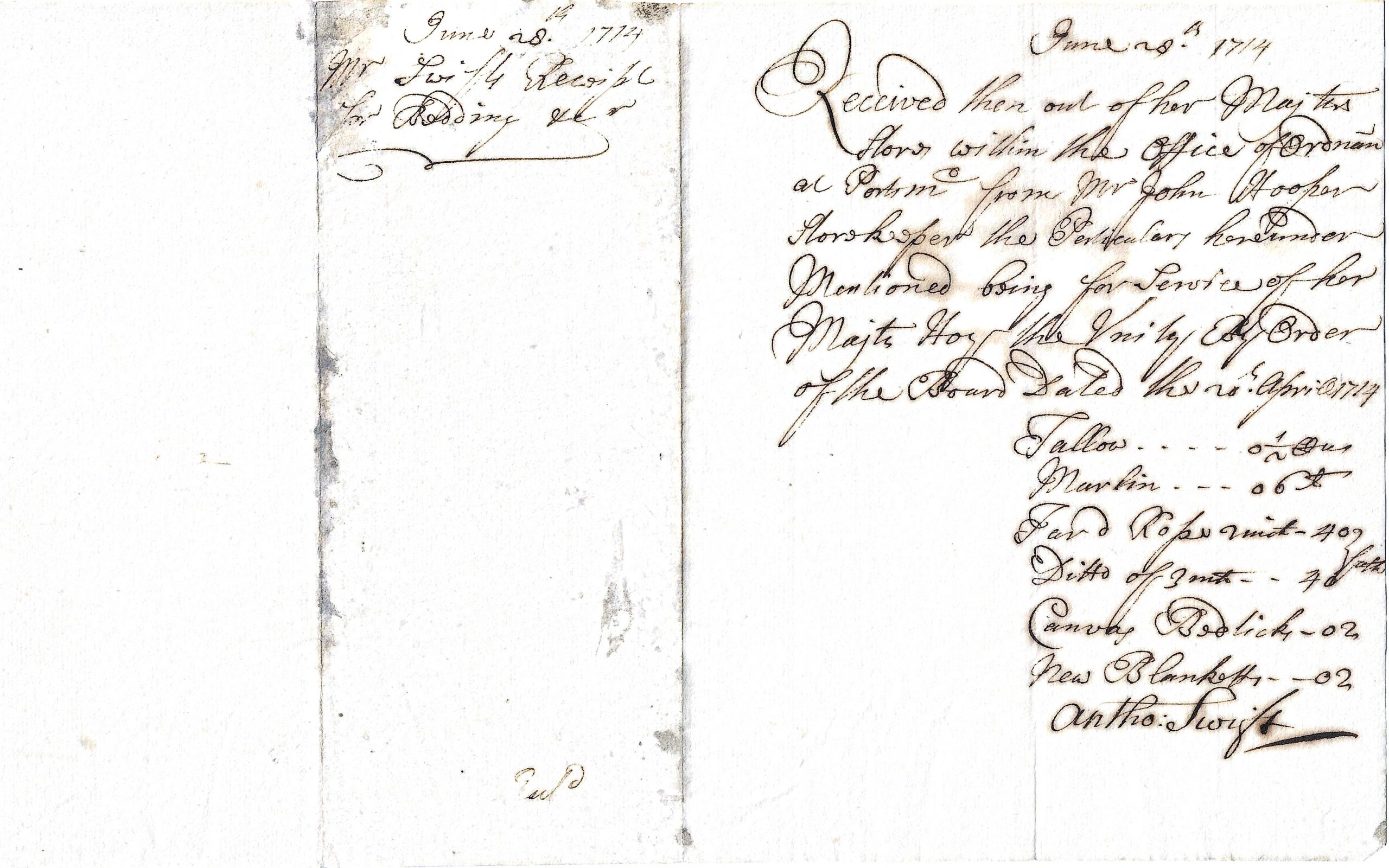
A bill of laden from Mr Swift, master of HM Hoy Unity.
View in new tab:
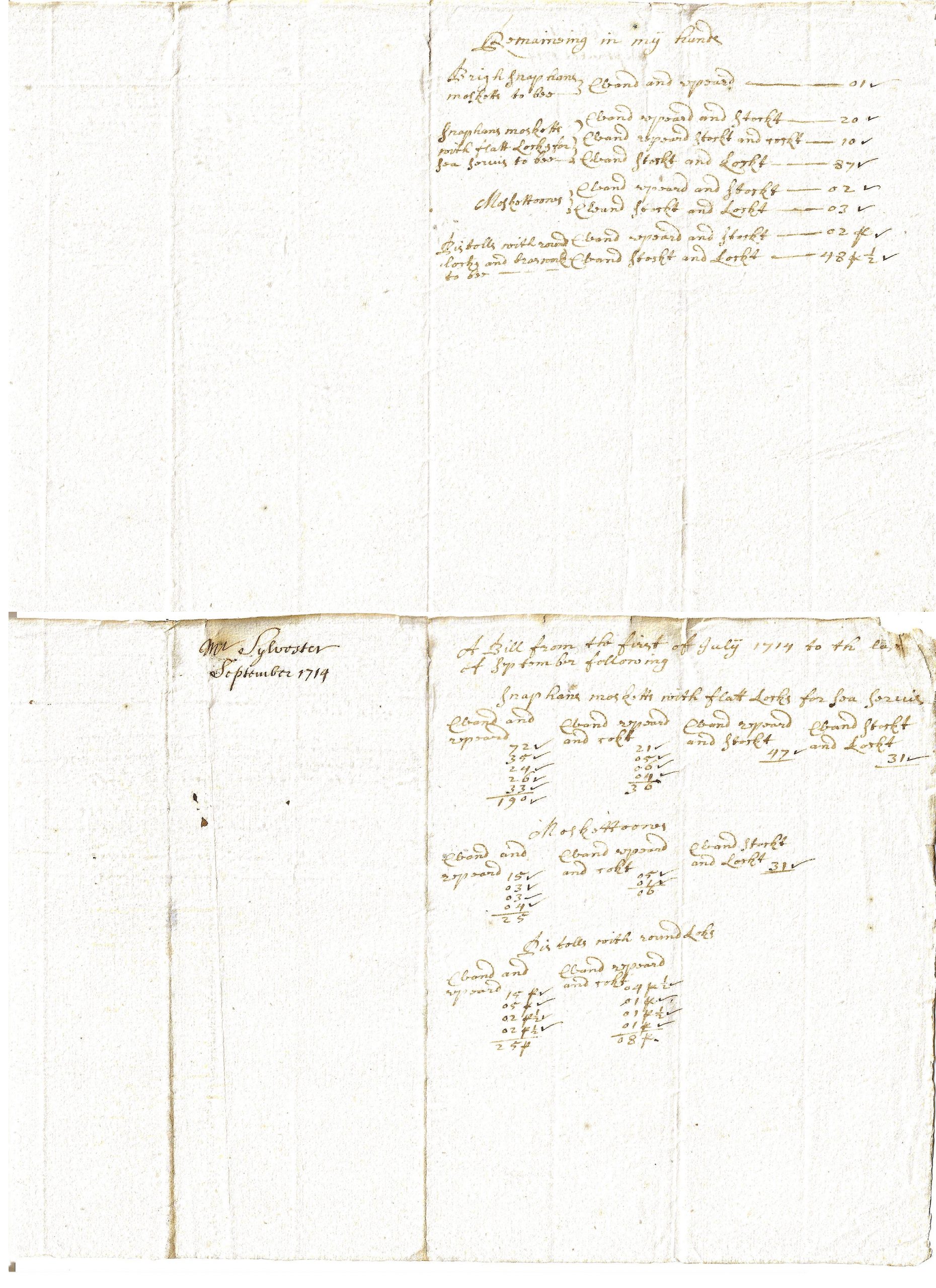
Usually, we see Mr. Hooper’s instructions to John Silvester repair small arms, but in September 1714 we see Mr. Silvester’s bill for repairs for the period from July to September.
View in new tab:
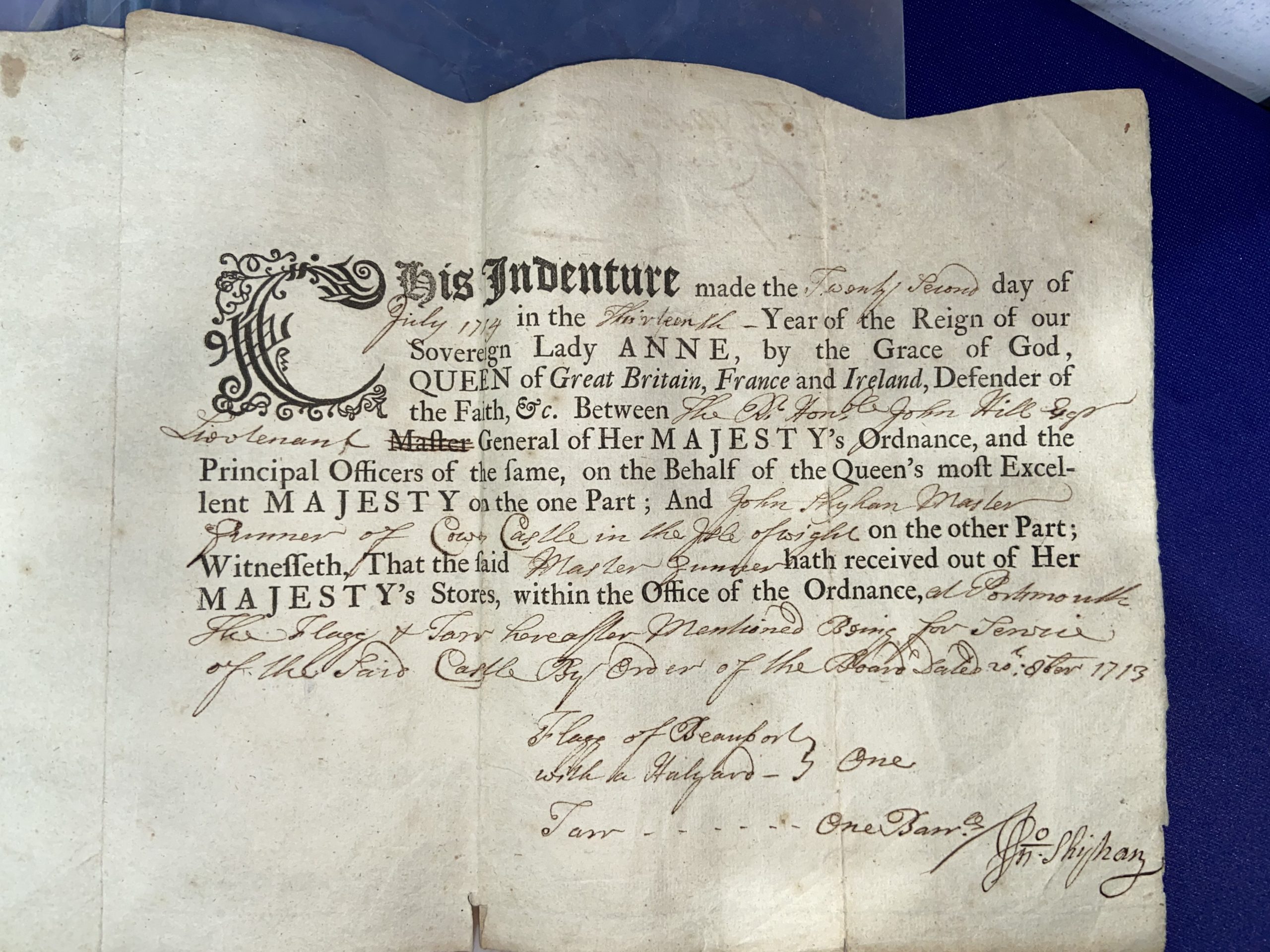
This Indent does not contain a precis; they often didn’t. Curiously, it would appear to have taken almost a year to have arrived as the order for stores was dated October 1713, but would not appear to have been fulfilled until July 1714. The document was authorised by Lieutenant General John Hill.
View in new tab:
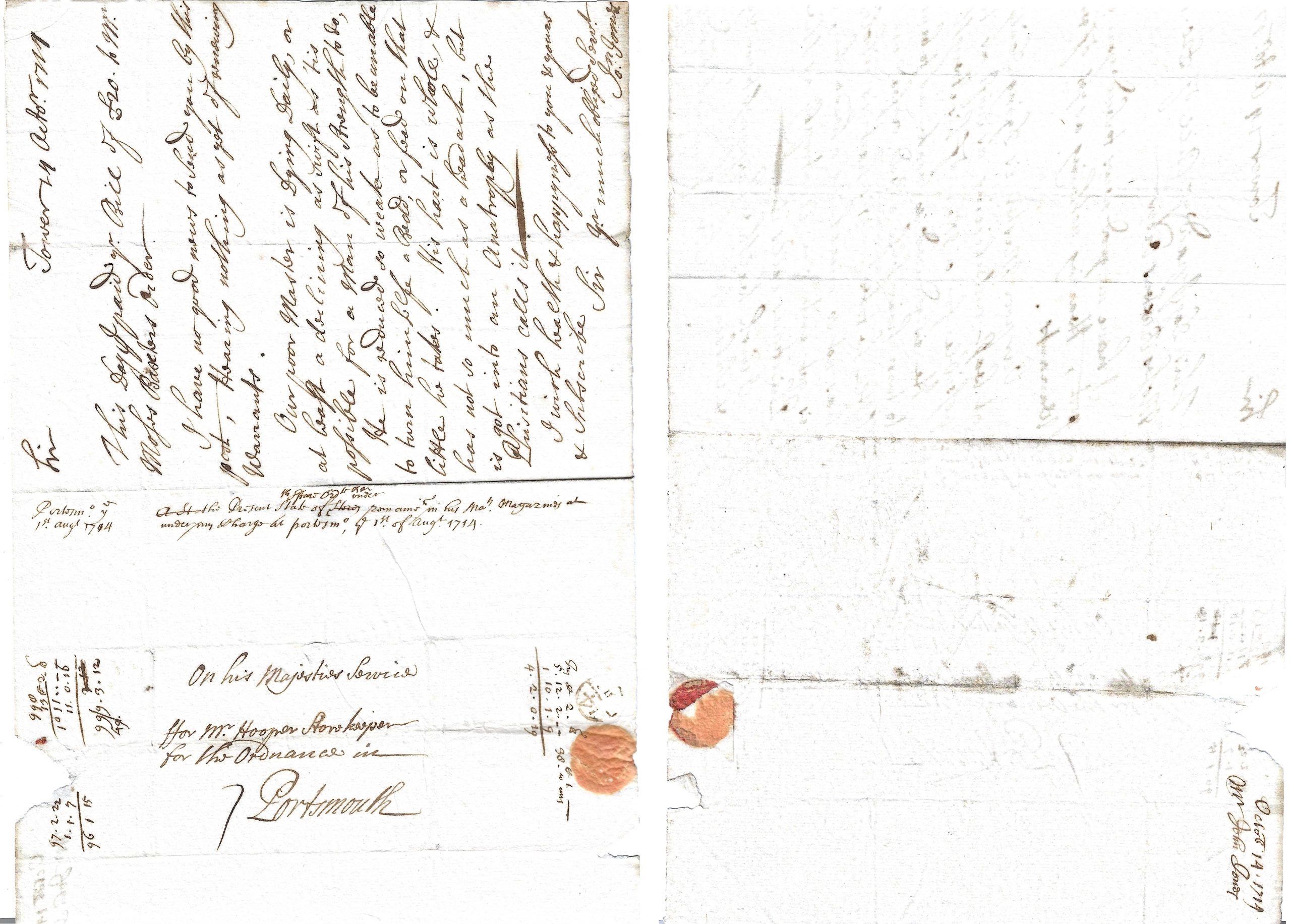
1st August 1714, was a bad day: Queen Anne died and Mr John Jones writes a sad letter to Mr. Hooper with bad news about Mr. Moses Baxter who appears to be in very poor health. We have no other information about who Moses Baxter was, but he was clearly well known to Mr. Hooper. Strangely, the date of the letter and of the precis appear to disagree.
This is the first time we see the monarch referred to as ‘His Majesty’.
View in new tab:
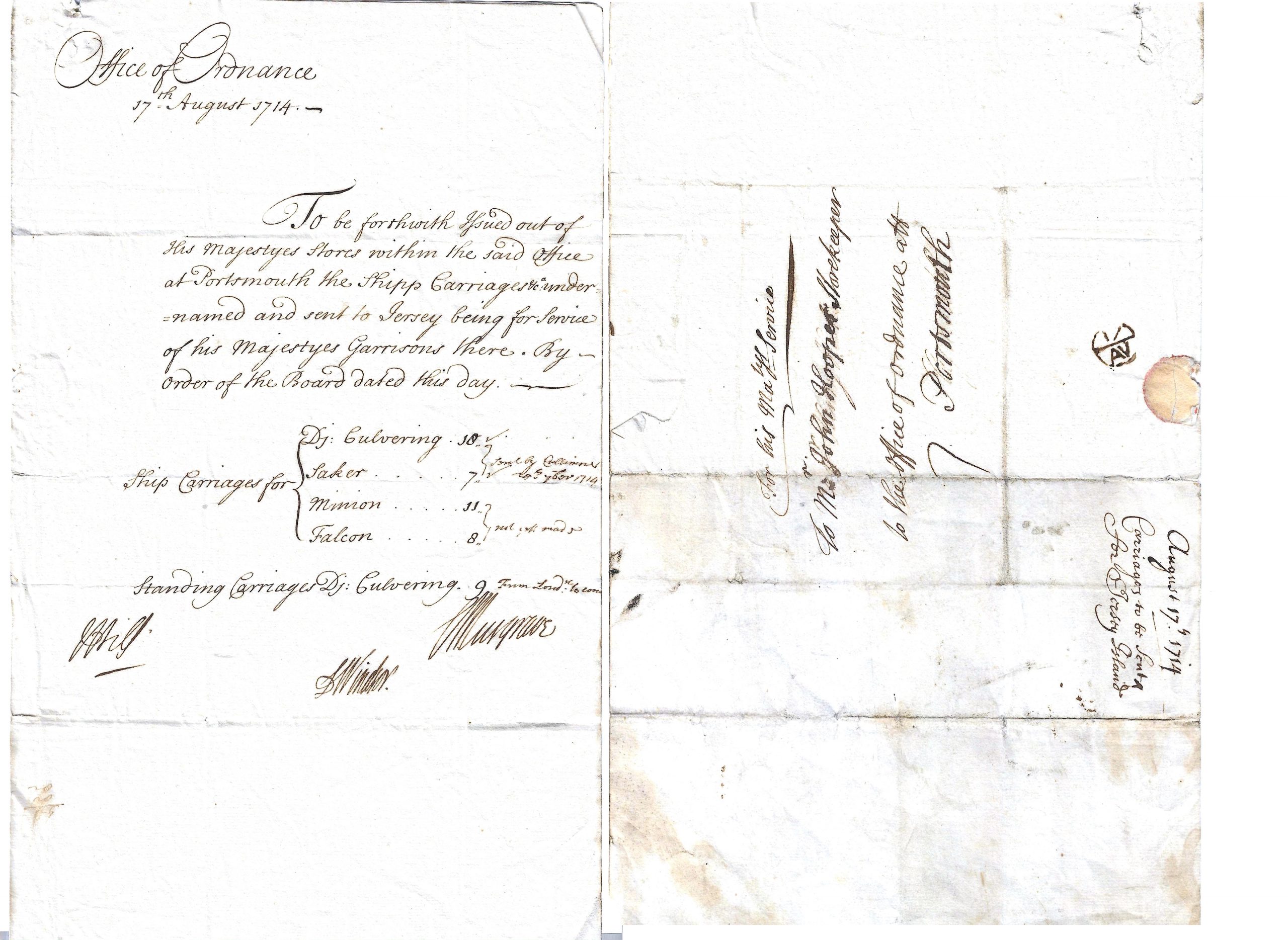
The letter from The Board on 17th August 1714 regarding ship carriages for Jersey has additional notes, presumably added by the storekeepers at Portsmouth. They are difficult to read and contain an unfamiliar contraction ‘yber’ is used to represent the month, one must assume that this is September.
View in new tab:
From the account of smiths work for the September quarter 1714 we learn that there are two Archibald Maxwells, senior and junior, both are blacksmiths working with Edward Silvester. We can also assume that William Ogbourne is a carpenter as it is he who has made new carriages.

View in new tab:
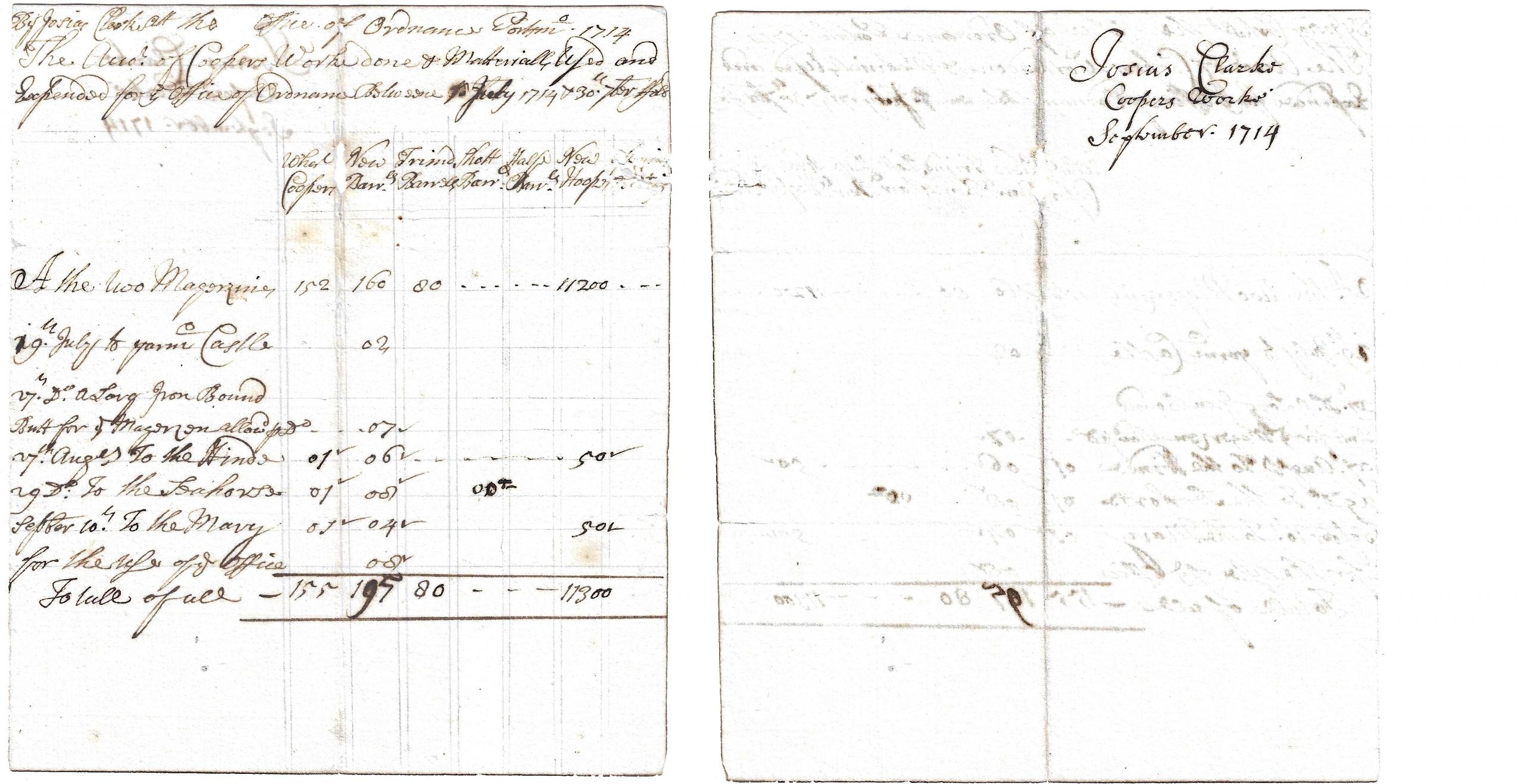
Another cooperage bill from Josias Clark.
View in new tab:
Written on fine paper, probably by John Hooper himself, this is a request to Mr. Silvester to ‘Probably written by John Hooper himself, this is a request to Mr. Silvester to ‘make clean and repair’ small arms.

View in new tab:
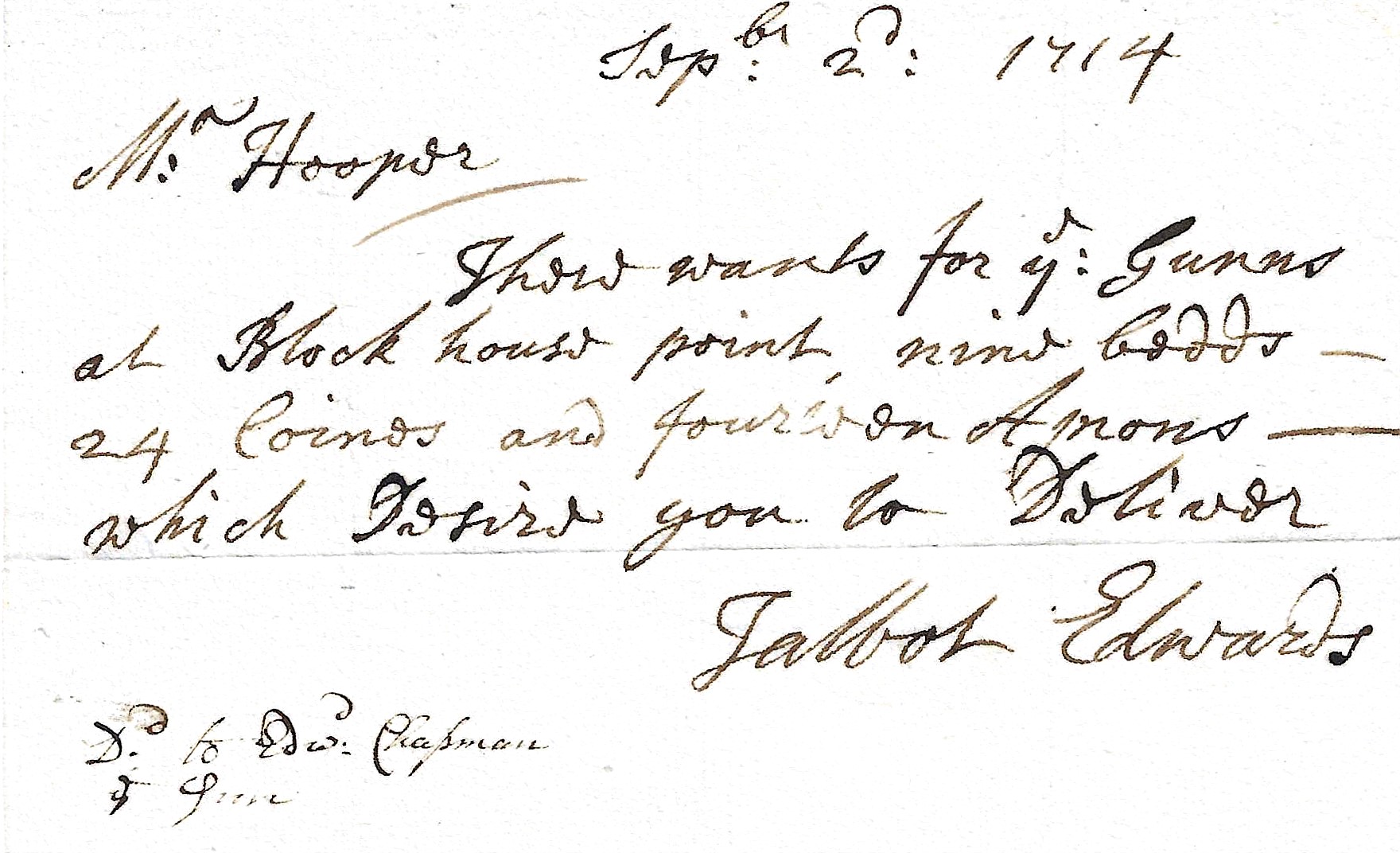
On 2nd September we are introduced to Captain Talbot Edwards who was a Royal Engineer, later to be appointed Chief Engineer of Great Britain. It would appear that at this time he was based at Fort Blockhouse in Gosport at the entrance of Portsmouth Harbour. His note is very brief and demands beds and quoins. These were parts of a gun carriage used for elevating the gun.
View in new tab:
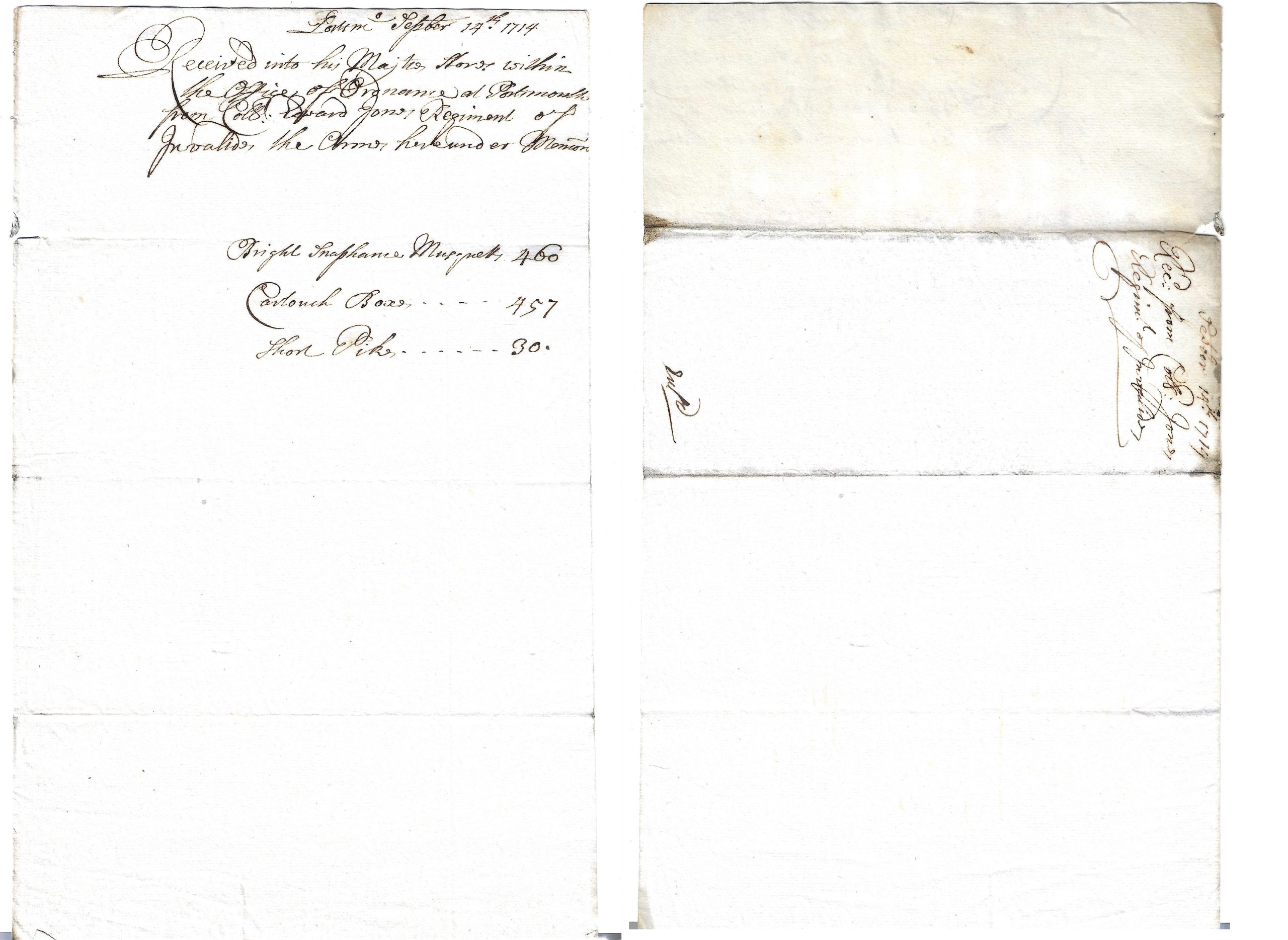
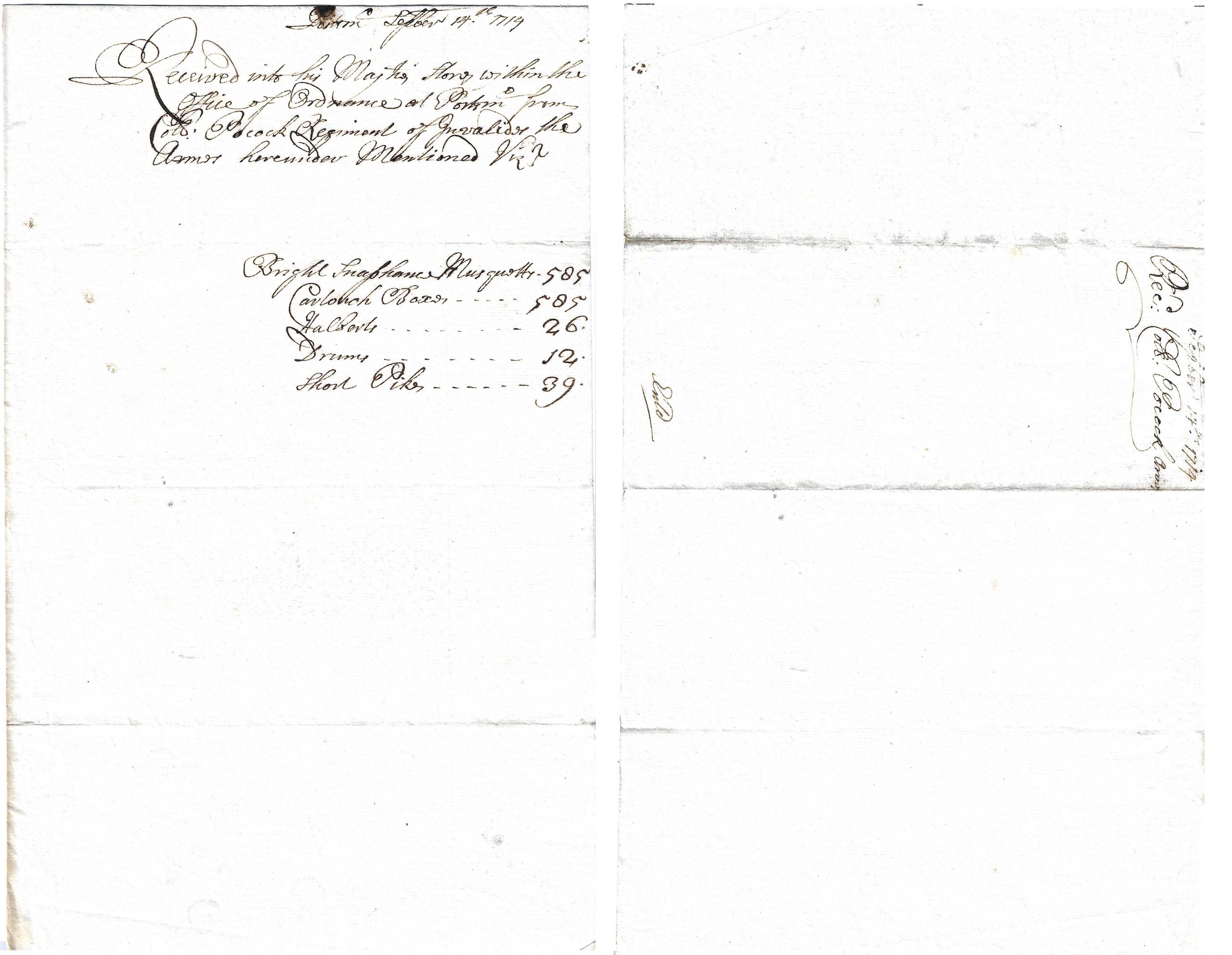
Two receipts dated 14th September 1714 for muskets, halberds, pikes, drums and cartouche boxes is for the Regiment of Invalids. These were veterans of the British army who were employed for garrison work and occasionally as Royal Marines. They were formed in 1688 and were active until 1802 when they were absorbed into the regular army. Their legacy is the uniform worn by Chelsea Pensioners.
View in new tab:
View in new tab:
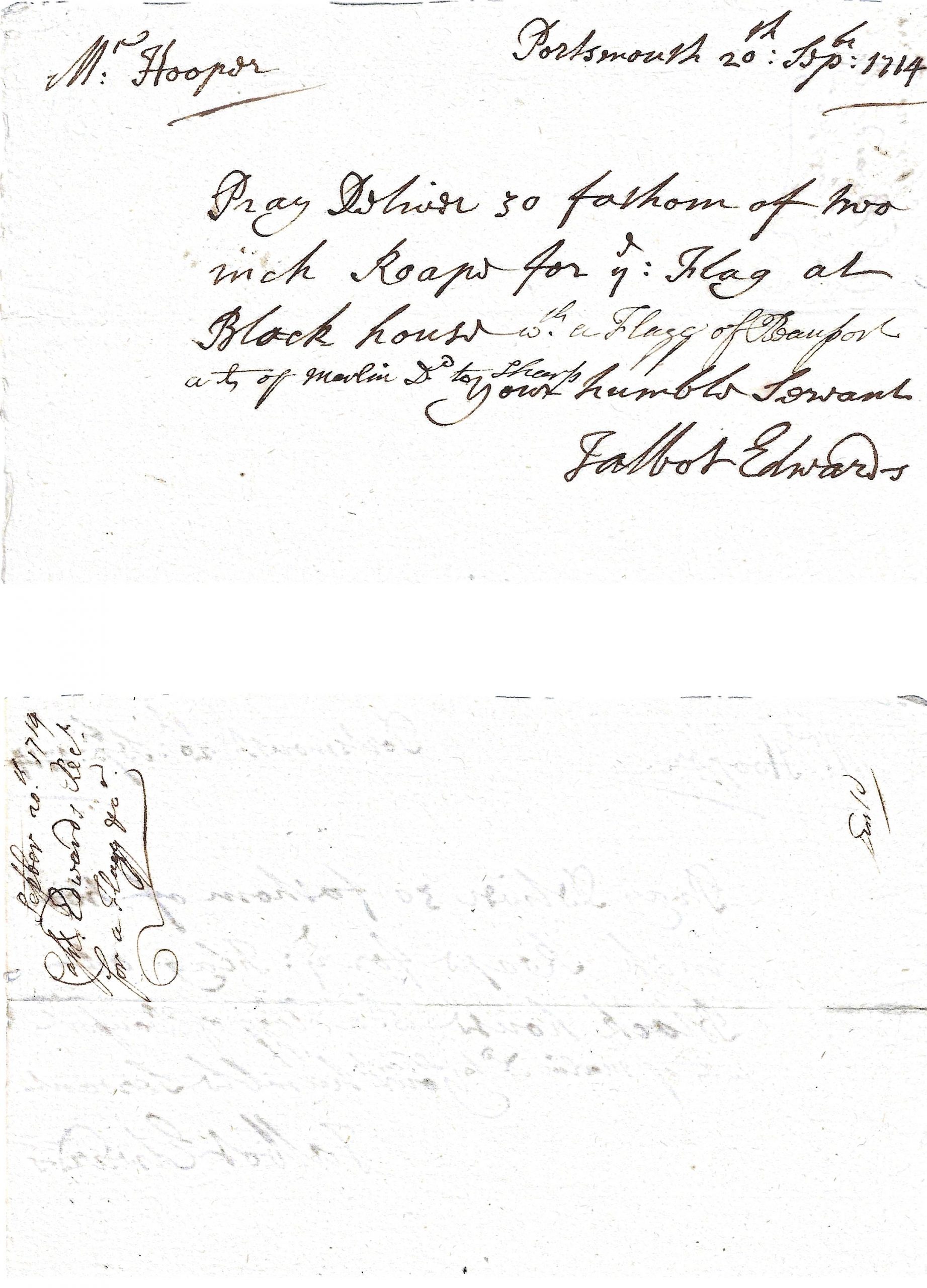
A more polite note from Talbot Edwards arrived on 20th September requesting 180 feet of rope and a flag of Beauport. This time he signs off ‘your humble servant’.
View in new tab:
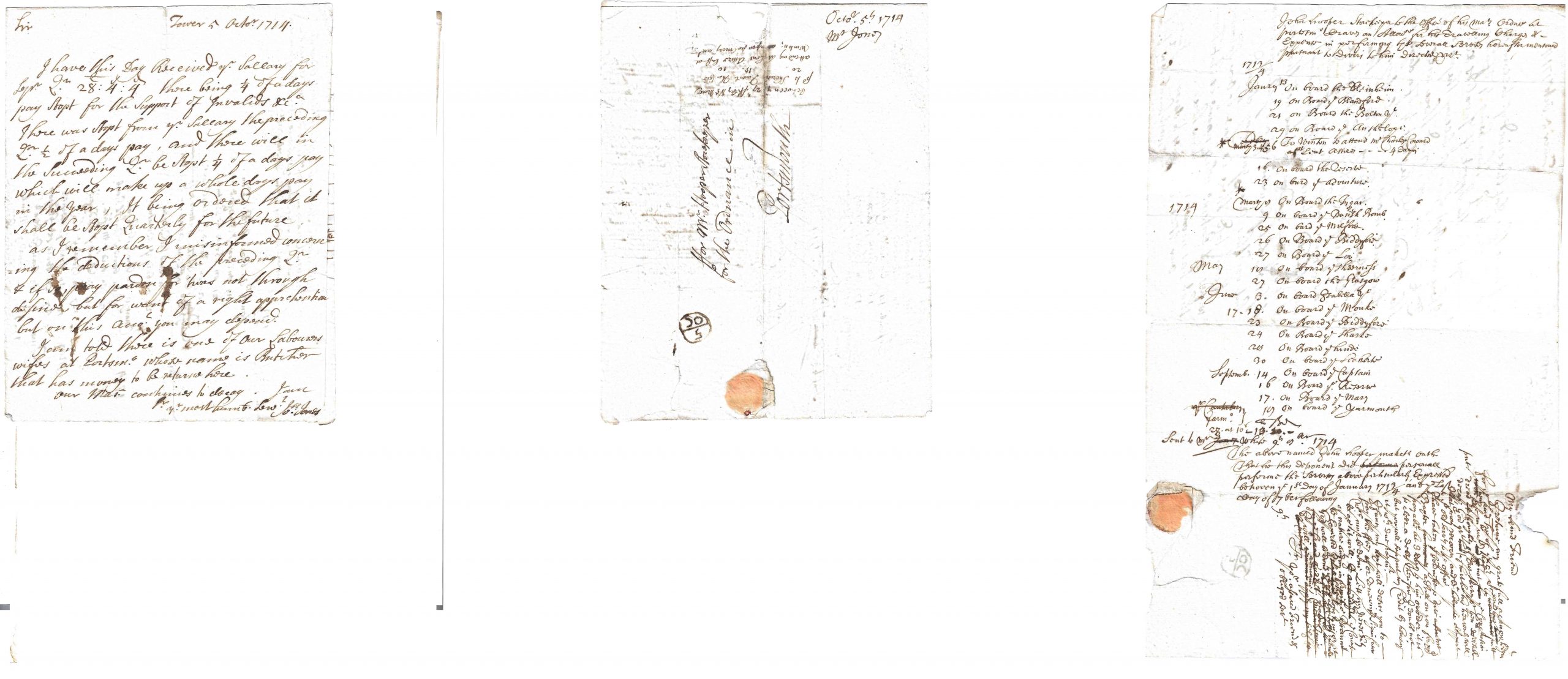
The letter from Mr. John Jones of The Tower on 5th October 1715 is in three parts and somewhat difficult to read. It looks as though Mr. Hooper is to be stopped one day’s pay over the course of a year from his salary leaving him £28/4/4d. A brief comment states that “Our master continues to decay.”, this is Mr. Baxter referred to by Mr. Jones in September.
The letter also holds an expense account for Mr. Hooper and, written at 90 degrees to the rest of the letter a reply from Mr. Hooper to John Jones, the writing is crammed, and some words defy transcription.
View in new tab:
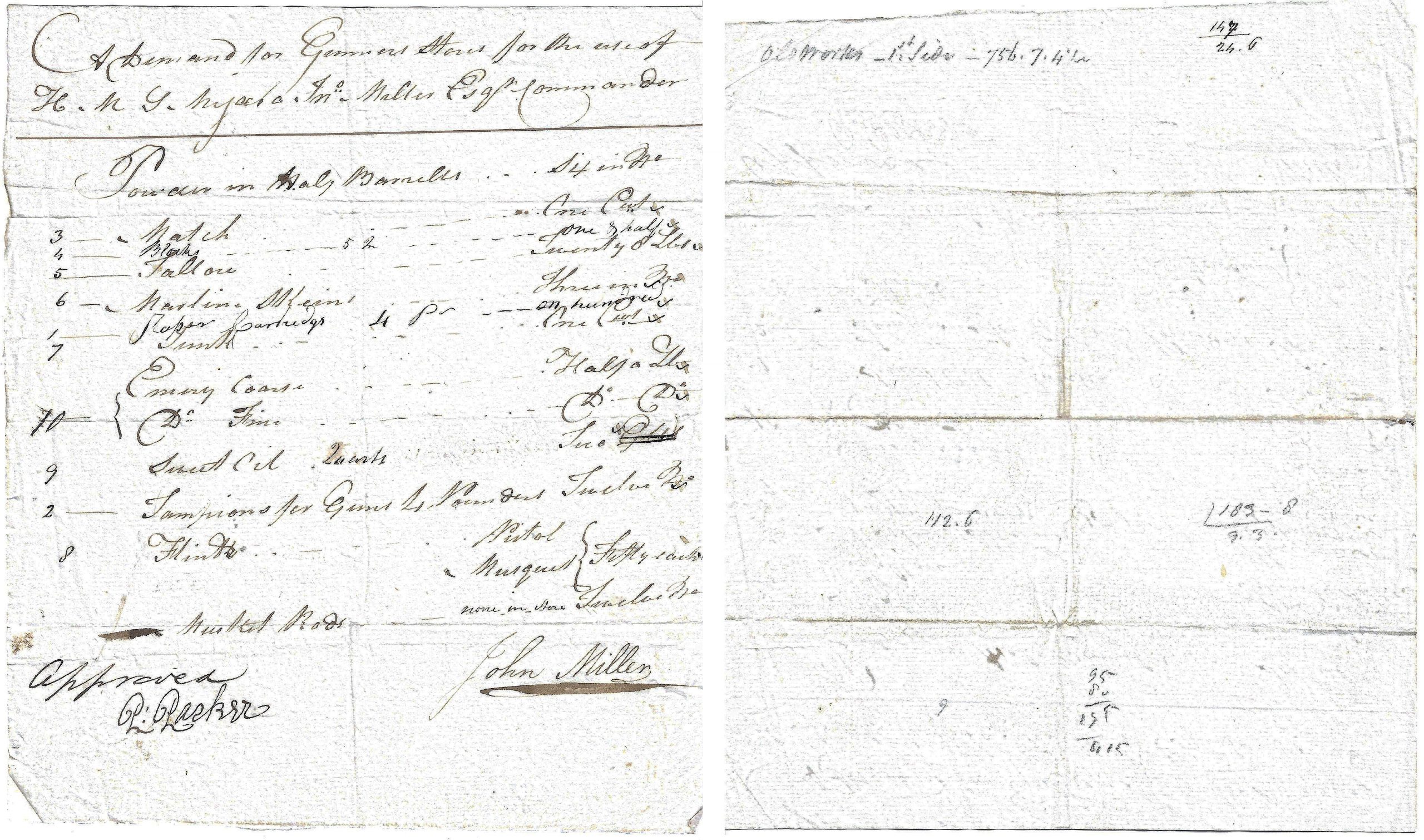
A request for a list of stores from John Miller, commander of HM Yacht Hyacia includes 2 quarts of ‘sweet oil’, this was usually olive oil likely used for lubricating navigational instruments, clocks, watches, small arms, etc. The ship’s surgeon would also have uses for sweet oil.
View in new tab:
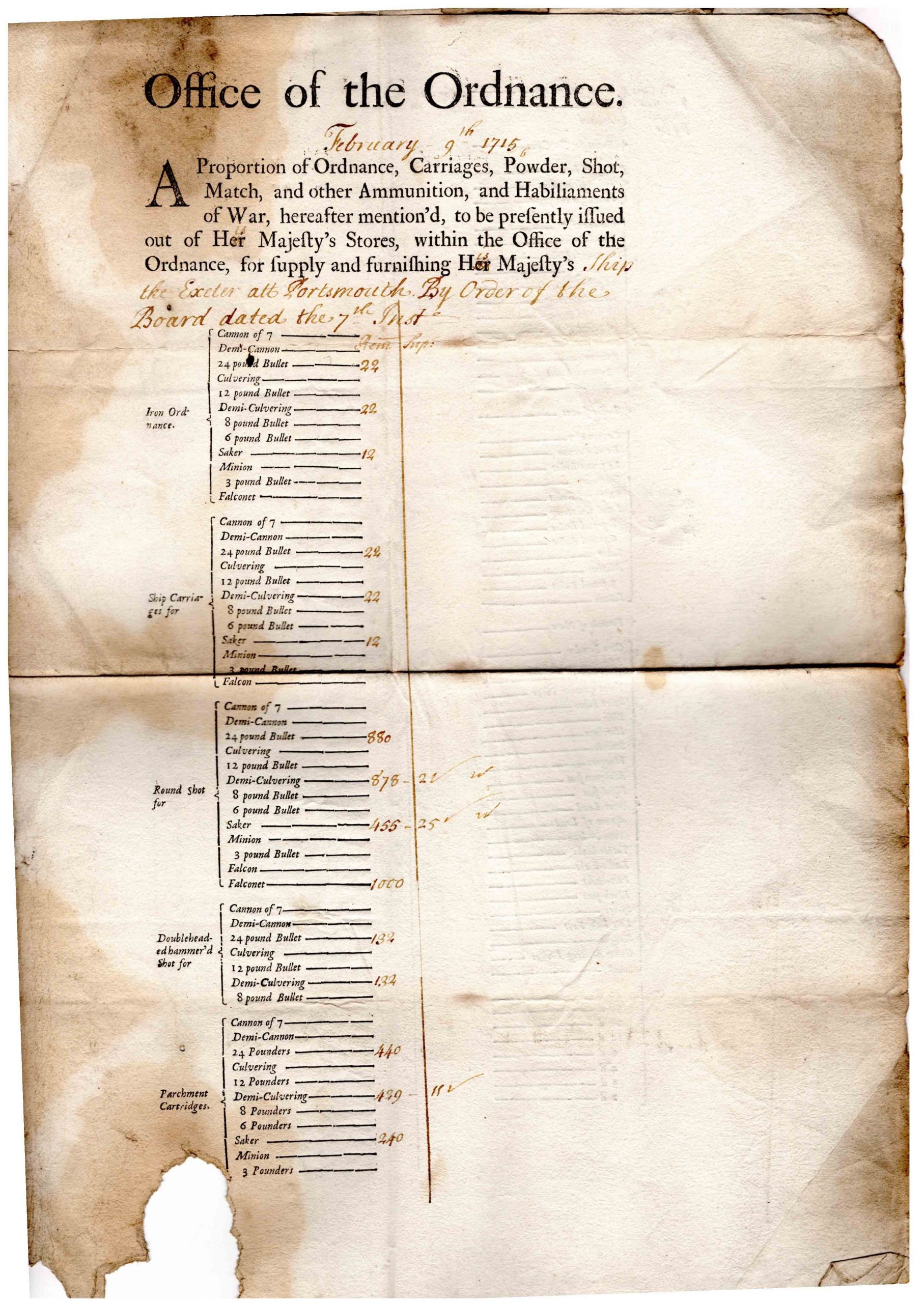
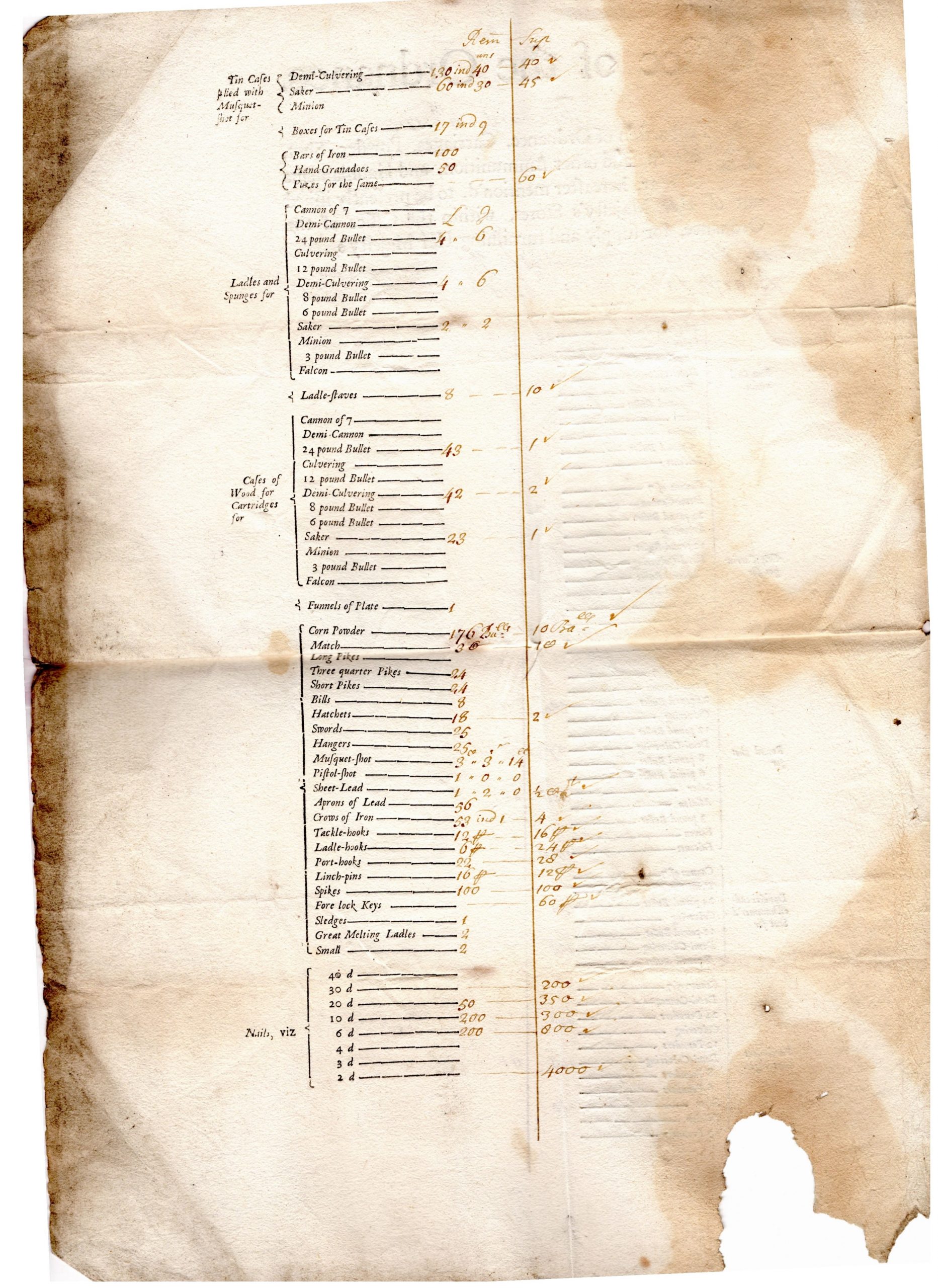
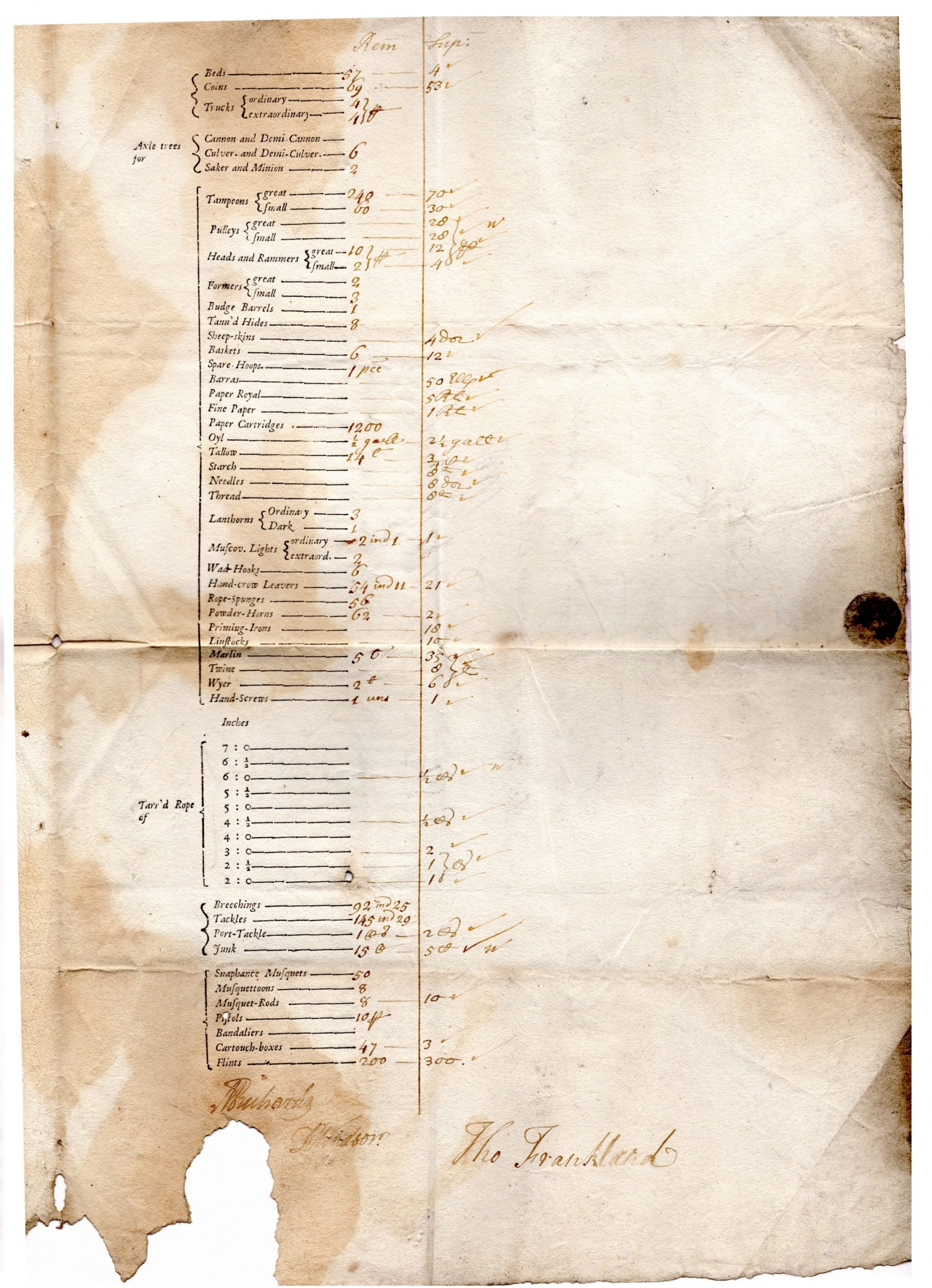
From the proportion of Ordnance of 9th February 1715 for HMS Exeter (1697), a 60 gun fourth rate, we can see that she had 24 pounders on her lower gun deck, Demi-Culverings (8lb) on her middle deck and Sakers (6lb) on the upper deck. These documents are a mine of information on the stores carried by a warship.
View in new tab:
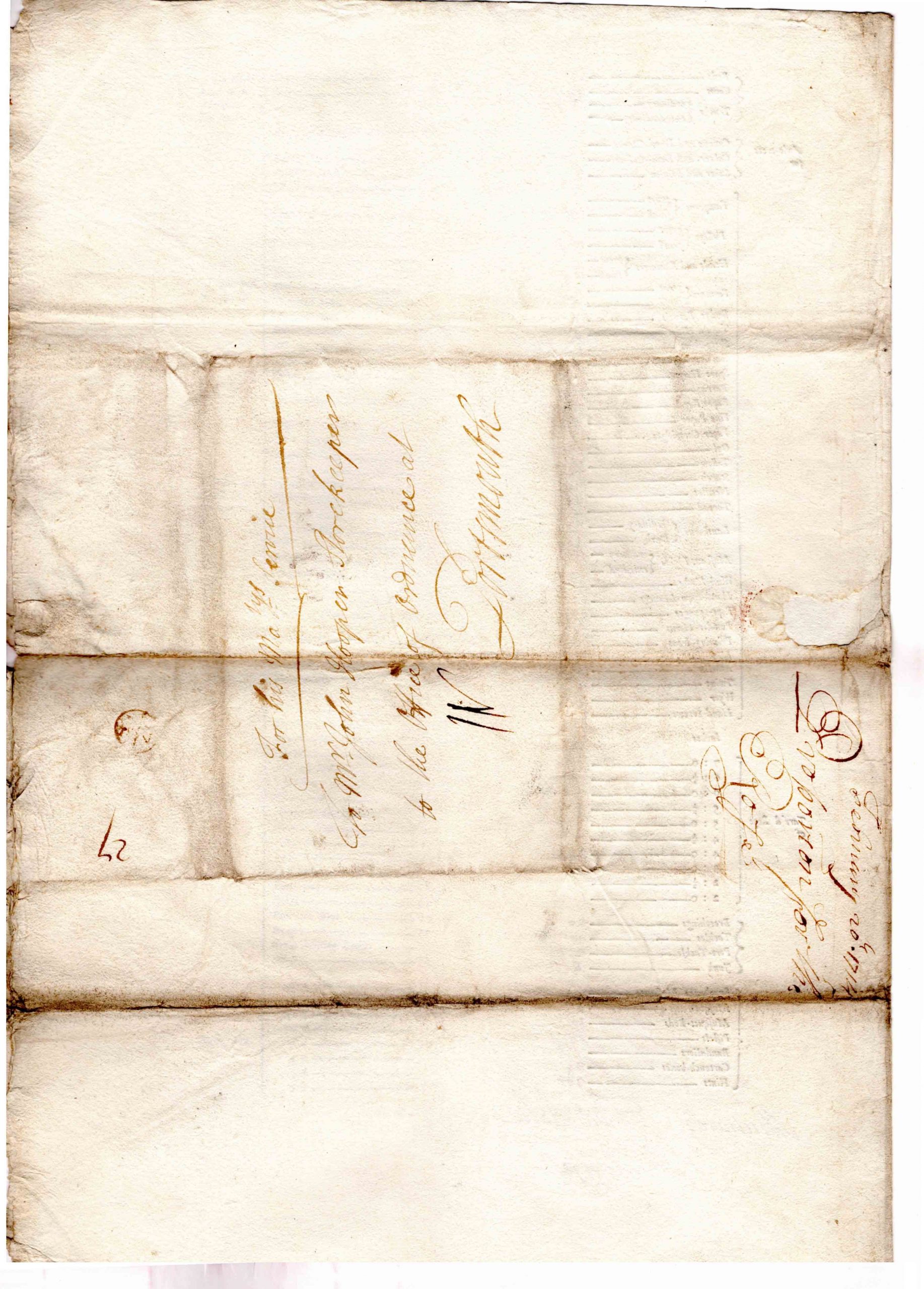
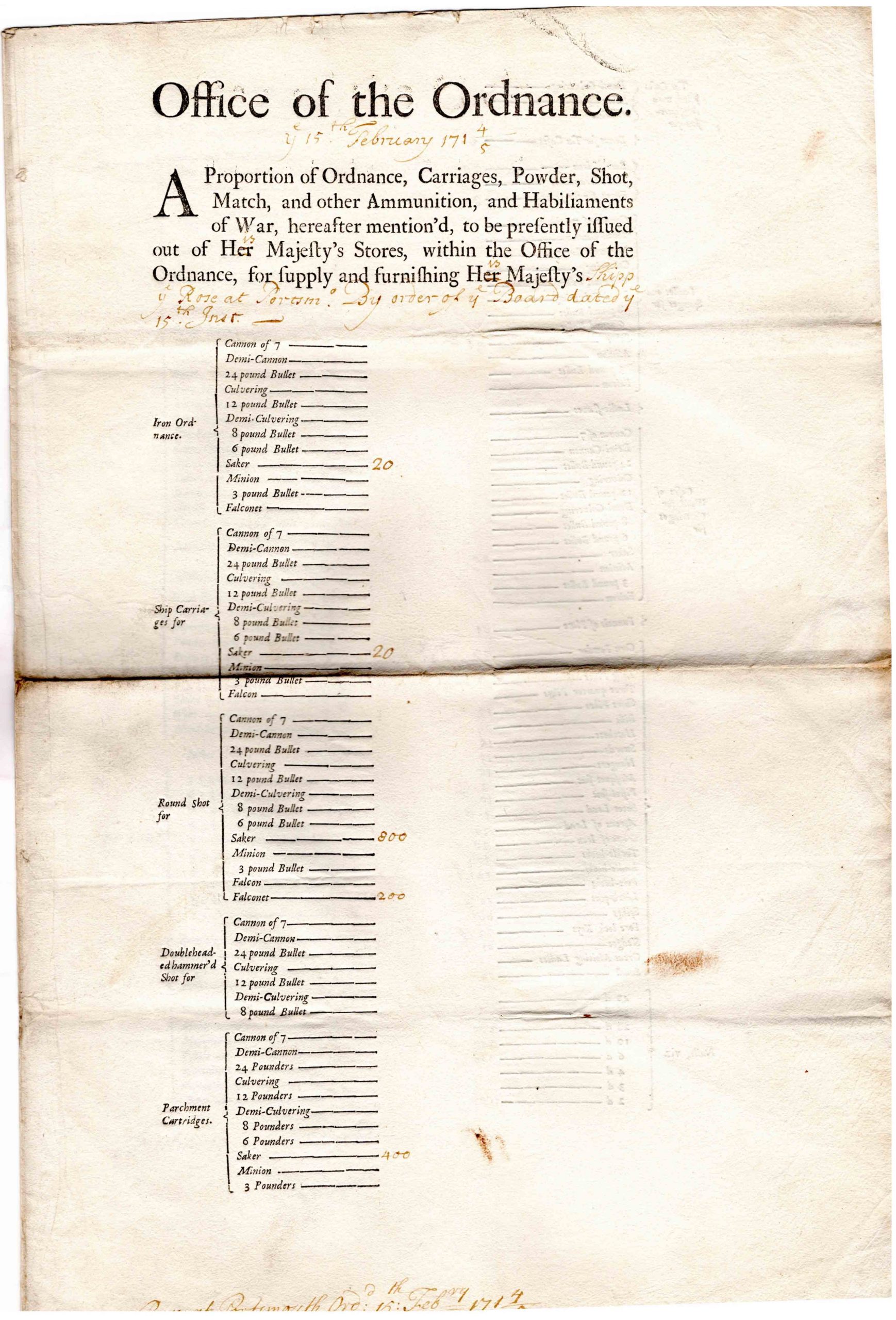
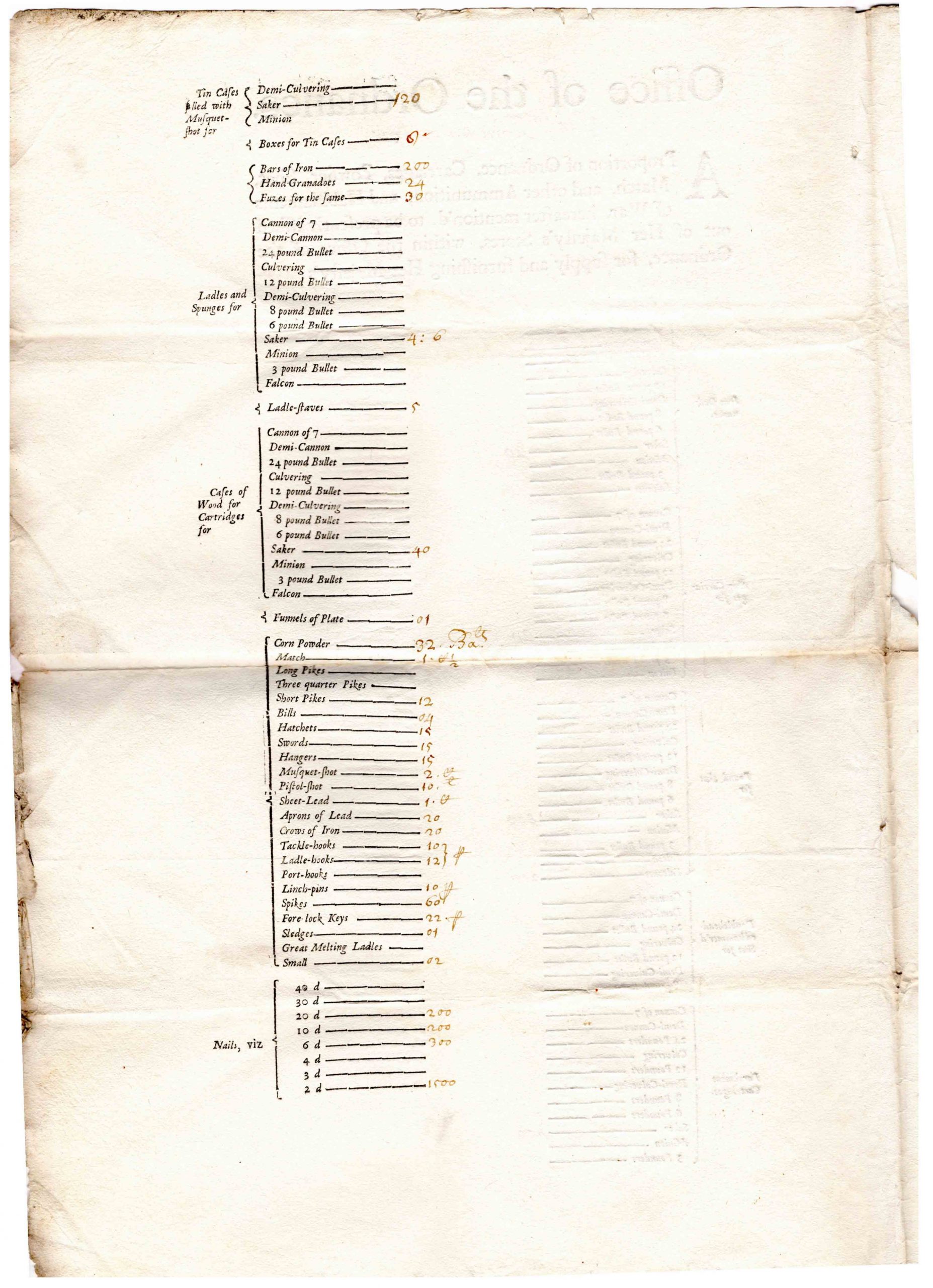
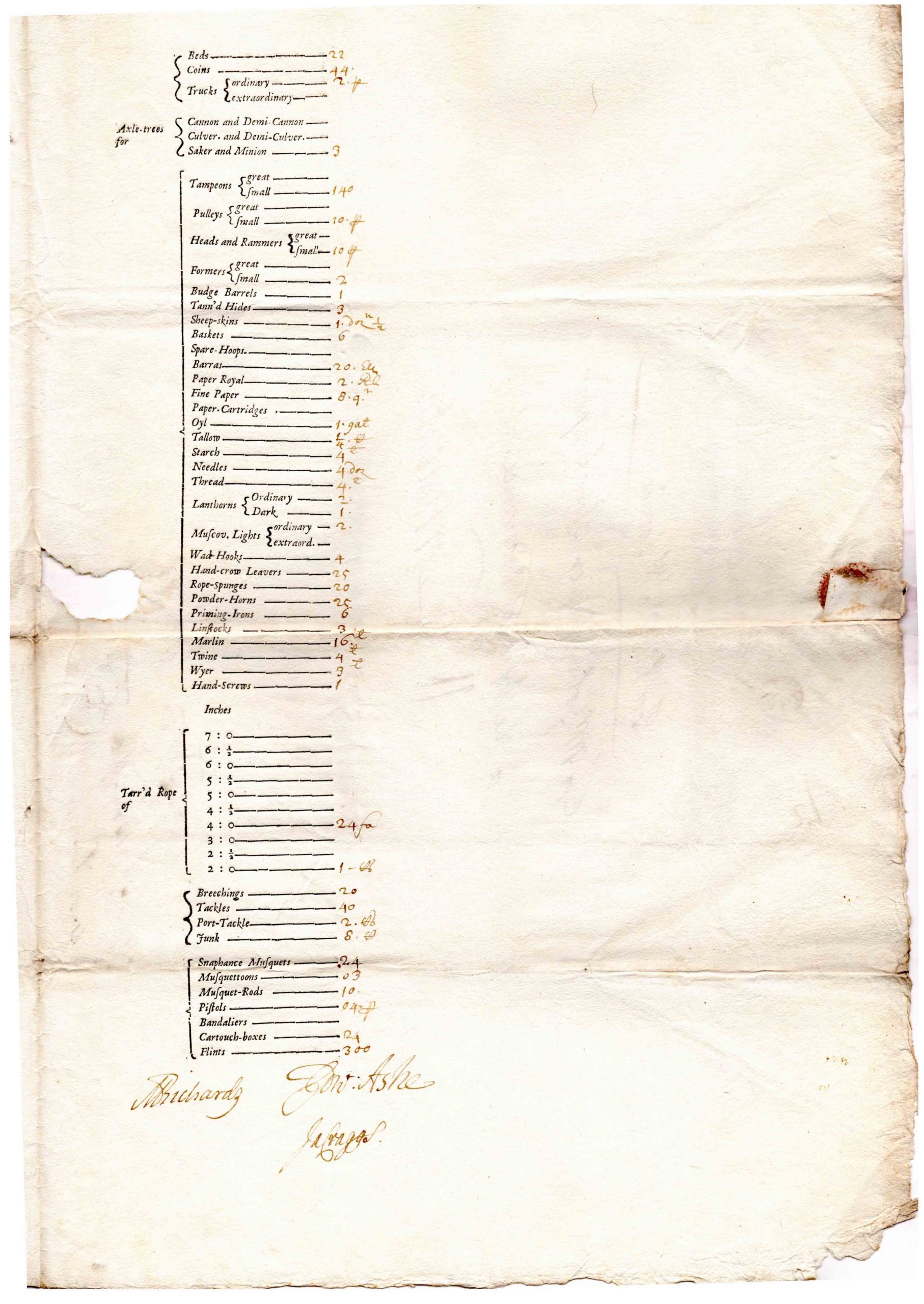
There follows, on 15th February 1715, a similar document for supplying HMS Rose, (1712) a 20 gun, sixth rate which carried 20 Sakers (3.65″ calibre), but was also issued 200 shot for Falconets (2″). I assume that these would have been used to make canister shot for the sakers. We can also she that she carried only 40 full size shot for each gun.
Incidentally: A replica of a later HMS Rose (1757), also a 20 gun sixth rate, was built in the US, it was originally named Rose, but was later renamed Surprise and appeared as such in the motion picture ‘Master & Commander: The Far Side of the World’ starring Russel Crowe.
View in new tab:
And yet another proportion for HMS Norfolk (1693), an 80 gun third rate. Again we can see that it was policy to supply a ship with 40 rounds of round shot per gun and, in this case, 6 rounds of double headed shot. This allowed for minimal practice, so well heeled captains would often purchase additional powder and shot to enable their gun crews to practice thereby giving them an advantage over inexperienced crews.
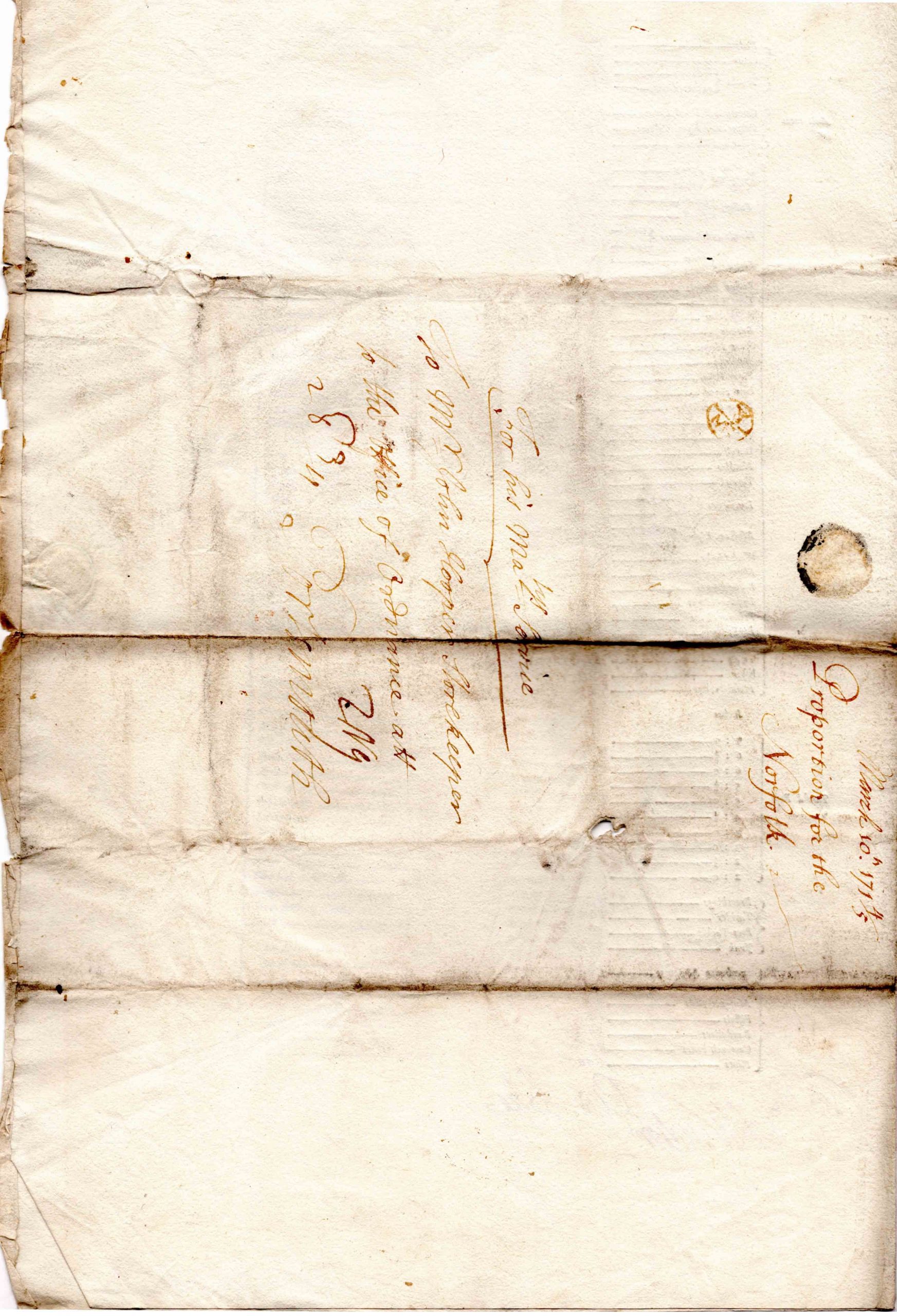
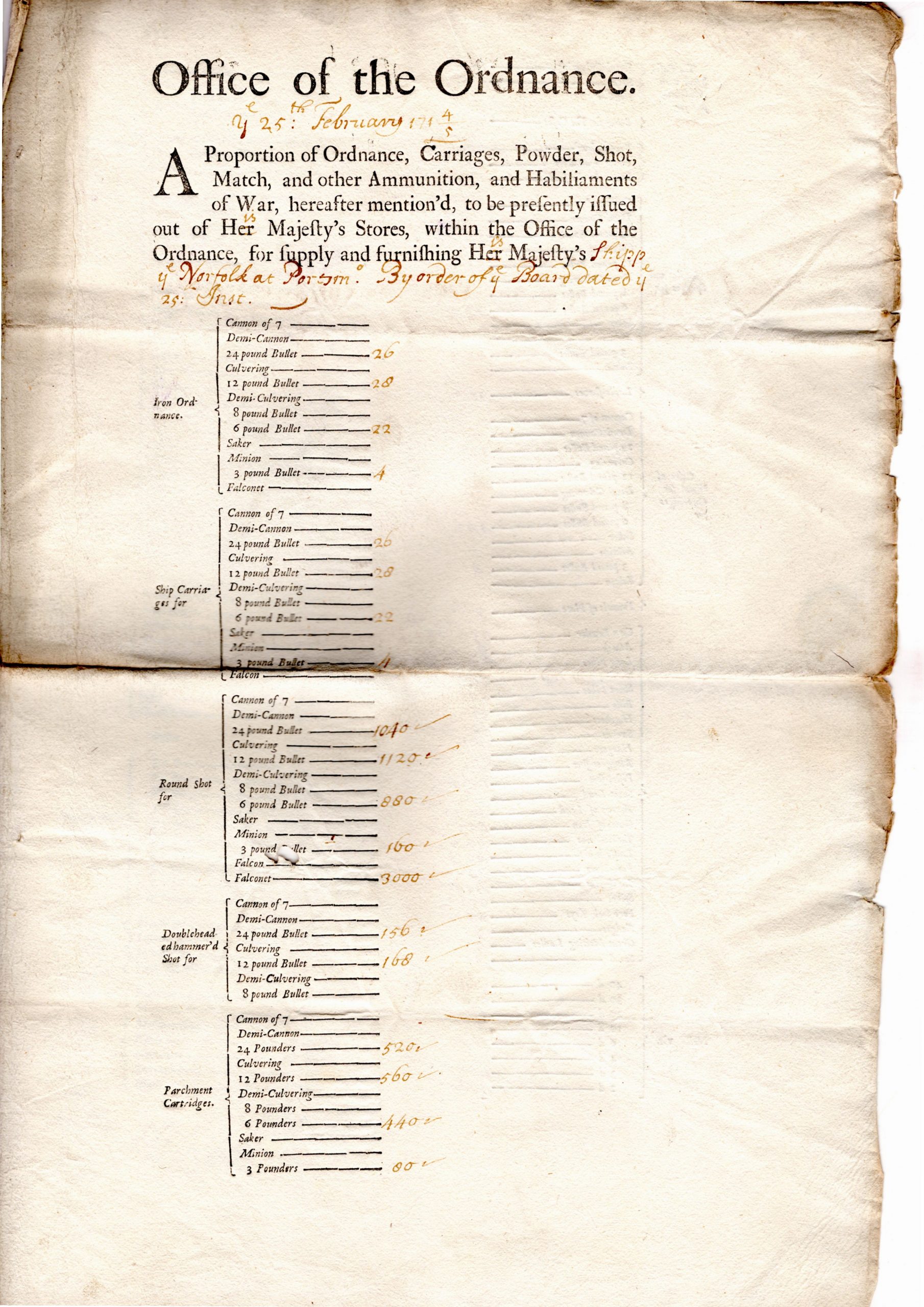
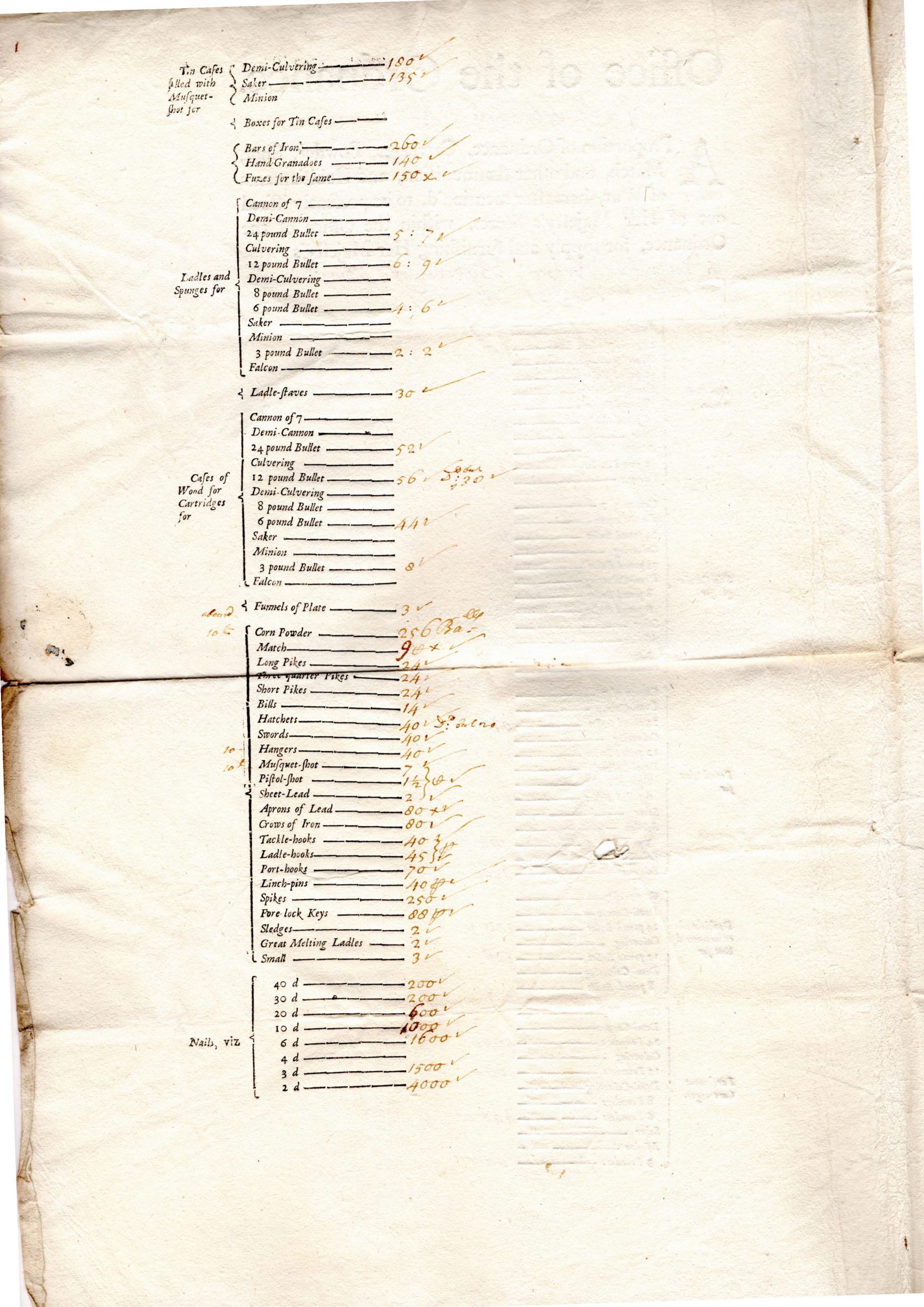
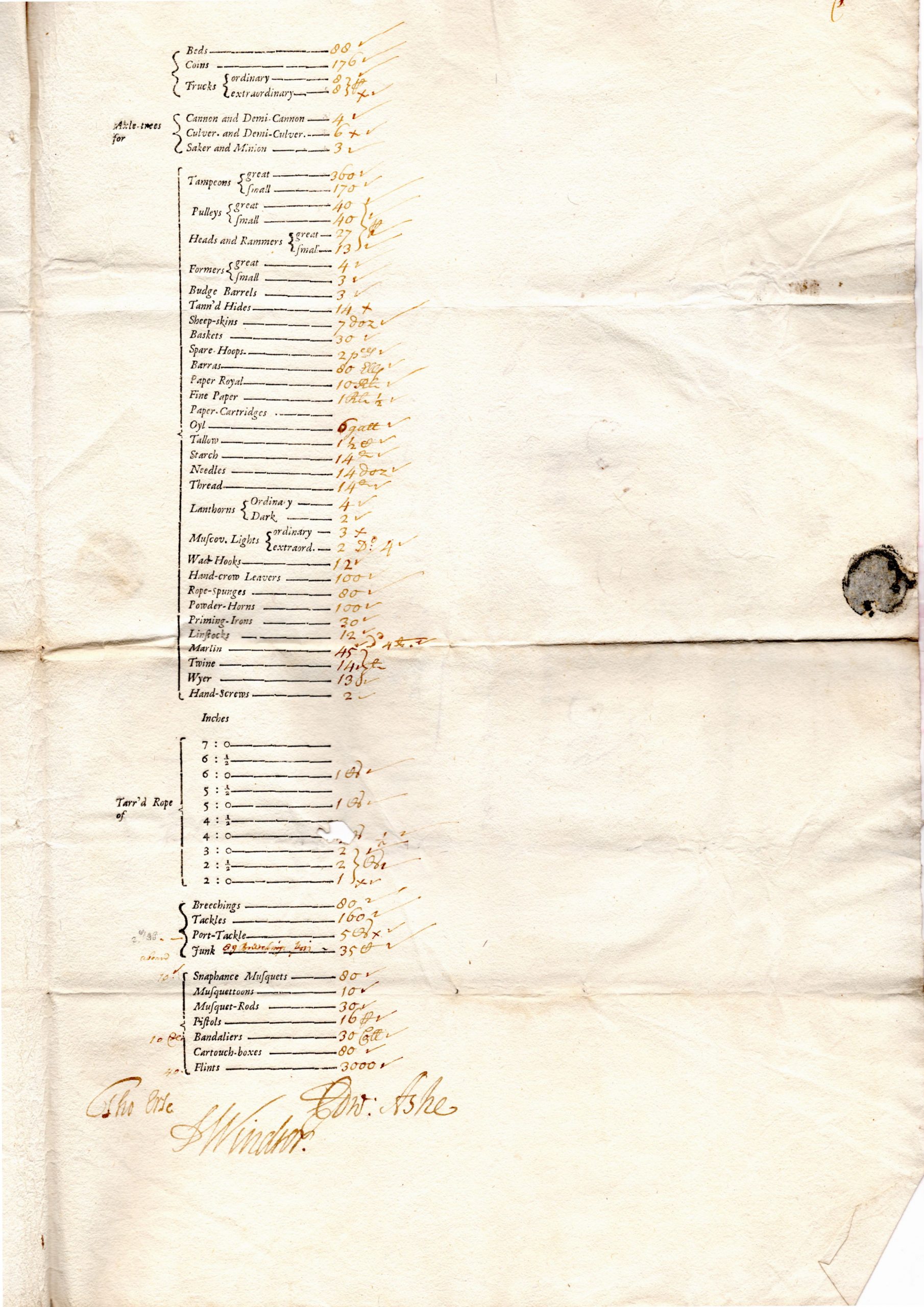
View in new tab:
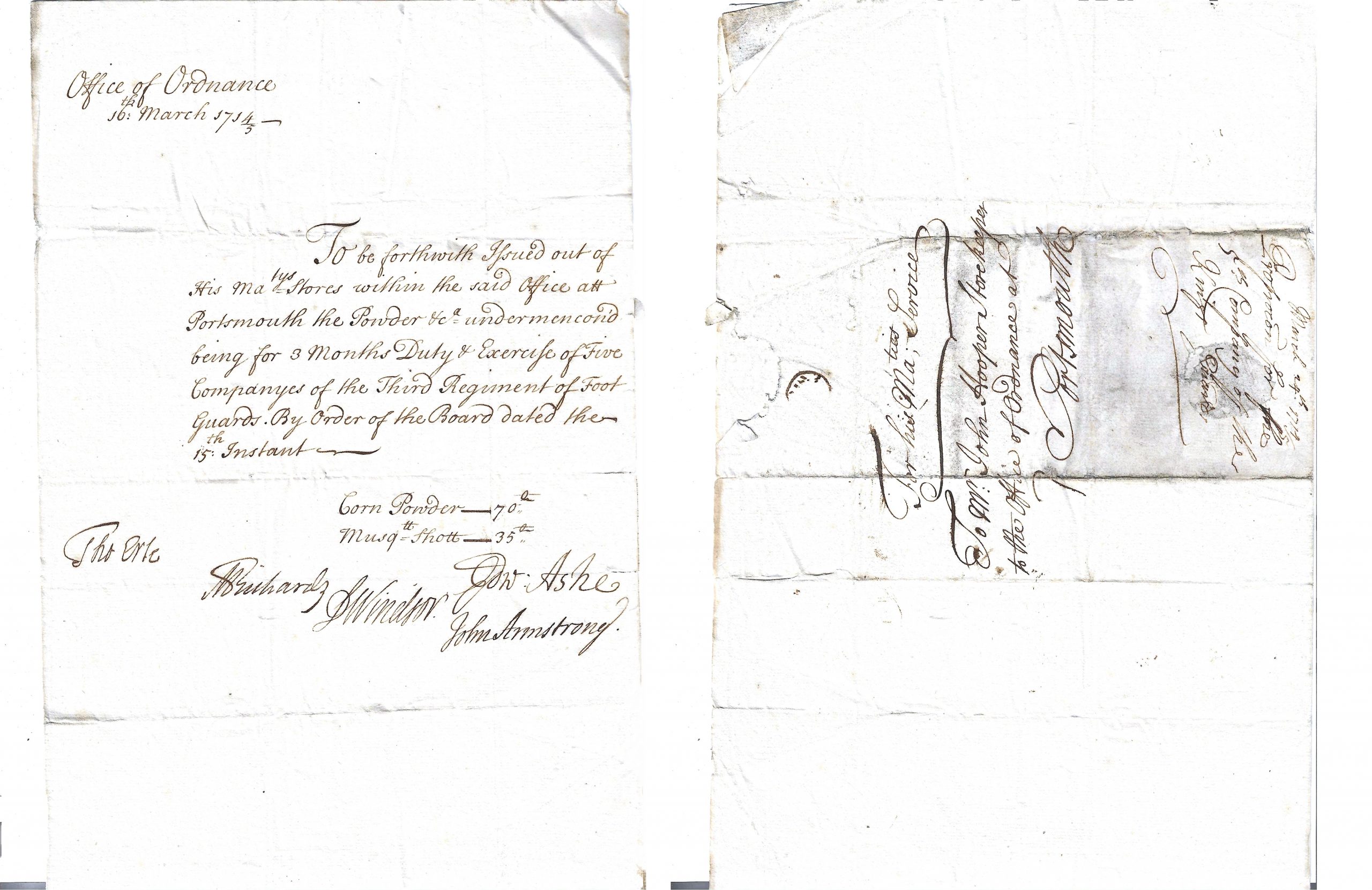
On 16th March 1715, an instruction to supply powder to the Third regiment of Foot Guards (Scots Guards).
View in new tab:
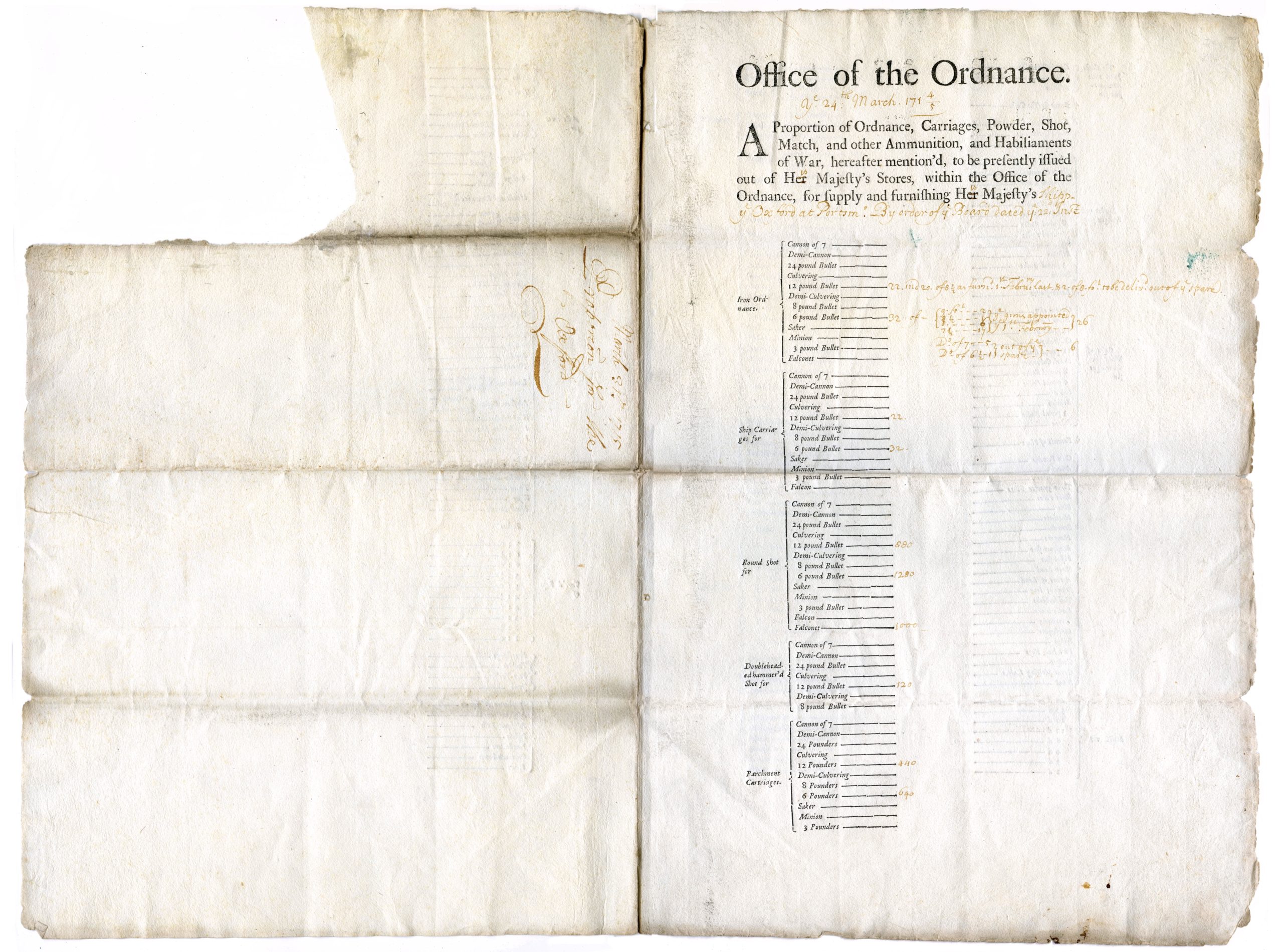
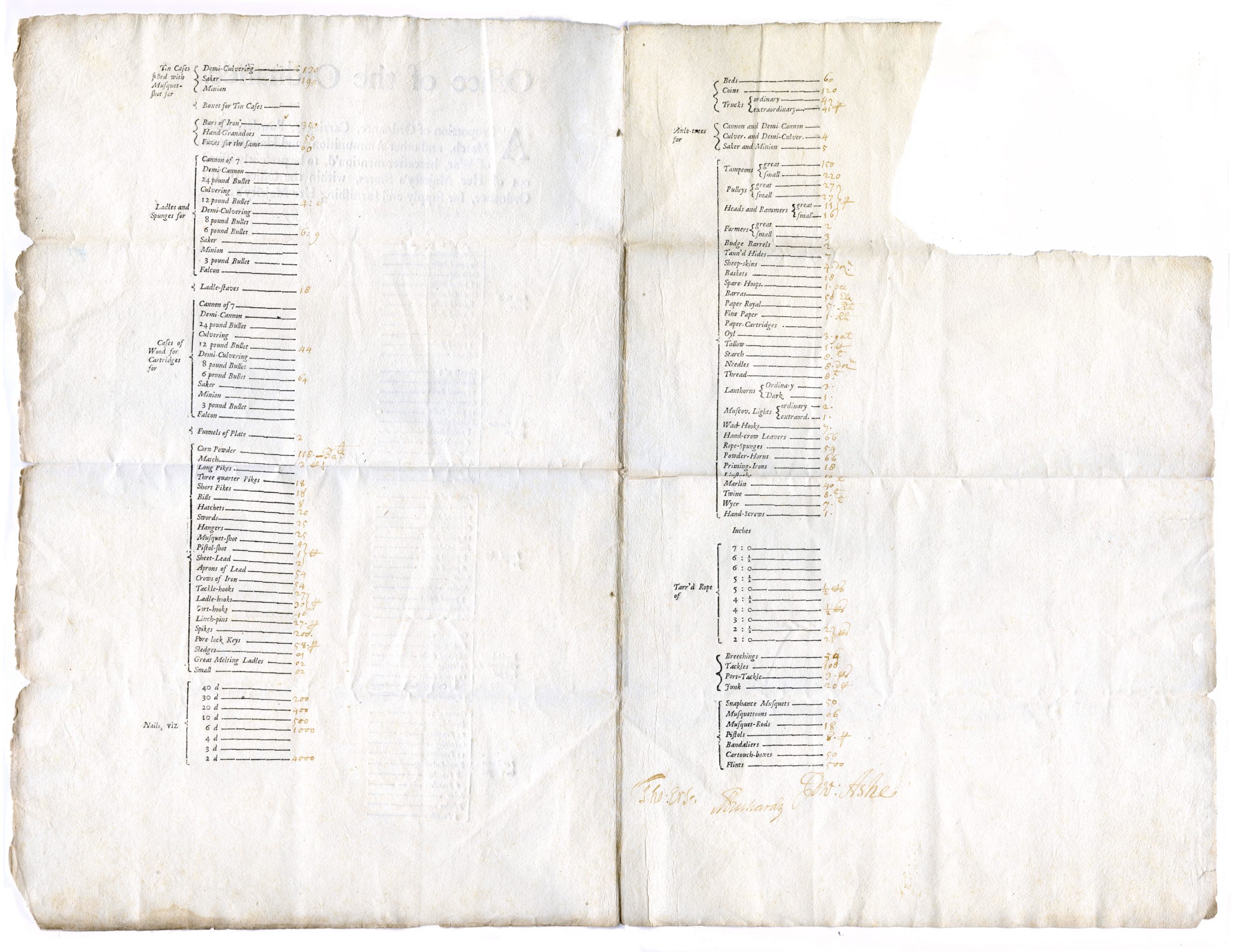
This document spent some time in the US, but has now been repatriated. It is a fairly run of the mill Proportion of Ordnance. However, it does underline the issue with the dates in January, February and March. The document itself was dated 24th March 1714/5 (the day before Lady Day when the new year started in the Julian calendar), whereas the precis is dated 31st March 1715.
View in new tab
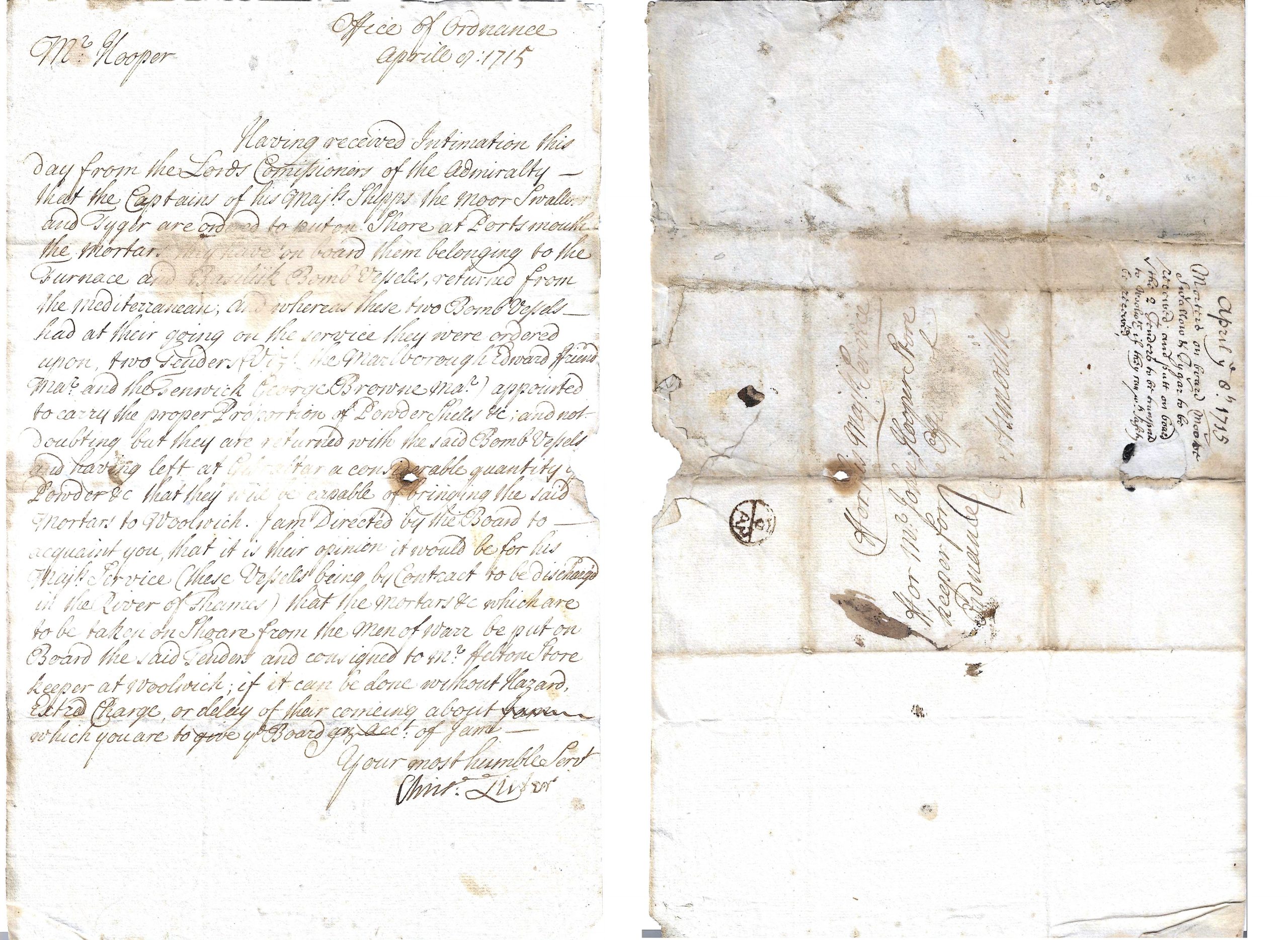
Chris Lister’s letter of April 8th, 1715 demonstrates how many words can be used to say so little. It says that the mortars carried by Moor, Swallow and Tyger, belonging to Furnace and Basilisk, should be put aboard the hoys Marlborough and Tenwick and transported to Woolwich, and that Mr. Hooper accounts for any delay or extra charge.
View in new tab:
On 15th April 1715 the ships Ruby (1708) 54 guns and Southsea Castle (1708) are ordered to be ‘laid up’. This means that they will have all guns and stores removed, their crews disbanded, and the ships put into ‘Ordinary’: stored in reserve.

View in new tab:
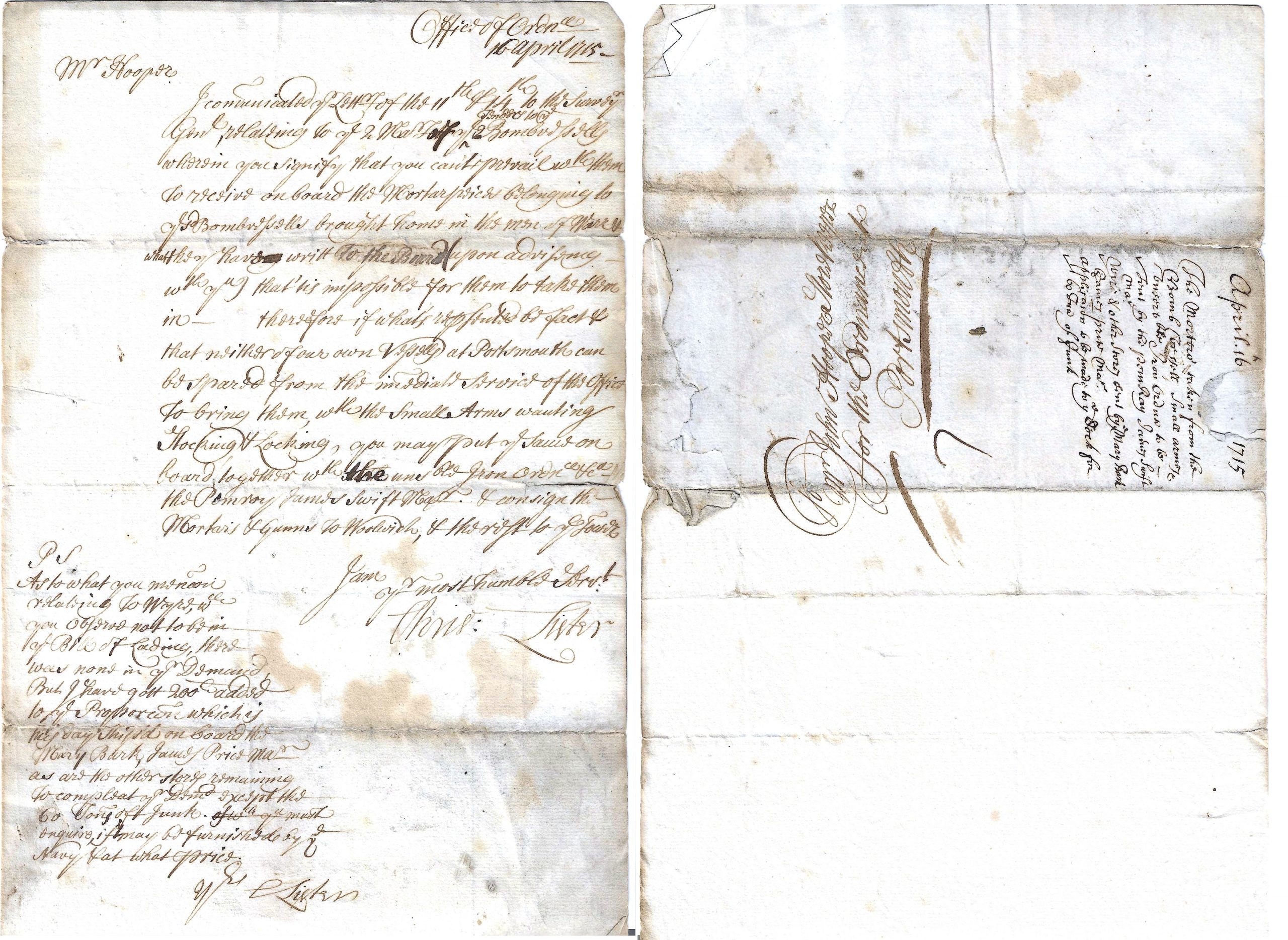
A letter on the 16th of April 1715, referring to the issue of the transfer of mortars, infers that the transports Marlborough and Tenwick were unable to carry the mortars and that they should instead be sent in the Pomroy. This gives us an idea of just how busy the hoys were.
View in new tab:
From an order for white rope on 27th April 1715 we learn, by comparing the wording in the precis and the letter content, that the measure for rope, a Cable (10 fathoms – 600 feet), was also known as a Coil (Coyle). White Rope was any rope that was not tarred.

View in new tab:
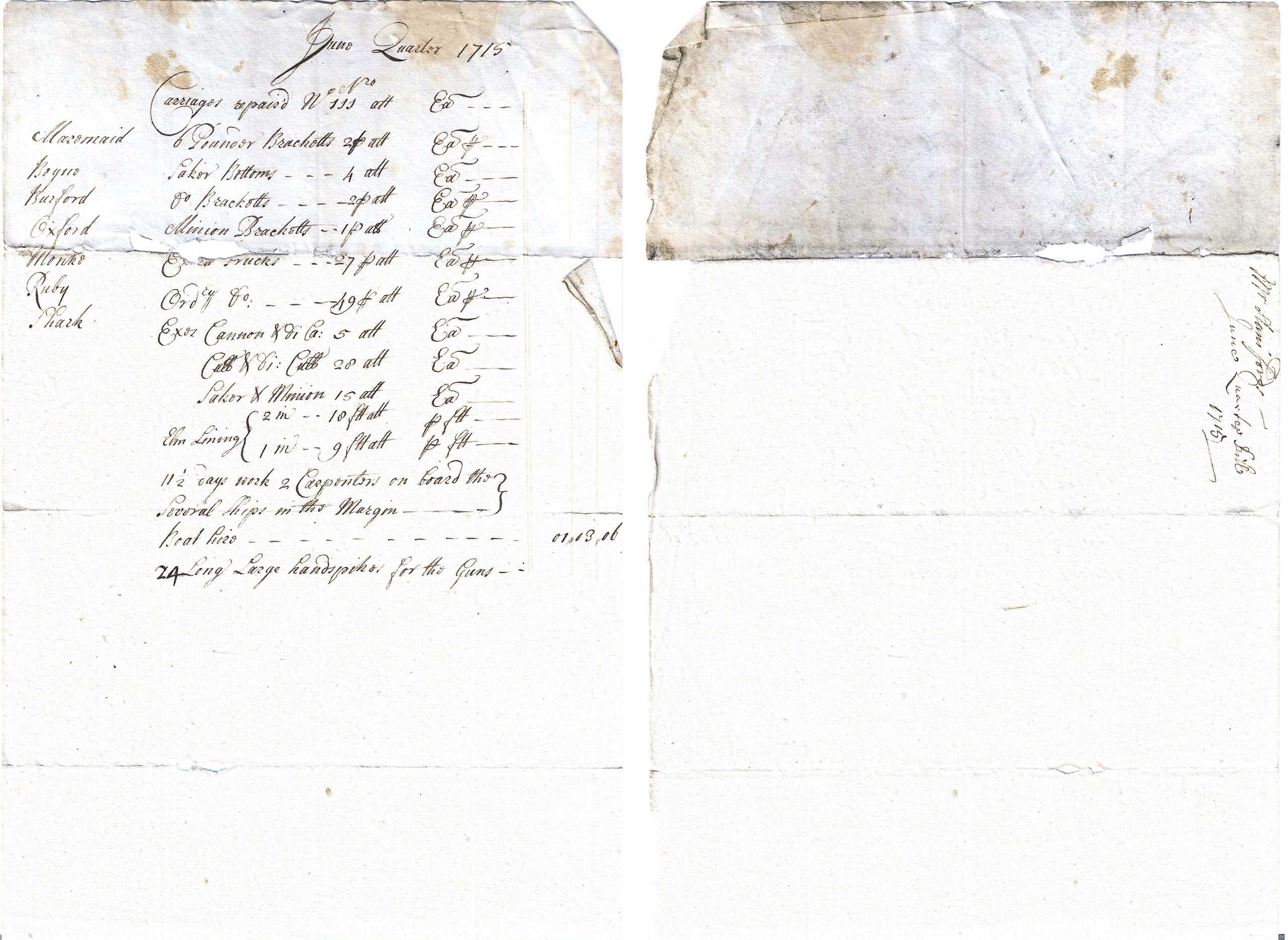
Henry Stanyford’s carpentry bill for the June quarter lists several ships one of them being the Boyne (1692) famed for her part in taking Gibraltar in 1704. The bill is for the usual repairs to ships’ gun carriages.
View in new tab:
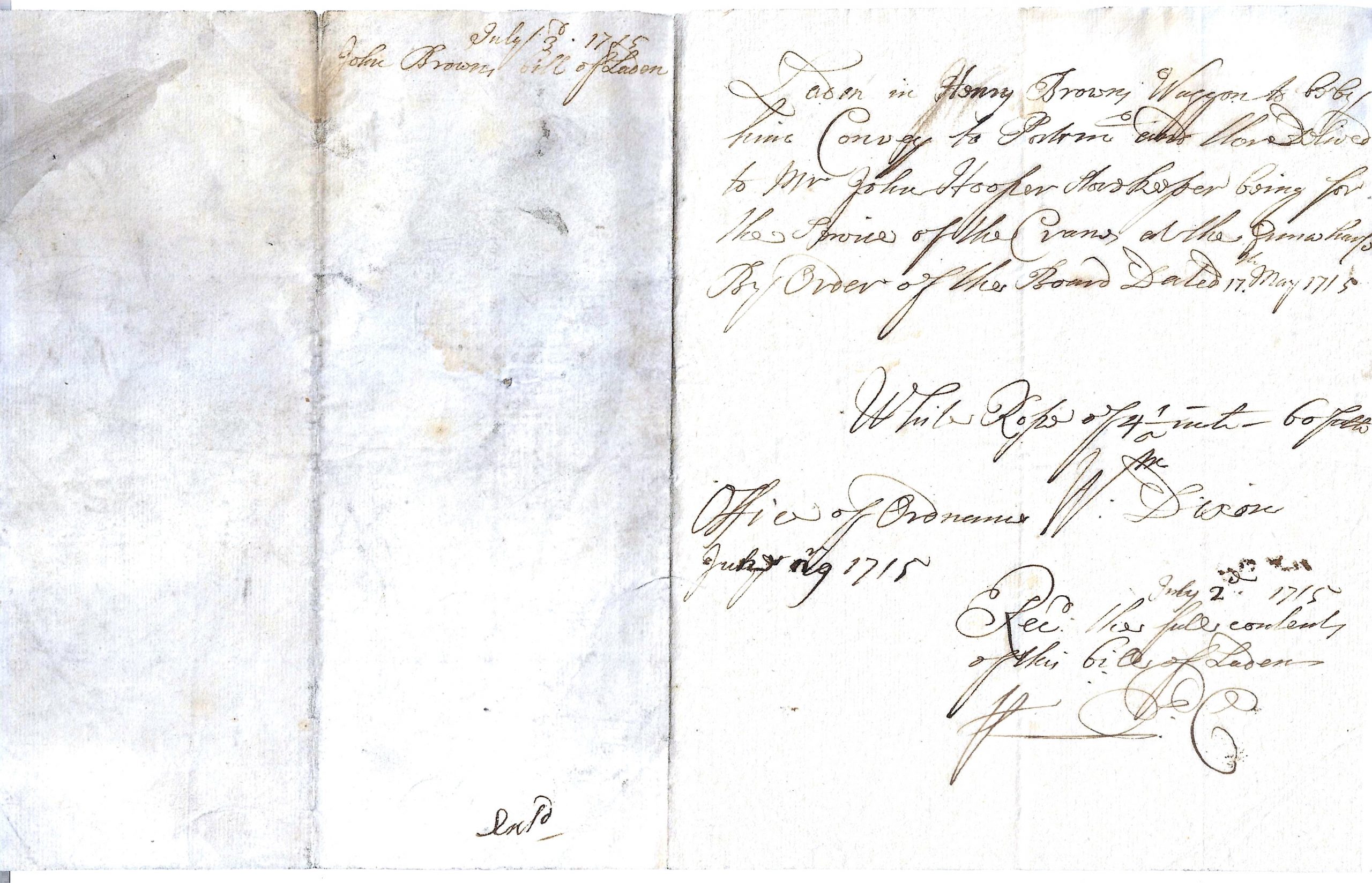
On 3rd July 1715, John Brown’s, waggoner’s bill of laden for white rope to supply the cranes at Portsmouth.
View in new tab:
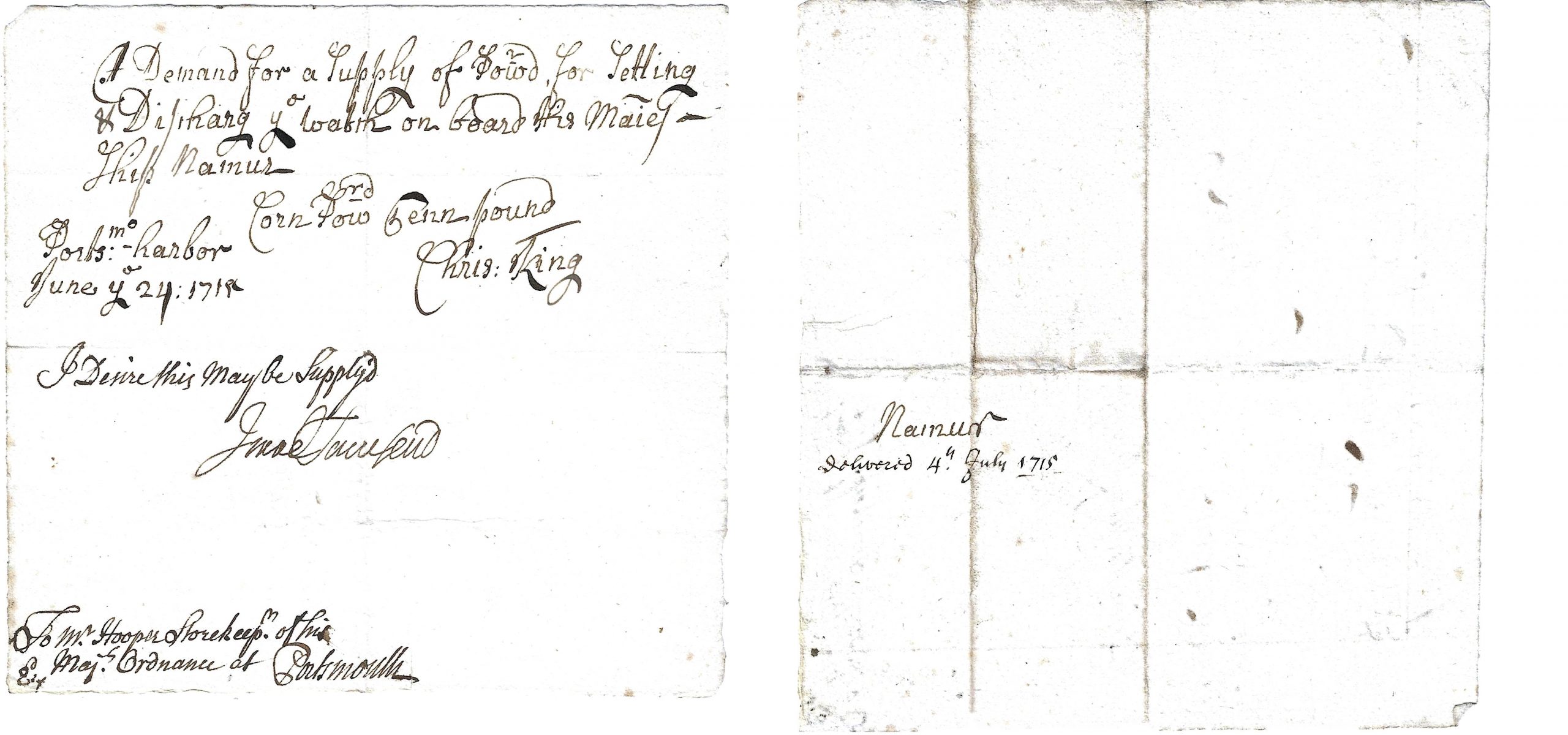
Then on the 4th, a request from Chris King of HMS Namur (1697) for powder. Endorsed by Isaac Townsend.
View in new tab:
On 9th July 1715 a note from Richard Perry, assumed Master Gunner of Portland Castle requests a supply of powder.
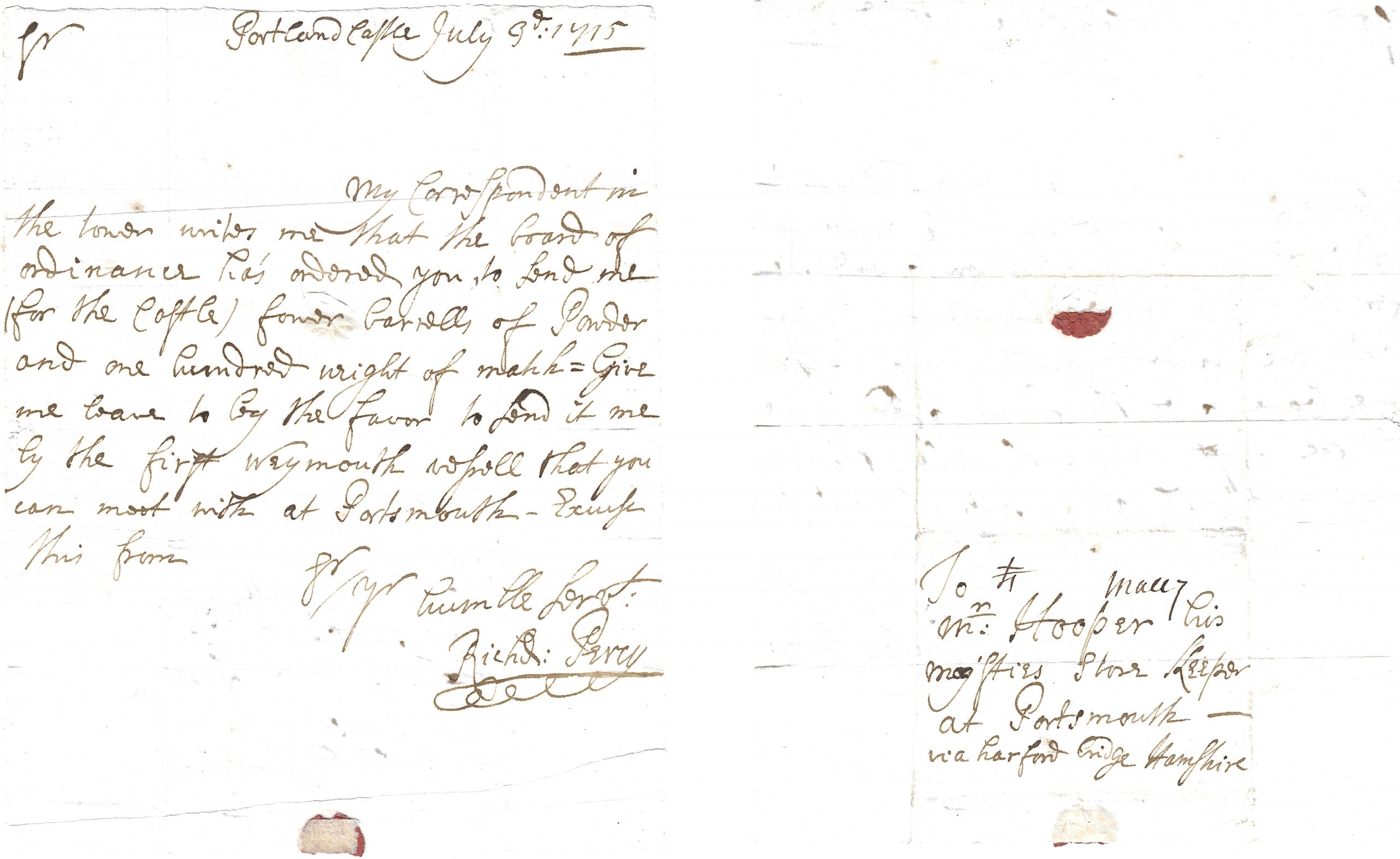
View in new tab:
Corn powder and musket shot for the 3rd Regiment of Foot.

View in new tab:
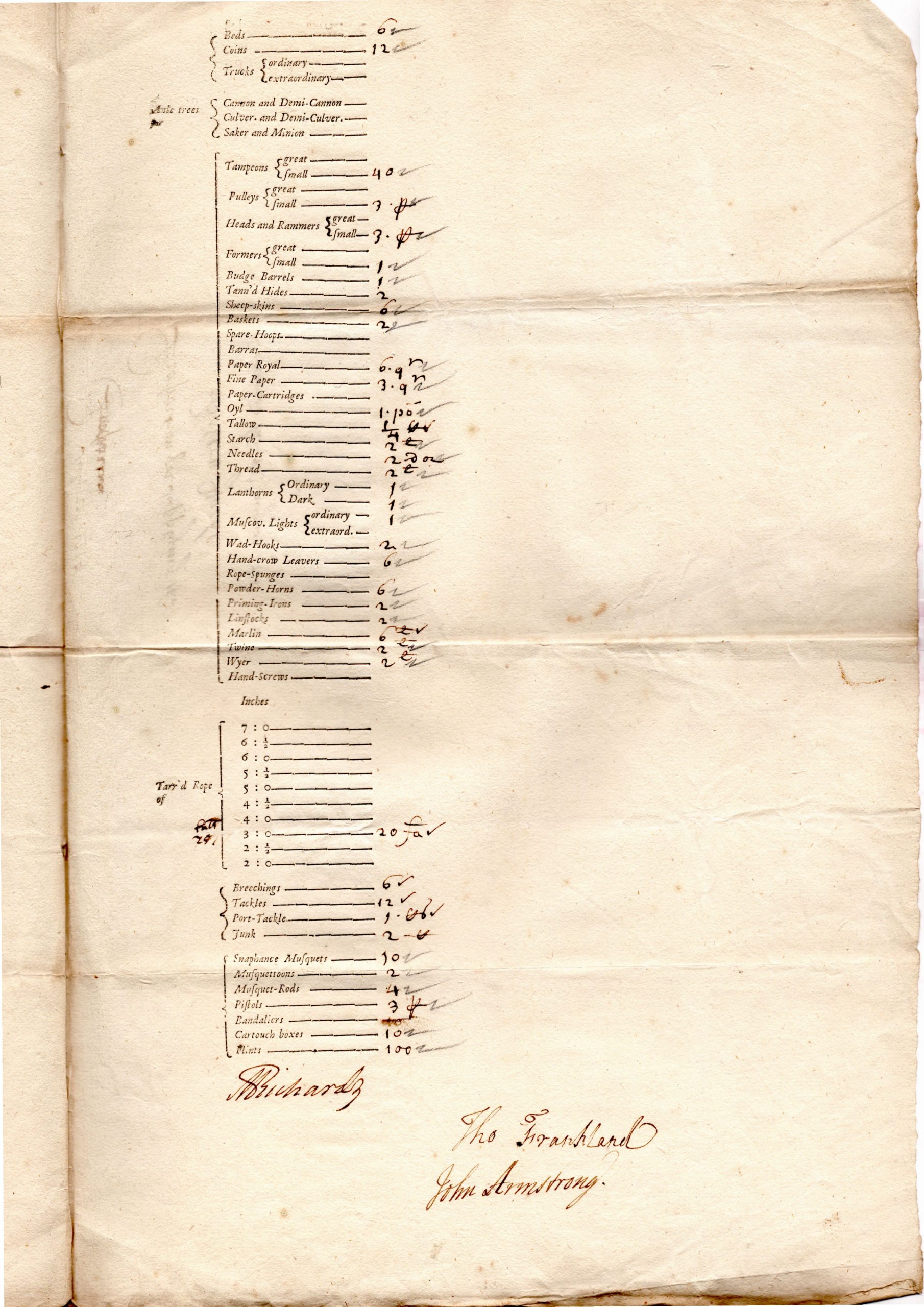
There were numerous vessels designated ‘HM Yacht’. I can find no record of the yacht Bolton, but the proportion for supplying her dated 27th July 1715 gives us an idea of her size. She carried six 3 pounder guns, so was a relatively small vessel. We can also see that her allowance of shot enabled each gun to fire 20 shots, and she carried 2 barrels of corn powder and 1cwt of slow match.
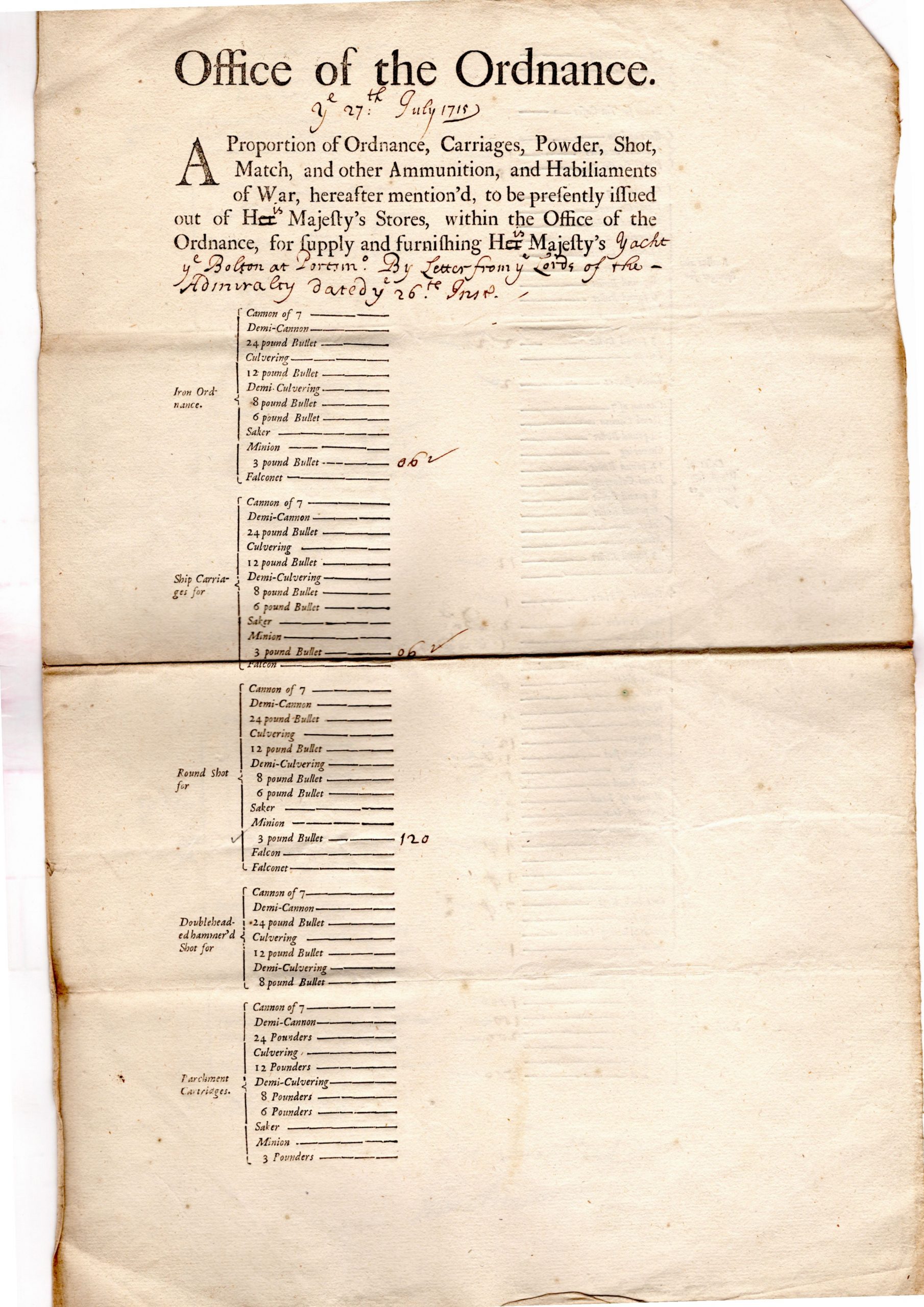
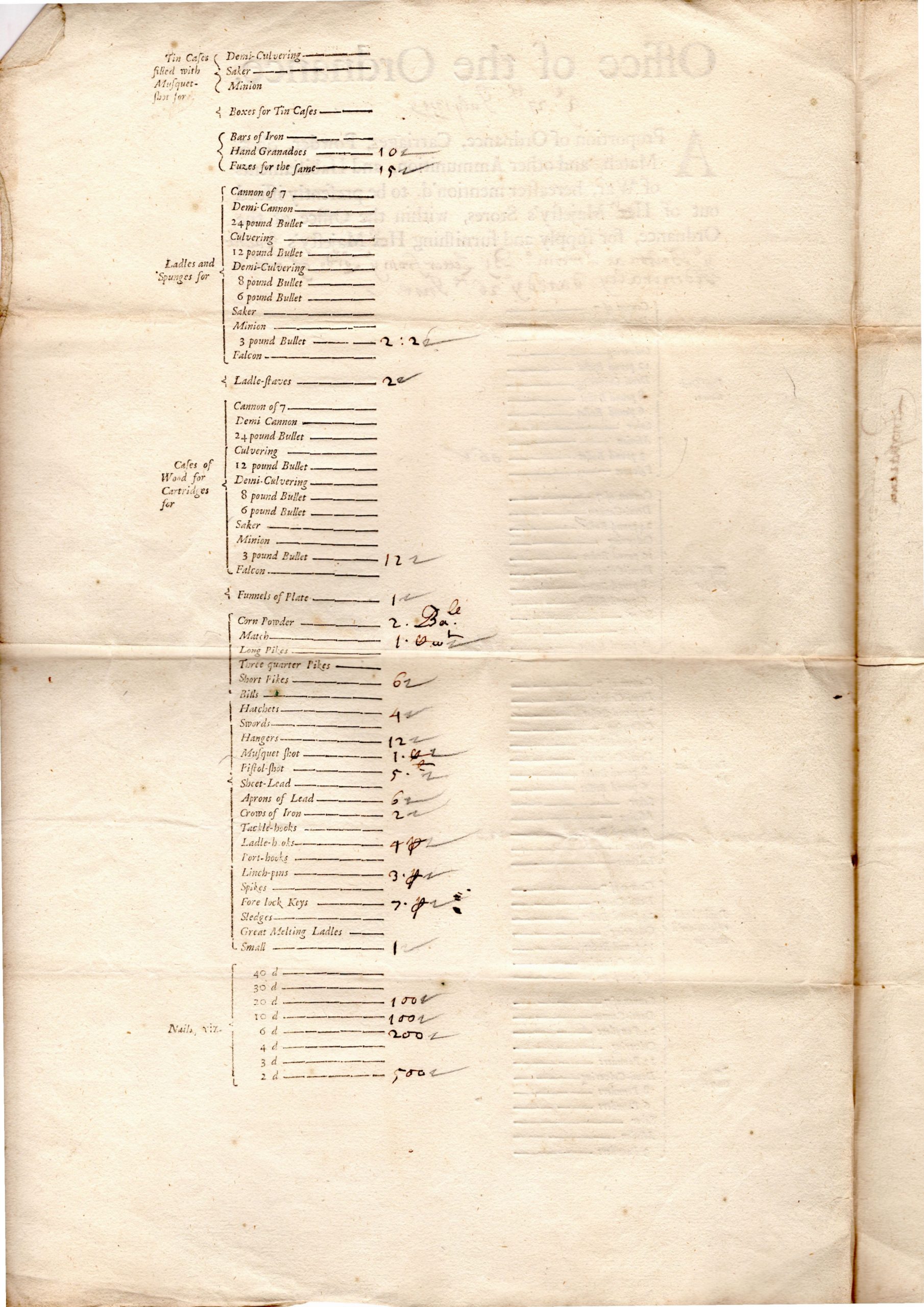
View in new tab:
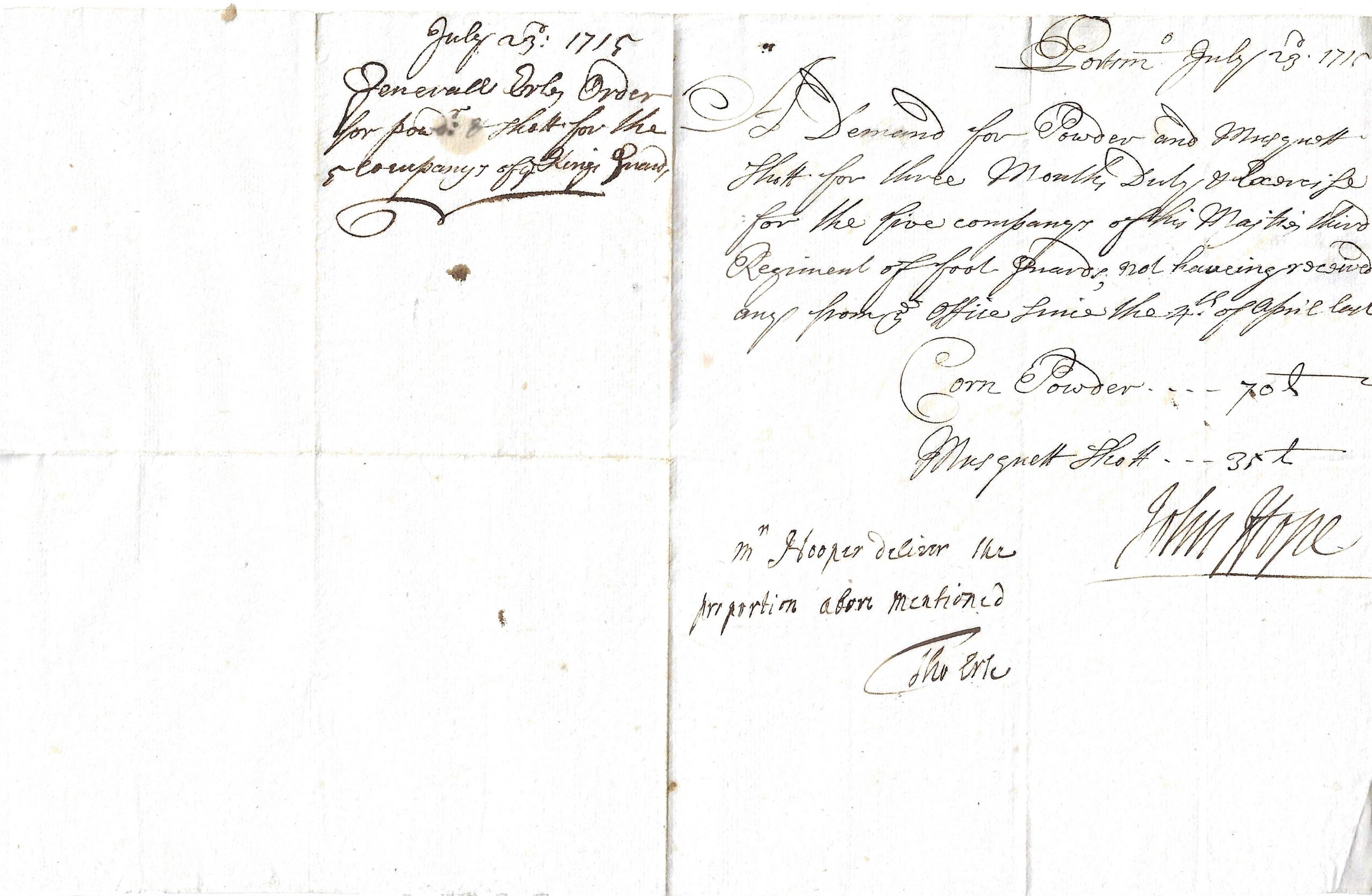
A demand for powder and shot for His Majesty’s Third Regiment of Foot Guards, these became The Scots Guards who had been moved from Scotland to London in 1712 and were not to return for 100 years.
View in new tab:
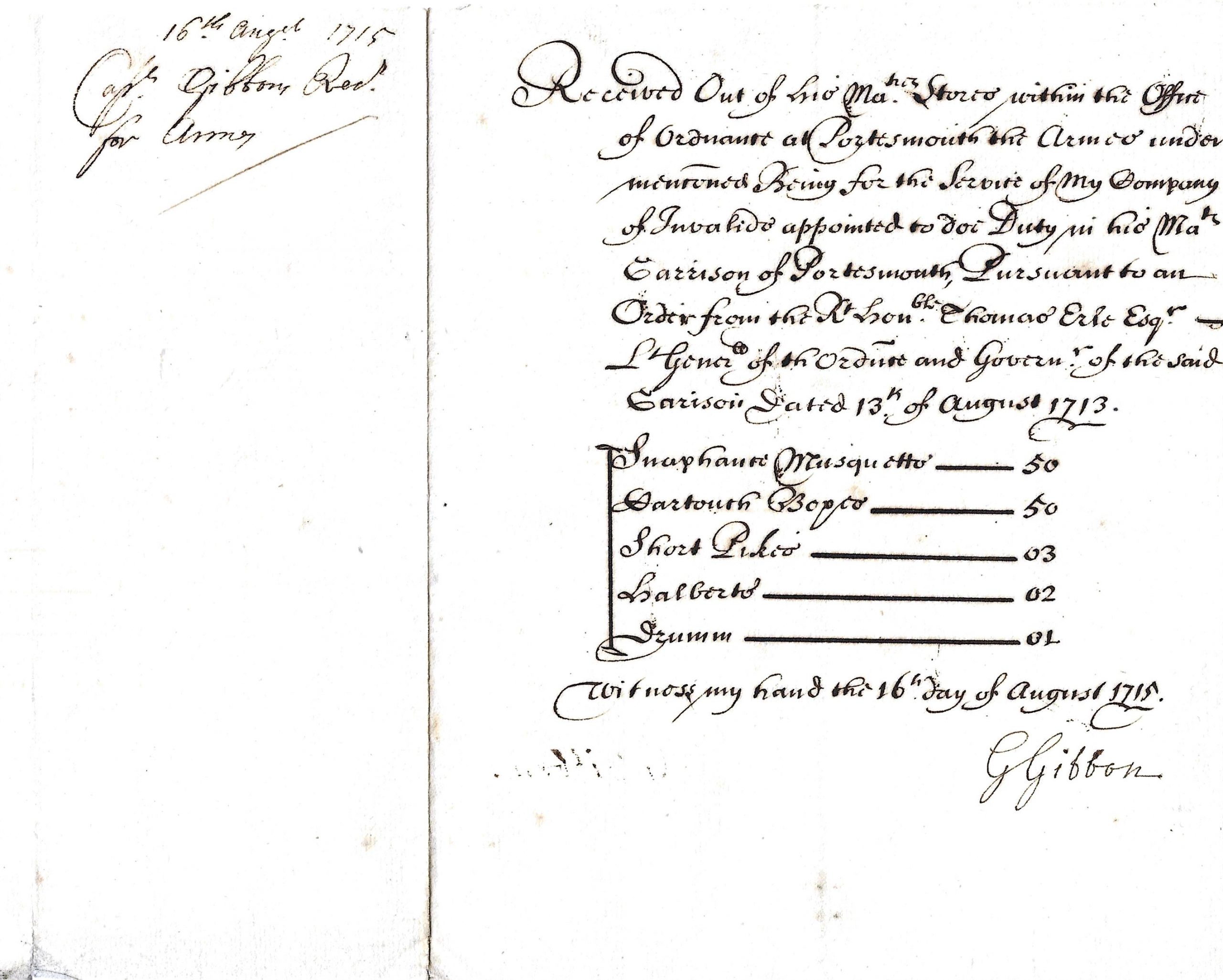
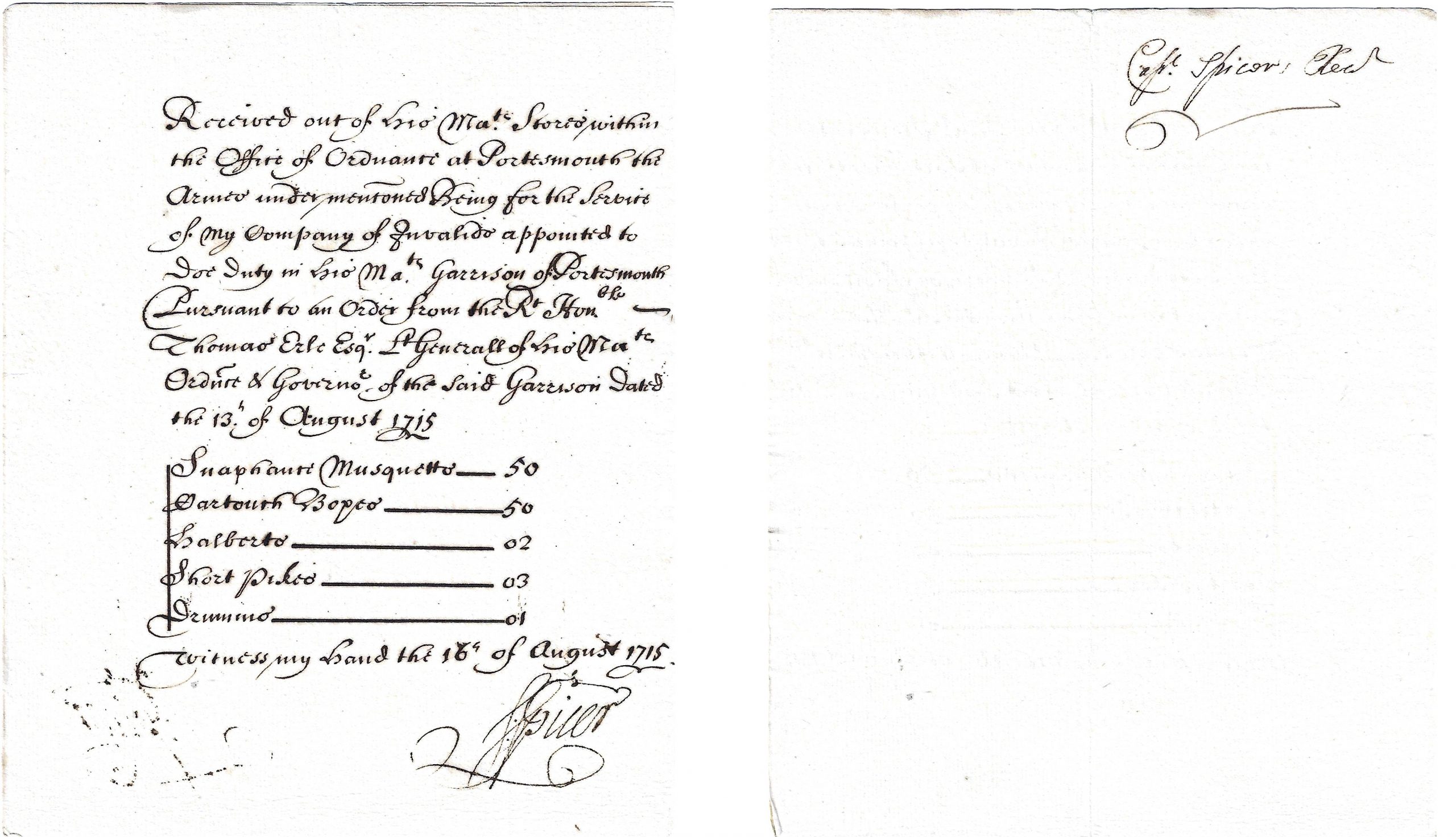
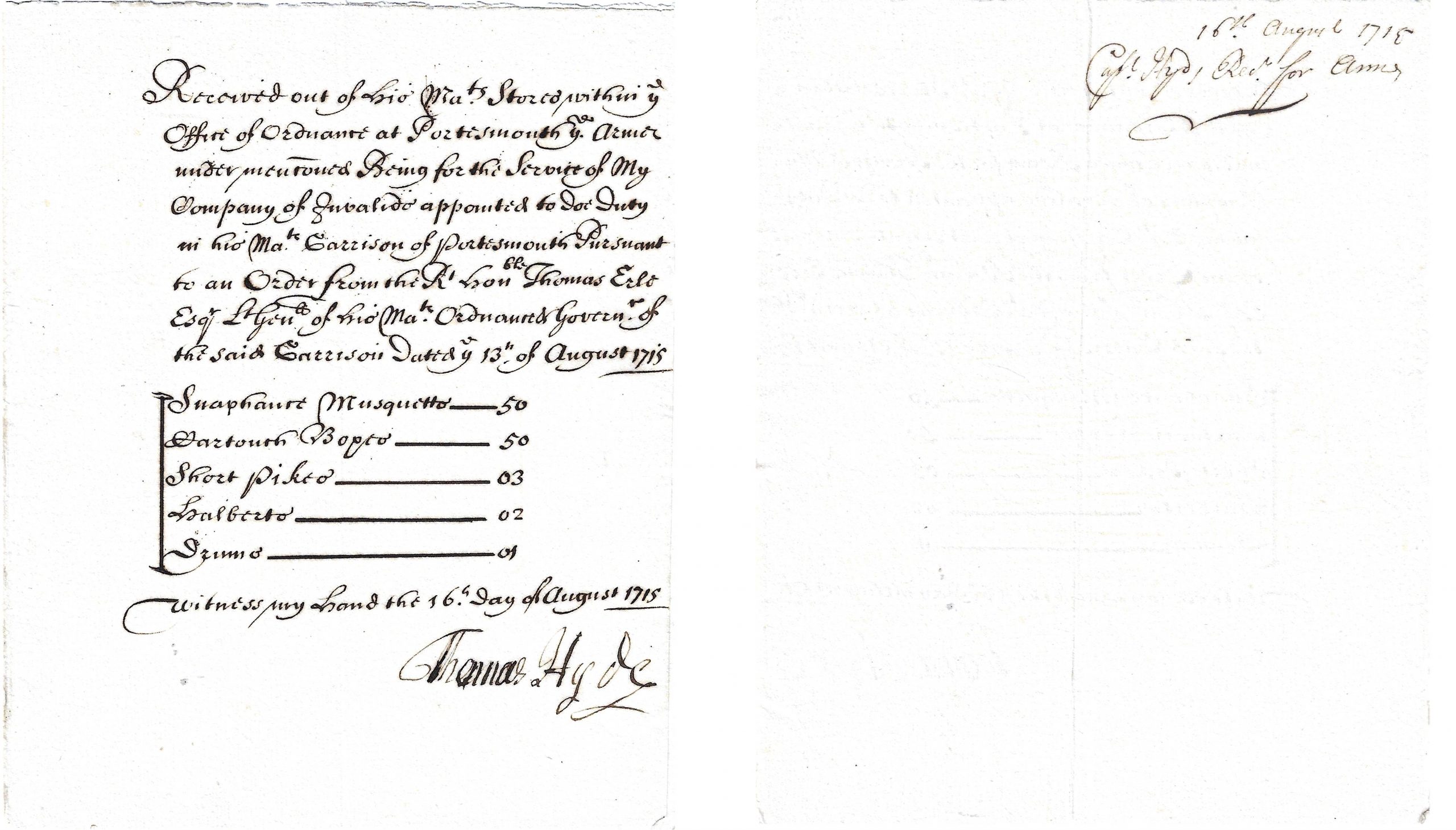
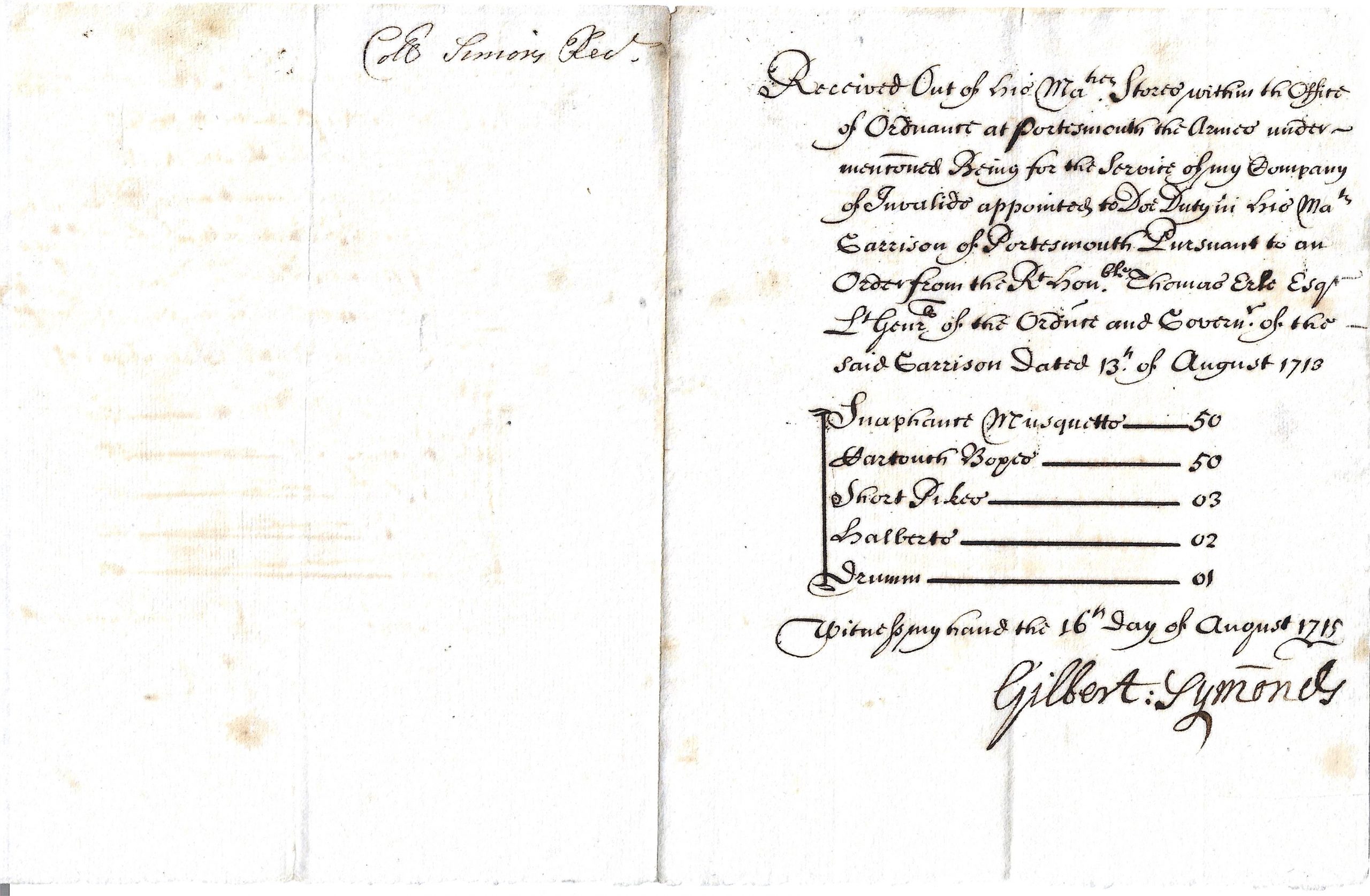
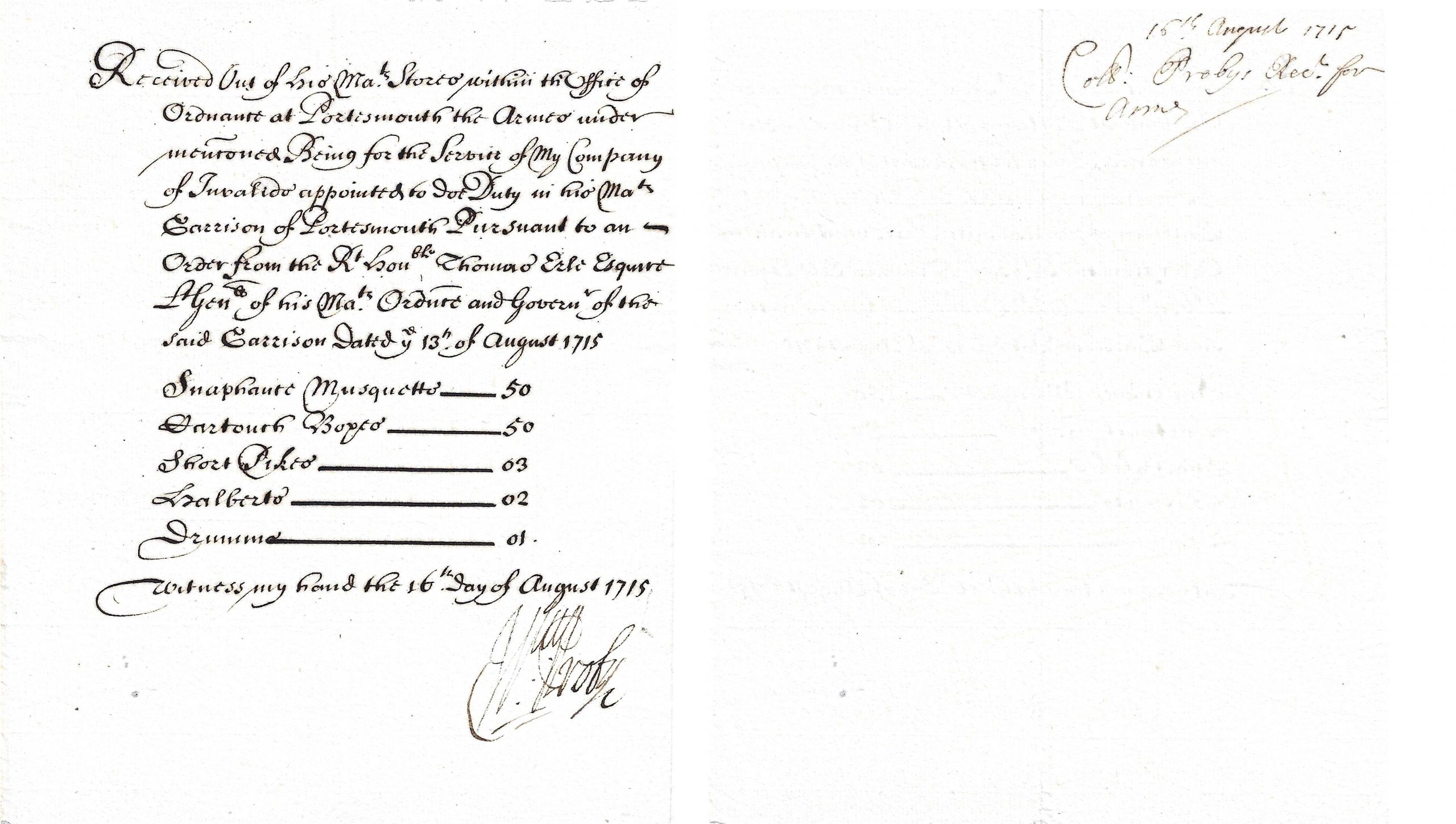
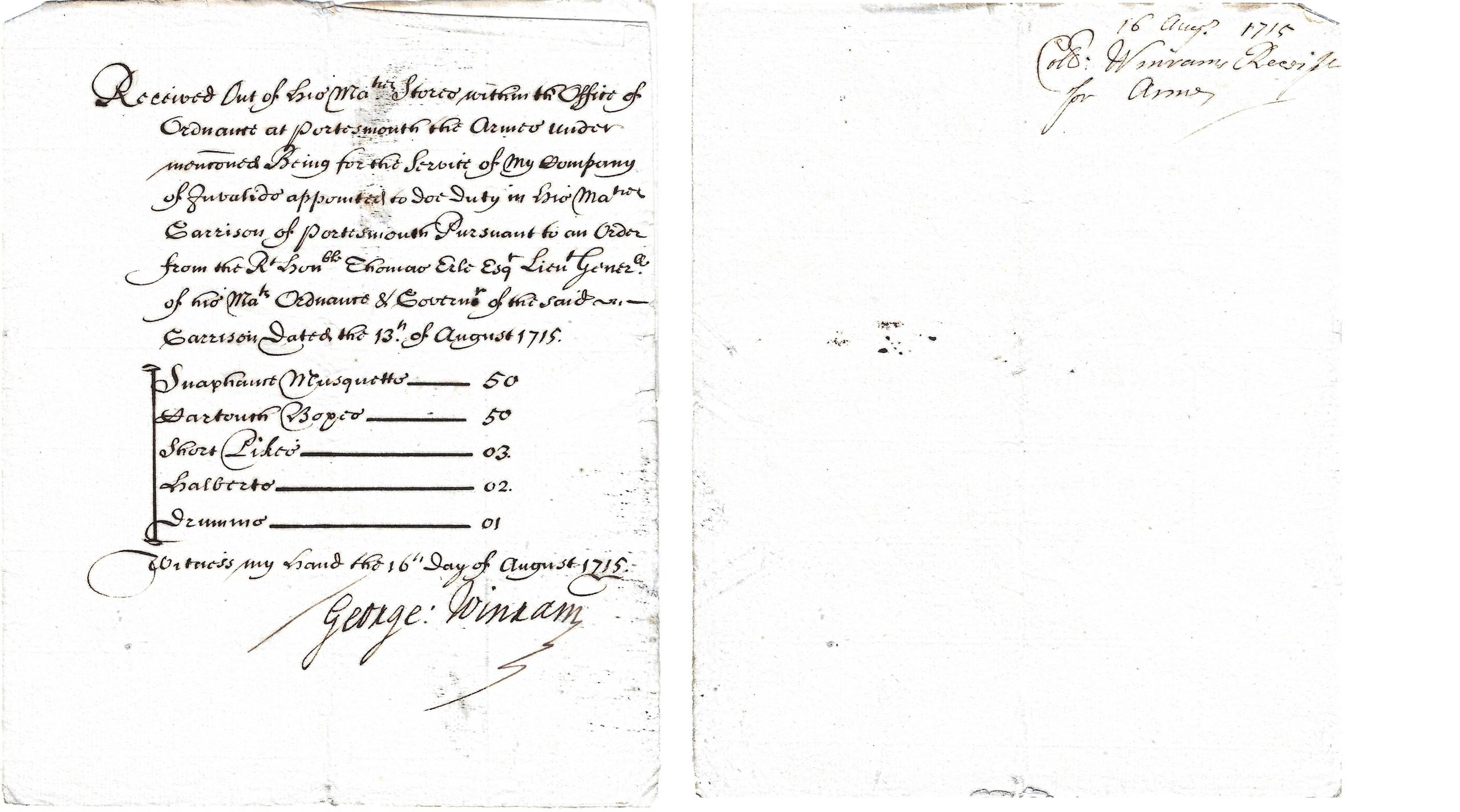
Six receipts for powder and shot for the company of invalids, all written in the same hand, but signed by different people are followed by a letter from The Tower ordering the supply of small arms to the regiment of invalids.
View in new tab:
View in new tab:
View in new tab:
View in new tab:
View in new tab:
View in new tab:
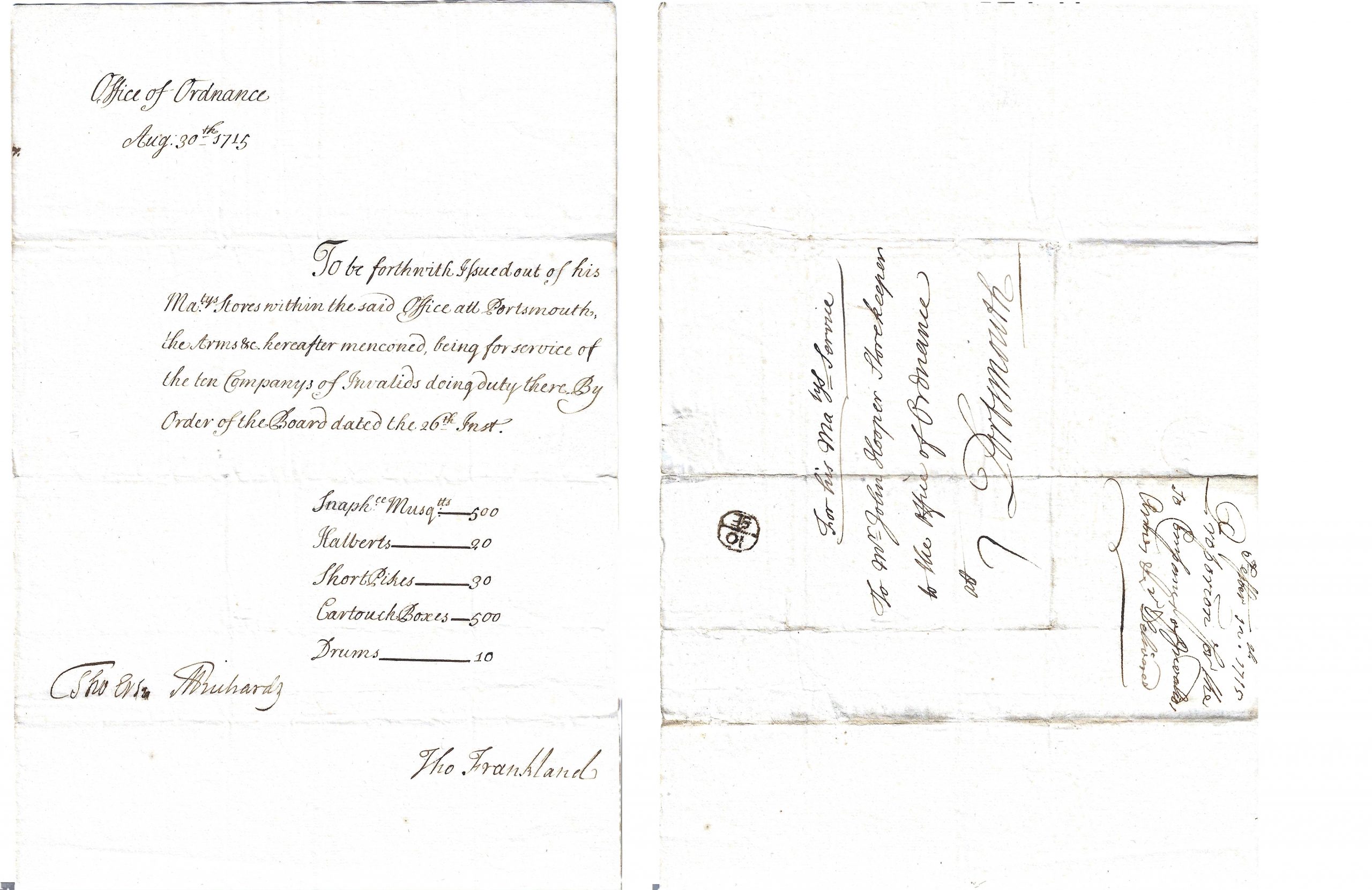
Having seen the six receipts for arms from the army, we now see an order to provide small arms to the companies of Invalids.
View in new tab:
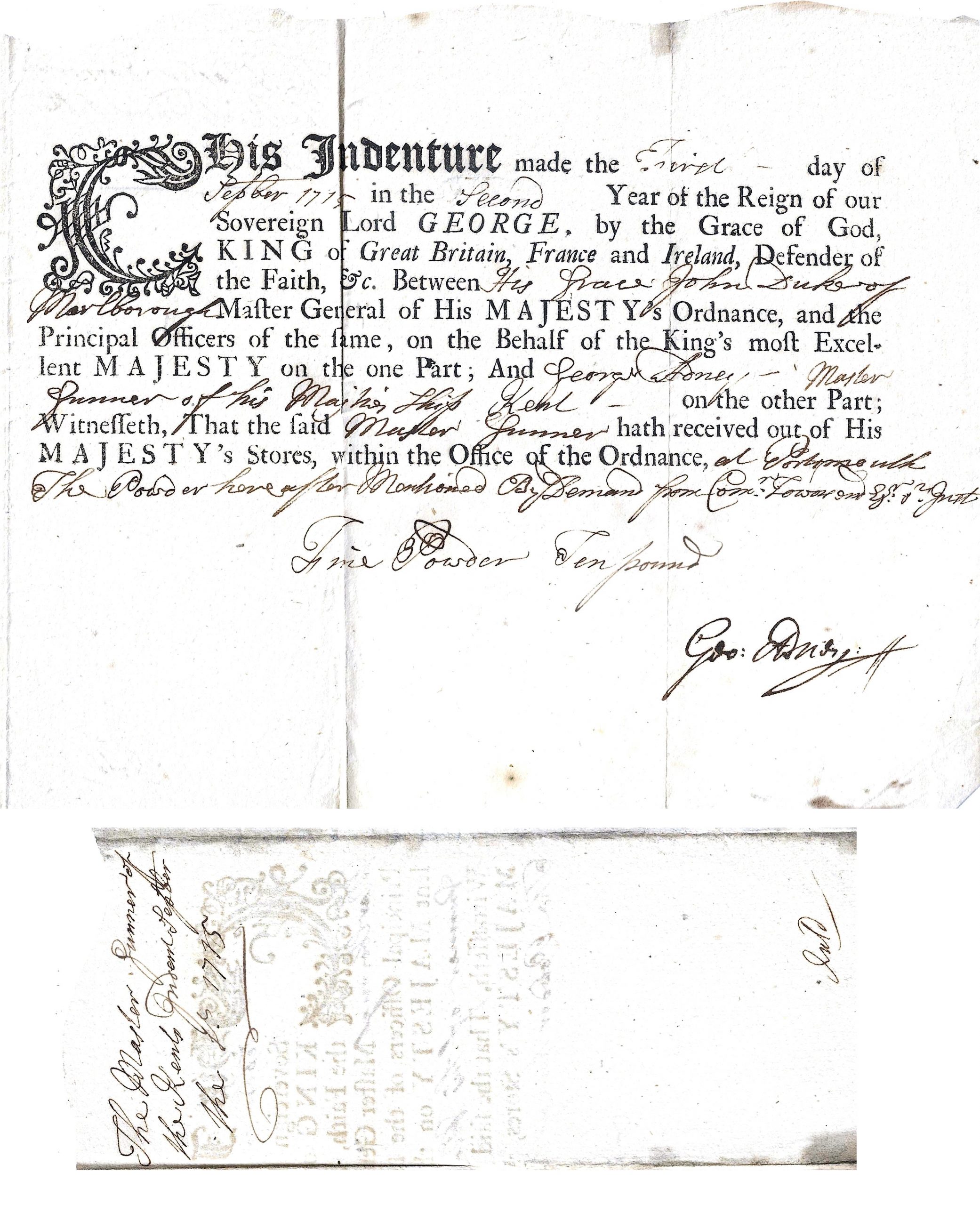
The Indenture dated 1st September 1715 for supplying George Stone, master gunner of HMS Kent (1679) with ten pounds of fine powder, used to prime the guns.
View in new tab:
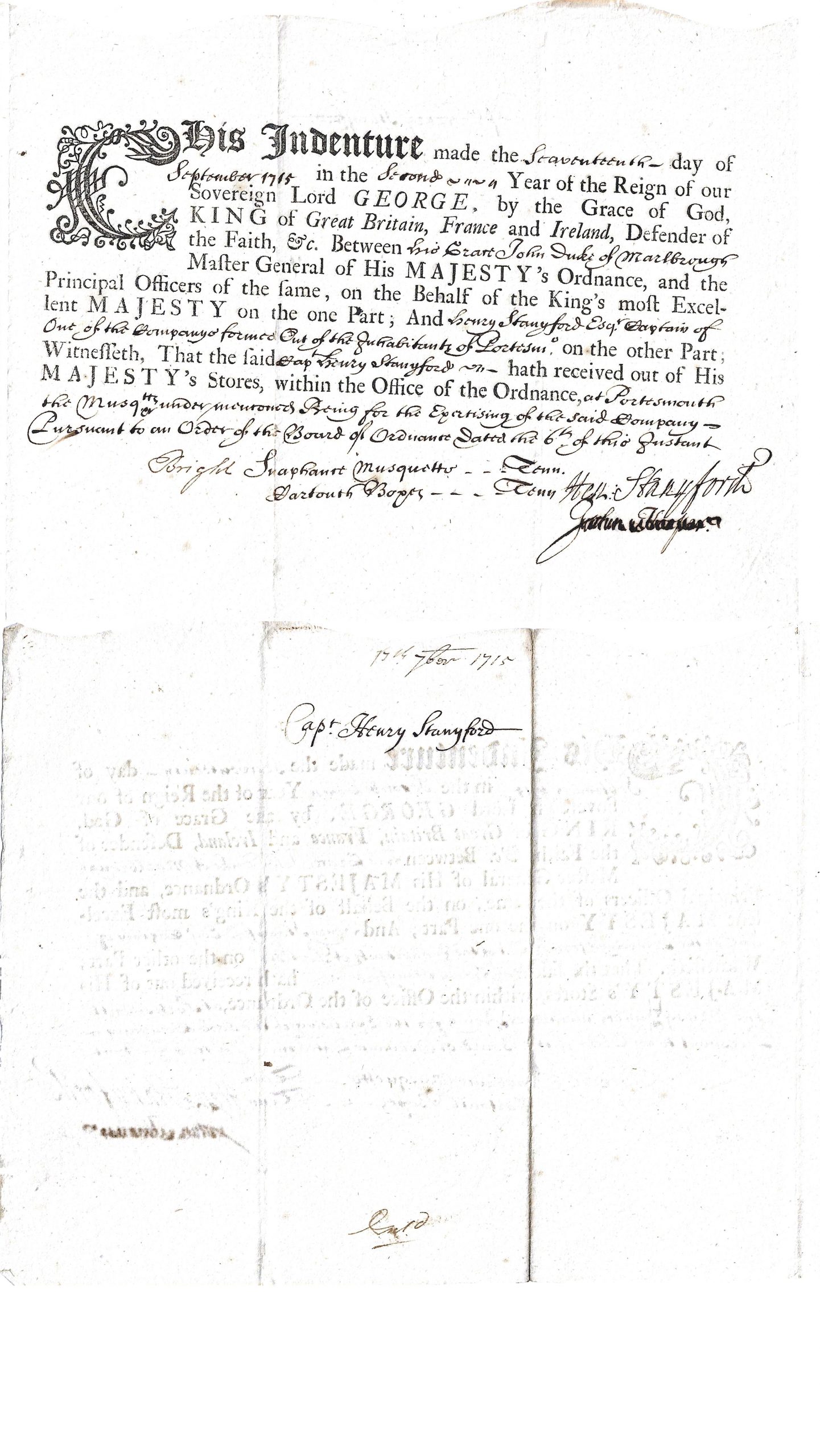
This is followed on the 17th by another Indenture for supplying Captain Henry Stanyford, master carpenter and captain of the Portsmouth town militia with muskets and cartouche boxes. The indenture is signed by Capt. Stanyford and John Hooper.
View in new tab:
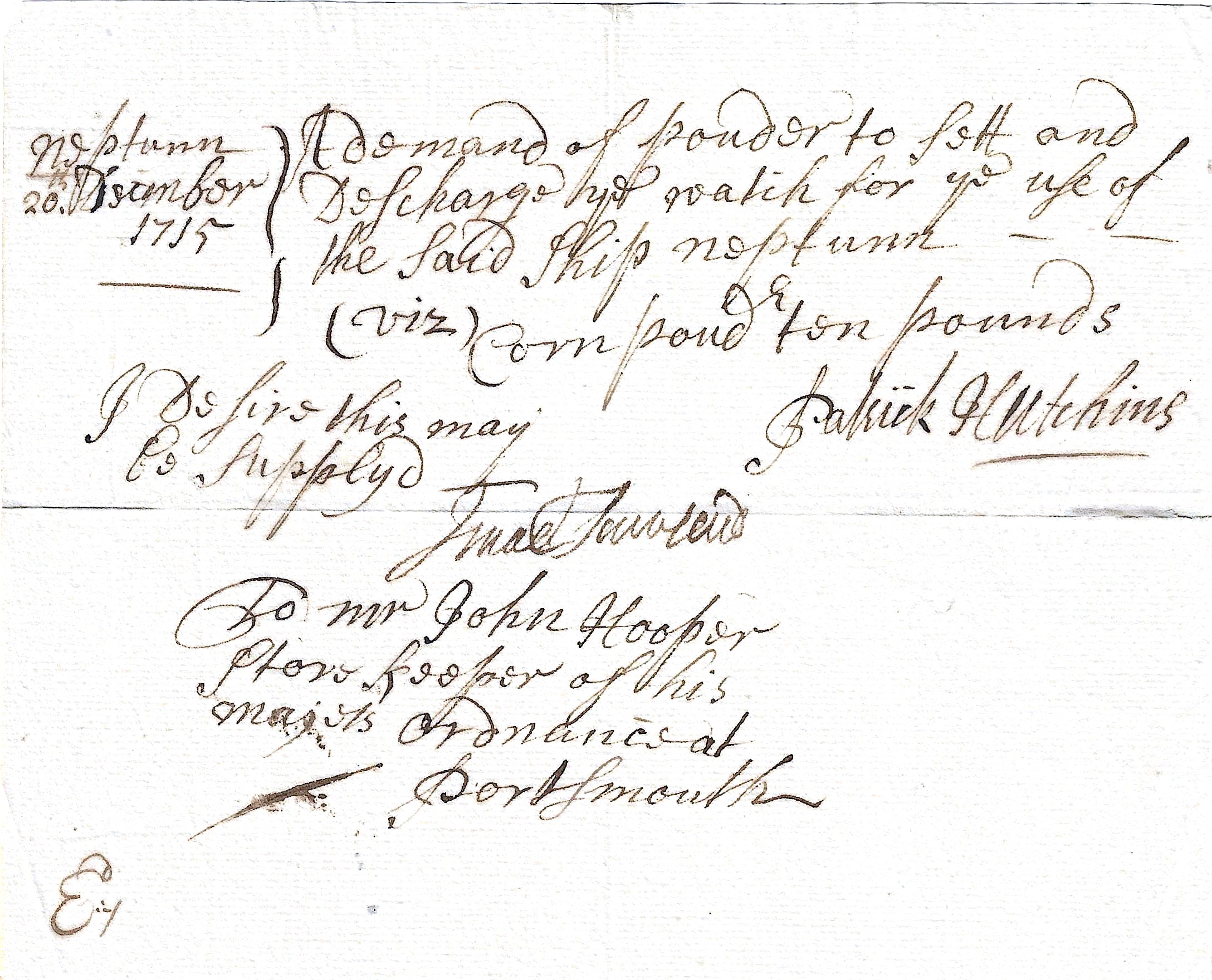
20th September 1715 a demand for corn powder for HMS Neptune (1683), endorsed by Isaac Townsend.
View in new tab:
There was obviously a lot of work going on building fortifications, presumably under the command of Captain Talbot Edwards of the Royal Engineers. Six notes follow from Thomas Bowerbank and Talbot Edwards. From 6th October to 13th 1715, one from Talbot Edwards then from Thomas Bowerbank request stores and equipment for the building of fortifications. One for hatchets and one for Muscovy lights. These were lamps that used mica as a transparent medium in place of the traditional cow horn which tended to distort with the heat.
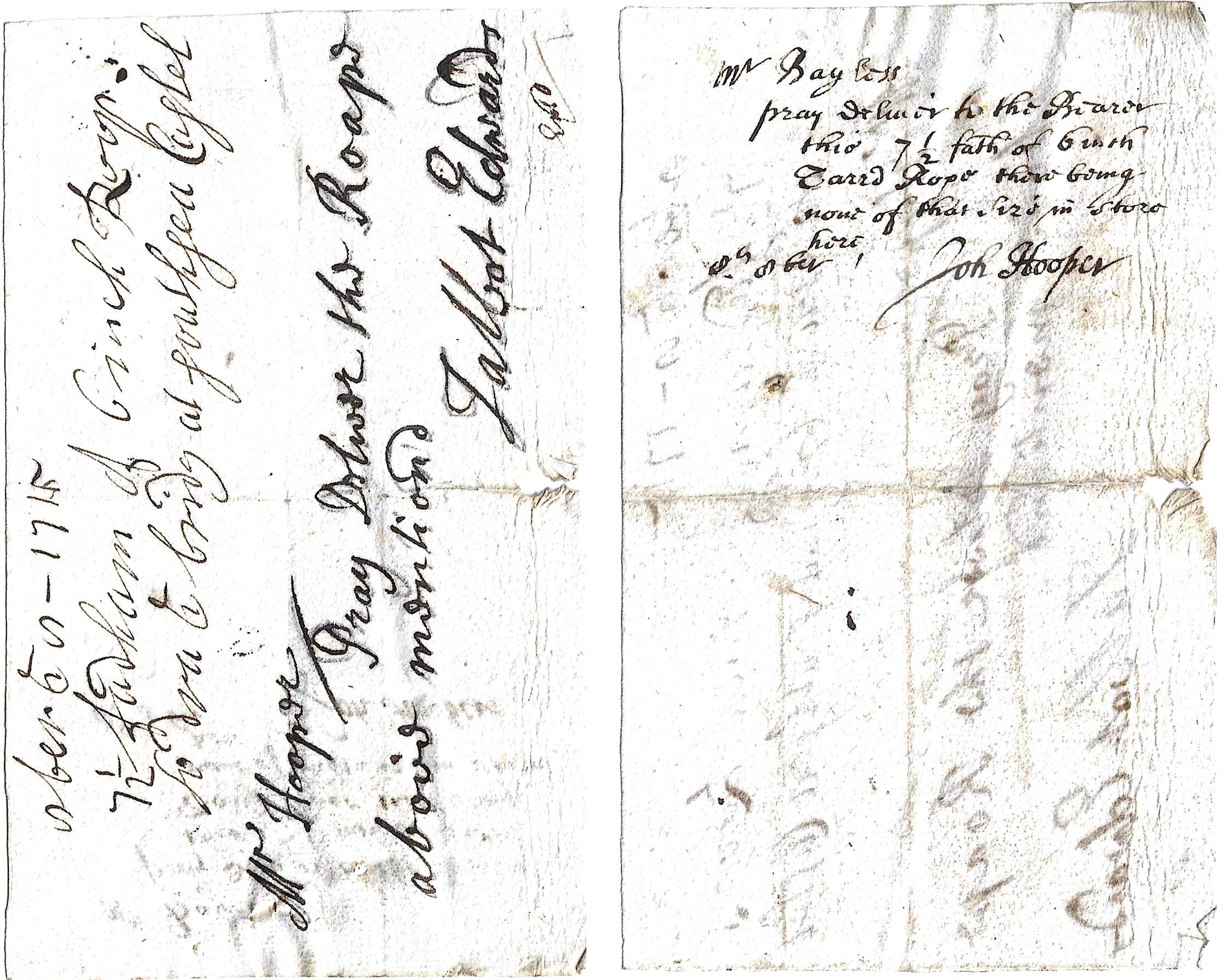
View in new tab:
Another terse demand from Captain Edwards.
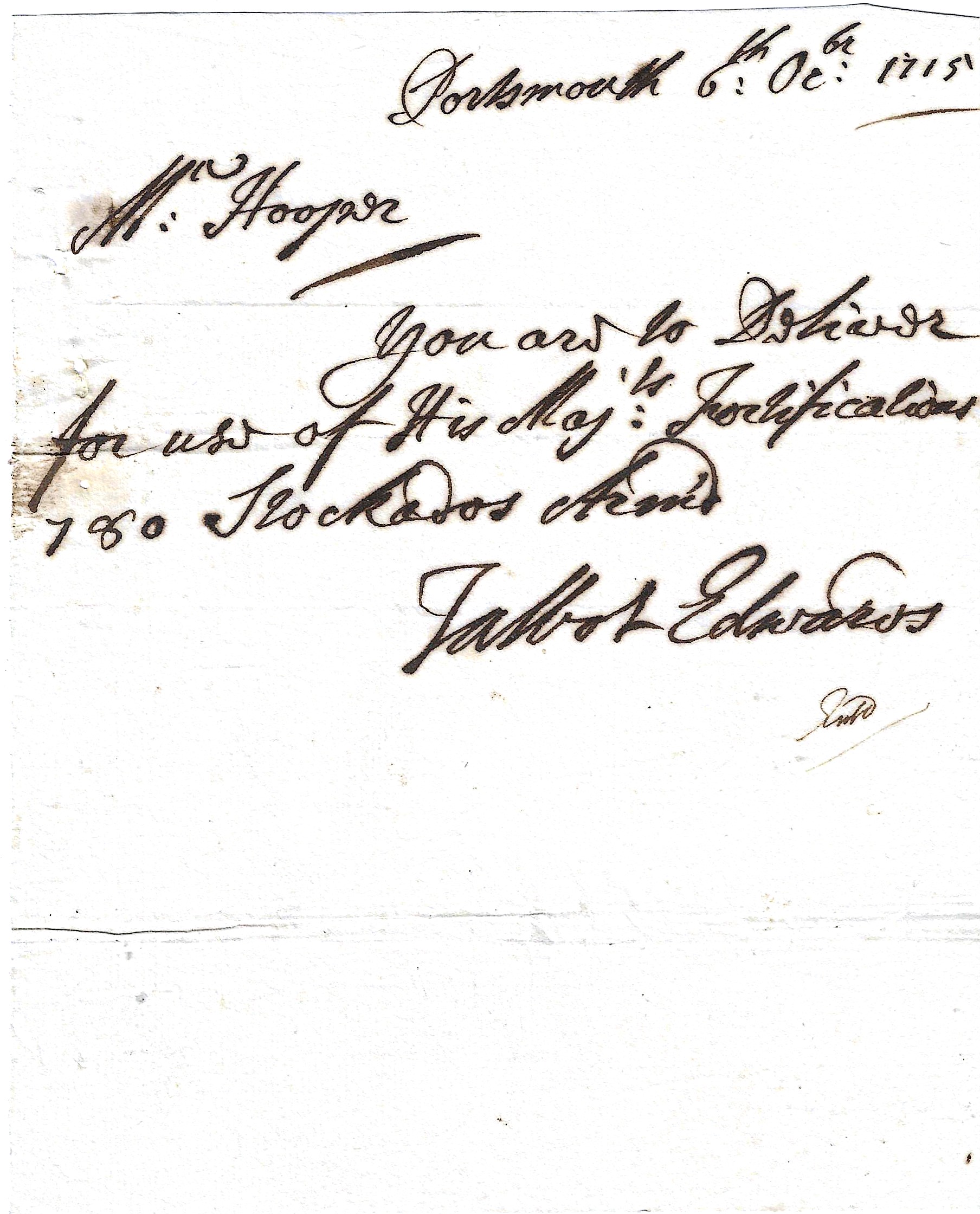
View in new tab:
A stark difference from talbot Edwards’ note and this one from Thomas Bowerbank.
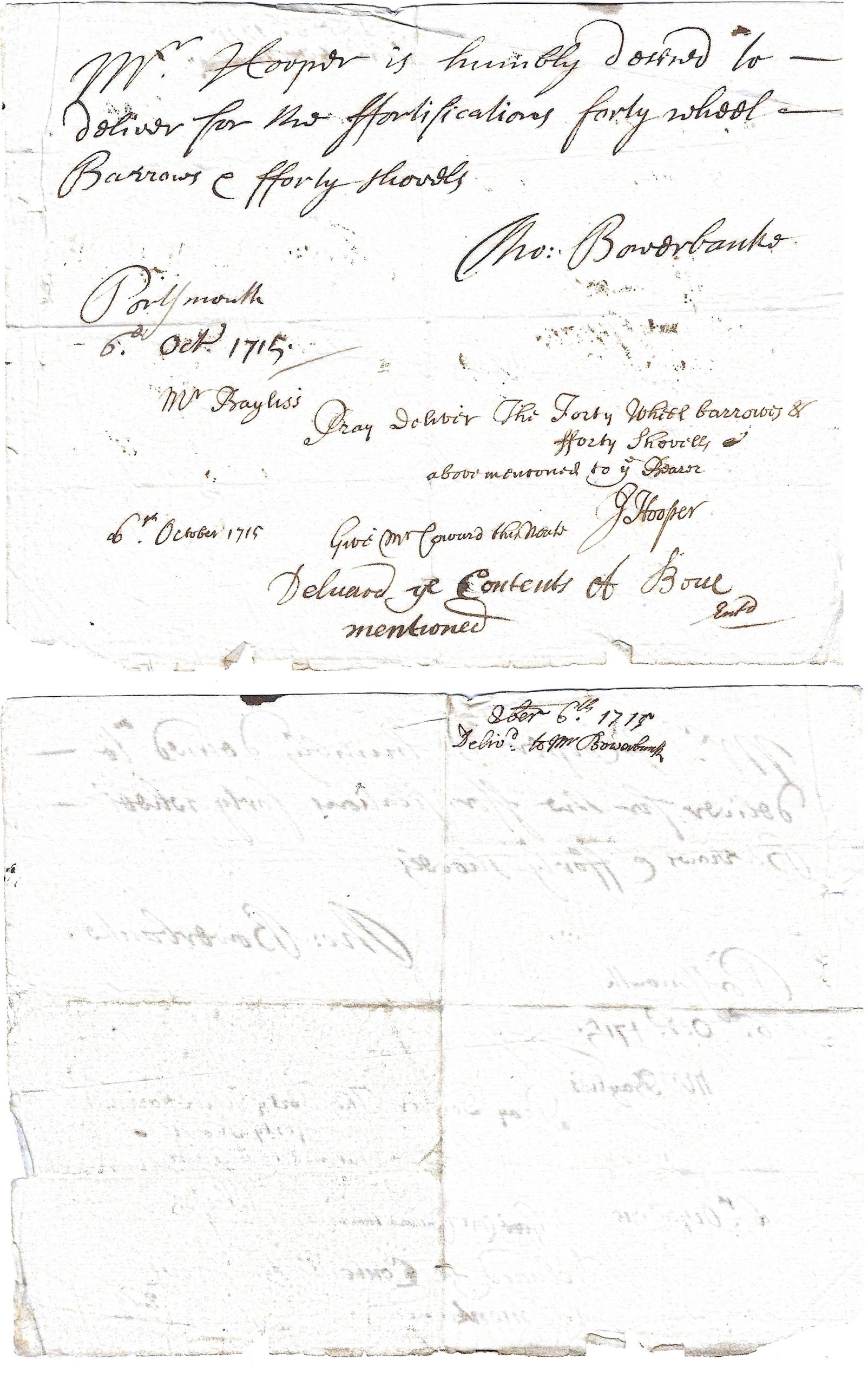
View in new tab:
10th October 1715 a demand from Talbot Edwards for hatchets.
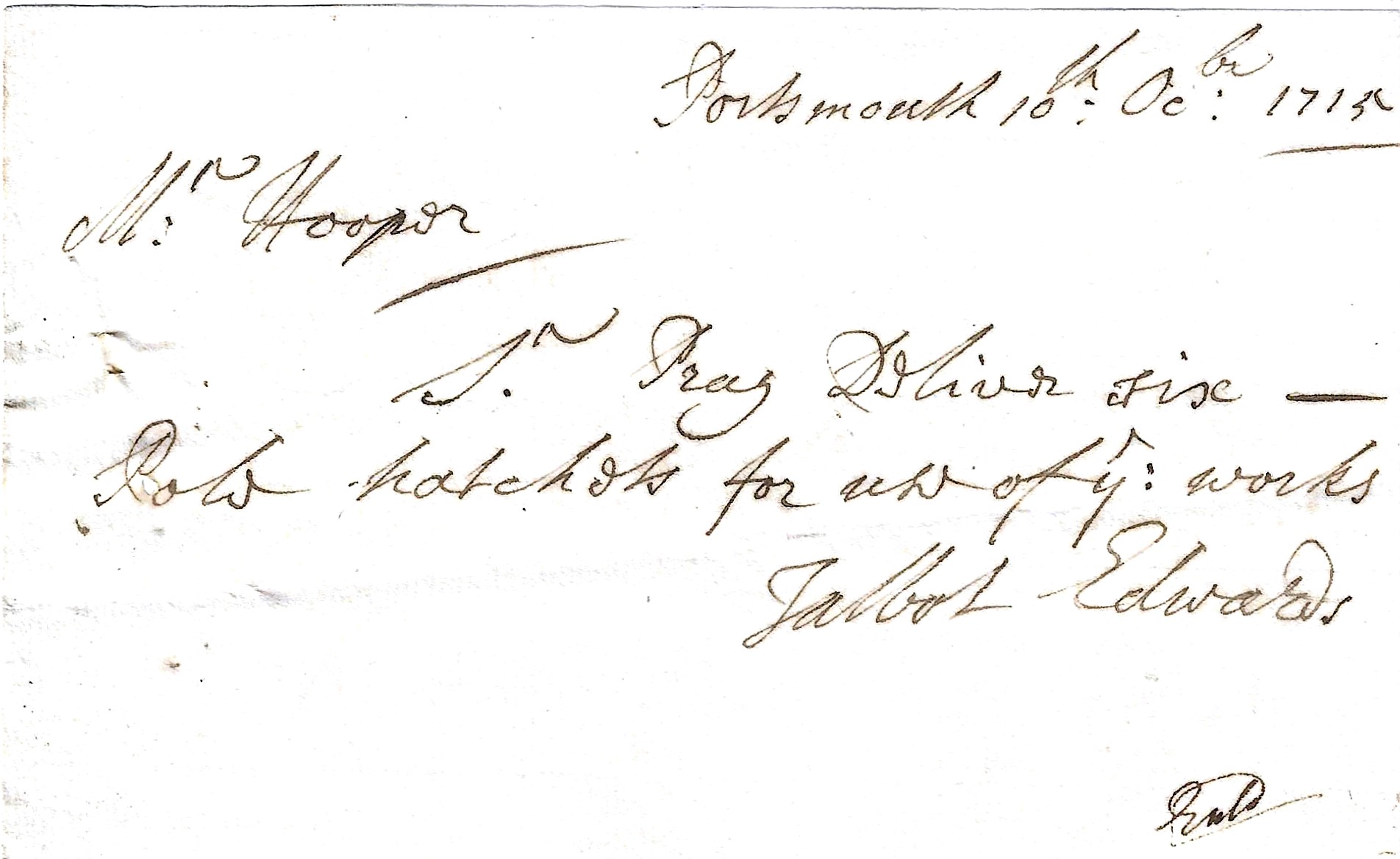
View in new tab:
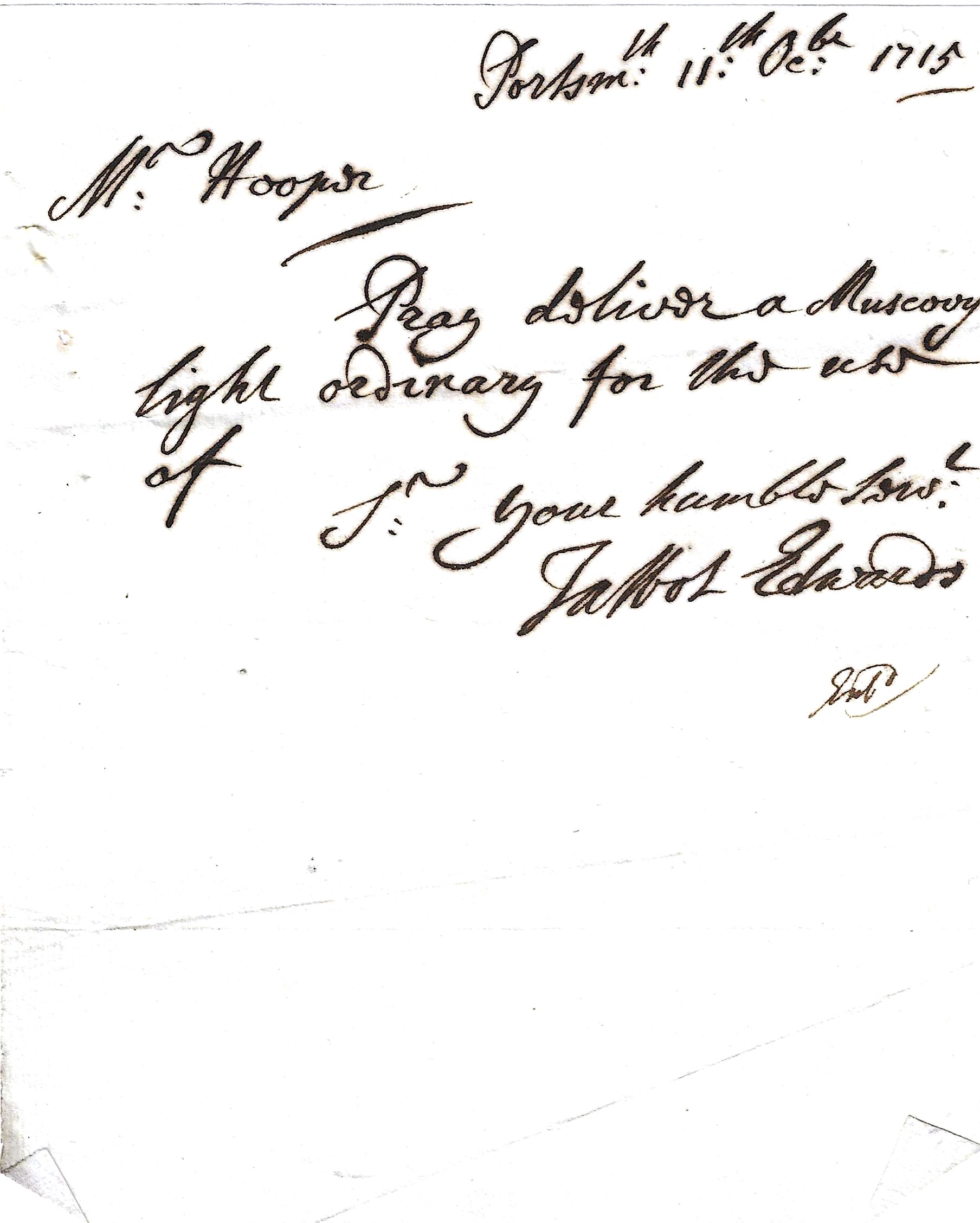
A much more polite request from Talbot Edwards for a muscovy light. These were lanterns that used mica for the transparent medium.
View in new tab:
Less terse than Talbot Edwards, Thomas Bowerbank asks for some pole axes.

View in new tab:
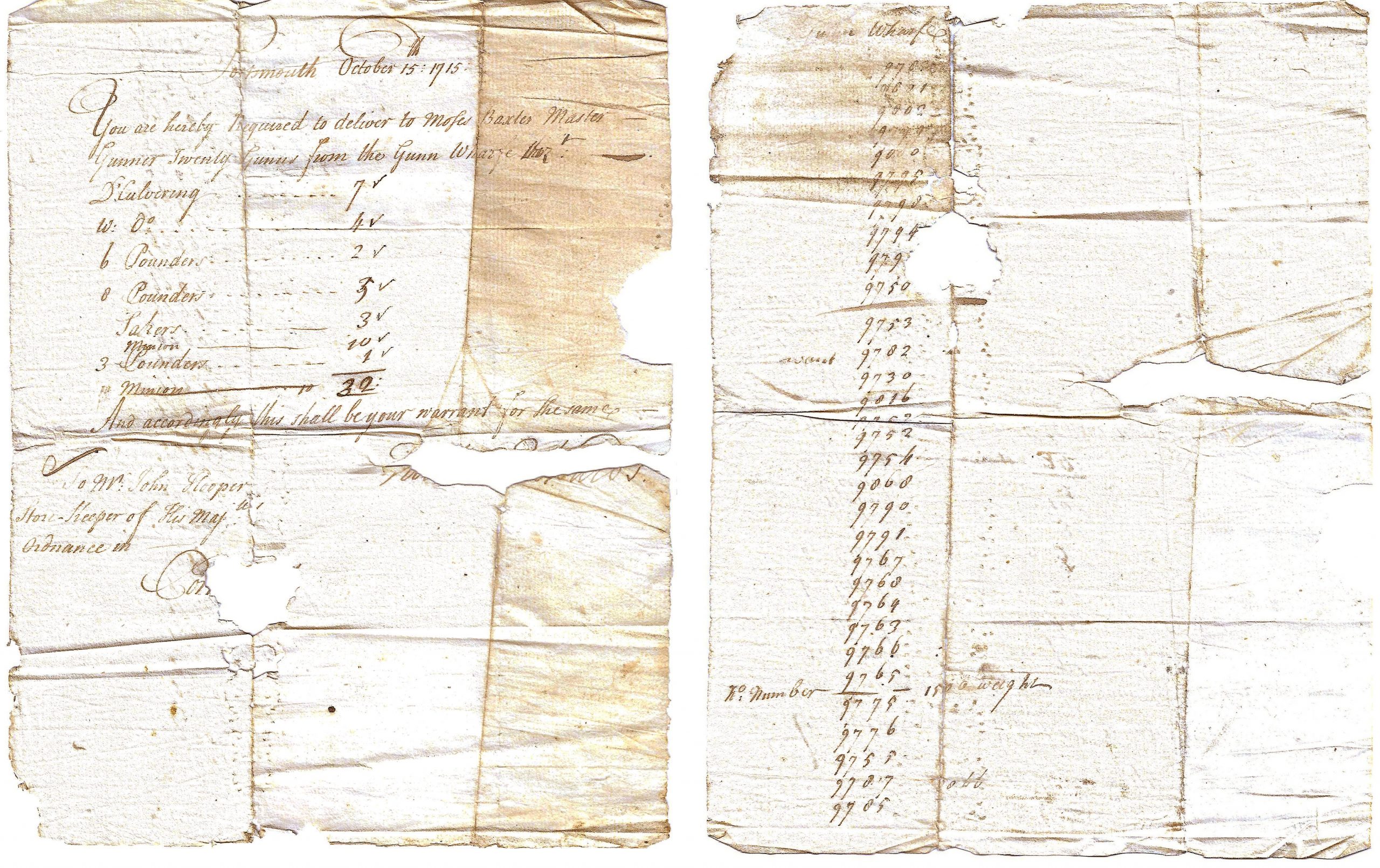
On the 15th October 1715 a badly damaged request for guns to be delivered to Moses Baxter, master gunner detailing the 32 guns requested by Captain Edwards. The signature is unreadable but is highly likely to be that of Isaac Townsend.
View in new tab:
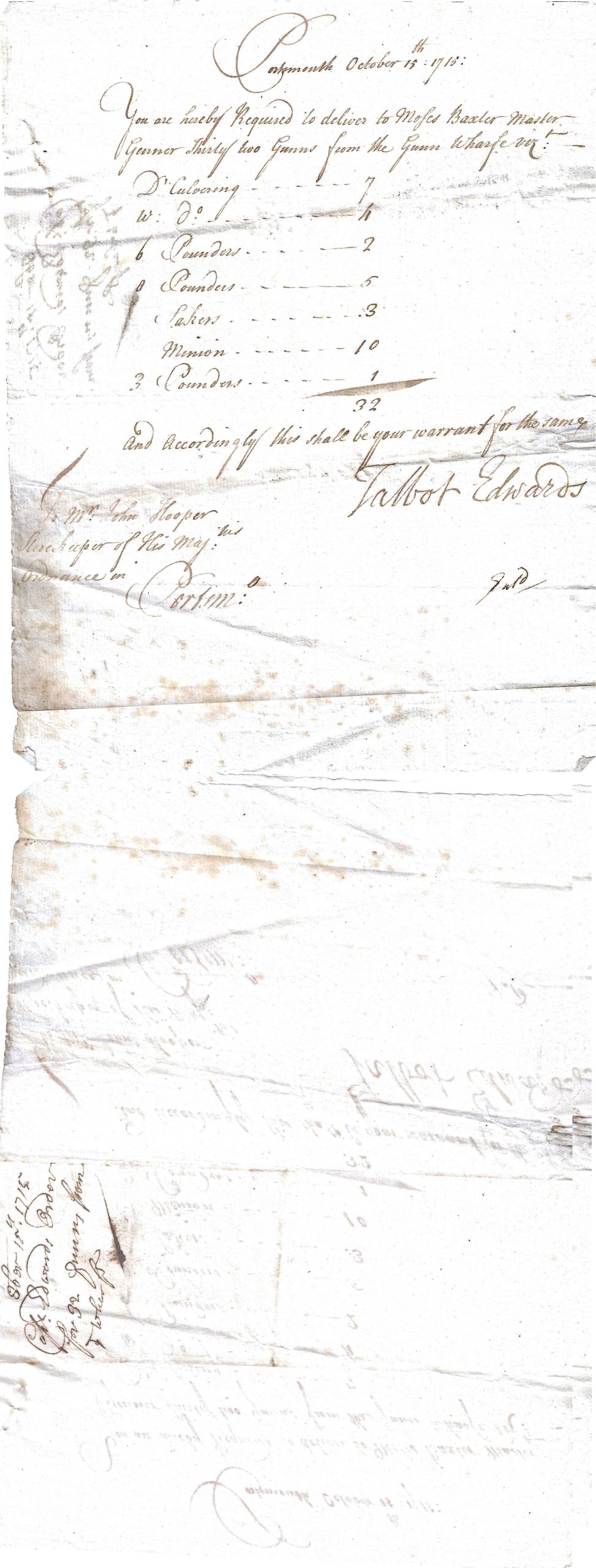
Also on 15th October 1715 we see another note from Captain Talbot Edwards demanding thirty-two guns of varying sizes. This note is typically abrupt with no niceties.
View in new tab:
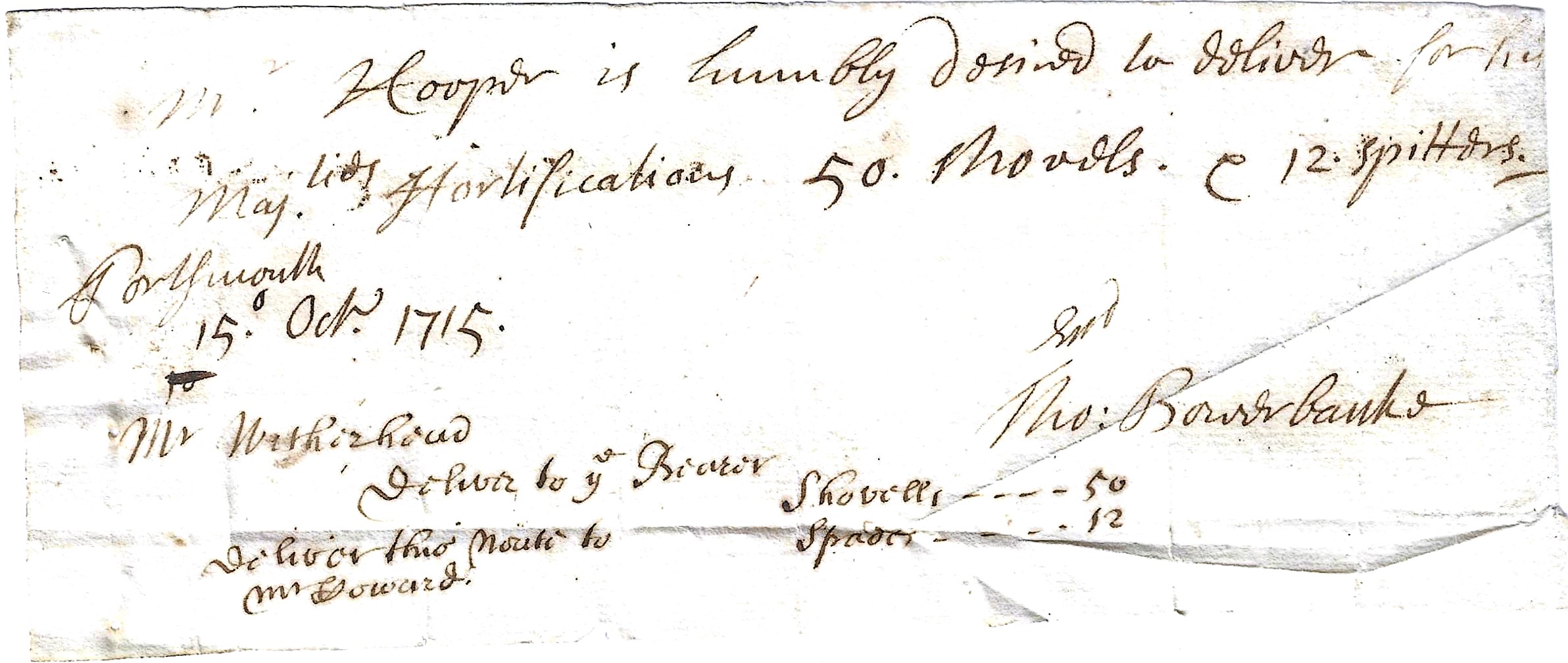
Another request from Thomas Bowerbank for tools for building fortifications.
View in new tab:
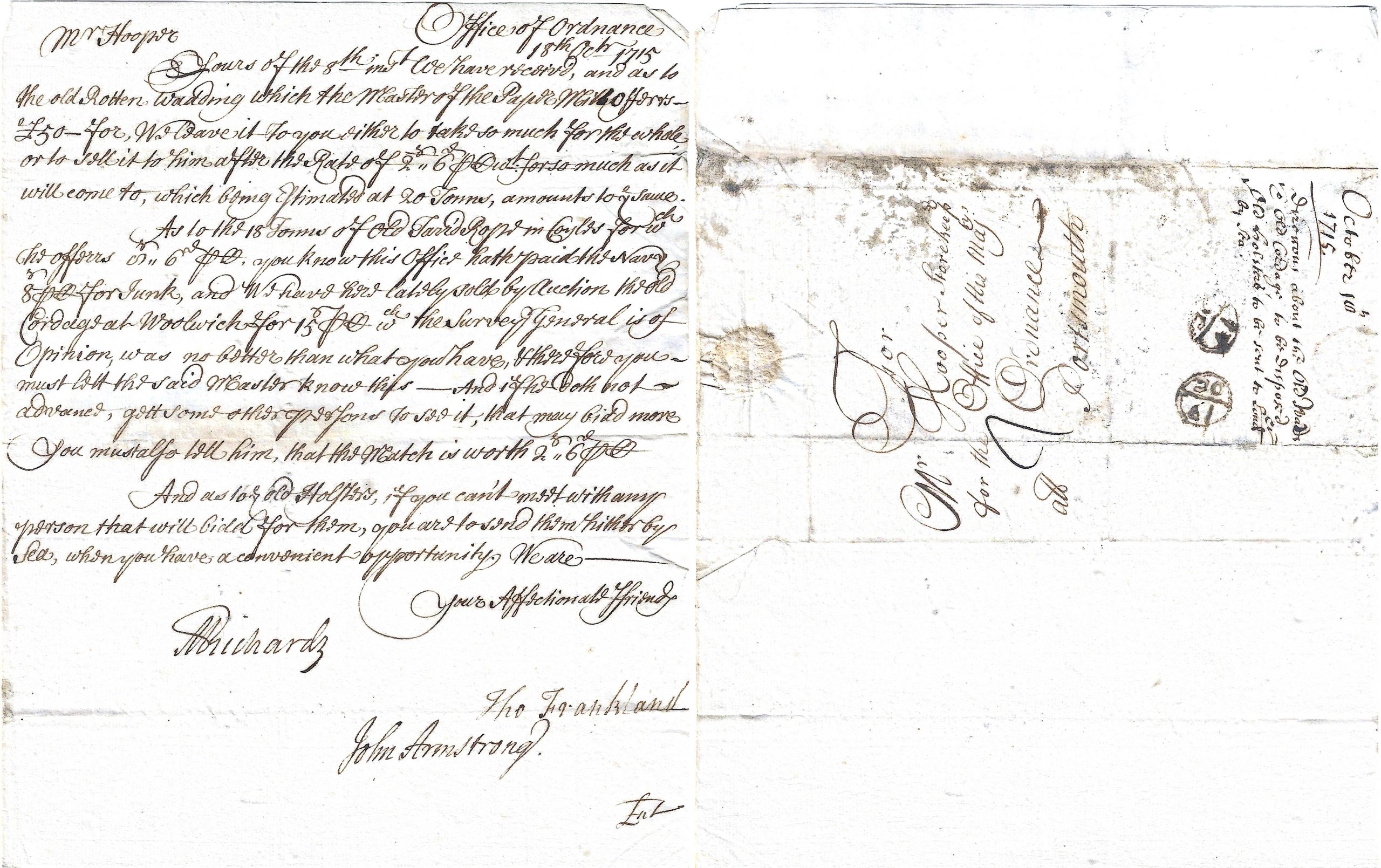
The letter of the 18th of October 1715 shows us that The Board were well acquainted with the value of stores, even old ones. The letter instructs Mr. Hooper to haggle and remind the prospective buyers of the value of the old rope.
View in new tab:
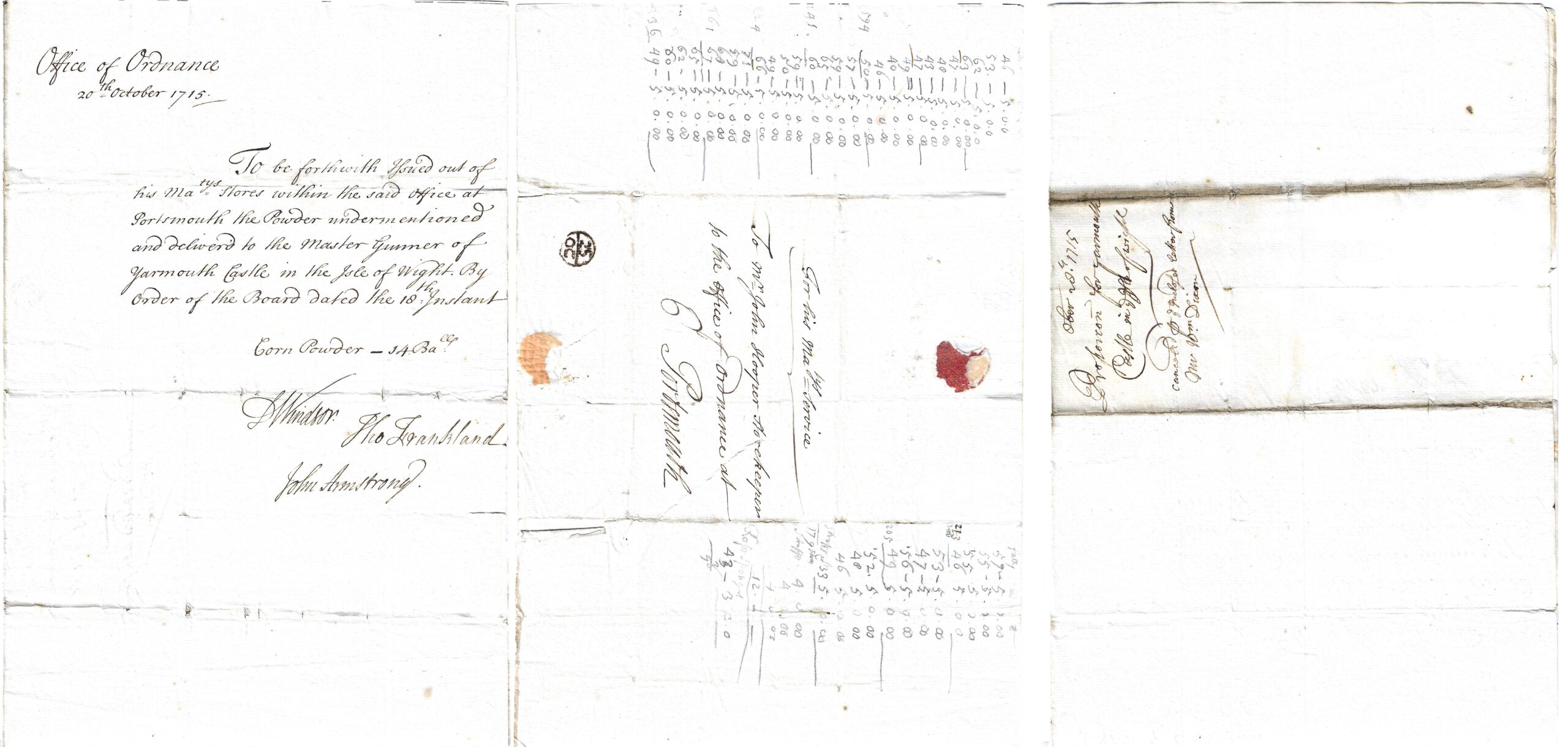
20th October 1720 an instruction to supply Yarmouth Castle with powder.
View in new tab:
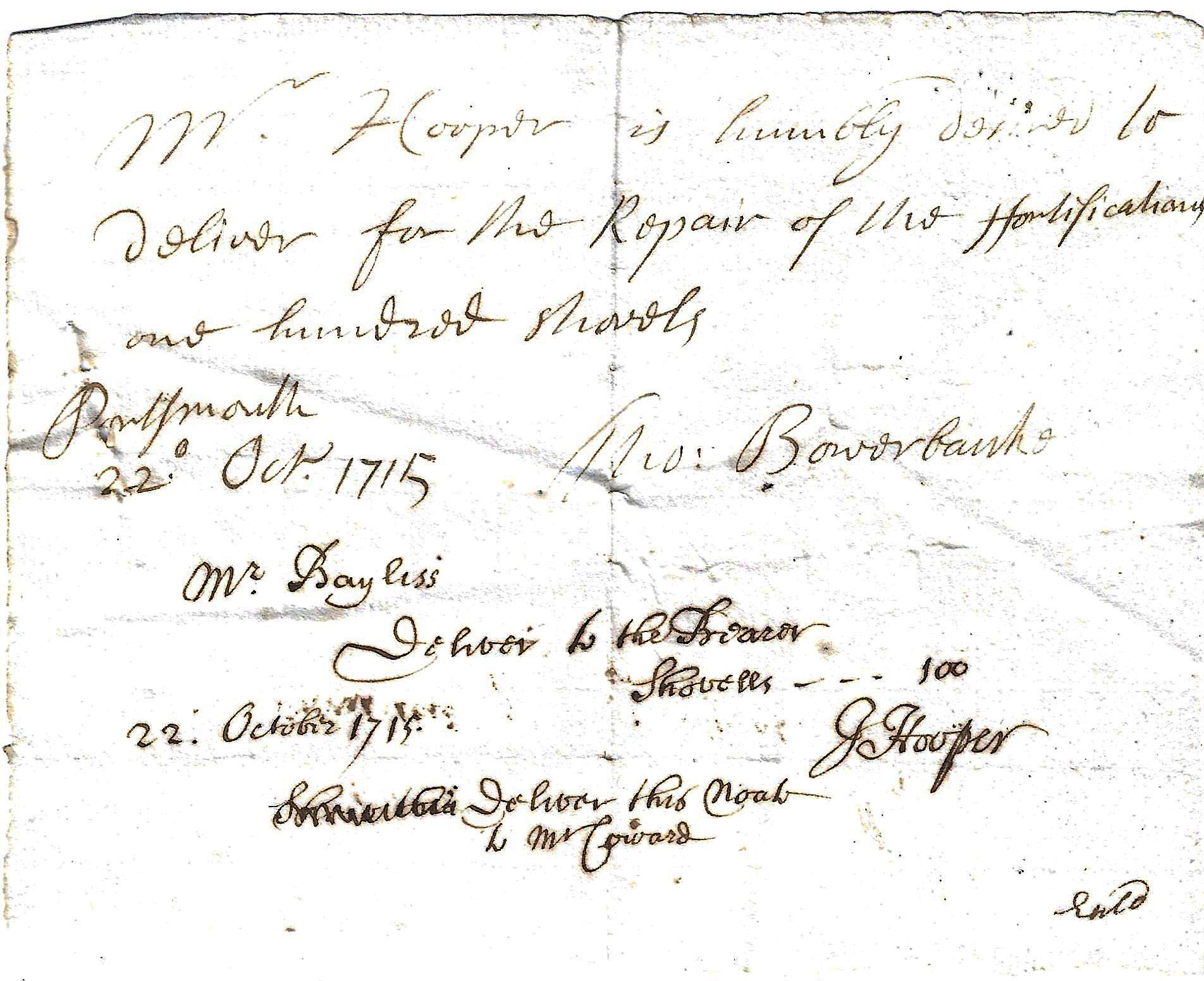
The fortifications mentioned earlier must have been substantial. The note from Thomas Bowerbank on 22nd October 1715 asks for 100 shovels. Finally, on the 24th of October we find that the works were being carried out at the saluting platform. This still exists, jutting out into the sea, just to the southwest of the Royal Garrison Church on Portsmouth seafront. Captain Edwards is requesting lead cramps for pinning the foundations.
View in new tab:
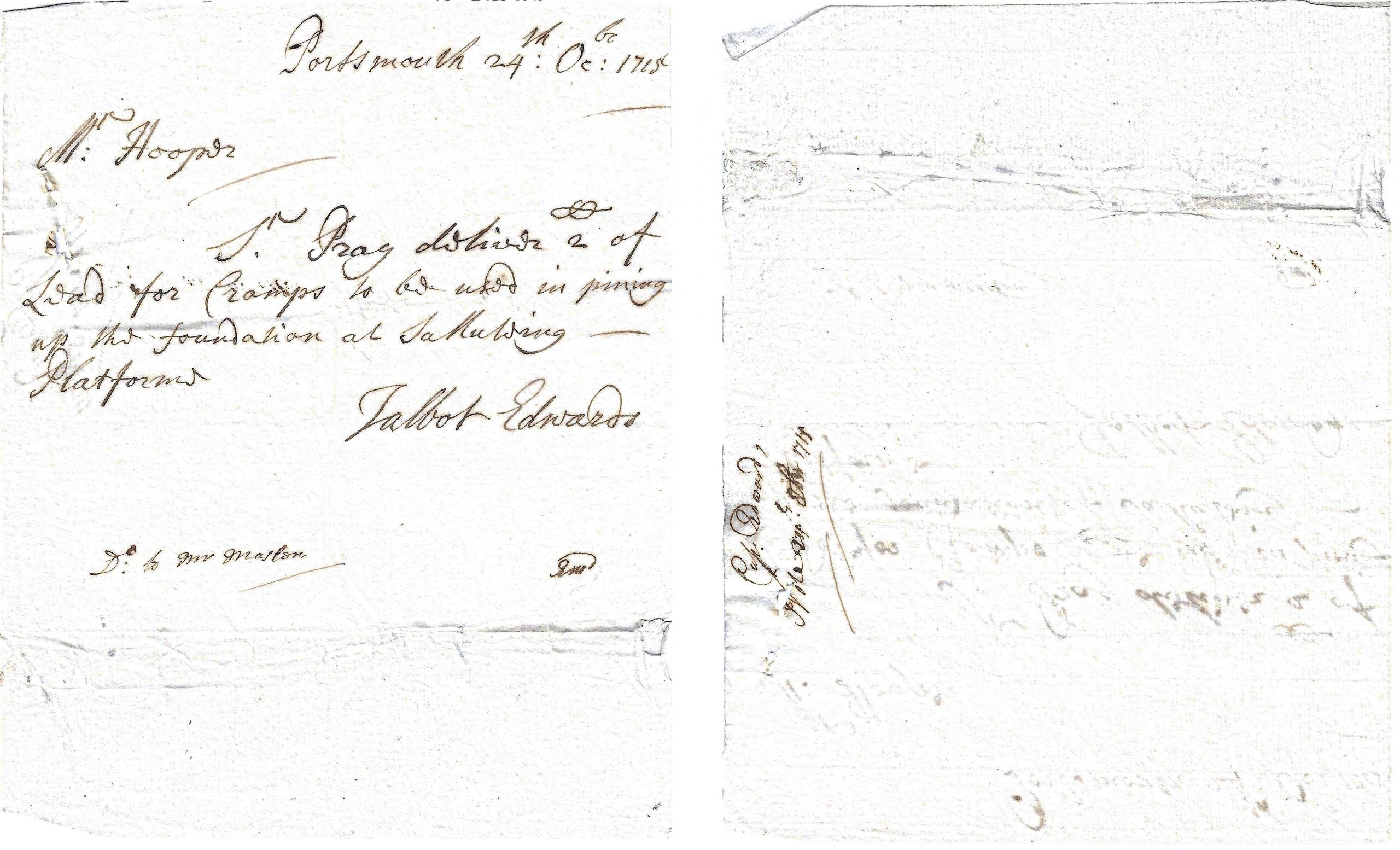
An unusually polite request from Talbot Edwards for 2 hundredweight of lead.
View in new tab:
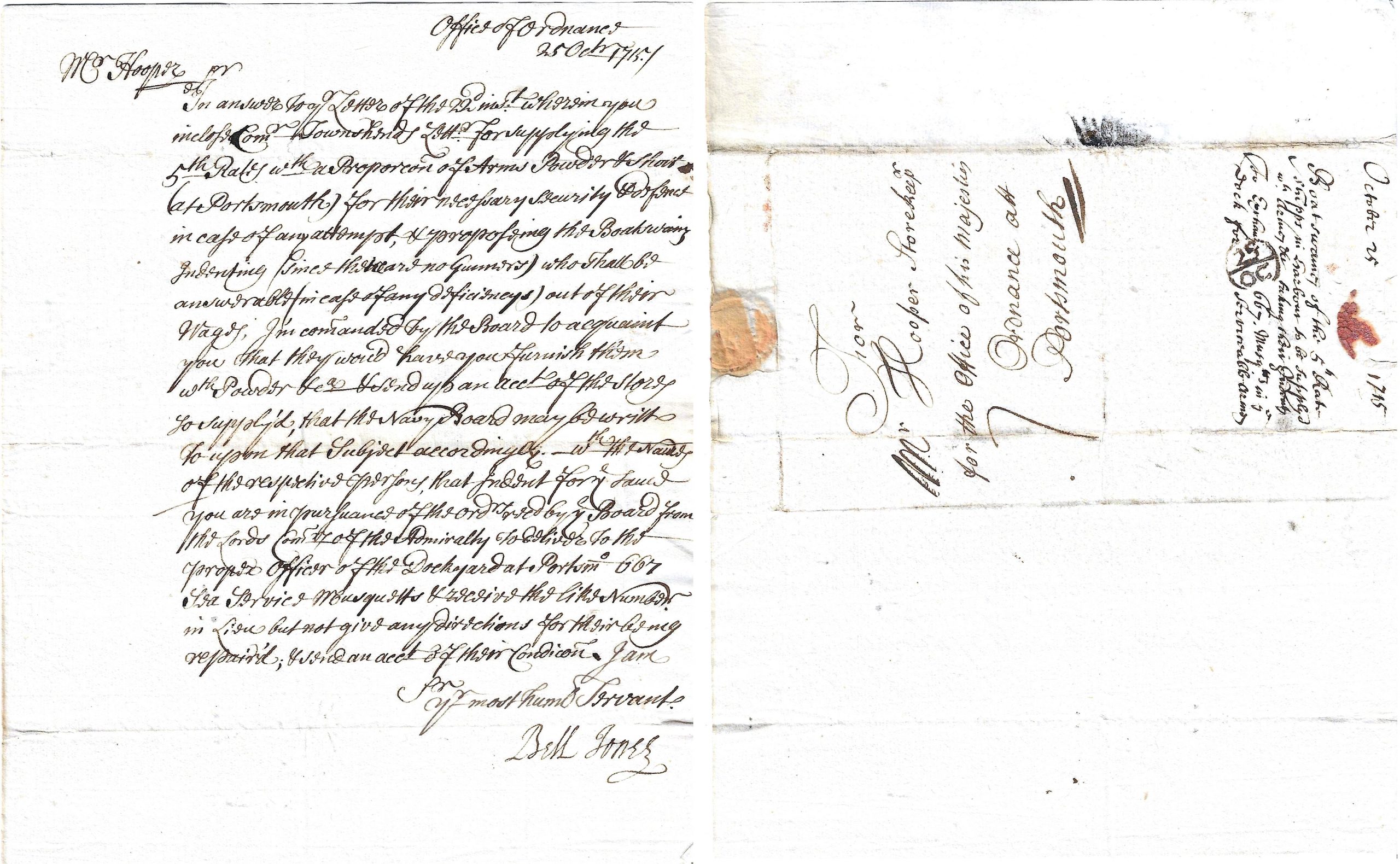
On 25th October 1715 Bell Jones writes on behalf of The Board to instruct Mr. Hooper to take 667 muskets from the 5th rate ships exchanging them for a like number and to report on their condition.
View in new tab:
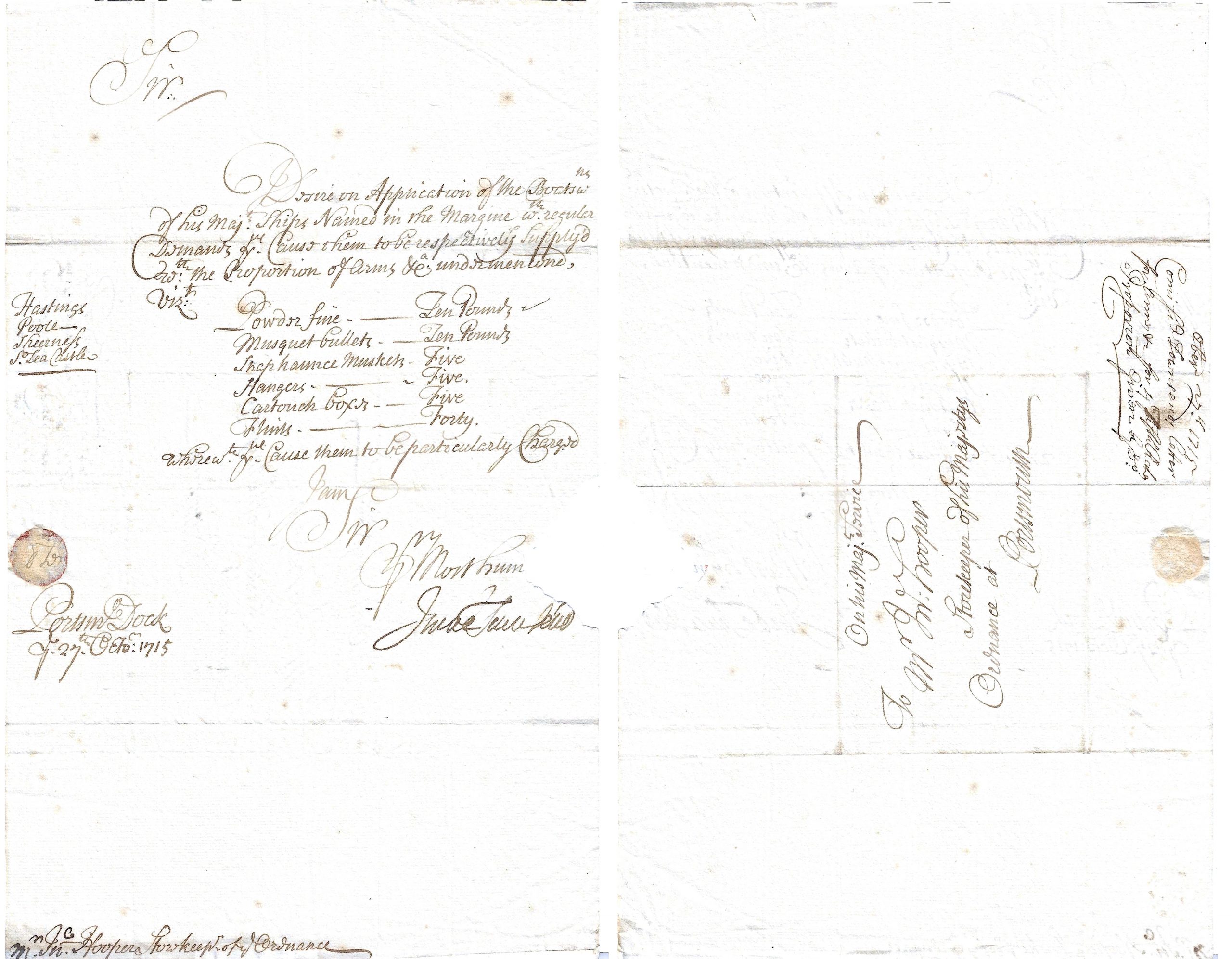
An instruction from Isaac Townsend to supply small arms to four ships.
View in new tab:
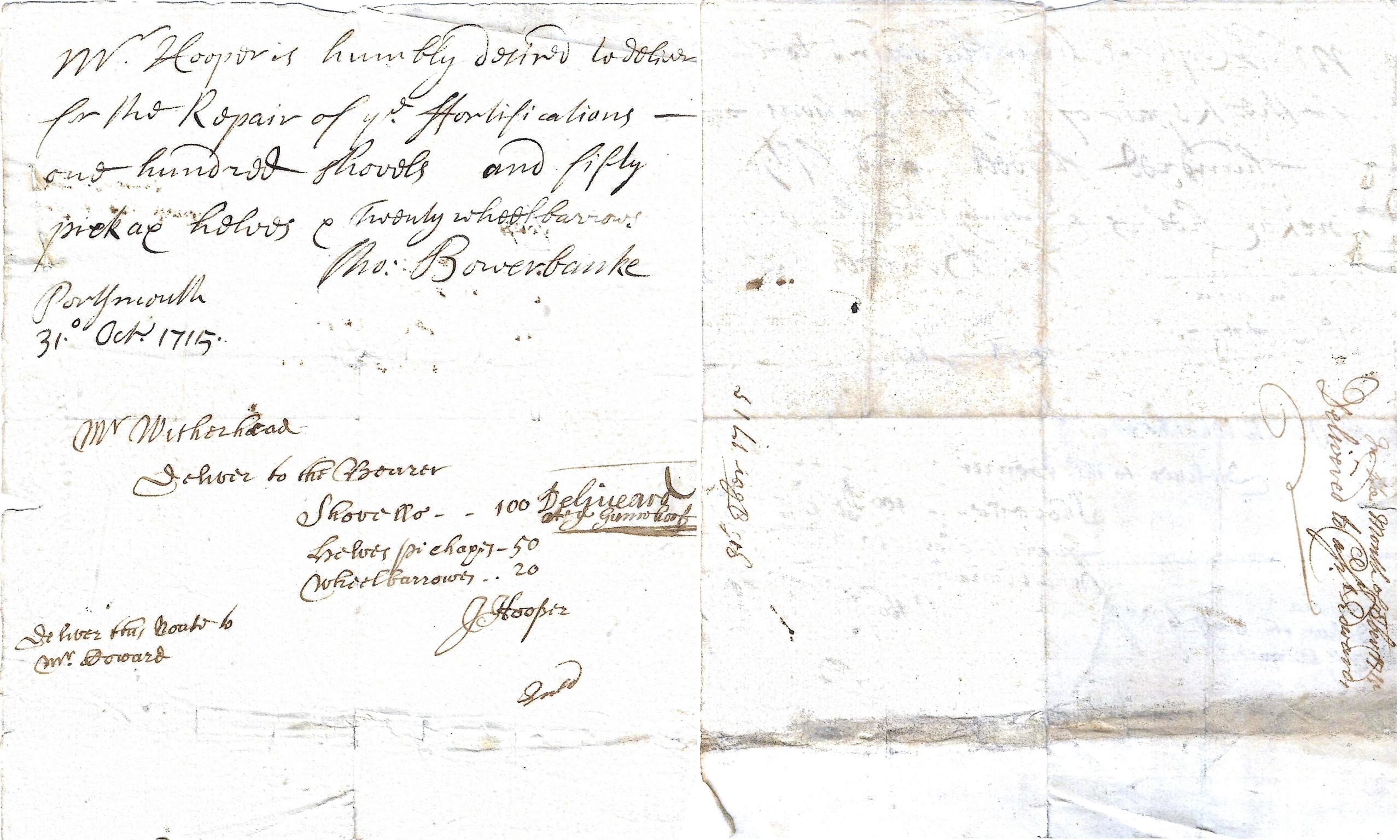
Another request from Thomas Bowerbank for tools to repair fortifications.
View in new tab:
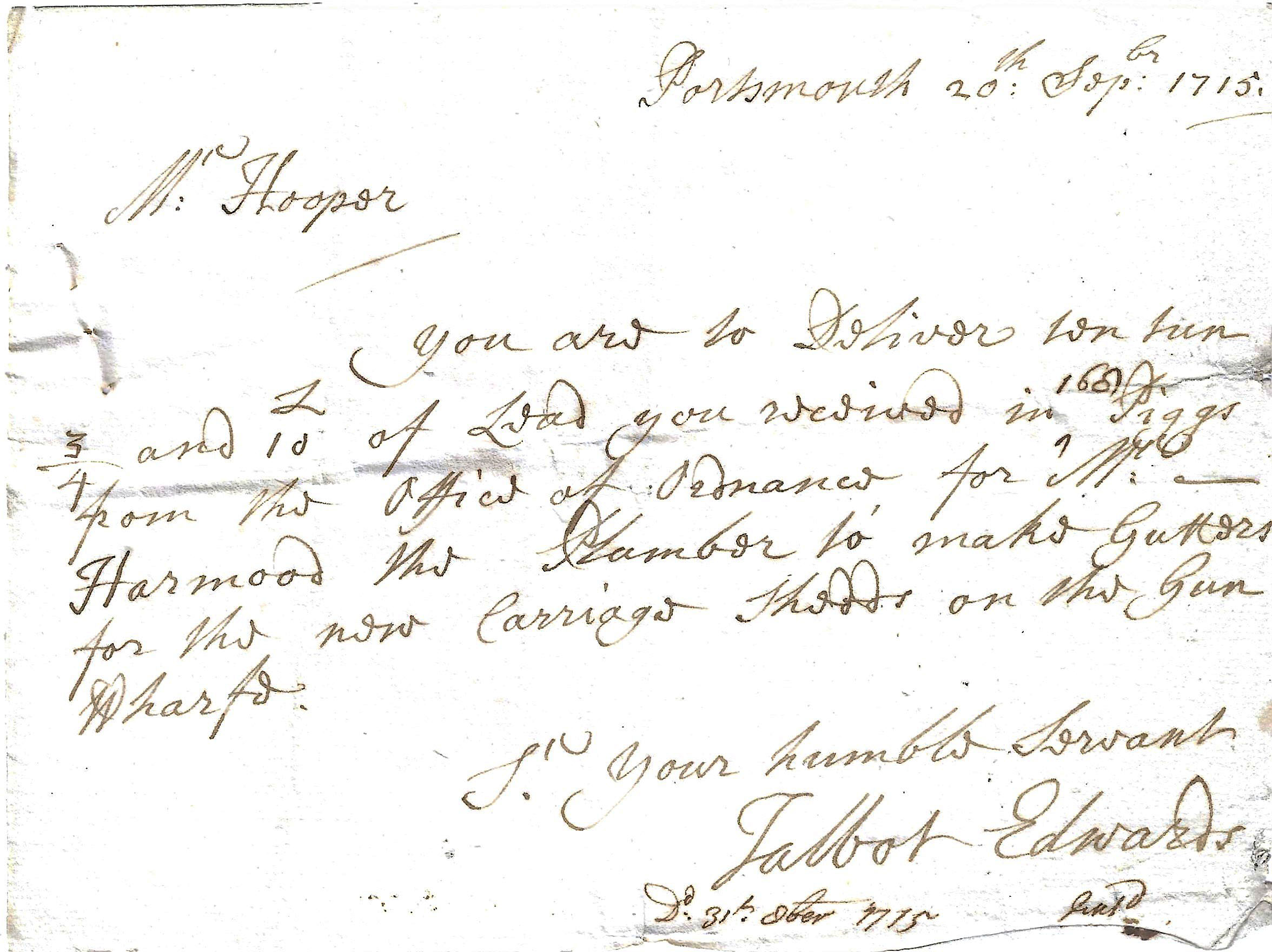
Abrupt as ever, Talbot Edwards requests that he be supplied with lead for his plumber.
View in new tab:
Another note from Talbot Edwards requesting an exchange of serviceable muskets for unusable ones.
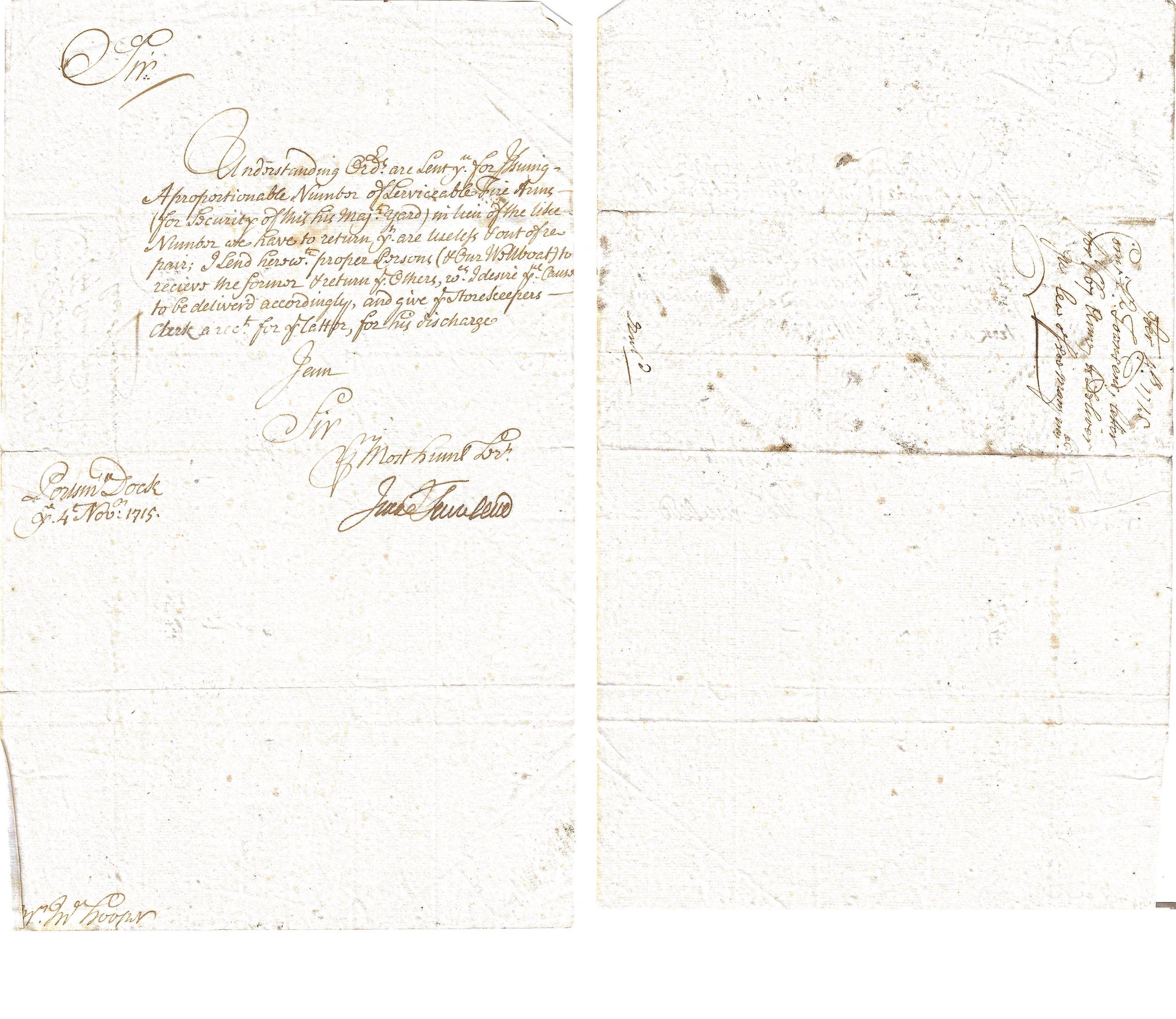
View in new tab:
On December 16th of 1715, a letter from The Tower an instruction to issue 400 muskets and cartouche boxes to the inhabitants of Portsmouth: presumably the militia captained by Henry Stanyford.
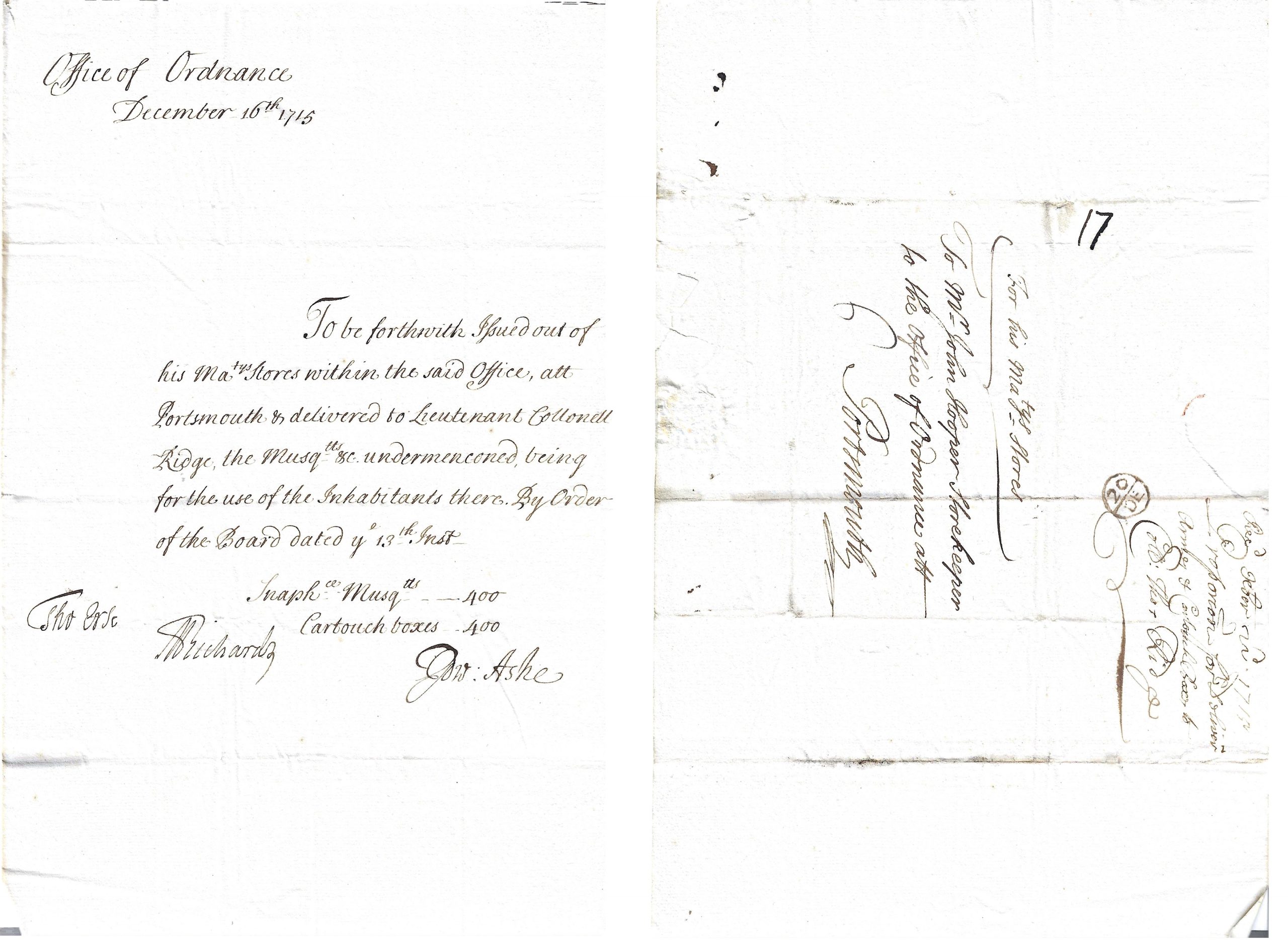
View in new tab:
Also on December 16th of 1715, Thomas Clayton, master gunner of HMS Canterbury (1693), asks for powder and flints. The note would appear to have been written on board the ship as it is headed ‘Portsmouth Harbour’, yet it has been endorsed by Sir Isaac Townsend.
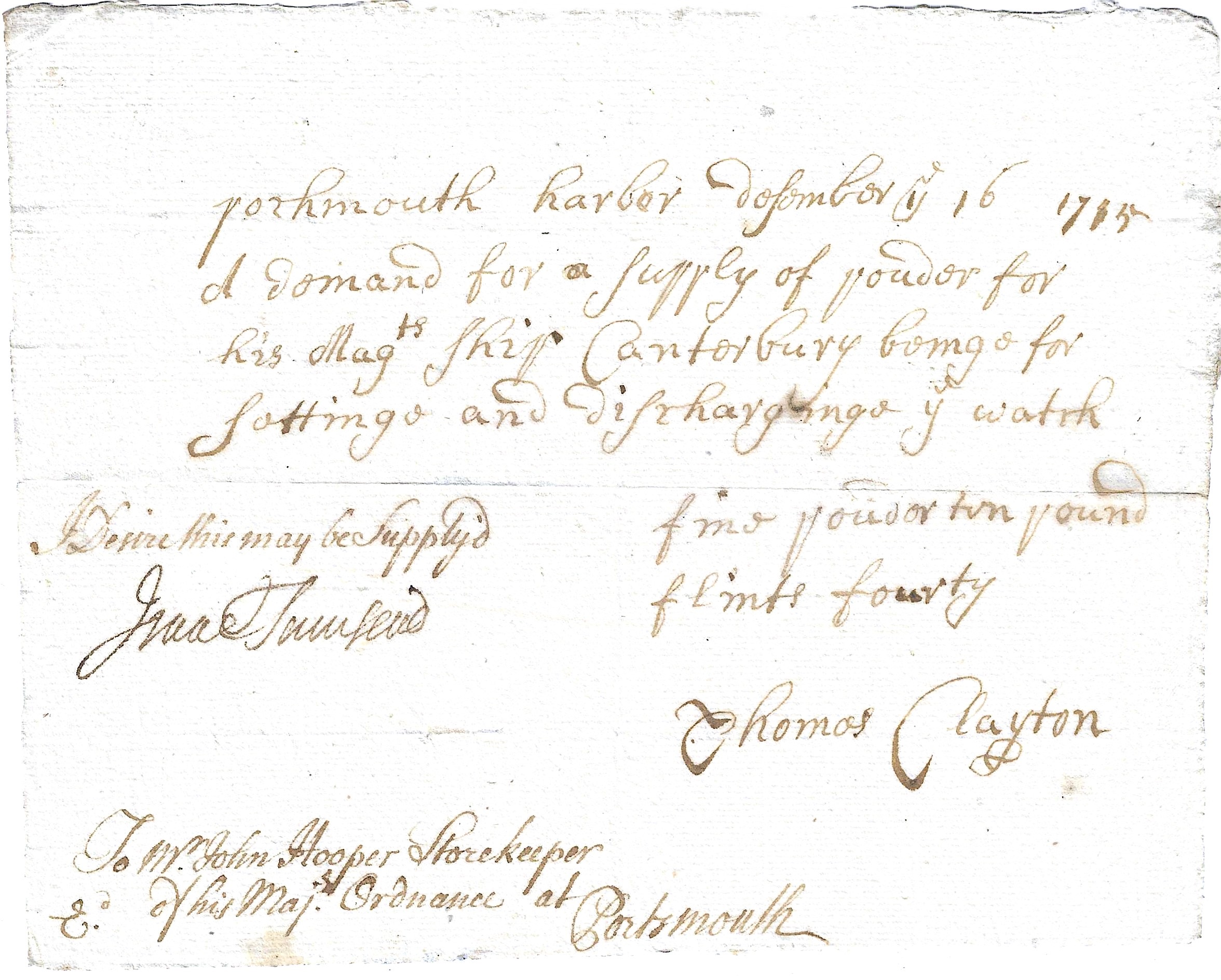
View in new tab:
A letter from Bell Jones of The Tower dated 19th December 1715 shows that The Board covered all bases. HMS Squirrel, anchored off the Kent coast (The Downs), is to be refit for Channel service but has been given the option of refitting at Portsmouth or Sheerness.
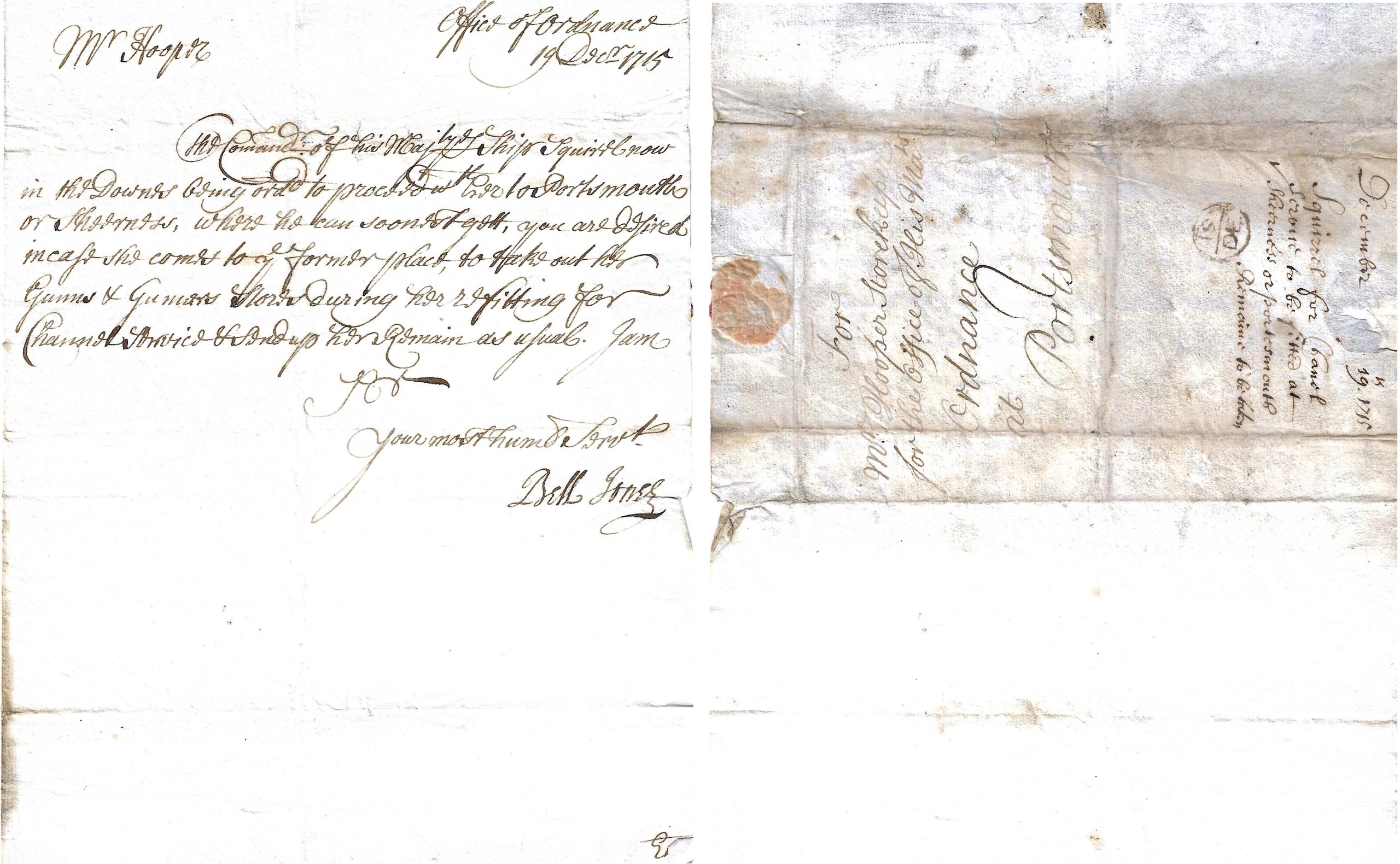
View in new tab:
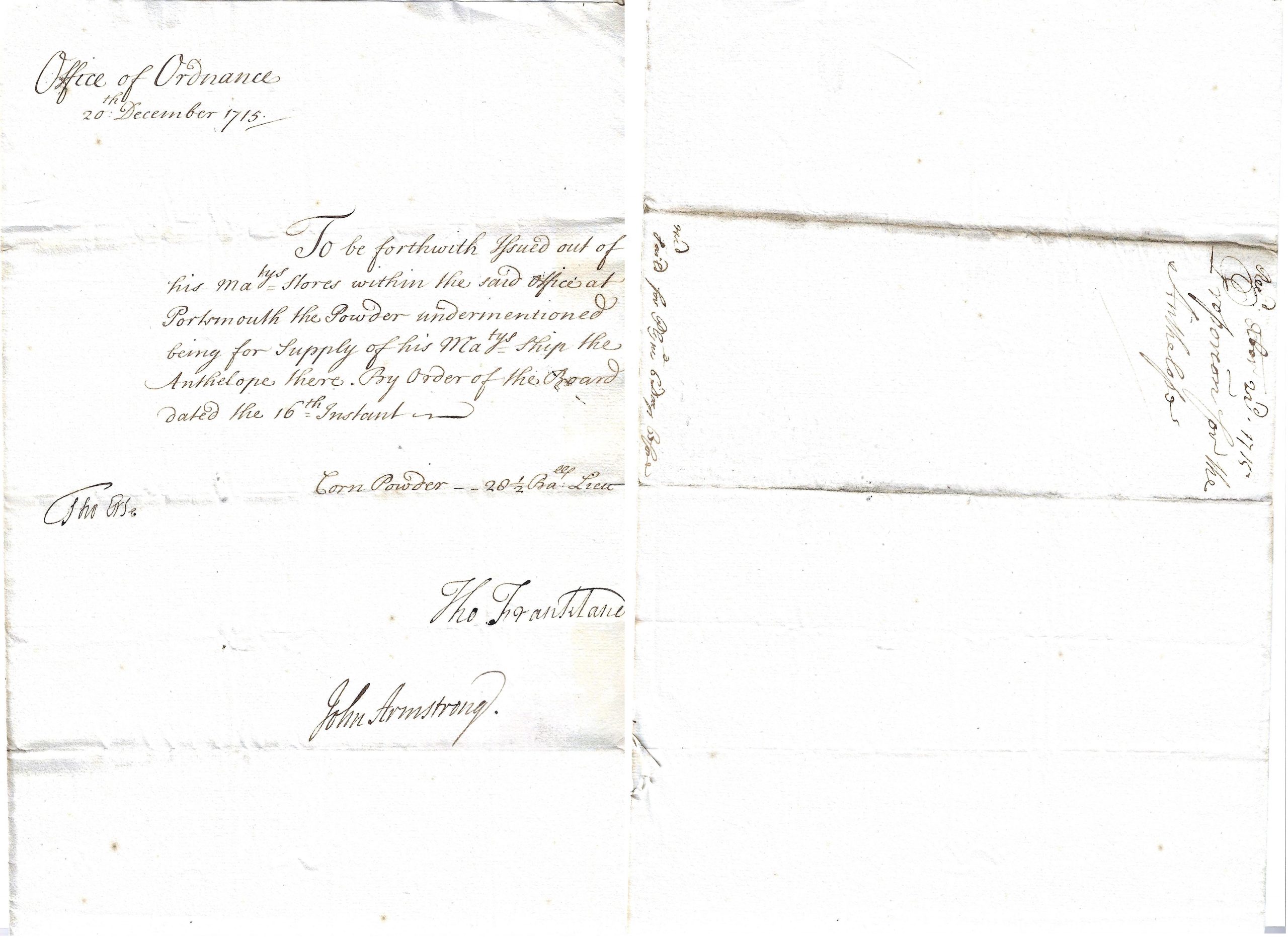
20th December 1715, an instruction for corn powder for HMS Antelope.
View in new tab:
It is unusual to see brass ordnance mentioned in favour of iron, but the letter from The Tower dated 19th January 1716 specifies brass guns to be sent to Woolwich. We also see the term ‘drakes’ used for close fighting, these were narrower than normal for their calibre and length would normally require and so used a lesser charge.